Showing posts with label health journalism. Show all posts

Tuesday, June 17, 2025

Microgrant deadline extended for reporting on opioid settlement funds

Reporting on Addiction, a collaborative movement staffed by media professionals working to address addiction, is extending its deadline to apply for 2025 microgrants for journalists reporting on opioid settlement funds in Kentucky, Maine, New Jersey or New York.

June 20 is the new deadline. Apply here.

As billions in opioid settlement funds enter the U.S. economy, how that money will be spent is unclear. Especially for individuals, families and communities touched by the opioid and fentanyl crisis, having journalists who use their investigative skills to follow who spends the money and on what is of vital importance. Watchdog reporters are needed as a primary, trustworthy source for people who want to hold public officials accountable for how these funds are used to address the addiction crisis.

To support this vital journalistic effort, Open Society Foundations is partnering with Reporting on Addiction to offer four microgrants ($500–$1,000 each) for journalists reporting in Kentucky, Maine, New Jersey and New York to investigate how opioid settlement funds are being allocated and spent.

Grants will support long-term reporting that help your audience understand the opioid settlements and show them where and how funds are being spent. Priority will be given to submissions focused on:
  • Spending (or a lack of spending) related to evidence-based prevention, addiction, harm reduction, treatment and/or recovery.
  • Issues with waste, fraud, abuse, or mismanagement of opioid settlement funds.
  • Incorporating the perspectives of impacted community members.
  • Helping communities understand the spending decision-making process (or lack of process).
Story pitch requirements: Pitches can be for any platform, print, digital, radio, television, podcast, etc. Freelancer submissions are welcome, but must have a letter of support from a publisher.

Grant awardees will receive free training: Awardees must agree to attend two virtual Reporting on Addiction trainings, share their final story, and have a commitment from a newsroom editor to publish their reporting by Feb. 1, 2026. Freelancers should secure a publication commitment before applying and supply supporting documentation.

Thursday, August 03, 2023

Aug. 11 is deadline to sign up for Association of Health Care Journalists' Rural Health Journalism Workshop in K.C.

The mostly annual Rural Health Journalism Workshop of the Association of Health Care Journalists will be held Aug. 24 at the Hotel Kansas City in Kansas City, Mo. The full program, titled "The 5 Most Urgent Conversations About Rural Health," will focus on these points:
  • Investigating environmental health — access points and pointers
  • How rural harm reduction fits into the fight against overdose
  • Rural mental health care: Reaching cultural competency
  • Finding a maternal health solution for rural America
  • How people get health care information in news deserts
The deadline for registration is Aug. 11, but the room block has expired, so if you're interested, act quickly. The fee is $25 for ACHJ members and $35 for non-members, but non-members may purchase a seat and a six-month AHCJ membership for a combined fee of $60. Scholarships are available to Kansas and Missouri-based journalists for help with mileage, registration and one hotel night. Apply here.

Tuesday, July 18, 2023

To sustain themselves, innovative rural newspapers develop alternative revenue sources, including a nonprofit element

Jack Rooney, left, and David Woronoff spoke to the National Summit on Journalism in Rural America.

Two of America's most innovative rural newspapers, a weekly and a daily, are following very different strategies to sustain their journalism in the digital age. They were the focus of a session July 7 at the National Summit on Journalism in Rural America, sponsored by the Institute for Rural Jouranalism and Community Issues (publisher of The Rural Blog).

Alternative revenue sources are the reason The Pilot, a twice-weekly in Southern Pines, N.C., has 11 newsroom employees, Publisher David Woronoff said. At The Keene Sentinel in southwest New Hampshire, reader donations are supporting journalism, especially a nonprofit subsidiary focused on health, said Jack Rooney, the daily's managing editor for audience development.

Woronoff led off the session by saying, "If the only tool you have is a hammer, every problem looks like a nail. If the only tool you have is a newspaper, then the solution to all of your community's information and marketing needs is going to be – surprise, surprise – more newspaper.  . . . Sometimes you need a glossy magazine to to solve that information need. And sometimes you need a daily email newsletter, or sometimes you need a annual phone book, or sometimes you need a independent bookstore. And that and that's what we do. . . . We're in the community-building business, and news just happens to be the service we render."

Woronoff said The Pilot is 30% larger than it was when he and his partners bought it 27 years ago, "but it only represents 25% of our total enterprise. So we have stretched that overhead across a lot of revenue, which gives us the ability to finance our journalism. So that's why, in a relatively rural community, we have an 11-person newsroom. . . . We're able to produce that sort of journalistic heft because we have expanded beyond just being a newspaper."

More than half of The Pilot's revenue comes from magazines and similar products: PineStraw, a free-circulation monthly; The Sway, an email newsletter aimed at millennials; Business North Carolina, which has several products including a daily newsletter and events; South Park, a monthly delivered to some Charlotte Observer subscirbers; the North Carolina Tribune, a daily politics and public-policy newsletter; and Walter and O. Henry, magazines for Raleigh and Greensboro, respectively.

Eleven percent of revenue comes from a local bookstore that "was getting ready to fail," Woronoff said. "Not the wisest investment I ever made, but I just couldn't imagine our little town without an independent bookstore in it. And I think it says something about our community that we can afford one and it's become part of the cultural tapestry of our community. Last year we had a hundred authors come to the town, most of them for free. . . . I would argue that that's part of serving your community is not just putting news in the newspaper. It's creating this cultural appreciation. And by being a convener of our of the people in our community, we are making ourselves more relevant."

"Relevance is the coin of the realm," Woronoff said at another point. "If you are it not relevant to your community, if all you are as a newspaper, then your relevance is going to diminish." An example is The Sway, produced by "a bunch of 20 somethings," which has 20,000 free subscribers. "It's written in the voice of a 20-something female, a very sassy, irreverent tone. . . . It makes us relevant to an important segment of our community that we don't, we wouldn't, reach with just the newspaper."

Woronoff acknowledged that he's in a catbird seat, in a golf-centric area with above-average income that is comfortably close to, but not overwhelmed by, three metropolitan areas. For his formula to work, he said, "You have to have a vibrant commercial business community. You've got to have a vibrant retail community. . . . but we think there are a lot of communities out there who can do this . . . If you want to try it in your market. The first thing you have to accept is that you have to be more than just a newspaper."

The Keene Sentinel is doing that, in another way. Its Monadnock Region Health Reporting Lab, which "operates as a nonprofit, essentially," is "a testing ground to develop new ideas and find ways to reach new audiences and grow revenue," Rooney said. "The lab is completely donor-funded through a combination of grants, some individual kind of high-dollar donors in our community who we've identified and who really see the value in what we're providing," plus "constant crowd-funding."

"Journalists, historically, are not very good at telling their own stories of their organizations to garner that support," Rooney said, so the paper does annual community-impact reports, and does a seperate one for the health-reporting lab, which says, in effect, "Here's the the return on your investment." And it has things to crow about; the lab won the first-place investigative-reporting award from the New Hampshire Press Association, for its report on 21 gallons of Fentanyl solution that went missing from the local hospital. 

The Sentinel launched the lab in February 2022 after monthgs of "listening sessions with all sorts of folks in our community: health care providers, patients, nonprofit leaders, social service agencies, and some initial rounds of of fundraising," Rooney said. "We picked health care for this initiative largely because it's one of the issues [for which] rural communities are so well known."

The lab has a free email newsletter on Mondays with more than 1,000 subscribers and an open rate of 45%. Its content is published in the Sentinel's health section on Wednesdays as well. And it has a podcast, "Invisible Illness," with interveiws of "folks who have a diagnosis that's not outwardly visible and kind of shines the light on on their experiences," Rooney said. And the lab goes beyond journalism, to community service; it held a health fair that attracted 300 people.

The National Summit on Journalism in Rural America was a hybrid event, with in-person and online audiences. A Zoom recording of the morning session, at which Rooney and Woronoff spoke, is here

Saturday, June 24, 2023

In wire-service transgender stories, Fox replaces 'gender-affirming care' with 'sex change' or 'sex reassignment'

"Fox News’ website is altering articles from The Associated Press and Reuters to replace the phrase 'gender-affirming care' with the terms 'sex change' or 'sex reassignment' — phrases that the AP, trans journalists, and LGBTQ rights advocates deem outdated — and frequently removing or replacing references to 'care' or 'medical care'," Mia Gingerich reports for Media Matters.

"In one of the most recent examples, Fox fabricated a quote from an Oregon state senator," Gingerich reports. "AP and Reuters confirmed that altering their content to change the meaning or accuracy of the reporting violates their rules."

Fox moved from changing headlines to changing story texts with an AP article it reposted April 27, Gingerich reports. "Over the last two months, Fox News has altered at least 18 articles from the AP and one from Reuters on anti-trans legislation that are credited exclusively to the respective outlets. No notes or citations are made clarifying any changes." Her story cites each examples of changes.

Gingerich explains, "Gender-affirming care is a broad term that encompasses an array of essential services for trans and nonbinary people that can include both medical care — such as therapy and medication — as well as nonmedical services, like changing the way you dress or what pronouns you use." She notes conservative information outlets like The Daily Signal "castigated the cable network for its occasional 'use of activist language like "gender affirming care" in stories on its website, as well as the site’s consistent use of female pronouns for biological males.' Last year, Fox News’ Laura Ingraham similarly called on people to stop using the term, claiming it was a 'misleading euphemism'. The medical professionals providing gender-affirming care, and who overwhelmingly support trans youth’s access to care, do not share that sentiment."

Last year AP added a topical guide to its Stylebook, giving guidance "not to use outdated terms, singling out 'sex change' as one to avoid," Gingerich notes. 

Thursday, February 02, 2023

Expert opinion: 'The new normal cannot fall back to a pre-Covid normal; we must be bigger, better and smarter'

By Katelyn Jetelina
Your Local Epidemiologist

On Monday the World Health Organization’s Emergency Committee gave official word that they voted to renew the Public Health Emergency of International Concern. They are likely teeing up for “the end” in 2023. The U.S. is far more confident in “the end” of the national emergency. On Monday, the White House announced that they are ending it in mid-May.

An inflection point is clearly on the horizon, albeit with uncertainty. This leads to legitimate questions: Are we still in an emergency? What will the future hold? What happens next?

Are we still in an emergency? There is no “level of disease” that defines a pandemic or emergency. Even if there was an objective metric, the reality is that this isn’t determined through epidemiology alone. Where we, as a society, place SARS-CoV-2 in our repertoire of threats is a collective decision—a psychological, cultural, and political decision. Every day we consciously (or subconsciously) decide how much risk and suffering we are willing to accept: How many people get the booster? How many people wear a mask? How many people order free antigen tests? How many deaths, and among whom, are we willing to accept?

This has sparked an intense tug-of-war among scientists, leaders, and the public throughout the pandemic: a push towards “normalcy” from some and push back towards “urgency” from others. All individuals and societies fit somewhere on this spectrum. And one’s position may (and perhaps should) change with time.

How did winter play out? How we fared this winter gives us a good idea as to whether we are still in “emergency” phase in the U.S. We essentially had two tests:

How well did our immunity hold up against a constantly changing Omicron? According to varying hospitalization models from early fall, the 2022-23 winter played out as a best-case scenario for Covid-19. Even the best-case scenario, though, led to a peak of 48,000 hospitalizations.
Projections of hospitalizations, from CDC's Advisory Committee on Immunization Practices meeting on Sept. 1, 2022

Could our hospital systems handle the stress of a novel virus on top of the “normal” respiratory viruses? We hadn’t previously seen the impact of all of them at the same time. In addition, health-care workers are increasingly burnt out, and hospitals are increasingly understaffed. Given all of this, hospitals did okay this winter. Pediatricians were drowning, particularly because of a massive RSV wave. Emergency rooms were overcrowded with sickness. But a Covid-19 emergency declaration wouldn’t necessarily help with either of these. Hospitals were not overwhelmed with adults because of our immunity wall, and I’m increasingly convinced there was viral to viral interaction—in other words, we didn’t see all three viruses peak at the same time.

Given this, I agree that we are not in an emergency phase in the U.S. An emergency declaration was appropriate when we had rational hope that transmission could be interrupted on a population level and when we needed extreme measures to prevent collapse of healthcare systems. We are past this. Continuing the emergency would not be constructive given public sentiment and lack of funding anyway. As one epidemiologist told me, “If it’s always an emergency, nothing’s an emergency.”
What will the future hold?

If we end the emergency, it begs the question: What phase are we in?

I don’t believe we are in an endemic phase— a state of predictability. I think we are on our way, and Covid-19 will eventually fall into seasonal patterns. But this will likely take years. Until then, we will be in an awkward space between pandemic and endemic. Epidemiologists don’t have an official word for this phase. WHO flu risk management people would probably call this the “transition” phase.
Graph from World Health Organization pandemic risk management guide

We will continue to see the virus ebb and flow—it will mutate, we will get waves, people will continue to miss work and daycare, and people will continue to be hospitalized and die, particularly those over 65 years and immunocompromised. The end of an emergency does not mean the end of disruption or suffering.
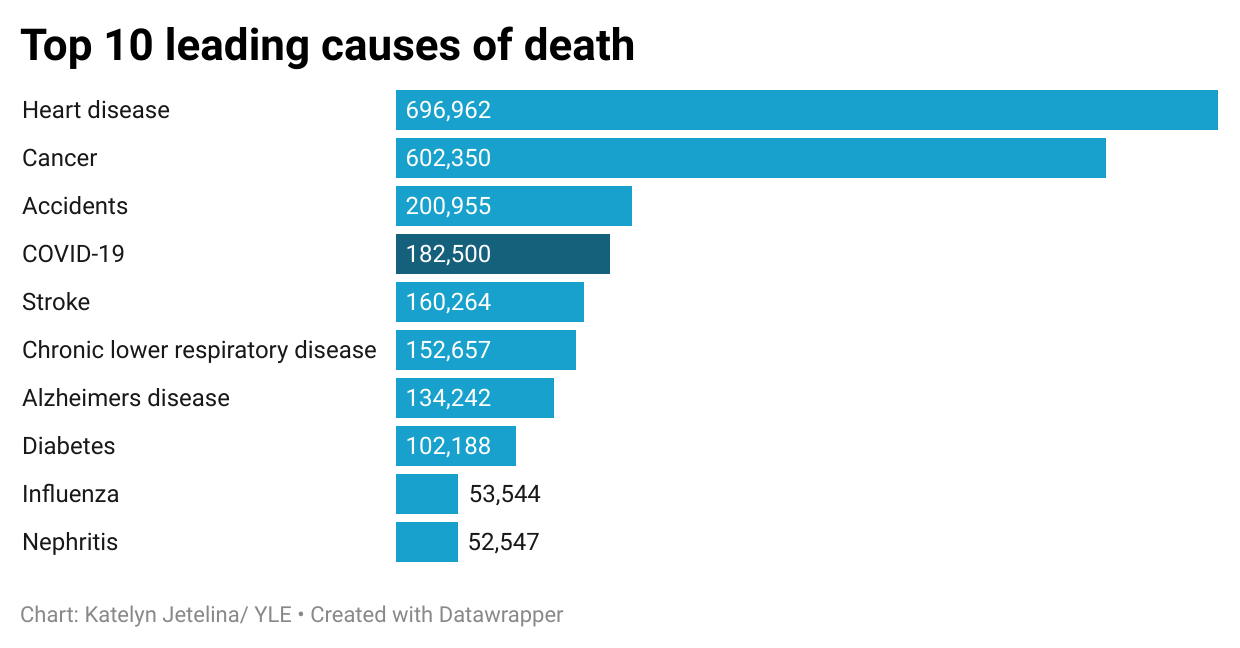
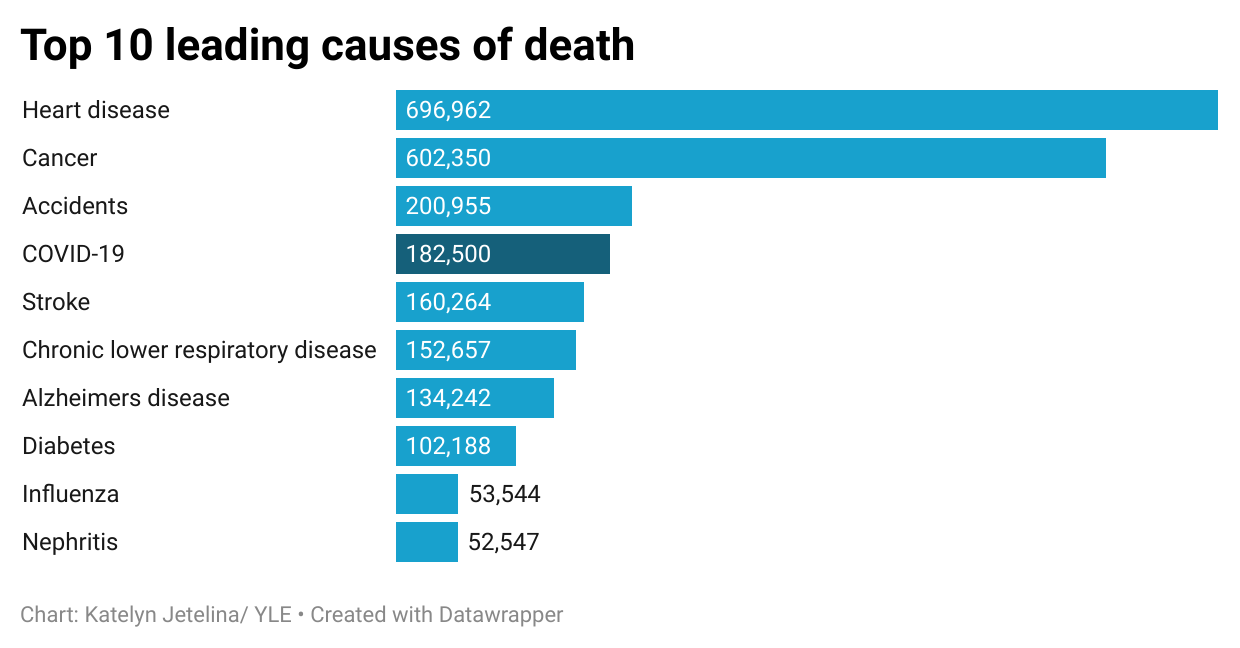
Deaths from Covid-19 are projected for 2023; data from CDC, here

Today, roughly 500 Americans are dying each day from Covid-19. At this rate, SARS-CoV-2 will be the fourth leading cause of death in the U.S. in 2023—about triple the threat of influenza.

What happens next?

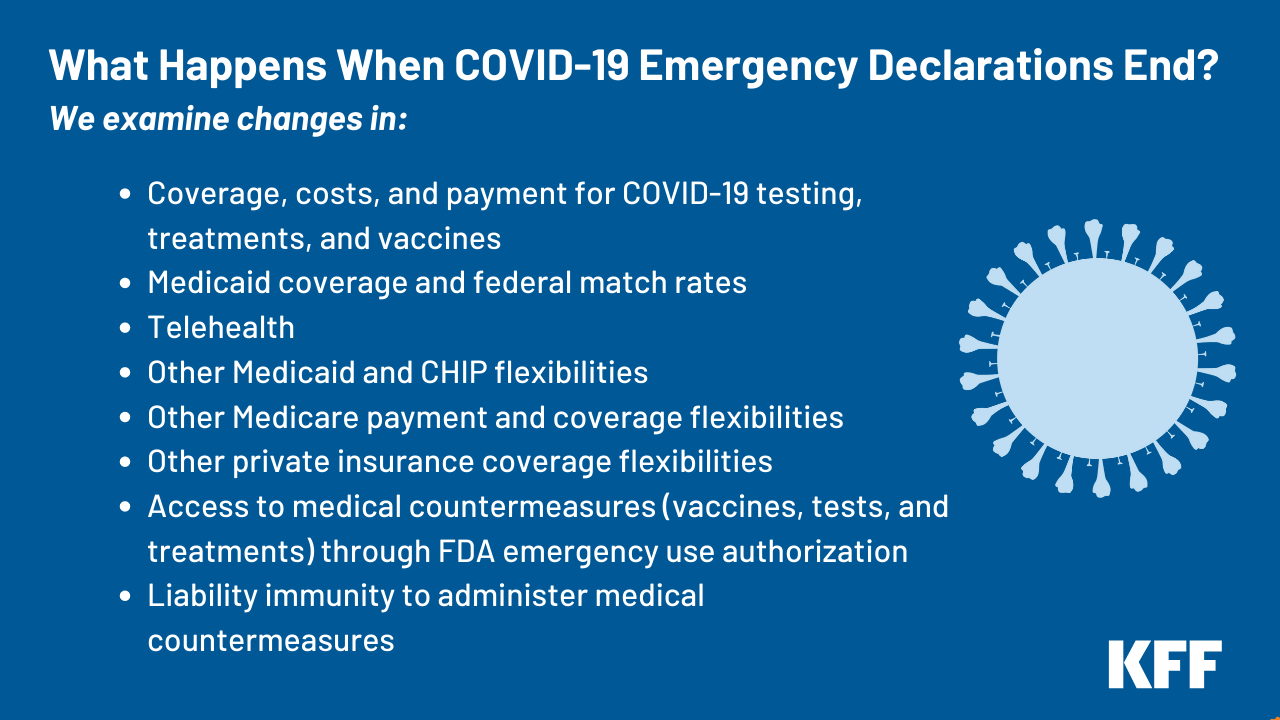
Unraveling the public-health emergency may get messy. It will certainly take time (hence the 3 month lag time). The Kaiser Family Foundation outlined the implications nicely:
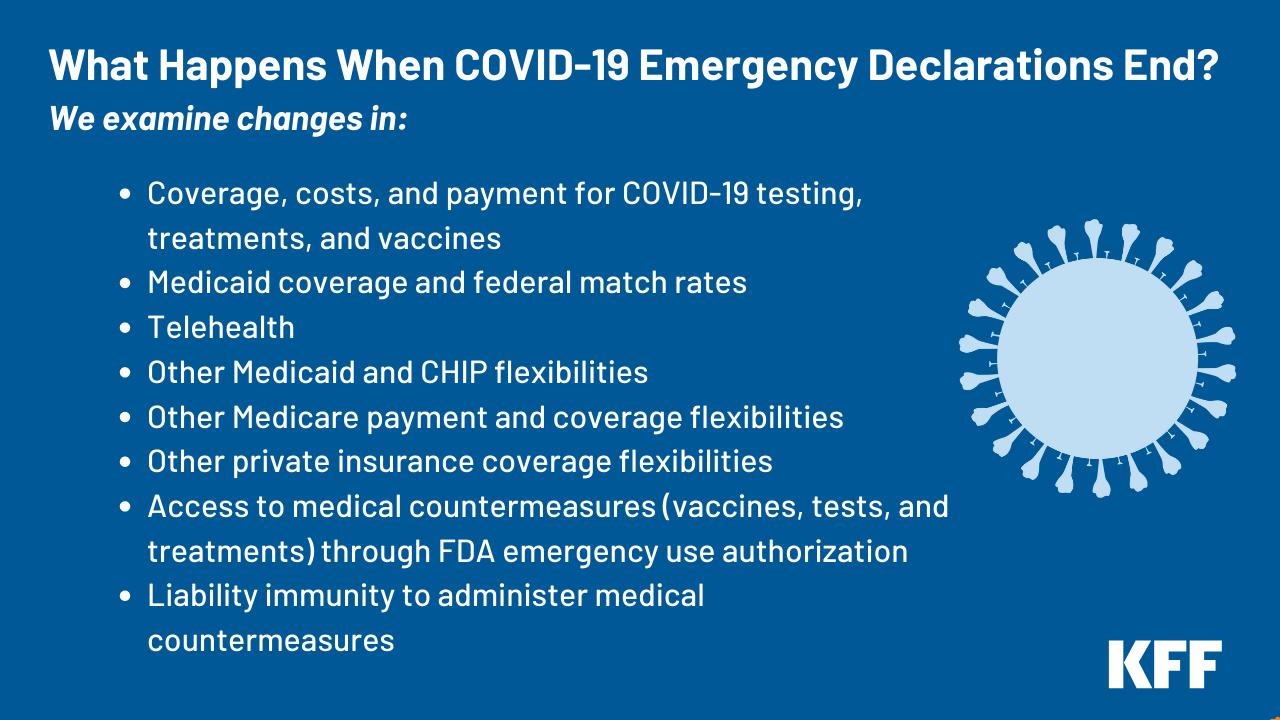

This does not impact the Emergency Use Authorization of vaccines and therapeutics from the FDA. In other words, these will still be available.

HOWEVER, the ending of funding for testing and vaccines is a real cause for concern. Once our free supply is out, everything will be privatized. Pfizer announced its vaccine will cost $130 per dose. Insurance will have to cover it, like the flu vaccine. This will, no doubt, fuel deep inequities in the U.S. And it is part of a much larger, deeply flawed system of pharmaceutical profiteering that this country hasn’t got the ethical fortitude to address yet.

Our work is not done: Most importantly, the end of the emergency doesn’t mean our work is done. There is no infectious disease more insidious or with greater impact on global mortality, morbidity, and health care systems than Covid-19.

As individuals, we still need to get vaccinated. We still need to leverage antigen tests. We need to invest in better filtration and ventilation. We still need to protect the most vulnerable.

As public-health officials, we must decide the minimum structure needed moving forward. Invest in wastewater monitoring. Continue to report hospitalizations (and get better at it). Commit to transparent and effective communication. Vaccine innovation is needed.

As a society, we MUST put real energy, innovation, and investment into repairing and strengthening our health and public health systems. The new normal cannot fall back to a pre-Covid normal. We must be bigger, better, and smarter. This means the very notion of for-profit healthcare needs to be fixed. In public health, we must figure out how to get out of the cycle of panic and neglect through preparation. We are LESS prepared for the next pandemic, given loss of trust, polarization, changing information echo-systems, and mis/disinformation.

Sadly, I’m starting to see denial and wishful thinking. I hope this changes as it will definitely not be another 100 years before the next pandemic emerges to grip the globe in a choke hold.

Bottom line: In the U.S., the end of the emergency is coming. I agree with this decision, but this certainly isn’t the end of Covid-19 or public health threats. In fact, this end is the beginning. We have our work cut out for us.

Katelyn Jetelina is a California epidemiologist and biostatistician who says she writes her newsletter on Substack as a way to translate public-health science for everyday use, helping people to make evidence-based decisions. She is a consultant to several organizations, including the CDC.

Thursday, October 20, 2022

Whites now more likely to die from Covid-19 than Blacks, partly because of resistance to vaccines, other prevention

The racial gap in age-adjusted Covid-19 death rates narrowed, then reversed.
(Graph by Dan Keating, The Washington Post; click here for the interactive version.)
White people are now more likely to die from Covid-19 than Black people — a dramatic shift from earlier in the pandemic when certain minority groups were more likely to die from the disease, Akilah Johnson and Dan Keating report for The Washington Post.

Usually, when such a shift occurs, it's because the worse-off group got better. In this case, the better-off group got worse, in large measure because rural whites have resisted vaccination and other measures to prevent Covid-19 infection. Early in the pandemic, Black Americans, afflicted by long-running health disparities that predate the pandemic, fell victim to the virus more often as those with "hypertension, diabetes and obesity, all of which beset Black people at higher rates and earlier in life than White people." But as vaccines came along, Blacks were more likely to get them than rural whites.

“After it became clear that communities of color were being disproportionately affected, racial equity started to become the parlance of the pandemic, in words and deeds,” Johnson and Keating write. “As it did, vaccine access and acceptance within communities of color grew — and so did the belief among some White conservatives, who form the core of the Republican base, that vaccine requirements and mask mandates infringe on personal liberties.”

The phenomenon was essentially predicted in 2019 by Jonathan M. Metzl, director of Vanderbilt University's Department of Medicine, Health, and Society, in a book, Dying of Whiteness: How the Politics of Racial Resentment is Killing America's Heartland, which examined how the politicization of public health furthered mistrust in medical institutions. The book served as a sort of "prehistory" for the pandemic, Metzl said. It detailed how some uninsured white patients declined life-saving procedures because it meant they'd have to sign up for health benefits provided by the Patient Protection and Affordable Care Act. Metzl told the Post that rejecting public-health measures is about "dogma, more so than a mistrust of the science of vaccines or masks."

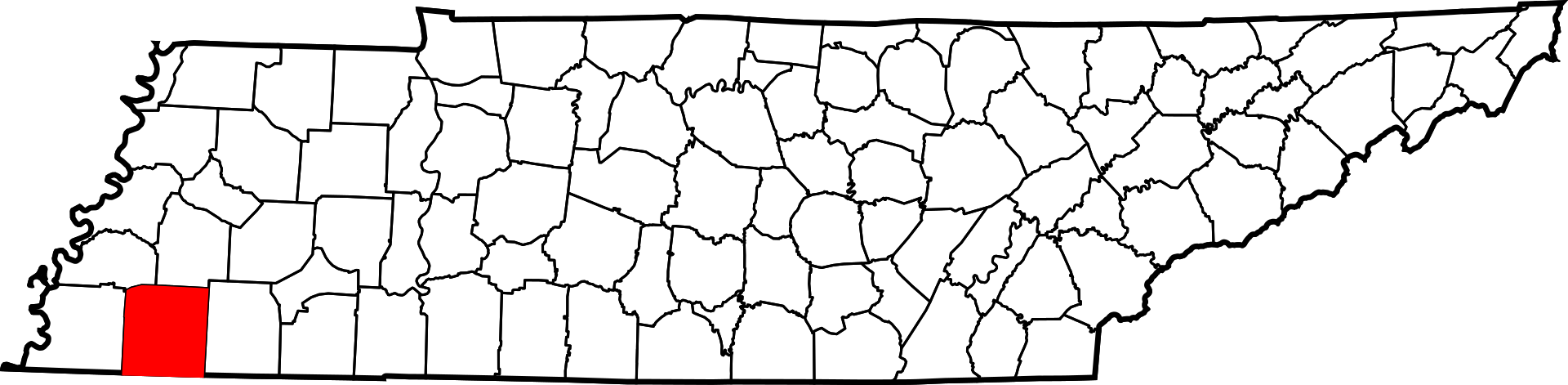
Fayette County in Tennessee (Wikpedia map)
The Post's object example is Fayette County, Tennessee, and Skill Wilson, who was an unvaccinated paramedic in Somerville, is the prime example. As the pandemic raged in nearby Memphis, Wilson and his wife felt their county of 42,000 was more protected because there were simply "less people, less chance of exposure." Eventually, Wilson "joined the choir of critics opposing vaccination requirements" and "commiserated with like-minded people in Facebook groups and on Parler and Rumble, the largely unmoderated social networking platforms popular with conservatives." The 59-year-old died from Covid-19 falling ill after transporting an infected patient to the hospital. 

Wilson's widow, Hollie, said after Skill died in January, "We’re Republicans, and 100 percent believe that it’s each individual’s choice — their freedom" when it comes to getting a vaccine. "We decided to err on the side of not doing it and accept the consequences. And now, here we are in the middle of planning the funeral."

Tuesday, October 18, 2022

Telehealth potential unrealized in places with poor internet; that becomes a bigger issue when telehealth is mandated

Homes in wealthy communities like the Blue Ridge Mountain Club near Boone, North Carolina, have access to high-speed internet. But most parts of the mountainous western region of the state, which has many poor people, have little broadband infrastructure. (Photo by Mark Darrough, Carolina Public Press, via The Daily Yonder)

The pandemic proved the great potential of telehealth for rural Americans, advancing its use years beyond what its advocates had expected. But it remains hamstrung by the lack of reliable, high-speed internet in many rural areas. That problem is explored in a four-part series by The Daily Yonder, the Institute for Nonprofit News, Carolina Public Press, Honolulu Civil Beat and Shasta Scout. with support from the National Institute for Health Care Management Foundation.

"Chronic health conditions and distance to medical services mean rural residents need more health-care specialists and better telehealth. But they are less likely than urban areas to get it," the Yonder says in introducing the first installment, in which Kristi Eaton cites examples from upstate New York, the Hawaiian island of Lanai, northern California and western North Carolina.

From the latter region, Eaton writes: "Lee Berger sat hunched over her laptop trying to complete a routine appointment with her primary-care doctor. But the 73-year-old, who has good hearing, couldn’t fully hear what the doctor was saying. It came down to unreliable internet access, she told Carolina Public Press. In North Carolina, an estimated 4 million residents don’t have access to reliable broadband service. This tends to have a greater effect on rural residents, many of whom live in communities that suffer most from a smaller supply of health professionals."

Fiber-optic service is provides the best broadband. but fewer than one in four households in western North Carolina even has access to fiber, Shelby Harris of CPP reports in the second installment, which reveals another problem: health-care providers who mandate telehealth, "such as Mission Health’s tele-hospitalist and tele-psychiatry programs. . . . Mission Health is the largest medical provider in the region" and is owned by HCA Healthcare, "the largest hospital system in the country."

Maggie Sauer, director of the North Carolina Office of Rural Health, told Eaton, “I’ve been in this business for a while, and I do not believe that without a hybrid telehealth model — in-person and then also telehealth — that we will be able to do what we need to do for our rural citizens.”

Thursday, August 18, 2022

USA Today series shows gaps in health care for rural moms

USA Today's Nada Hassanein has just published a four-part series on disparities in health care among rural mothers. Part one has an overview of the issue; part two focuses on inequalities among rural indigenous people; part three has data on maternal mortality among rural women of color, and part four explores the historical roots of the phenomenon.

"About 2 million rural women of childbearing age live in maternity care deserts at least 25 miles away from a labor and delivery unit," Hassanein reports. "Rural hospitals and obstetric wards, already scarce, have continued to shut down in record numbers. Women of color are even more vulnerable . . . and the federal government has only recently started to identify the problem. The maternal death rate for rural Black women is three times higher than for rural white women, a 2021 Government Accountability Office report found, and the rate of severe maternal illness for those Black mothers was twice that of white women.

"The Covid-19 pandemic made matters worse. The nation’s overall maternal death rate increased, and disparities widened. While the death rate for white mothers rose in 2020 from about 18 to 19 deaths per 100,000, Black mothers' death rates remained three times as high, soaring from 44 to 55 deaths. Hispanic mothers' death rates also surged, from 12 to 18 per 100,000, according to the CDC. At the same time, half of rural hospitals already had no obstetric care, and two dozen hospitals shut down entirely."

Monday, July 11, 2022

Virtual registration is open for Thursday's conference on health journalism in rural areas; registration is $50 tops

Want to attend the Rural Health Journalism Workshop 2022 on Thursday, July 14, but can't make it to Chattanooga? Not to worry: Virtual attendance is available, and registration is now open. The one-day conference is free for (and only open to) members of the Association of Health Care Journalists. Membership is usually $60 a year, but AHCJ will knock $10 off if you use the code RURAL22 when you register.

From the workshop website: "This workshop will bring journalists together with health care and policy experts who focus on the medical challenges of rural areas. Leave with a better understanding of what’s happening – or will be happening – in rural regions, and return to work with dozens of story ideas you can pursue. You don't have to live in a rural area to write great stories about what's happening just beyond the city limits. And think about how much policy is set based on the non-urban population of your state. This special one-day, no-fee workshop will help you find and cover health stories in rural America."

Sessions will cover data resources for reporters, rural health-care resource inequality during the pandemic, the promise and limitations of rural telemedicine, mobile clinics and other creative approaches to bridging rural health-care gaps, how to ask the right questions about opioid settlement money, and how to boost the number of rural doctors and nurses by establishing health-care pipelines in schools. Click here for more information about each session as well as a full list of panelists.

The conference is hosted by the University of Tennessee's Health Science Center, Cempa Community Care and Erlanger Health System, and is sponsored by The Leona M. and Harry B. Helmsley Charitable Trust, the Robert Wood Johnson Foundation, and The Commonwealth Fund.

Wednesday, July 06, 2022

Register by 5 p.m. CT Thurs. for Rural Health Journalism Workshop in Chattanooga on July 14; registration $50 tops

There's still time to register for the Rural Health Journalism Workshop 2022, which will be held July 14 in Chattanooga, Tenn. The one-day conference is free for members of the Association of Health Care Journalists. Registration will close at 5 p.m. CT Thursday, July 7. Membership is usually $60 a year, but AHCJ will knock $10 off if you use the code RURAL22 when you register.

From the workshop website: "This workshop will bring journalists together with health care and policy experts who focus on the medical challenges of rural areas. Leave with a better understanding of what’s happening – or will be happening – in rural regions, and return to work with dozens of story ideas you can pursue. You don't have to live in a rural area to write great stories about what's happening just beyond the city limits. And think about how much policy is set based on the non-urban population of your state. This special one-day, no-fee workshop will help you find and cover health stories in rural America."

Sessions will cover data resources for reporters, rural health-care resource inequality during the pandemic, the promise and limitations of rural telemedicine, mobile clinics and other creative approaches to bridging rural health-care gaps, how to ask the right questions about opioid settlement money, and how to boost the number of rural doctors and nurses by establishing health-care pipelines in schools. Click here for more information about each session as well as a full list of panelists.

The conference is hosted by the University of Tennessee's Health Science Center, Cempa Community Care and Erlanger Health System, and is sponsored by The Leona M. and Harry B. Helmsley Charitable Trust, the Robert Wood Johnson Foundation, and The Commonwealth Fund.

Wednesday, June 15, 2022

Association of Health Care Journalists resumes in-person Rural Health Workshops; next one in Chattanooga July 14

The pandemic has kept the Association of Health Care Journalists from having its annual Rural Health Workshop, until now. One will be held July 14 in Chattanooga, Tenn., and registration is open and free.

ACHJ says journalists can get answers at the workshop to such important questions as, "What does it take to keep a rural hospital open in the state with the highest rural hospital closure rate in the country?" It says the health-care and policy experts and researchers at the workshop will include Stephanie Boynton, vice president and CEO of hospitals in North Carolina Hospital and Tennessee, who "will talk about how a hospital just days away from closing its doors found a path to survival and what that has meant to a community."

The program, which may be updated, will also include sessions on finding and interrogating data, judging the quality of programs that will receive opioid settlement funds from state and local governments, and what it takes to build the rural health care pipeline, among others.

To register, go here or call 423-756-5150. Use this link to book your hotel room. Watch AHCJ’s website and social media platforms for important program announcements and updates.

Monday, May 16, 2022

N.H. and Vermont on the lookout for tick that can cause a meat allergy, a species moving north with climate change

Inside Climate News graphic; click on the image to enlarge it.
A tick that can cause an allergy to red meat may be expanding its territory to  northern  New England due to climate change.

When a lone star tick—so-called for the distinctive white spot on adult females' backs—bites a human, sometimes it "transmits a sugar molecule called alpha-gal that triggers an allergic response to lamb, pork and beef and, in some cases, other animal products. There is no cure, and the reactions range from eczema and a runny nose to difficulty breathing that can prove deadly," Claire Potter reports for the Valley News in West Lebanon, N.H., and White River Junction, Vt. "The tick also carries ehrlichiosis, Heartland virus disease, southern tick-associated rash illness (STARI), Bourbon virus disease and tularemia."

Though individual lone star ticks have been found in Vermont and New Hampshire, scientists believe they hitched a ride with migrating birds, since no breeding tick populations have been found locally. But that day isn't far off: lone star ticks have already spread as far north as Massachusetts and New York. Because of climate change, "We’re expecting them to make their way here," Eliza Doncaster, the vector management coordinator at the Agency of Agriculture, Food and Markets, told Potter.

Alpha-gal-triggered meat allergies are becoming more common. That's not just because lone star ticks' habitat is expanding; because of climate change, they're living longer in the year, sometimes even surviving over the winter, and breeding more. So all tick-borne diseases are going up, as are diseases caused by similar pests. In fact, diseases from ticks, fleas and mosquitos tripled between 2004 and 2018.

Does someone in your community have an alpha-gal-triggered meat allergy? Check and see with this self-reported interactive map (note: the map shows cases entered by site users and is not verified). And here are some tips from the Centers for Disease Control and Prevention on how to avoid tick bites (see graphic also).

Thursday, April 21, 2022

Rural coronavirus cases are on the rise even as Kansas and Missouri declare it 'endemic' and reduce data reporting

New coronavirus infections, in ranges by county, April 11-17
Map by The Daily Yonder; click on the image to enlarge it or click here for the interactive version.

Rural counties reported nearly 18,2000 new coronavirus cases during the week of April 11-17, a 9 percent increase from the week before. The uptick, concentrated in New England, marks the end of an 11-week downward trend in new rural cases, Tim Marema reports for The Daily Yonder. New metro cases fell by about 2%. However, data on cases and deaths is skewed — and will likely stay skewed — because some states have stopped regularly reporting data.

Rural deaths related to Covid-19 fell by about 12% from the week before, while Covid deaths in metropolitan areas fell by about 5% in the same time period. The weekly death rate was about 40% higher than the metro rate, and has been higher than the metro rate for almost a year, Marema reports.

"The cumulative death toll from the pandemic is also higher in rural counties than metropolitan ones. Since the start of the pandemic, 172,000 rural Americans have died from Covid-19, which equates to about one death for every 267 rural residents," Marema reports. "Metropolitan counties have recorded 771,290 Covid-related deaths, which equates to about one death for every 366 metropolitan residents."

There are likely more cases and deaths than the map reflects, since Kansas reported no data for last week. Because of falling case numbers, state governments in Kansas and Missouri announced at the end of March that the coronavirus is now considered "endemic," Natalie Wallington reports for The Kansas City Star. Those states will now treat the virus much like the seasonal flu, and will no longer have access to some emergency measures that gave priority and funding to fighting the disease. They will also only update case and death totals once a week, and Missouri will no longer report death totals by county. However, regardless of official declarations, the coronavirus can still mutate and cause future surges in cases and deaths, Wallington notes. Cases in the Kansas City area and across the state began creeping up again last week, according to local station WDAF-TV, but the lack of official data and the increasing prevalence of at-home testing make it difficult to assess the true numbers.

Tuesday, April 19, 2022

Groundbreaking USA Today investigation rates every nursing home in the nation on its Covid-19 response

More than 140,000 U.S. nursing-home residents have died from Covid-19, including 71,000 in last winter's surge. At more than one-third of the nursing homes that reported outbreaks during the surge, no one died, but the performance of some others was much worse, USA Today reports.

In a year-long, first-of-its-kind analysis of the nation's more than 15,000 nursing homes, USA Today investigated questions of corporate responsibility left unanswered by government regulators or research papers, and revealed webs of nursing-home ownership previously invisible to consumers. They also interviewed nursing-home workers, families of the dead, government officials and industry experts. Armed with in-depth data, they scored the performance of every nursing home in the country.

Here's the main page for the multimedia package, which includes a deep dive into the unusually high death count among residents at a chain of Midwestern nursing homes, video interviews with family members of those who died, pointers on how to choose the right nursing home for your loved ones, an interactive database where you can look up how local nursing homes have fared, and more.

The investigation of Trilogy Health Services is a highlight of the package. USA Today reports that residents at the company's 115 nursing homes died of Covid-19 last winter at more than twice the national average rate for nursing homes (Trilogy disputes this) and government regulators missed such chain-wide trends because they focused on individual facilities. Trilogy, which was acquired in 2015 by a real-estate investment trust that plans to go public later this year, went further than any other business in cutting staff to generate more profit. The acquisition was unusual because the REIT purchased not only Trilogy's properties, but also the health-care operations inside the buildings.

Thursday, March 31, 2022

Learn about impact of transportation on rural health care

The Rural Health Information Hub has a new information guide and toolkit on rural transportation.

The guide focuses on the importance of transportation in rural health care: "The availability of reliable transportation impacts a person’s ability to access appropriate and well-coordinated healthcare, purchase nutritious food, and otherwise care for themselves," says the RHIHub website. "This guide focuses on how communities can provide transportation services to support access to rural healthcare, which may also benefit healthcare providers by decreasing inappropriate use of EMS services, improving utilization of healthcare services, decreasing no-show rates, and increasing access to health-supporting services. The guide also highlights transportation as a community-based service that can allow the elderly and people with disabilities to live successfully in a community rather than entering a long-term care facility or leaving the community."

Rural residents most likely to need transportation services to maintain their health include seniors, people with disabilities, low-income individuals and families, veterans, and people with special health-care needs who often must travel long distances to access care, the guide notes.

The toolkit, meanwhile, "provides guidance, resources, and model programs to aid the development, implementation, and evaluation of transportation programs to support rural communities."

Thursday, February 10, 2022

Apply for mental-health journalism fellowships by April 6

The Carter Center is now accepting applications for the 2022-2023 Rosalynn Carter Fellowships for Mental Health Journalism. From the website: "The yearlong, nonresidential fellowships aim to equip journalists with resources to produce compelling and balanced reporting on mental health and substance use issues and to develop a diverse cohort of journalists who can effectively report on the topics across evolving and emerging platforms."

Each fellow will receive a $10,000 stipend, intensive training on behavioral health reporting, and networking opportunities with advisors and other fellows. Fellows from across mediums pursue a range of innovative journalism projects that tackle some of society’s biggest behavioral health challenges and seek to drive change in their communities and help reduce stigma through storytelling.

Journalists who are U.S. citizens and residents are invited to apply online. The deadline is April 6, and fellows will be announced in July on the Center's website. The fellowship begins in September.

Monday, January 31, 2022

Research suggests local journalists quote local experts, not Fauci et al., when discussing pandemic health guidelines

Rural journalists are charged with keeping readers informed about the coronavirus pandemic, but widespread skepticism of government-endorsed public-health measures makes it difficult (as rural Minnesota publisher-editor Reed Anfinson can attest; see this story from last week).

Soon-to-be-published research suggests a solid approach to making public-health information seem more trustworthy to readers: Quote local sources such as doctors or health-department administrators instead of "elite" sources such as Dr. Anthony Fauci, Austin Fitzgerald reports for the University of Missouri's Donald W. Reynolds Journalism Institute. So advise Associate Professors Monique Luisi and Ben Warner, who analyzed the results of a survey of more than 3,000 adults about attitudes concerning coronavirus vaccines, politics, and trust in public-health recommendations.

The findings "were striking. While demographic factors — such as age and race — and partisanship explained some variance in views about vaccination and public health recommendations, anti-elitism accounted for more than a third of this variance," Fitzgerald reports. "Though partisanship has been seen as an important factor in the divide between the vaccinated and unvaccinated, this finding indicates the story is more nuanced, especially given that the media — one of the primary purveyors of public health information — is itself considered 'elite' by many who hold anti-elitist values."

So, local newsrooms are likely best served by quoting local sources and citing local impact. "When people hear about the burden the virus is creating in their community or learn about what their local health department is doing, they are more receptive," Luisi told Fitzgerald. "And a more receptive audience could mean more lives saved."

Thursday, January 27, 2022

Kaiser Health News opening a rural reporting desk for Midwest and Mountain West, supported by $3.9 million grant

Kaiser Health News is establishing a rural health reporting desk to cover the Midwest and Mountain West, planning to hire journalists and social-media experts to cover Iowa, Minnesota, Montana, Nebraska, Nevada, North Dakota, South Dakota, and Wyoming.

KHN's parent organization, the Kaiser Family Foundation, is able to fund the expansion through a $3.9 million grant from the Leona M. and Harry B. Helmsley Charitable Trust., which aims to improve lives by promoting health- and place-based initiatives.

"The team of journalists will provide unbiased, accurate, and trusted reporting on a wide range of complex issues, including the ongoing pandemic, access to health coverage and care, the burden of health care costs on consumers, housing and education, the opioid epidemic, mental health, hospital closures, the lack of critical lifesaving equipment, and burgeoning changes in telehealth and medicine. KHN will partner with local media throughout the region to produce deeply sourced stories that shed light on underreported issues," according to the press release. "As with all its journalism, KHN stories produced by the Rural Health Desk will be made freely available for publication by media outlets across the country, published on khn.org and distributed through KHN’s social media platforms."

Wednesday, December 22, 2021

Americans not paying much attention to news of Omicron variant, one of most contagious viruses ever discovered


"New data shows that the Omicron variant is not jumpstarting Americans' engagement in Covid news, despite indications that it may be one of the fastest-spreading variants to date," Sara Fischer and Neil Rothschild report for Axios. That matters because "a lack of widespread appreciation of the threat could hamper the response."

Americans' social media interactions on news articles about the coronavirus have fallen from an average of 1,171 per article in March 2020 to 326 in December 2020, to 108 over the past three weeks. Engagement spiked when the Delta variant was first identified, but that hasn't happened with the Omicron variant yet, Fischer and Rothschild report.

The decline in news interactions likely stems from pandemic fatigue, and a perception that Omicron is no more dangerous than previous variants, University of New Haven political science professor Chris Haynes told Axios.

The reasons for not paying attention vary: Vaccinated people may believe there's not much more they can do or need to learn, while unvaccinated people may believe the coronavirus isn't a threat or is inevitable, Annenberg Public Policy Center director Kathleen Hall Jamieson told Axios.

But, Fischer and Rothschild note, "as the Omicron variant spreads, interest in Covid news could start to spike in coming weeks, especially as it pertains to holiday travel."

Monday, December 20, 2021

Opinion: News media must focus on systemic cause-and-effect in pandemic coverage, not just individual choices

Shutdowns in response to the Omicron variant are reminiscent of the early days of the pandemic. But journalists shouldn't cover it the same way they did then (and still do, in many cases), Jon Allsop writes for Columbia Journalism Review.

U.S. news media have tended to emphasize personal responsibility in preventing infection, and though that's important, systemic and institutional factors must also be acknowledged, Allsop writes. That includes availability of tests and vaccines, and fear of losing work from vaccine side effects. "Even coverage that centers systemic risk sometimes treats it as a separate phenomenon from individual action. But systems are made up of individuals, whose choices rebound beyond themselves," he writes. "We don’t yet know exactly what will happen with Omicron, but as we wait to find out, coverage must conceive of individuals’ decisions not only as discrete calculations tailored to their personal circumstances, but as component parts of society-wide chains of transmission and response."

Focusing coverage on individual choice and repercussions means missing the pandemic's greatest impact, Allsop writes: "What we know of Omicron so far suggests that its biggest risk is at this systemic level: most vaccinated people who get it will probably be more or less fine, but so many people could get it that a relatively small percentage of severe cases might overwhelm hospitals anyway—and if that does happen, by the time we can see it, it’ll be too late to stop it." (Throughout Covid, news outlets have struggled conceptually with such lags between cause and visible effect.) Even coverage that centers systemic risk sometimes treats it as a separate phenomenon from individual action. But systems are made up of individuals, whose choices rebound beyond themselves."

Allsop advises, "Coverage must conceive of individuals’ decisions not only as discrete calculations tailored to their personal circumstances, but as component parts of society-wide chains of transmission and response." His report has links to other articles about Covid-19 and coverage of it.