Showing posts with label prescription drugs. Show all posts

Tuesday, March 10, 2026

Newly formed nonprofit can help with heath care copays, prescription payments and heath insurance denials

Last year the two companies awarded $200k to patients who
needed financial health care help. (Photo by J. Trierweiler)
Uninsured Americans or those with health insurance coverage who are facing sky-high bills or insurance denials might be able to turn to a newly merged nonprofit for assistance.

The Patient Advocate Foundation and the Patient Access Network Foundation joined together and are now operating as the Patient Advocate Foundation. Peter Loftus of The Wall Street Journal reports, "The merger created a nonprofit with more than $800 million in assets to help patients pay for drug copays and appeal health-plan coverage denials."

For many Americans dealing with expiring Affordable Care Act subsidies, job loss or employment that doesn't offer health care benefits, the merger offers a safety net. Loftus writes, "The nonprofits said the combination will allow them to better serve low- and middle-income patients facing rising healthcare costs, including many who have lost insurance coverage."

Patient Advocate Foundation Chief Executive Alan Balch told the Journal, "More people are struggling to pay for care and basic needs than ever before, and the safety net’s being stretched thinner and thinner."

Before the merger, the two nonprofits focused on different health care challenges faced by many Americans. The PAN Foundation helped patients "defray co-pays and other out-of-pocket costs for prescription drugs," Loftus explains. The Patient Advocate Foundation assisted patients who needed to file appeals for health care insurance denials.

In 2025, the two companies made "$273 million in direct payments to patients," Loftus adds. "They awarded financial assistance to nearly 200,000 people during that period."

As one company, the Patient Advocate Foundation will need patients to complete only one application to access all its services. 

Friday, December 20, 2024

Understanding what pharmacy benefit managers are reveals flaws and solutions in U.S. drug pricing and selling system

Not all PBM savings are passed along to members.
(Adobe Stock photo)
Despite a deluge of news information discussing the unfair pricing practices of pharmacy benefit managers, what they are and what they do may still be a mystery. James B. Rebitzer, an economics professor at Boston University, provides some answers in his Q&A for The Conversation.

What are pharmacy benefit managers?
During the 1960s, PBMs "became essential middlemen [companies] between drugmakers and the many insurers, employers and government entities who purchase drugs on behalf of their members. . . . These companies negotiate price, affordability and access to prescription drugs. They do this by operating and designing formularies, which are lists of drugs that insurers cover.

Formularies assign drugs to different tiers that determine what patients must pay out of pocket to access the drug. . . . Tier placement determines how affordable a medication is to consumers and the effective drug price that insurers pay. . . .The price at which the PBM obtains the drug for its clients is the net price – the list price minus the drugmaker’s discount. . . . If a drugmaker increases its rebate, the net price falls, even if the publicly posted list prices remain high. This is why focusing on list prices to determine the cost of a drug can be misleading."

Are PBMs working to decrease their clients' costs or increase their profits?
Both. "If the contest for formulary placement works as it should, competition compels drugmakers to offer substantial discounts off the published list price. As a result, insurers and consumers benefit from a reduced net price for drugs. However, formulary competition can be undermined in various ways. . . . Competition within the formulary can also be distorted when drugmakers post very high list prices. This artificially inflates rebates for PBMs without lowering net prices for insurers and other parties."

How does market competition figure into PBM activity?

"The current regulatory environment in the U.S. tolerates overly large PBMs that engage in anticompetitive practices to accumulate excessive profits. Without strong competitors, dominant PBMs are free to charge their customers high fees and keep a larger portion of drugmaker rebates for themselves. . . . In theory, this problem should be self-correcting. . . . High profits should attract new competitors into the industry." But the chances for scrappy upstarts to survive are also limited by the industry's current PBMs' dominance.

Who are the villians?
The concentration of power is the problem. "If we didn’t have PBMs, we would need to invent them – or something like them – to obtain reasonable prices on patented drugs. But the concentration of market power among a few companies threatens to dissipate the value they create. A more competitive and transparent market for PBM services will help keep that contest fair and transparent – to the benefit of customers and society. . . . In that sense, PBMs aren’t the villain. Too much market power in too few hands is the problem, and that’s something more competition, sensible regulation and vocal consumers might fix."

Tuesday, October 22, 2024

Powerful pharmacy benefit managers are tasked with cutting costs, but their practices can undercut small pharmacies

PBMs increase profits when independent pharmacies
go out of business. (Adobe Stock photo)
The loss of independent pharmacies across the country has been a concern for rural residents, but who are the fabled PBMs, or pharmacy benefit managers, how do they operate and what do they gain when they force smaller pharmacies to close, ask Reed Abelson and Rebecca Robbins of The New York Times. "A New York Times investigation found PBMs, which employers and government programs hire to oversee prescription drug benefits, have been systematically underpaying small pharmacies, helping to drive hundreds out of business."

PBMs garner the power to underpay smaller pharmacies from "two main sources. First, the three biggest players — CVS Caremark, Express Scripts and Optum Rx — collectively process roughly 80 percent of prescriptions in the United States," Abelson and Robbins explain. "Second, they determine how much drugstores are reimbursed for medications that they provide to patients. . . . When local drugstores fold, the benefit managers often scoop up their customers, according to dozens of patients and pharmacists."

The process of how pharmacists purchase medicines, sell them to patients and receive reimbursements is undermined by PBMs who seek to add to their profits by undercutting smaller drugstores' drug reimbursements. The Times reports, "To take just one example: For a month’s supply of the blood thinner Eliquis, several pharmacists in different states said, the big three PBMs routinely paid them as much as $100 less than what it cost the pharmacies to buy the medication from a wholesaler.

"By contrast, the PBMs sometimes pay their own pharmacies more than what they pay local drugstores for the same medications. Independent pharmacies are powerless to fight back. As the unprofitable transactions pile up, some are unable to stay afloat. . . . [The closures] have disproportionately affected rural and low-income communities, creating so-called pharmacy deserts that make it harder for residents to get prescriptions and medical advice."

There is an inherent tension between PBMs and any pharmacy seeking drug reimbursements. The PBMs' purpose is to cut costs, which is accomplished by paying pharmacies less. Those savings can, "in turn, lower insurance premiums for workers and people covered by government programs like Medicare," Abelson and Robbins write. "But that apparent frugality often benefits the PBMs in ways that have nothing to do with their clients’ interests. . . .At the same time that PBMs are reimbursing pharmacies at rates below their costs, the benefit managers are often charging employers much higher prices and pocketing the difference, according to insurance paperwork reviewed by The Times."

Thursday, August 22, 2024

Medicare will save billions from its first-ever drug price negotiations with pharmaceutical companies

The negotiated prices will apply in 2026.
(Adobe Stock photo)


The first-ever talks between Medicare and pharmaceutical companies have yielded some positive change for Medicare expenditures, but how much older Americans will save remains uncertain. "The federal government released the new prices it will pay for 10 prescription drugs," reports Jared S. Hopkins of The Wall Street Journal. "The drugs, for serious conditions including cancer, diabetes and blood clots cost the government more than $50 billion a year altogether. . . . [But] they might not translate into much savings for many seniors."

The talks were Medicare's first foray using its massive consumer base to tamp down drug prices. "Lowering drug prices through negotiations is a milestone in years of efforts to give Medicare, the country’s biggest purchaser of prescription medicines, a power that private health plans have long deployed to keep a lid on rising drug costs," Hopkins explains. "It follows other new government measures tackling high drug prices, such as a $35 cap on how much Medicare members pay out of pocket for insulin."

Here are a few of the newly negotiated drug prices for a month’s supply compared to Medicare's 2023 list price for a 30-day supply. To read the full list, click here.

Eliquis, a blood thinner from Bristol-Myers Squibb and Pfizer: $231, down from $521;
Enbrel, an arthritis drug from Amgen: $2,355, down from $7,106;
Jardiance, a diabetes drug from Eli Lilly and Boehringer Ingelheim: $197, down from $573;
Stelara, a psoriasis drug from J&J: $4,695, down from $13,836;
Xarelto, a blood thinner from J&J: $197, down from $517.

Medicare's new prices will start in 2026. Anna Anderson-Cook and Richard G. Frank of Brookings report, "Using publicly-available data, estimate savings consistent with CMS reporting, find that 51.4% of the estimated savings ($3.28 billion) is accounted for by 3 drugs. Penn reports, "The negotiations will save nearly $100 billion by 2031, the Congressional Budget Office estimated."

Thursday, January 04, 2024

Out-of-pocket prescription expenses can be painful -- here are some steps to control costs

Retail drug prices vary. Shopping around can
save money. (Photo by Jake Dockins, WSJ)
Ringing in the new year can mean the costly reset of health insurance deductibles, but understanding new caps and limits on prescriptions can make out-of-pocket expenses more manageable. "The Inflation Reduction Act of 2022 contained some of the most sweeping drug-price provisions ever enacted," reports Peter Loftus of The Wall Street Journal. Beyond the law's changes, there are several steps people can take to "put a lid on drug costs."

Beginning in 2023, insulin costs were capped at $35 per month for Medicare recipients. Loftus explains, "You can check the websites of the three main insulin manufacturers — Eli Lilly, Novo Nordisk and Sanofi — to see if the price of your insulin is being cut." If you carry private insurance, the cap does not apply.

The reduction act also "expanded the list of vaccines that seniors enrolled in Medicare Part D can receive at no cost," Loftus reports. Details are available here.

Check with your provider to see if swapping out your costly brand-name drug for a generic is an option. Loftus adds, "There's also a newer category of drugs called biosimilars, which are close copies of brand-name biologic drugs such as Humira, the high-selling drug for autoimmune diseases. . . . Here is the growing list of approved biosimilars."

Take time to compare costs. "Prices for the same drug can vary widely depending on where you buy it," Loftus writes. "For generics, check out the growing number of online discount prescription services. The Mark Cuban Cost Plus Drug Co. offers generic drugs at a 15% markup plus pharmacy and shipping fees by cutting out pharmacy middlemen and negotiating directly with manufacturers. Amazon.com offers various pharmacy services, including one that provides eligible medications for $5 a month, found here."

To read about when to consider skipping insurance and to find links to more savings options, you can read Loftus's full article here.

Thursday, December 21, 2023

As states receive more than $50 billion in opioid settlement money, companies are competing to get some of the funding

Caution is advised with settlement money.
(Photo by JP Valery, Unsplash)
Money from opioid settlements began to hit state coffers in November, and now a long line of companies and service providers want to help states spend it. Experts are urging caution, reports Aneri Pattani KFF Health News. Marketing pitches for everything from funding new psychedelic research to providing law enforcement with lassos instead of tasers have been flooding state and local officials in charge of distributing the more than $50 billion in settlement funds.

The billions in payments were intended as a punishment and warning to drug companies whose aggressive, harmful and often dishonest marketing practices "fueled an epidemic that progressed to heroin and fentanyl and has killed more than half a million Americans," Pattani explains. "The settlement money, arriving over nearly two decades, is meant to remediate the effects of that corporate behavior."

But as the dollars began to flow to states in early November, "a swarm of private, public, nonprofit, and for-profit entities began eyeing the gold rush," Pattani writes. "Some people fear that corporations, in particular — with their flashy products, robust marketing budgets, and hunger for profits — will now gobble up the windfall meant to rectify it."

JK Costello, director of behavioral health consulting for the Steadman Group, a firm that is being paid to help local governments administer the settlements in Colorado, Kansas, Oregon and Virginia, "receives multiple emails a week from businesses and nonprofits seeking guidance on how to apply for the funds," Pattani adds. "To keep up with the influx, he has developed a standard response: 'Thanks, but we can't respond to individual requests, so here's a link to your locality's website, public meeting schedule, or application portal.'"

KFF Health News "obtained email records in eight states that show health departments, sheriffs' offices, and councils overseeing settlement funds are receiving a similar deluge of messages," Pattani reports. "In the emails, marketing specialists offer phone calls, informational presentations, and meetings with their companies. Alabama Attorney General Steve Marshall recently sent a letter reminding local officials and vet organizations to reach out.

While some private sector companies will be partners, "the key, agree public health and policy experts, is to critically evaluate products or services to see if they are necessary, evidence-based, and sustainable — instead of flocking to companies with the best marketing," Pattani reports. "And, ultimately, failure to do due diligence could leave some jurisdictions holding an empty bag."

Wednesday, November 22, 2023

The overdose crisis isn't over, it's evolving

Suboxone is less effective in treating
some additions. (Drugs.com photo)
Powerful synthetic drugs such as fentanyl, xylazine and stimulants are undercutting the effectiveness of prescription drug treatments, leaving programs and patients struggling, reports Taylor Sisk of KFF Health News. Vermont, a state that pioneered prescription addiction treatments, is facing new challenges to help substance-abuse victims avoid overdoses and succeed in recovery.

Vermont's "Hub and Spoke" program is part of the statewide Blueprint for Health, with "hubs in relatively populous areas of this largely rural state," Sisk writes. "A patient enters the system for assessment and initial induction at one of nine hubs and then, once stable, is transferred to a spoke. If that patient relapses or needs more intensive care, they can be transferred back to the hub. The spokes typically offer Suboxone — the brand name for a combination of buprenorphine and naloxone -- and the most effective for those with mild to moderate opioid dependence — but not methadone, which is more regulated."

The mix of street drugs combined with their potency limits the impact of prescription care. "Suboxone has proved less effective against fentanyl, and commonly used doses can trigger violent, immediate withdrawal," Sisk explains. "Neither Suboxone nor methadone is designed to treat addiction to xylazine or stimulants. . . . The nation has also seen a significant increase in overdose deaths from co-use of stimulants and opioids."

Without effective prescriptions as part of a withdrawal plan, people with an addiction are less likely to succeed during the early days of recovery. "Those who seek help breaking their addictions face treatment options rendered less effective by the prevalence of fentanyl, xylazine, and other synthetic drugs," Sisk reports. "The Centers for Disease Control and Prevention estimates that of the more than 111,000 drug-overdose deaths in the U.S. in the 12-month period ending in April, more than 77,000 involved fentanyl and other synthetic opioids."

Jess Kirby, director of client services for Vermonters for Criminal Justice Reform, which offers services to counter substance use disorder, told Sisk: “There was a time when we couldn’t have pictured things being worse than heroin. Then, we couldn’t picture things being worse than fentanyl. Now, we can’t picture things being worse than xylazine. It keeps escalating. . . . We have a drug supply that’s contaminated with xylazine and fentanyl, and we know that people are struggling a lot more and are at a lot higher risk. It’s not just an overdose to be concerned about anymore. It’s life-threatening wounds and infections."

Tony Folland, clinical services manager with the Vermont Department of Health’s Division of Substance Use Programs, "said fentanyl is now implicated in about 96% of overdose deaths."

Tuesday, October 17, 2023

Newly released data reveals a 'virtual opioid belt' developed over about 15 years in West Virginia, Virginia and Kentucky

Average number of pills distributed per person per year, ranked by county from 2006 to 2019. White is equal to zero pills and scarlet is 120+ pills; shades of pink are ranges between those two. (Post via Openmap, with DEA Automation report data)

America's battle with pain-pill prescriptions might be tapering off, but deaths spawned by its spin-offs, heroin and fentanyl, have increased, and deeply affected regions are still clawing toward a recovery.

A database maintained by the Drug Enforcement Administration shows how the use of pain pills increased dramatically, particularly in Appalachian counties. The database "tracks every single pain pill sold in the United States, tracing the path from manufacturers and distributors to pharmacies in every town and city," reports Steven Rich, Paige Moody and Kevin Schaul of The Washington Post. "These records provide an unprecedented look at the surge of legal pain pills. . . which resulted in more than 210,000 overdose deaths during the 14-year time frame ending in 2019. It also sparked waves of an ongoing and raging opioid crisis first fueled by heroin and then illicit fentanyl."

The information can help people "understand the impact of years of prescription pill shipments on their communities," the Post reports. "A county-level analysis shows where the most oxycodone and hydrocodone pills were distributed across the country over that time — more than 145 billion in all."

The DEA's database, known as ARCHOs, was not willingly shared with the public. The Post and HD Media, which publishes the Charleston Gazette-Mail in West Virginia, "waged a year-long legal battle for access to the database, which the government and the drug industry had sought to keep secret," Rich, Moody and Shaw add. "The initial release of data covered 2006 to 2012, and was later updated through 2014. . . . The Post analysis shows that the volumes of the pills handled by the companies climbed as the epidemic surged, increasing by 52 percent from 8.4 billion in 2006 to 12.8 billion in 2011."

Appalachian counties have maintained that their regions were targeted by pharmaceutical companies' greed. The maps show how those areas suffered more than other areas of the country. The Post reports, "Comparing county-level maps of prescription opioid overdose deaths and pill shipments reveal a virtual opioid belt of more than 90 counties stretching southwest from Webster County, W.Va., through southern Virginia and ending in Monroe County, Ky. This swath includes 18 of the top 20 counties ranked by per-capita prescription opioid deaths nationwide and 15 of the top 20 counties for opioid pills distributed per capita."

The maps show a 'virtual opioid belt' through Appalachia. (Post map, from DEA and CDC data)

Thursday, October 05, 2023

New, lifesaving antibiotics don't make it to patients. Researchers say a different business model is needed.

Antibiotics have played a major role in helping to extend the average life expectancy across the world by fighting infectious diseases. But the companies that develop and produce antibiotics are struggling to make profits on the antibiotics they produce, causing severe problems in efforts to fight newer disease strains and keep patients alive. "The Treasure Called Antibiotics" explains the drugs' impact: "Prior to the beginning of the 20th Century, infectious diseases accounted for high morbidity and mortality worldwide. The average life expectancy at birth was 47 years. . . . The antibiotic era revolutionized the treatment of infectious diseases worldwide, although with much success in developed countries. . . . In the U.S., the average life expectancy at birth rose to 78.8 years."

Stock prices slide on new antibiotic companies.
(Graph by Josh Ulick,WSJ, from Dow Jones data)
But those once powerful drugs are no longer always effective. Antibiotic-resistant bacteria require new antibiotics; however, the companies that create new strains don't make money, reports Dominique Mosbergen of The Wall Street Journal. "The push for antibiotics to fight fast-evolving superbugs is snagging on a broken business model. Six startups have won Food and Drug Administration approval for new antibiotics since 2017. All have filed for bankruptcy, been acquired or are shutting down. About 80% of the 300 scientists who worked at the companies have abandoned antibiotic development, according to Kevin Outterson, executive director of CARB-X, a government-funded group promoting research in the field."


The crux of the problem is the current model for drug company profits, "which counts on companies selling enough of a new treatment or charging a high enough price to reward investors and make a profit — isn't working for antibiotics," Mosbergen explains. "New antibiotics are meant to be used rarely and briefly to defeat the most pernicious infections so bacteria don't develop resistance to them too quickly. Companies have priced them at 100 times as much as the generic antibiotics doctors have prescribed for decades, costing a few dollars per dose. Most have sold poorly."

Infectious disease specialist Dr. John. H. Rex told Mosbergen, "Antibiotics are like fire extinguishers. You really want these drugs available, but you mostly don't want to use them. That's the paradox." Mosbergen reports, "New antibiotics should get support similar to treatments for rare diseases, said Ryan Cirz, a co-founder of Achaogen, which filed for bankruptcy in 2019 less than a year after the FDA approved its drug Zemdri for complicated urinary tract infections. . . . The Orphan Drug Act of 1983 provides subsidies, tax breaks and additional years of market exclusivity to drugmakers that develop treatments for diseases affecting fewer than 200,000 people in the U.S."

"About 13,000 people in the U.S. each year develop a severe type of drug-resistant infection that Achaogen's drug Zemdri was developed to defeat," Mosenberg reports. "Up to half of people hospitalized with such infections die. They are among the more than 35,000 people in the U.S. who die annually from drug-resistant bacterial or fungal infections, a toll that has risen in recent years."

In 2019, the United Kingdom started a "subscription-style model to pay drugmakers for new antibiotics based on their potential public-health value," Mosbergen adds. "U.S. lawmakers have considered similar legislation. Bipartisan bills reintroduced in the House and Senate in April committed $6 billion to purchase new antibiotics to treat drug-resistant infections. They haven't received a vote." Dr. David Hyun, director of the Antibiotic Resistance Project at Pew Charitable Trusts, told Mosbergen: "It sounds like the intent is to save companies, but we're really talking about trying to fix the antibiotic pipeline itself."

Friday, September 29, 2023

To combat drug makers' increases in the price of insulin, states look at making it themselves; California will be first

Illustration by Sarah Grillo, Axios
As the price of some diabetes medicines continues to rise, states have looked at solving the problem on their own terms, with California the "first to enter the ring," reports Kaitlyn Levinson of Route Fifty. "As insulin prices have skyrocketed, states have intervened to lower them with price caps. California's decision to manufacture its own is leading other states to consider similar steps to ensure essential medicines are affordable to the public."

To claim that insulin prices are outrageous isn't an overstatement, reports Bob Herman of Axios. "These are the per-vial list prices for common insulin brands, according to Elsevier's Gold Standard Drug Database: Novo Nordisk's Novolog: $289 -- Eli Lilly's Humalog: $275 -- Sanofi's Lantus: $270."

When individuals don't have insurance, purchasing it isn't affordable, which has led to deadly outcomes. Levinson reports: "In 2017, a 26-year-old Minnesota man died after rationing his insulin. He did so because he was no longer covered by his mother's plan, and his job didn't offer insurance. Without coverage, he faced paying up to $1,300 for the drug, CBS News reported. His mother thought he could budget his remaining supply and pay for a new prescription when he could."

In 2019, Colorado capped a 30-day supply of insulin with a $100 co-pay. "California is the latest to adopt insulin co-pay price caps. . . .  (that) if signed into law, would limit insulin costs at $35 for a monthly supply," Levinson adds. But there is fear that the cap is not enough. "California is going beyond price caps to tackle insulin prices with an ambitious plan to produce the drug itself. Earlier this year, Gov. Gavin Newsom announced that the state is partnering with drug manufacturer Civica to produce $30 insulin vials and $55 packs of prefilled insulin injection pens."

In the past, other states have manufactured their own drugs, "From 1970 to the late 1990s, the Michigan Department of Public Health manufactured an anthrax vaccine," Levinson reports. "More than 20 years later, state lawmakers are revisiting public production, this time for insulin. If passed, a bill introduced in July would make $150 million available for Michigan to partner with private organizations to establish an insulin manufacturing facility. . . . Illinois and New York have also considered legislation to encourage affordable drug manufacturing. The bills aim to 'increase competition, lower prices and address shortages in the market for generic prescription drugs.'" 

Friday, September 01, 2023

Over-the-counter Narcan on shelves next week; overdose reversal spray may cost too much for many who need it

Photo by NEXT Distro, Unsplash
Over-the-counter naloxone nasal spray, or Narcan, will hit drugstore shelves next week. The lifesaving spray reverses opioid overdoses but used to require a prescription. “Big-box outlets like Walgreens, CVS, Walmart and Rite Aid said they expected Narcan to be available online and on many store shelves early next week,” report Jan Hoffman and Noah Weiland of The New York Times. “Narcan is already a staple for emergency personnel and street outreach teams. Now scientists and health officials hope Narcan will eventually become commonplace in public libraries, subways, dorms, corner delis and street vending machines.”

Walgreens announced that it will sell a two-pack of Narcan for $44.99, and the spray qualifies as a medical expense for health savings accounts and flexible spending accounts, according to the Flex Spending Store. But at $45 for two doses, the treatment may be out of reach for some that need it the most. “When Narcan was available only by prescription, public and private insurance readily covered it. But those plans typically restrict coverage of over-the-counter drugs,” the Times reports. “Some state Medicaid programs have already announced that they will cover Narcan when it becomes available over the counter. Those states include Missouri, California, Massachusetts, Washington, Rhode Island and Oregon.”

Where retailers display Narcan, such as behind the counter, could also prevent people from picking it up. “Behavioral health experts say that customers may be reluctant to ask store workers for Narcan, fearing raised eyebrows and dismissive comments—marks of the pervasive stigma surrounding drug use and addiction,” Hoffman and Weiland explain. “Rite Aid, Walgreens, Walmart and CVS also said that Narcan could be purchased next week through their online sites, offering greater privacy.” Brendan Saloner, an addiction policy expert at Johns Hopkins, told the Times: “Stigma will always be there, but I think there’s been a sea change in how the public perceives naloxone over the last decade, and many more people are willing to carry it.”

Narcan won’t be the only company in the overdose reversal OTC field; the drug’s price will likely fall with market competition and some insurance companies may offer coverage. The Times reports, “CVS is encouraging customers to ask for Narcan at the pharmacy counter ‘so our pharmacy teams can check a patient’s insurance plan for potential savings on prescription naloxone products,’ a spokesman said. . . . Earlier this summer, the Food and Drug Administration gave over-the-counter approval to RiVive, a naloxone spray expected in early 2024. RiVive, manufactured by Harm Reduction Therapeutics, is intended as a low-cost product largely for outreach groups."

Monday, August 14, 2023

Demon Copperhead author Barbara Kingsolver talks about the opioid epidemic and Appalachia's difficulty with it

Barbara Kingsolver
Barbara Kingsolver says she intended her Pulitzer Prize-winning novel Demon Copperhead to be her "great Appalachian novel" that told the story of how the opioid epidemic has ravaged the region, and its impact on children.

Ezra Klein of The New York Times interviewed Kingsolver, who grew up in Nicholas County, for his podcast, "The Ezra Klein Show." The Times transcribed the interview. It is wide-ranging, but a big chunk has her telling Klein how the opioid epidemic has impacted a whole generation of children who have become orphans and are being raised by grandparents and the foster system — and getting the bulk of their social services at school.
 
"We have a generation of orphans coming up through our schools," Kingsolver said, adding later, "There’s so many more kids in need than there are social networks to catch them — but the caseworkers are so overloaded and so pathetically underpaid. . . . This is something that I think the world needs to know about, this country — voters — need to know about. We need to know how this epidemic has left a generation of innocents that nobody’s taking decent care of. . . . These kids have been left behind. Our burdened public school systems are being asked to raise these kids." 

Klein and Kingsolver also talked about how Central Appalachia was targeted by Purdue Pharma with a drug that was so addictive and with doctors who were told otherwise. "This was done to them," Kingsolver said of her neighbors in southwest Virginia and southeastern Kentucky. "Nobody wants to be addicted."
 
Kingsolver also talked about the stigma associated with addiction and how people have been brainwashed to think it is a moral failing, instead of the brain disease that it is. 

"We have been trained, culturally trained, to think of addiction in this way, as a personal failing that needs to be punished. Incarceration does not cure addiction any more than it cures cancer. Addiction is a disease," she said. "It’s impossible to describe how terrible this disease is, not just the dope sickness of it but the fact that your entire life has to become just a really difficult, hard work in process of, every morning, getting your means, getting your fix, getting through another day. And nobody wants to live like that." 

Kingsolver told Klein that she hopes her novel will help people have more compassion and think of people with addiction as having a disease and to get rid of the idea that you don't treat a person with addiction until they "hit bottom." 

"That’s how we treat the disease of addiction. And it’s incredibly inhumane. And effective treatment will only happen after we switch over from putting this in the hands of the police and the prisons to medical workers who can meet addicted people where they live and offer them the first steps of clean needles and fentanyl test strips so that they won’t die in the weeks that it will take for them logistically, physically, emotionally, to get to the beginnings of treatment," she said. 

And to those who maintain a moral objection to such "harm reduction" programs, she said, "It’s as if people feel that addicted people deserve to die. Imagine if we looked at any other disease that way."

Friday, August 11, 2023

Supreme Court freezes Purdue Pharma's bankruptcy plan

The U.S. Supreme Court has frozen a bankruptcy reorganization plan for OxyContin manufacturer Purdue Pharma that would shield members of the Sackler family, who own the firm, "from civil claims in exchange for paying up to $6 billion to address the U.S. opioid crisis," Axios reports. "Justices will review the agreement and hear arguments in the case in December."

Adrriel Bettelheim writs that the ruling "marks a win for the Biden administration after the Justice Department argued the bankruptcy court couldn't grant the family members legal immunity from claims by opioid victims." The company said it was optimistic that the high court would find ten plan to be legal, NBC News reports.

"The 2nd U.S. Circuit Court of Appeals ruled in May that the bankruptcy plan could proceed, reversing a lower court ruling against immunity since the Sackler family members weren't declaring bankruptcy themselves," Bettelheim notes. "The deal furthered a settlement that would send billions of dollars to states, local governments and Indigenous tribes affected by the opioid epidemic. But experts questioned whether it would lead to copycat cases, in which corporations tried to limit liability through bankruptcy courts. Purdue filed for bankruptcy in 2019 after facing thousands of lawsuits over its marketing" of OxyContin, a painkiller widely blamed for starting the opioid epidemic.

Tuesday, July 25, 2023

Some of the most common prescription drugs face extinction; 'repatriating' our drug supply' offers one solution

Photo by Alexander Grey, Unsplash

Imbalanced profits between brand-name and generic drugs is one cause of Americans' prescription drug woes, reports Geoffrey Joyce for The Conversation, a journalistic platform for academics. "Patients and their providers increasingly face limited or nonexistent supplies of drugs, many of which treat essential conditions such as cancer, heart disease and bacterial infections. The American Society of Health System Pharmacists now lists over 300 active shortages, primarily of decades-old generic drugs no longer protected by patents. . . . I believe the drug shortage problem illustrates a major shortcoming of capitalism. While costly brand-name drugs often yield high profits to manufacturers, there's relatively little money to be made in supplying the market with low-cost generics, no matter how vital they may be to patients' health."

The hole in the generic-drug supply chain can have a dramatic impact on rural pharmacies that often make survival profits off their reimbursement. “Filling a generic prescription, from a financial standpoint, is like pulling the slots at a casino,” Ben Jolley, an independent pharmacist in Salt Lake City, told Markian Hawryluk of KFF Health News. “Sometimes you lose a quarter, sometimes you lose a buck, and sometimes you make $500. But you have to have those prescriptions that you make $500 on to make up for the losses on the rest of your meds.”

To shore up generic drug production, their profits would need to dramatically increase. Joyce explains, "Prices of brand drugs in the U.S. are among the highest in the developed world, while generic drug prices are among the lowest. [Brand-name] patents allow the drugmakers to cover the costs. . . and earn a profit without the threat of competition from a rival making an identical product. . . . Once the drug becomes generic any company can manufacture it. . . . Profits are determined by their ability to manufacture the drug at the lowest marginal cost. This often results in low-profit margins. . . . One of the consequences of generics' meager margins is that drug companies outsource production to lower-cost countries. As of mid-2019, 72% of the manufacturing facilities making active ingredients for drugs sold in the U.S. were located overseas, with India and China alone making up nearly half of that."

A generic drug's paltry profits also mean its quality can suffer, which can be dangerous. "A company that sells a new, expensive, branded drug has a strong profit motive to keep quality and production high. That's often not the case for generic drug manufacturers, and this can result in shortages," Joyce reports. "In 2013, the Department of Justice fined the U.S. subsidiary of Ranbaxy Laboratories, India's largest generic drug manufacturer, $500 million after it pleaded guilty to civil and criminal charges related to drug safety and falsifying safety data. In response, the Food and Drug Administration banned products made at four of the company's manufacturing facilities in India from entering the U.S., including generic versions of gabapentin, which treats epilepsy and nerve pain, and the antibiotic ciprofloxacin."

What are the options? "One option is to simply find ways to produce more generic drugs in the U.S.," Joyce adds. "California passed a law in 2020 to do just that by allowing the state to contract with domestic manufacturers to produce its own generic prescription drugs. In March 2023, California selected a Utah company to begin producing low-cost insulin for California patients. . . . Whether this approach is feasible on a broader scale is uncertain, but, in my view, it's a good first attempt to repatriate America's drug supply."

Sunday, June 18, 2023

How much money are your local and state governments getting from opioid settlements? KFF Health News has it

Companies that made, sold, or distributed opioid painkillers have begun paying more than $50 billion in settlements to state and local governments, and the payments will stretch over nearly two decades, KFF Health News (formerly Kaiser Health News) reports. It obtained documents from the court-appointed firm administering the settlements, showing the exact amounts that local governments have been allocated so far. To see them, click here.

Wednesday, May 31, 2023

Appeals court OKs plan that shields owners of Purdue Pharma from future lawsuits; they must give it up, donate

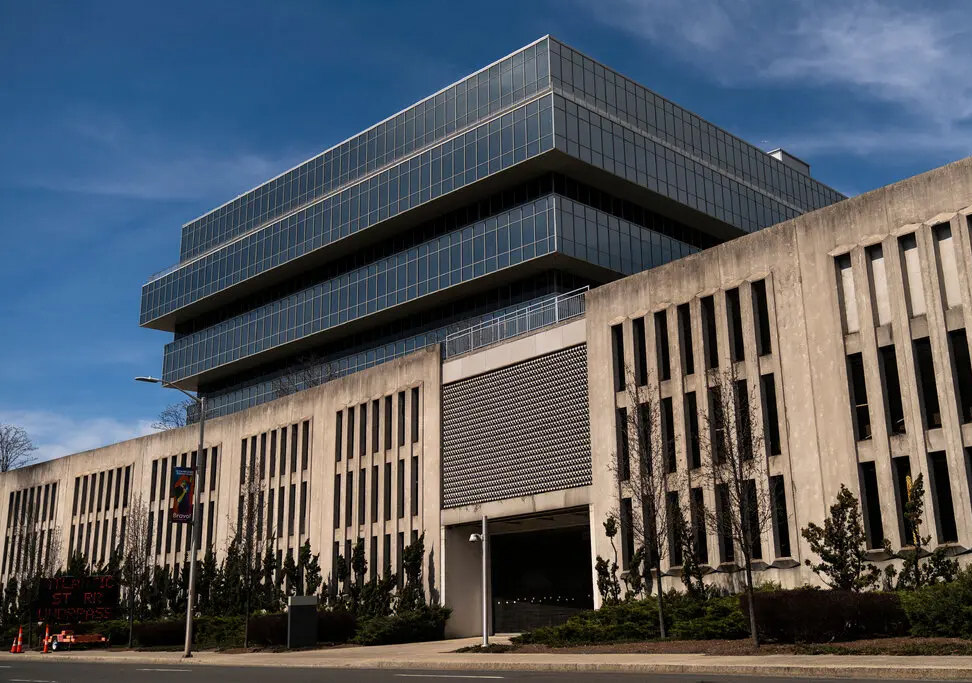
Purdue Pharma's headquarters in Stamford, Connecticut
(Photo by Drew Angerer, Getty Images, via The New York Times)
A federal appeals court has approved a settlement by Purdue Pharma, the maker of OxyContin, that protects its billionaire owners, the Sackler family, from future lawsuits. The Sacklers would give up the company, which would take the new name Knoa, "with its profits being sent to a fund to prevent and treat addiction," reports Geoff Mulvihill of The Associated Press.

"Family members would also contribute $5.5 billion to $6 billion in cash over time, or about half of what the court found to be their collective fortune, much of it held offshore. At least $750 million of that money is to go to individual victims of the opioid crisis and their survivors. Payments are expected to range from about $3,500 to $48,000."

Tuesday’s decision by The U.S. 2nd Circuit Court of Appeals in New York also protects the family from lawsuits "over the toll of opioids, even though they did not file for bankruptcy," AP notes. "The court’s ruling reversed a 2021 ruling that found bankruptcy court judges did not have the authority to approve a settlement that would offer bankruptcy protections for those who have not filed for bankruptcy."

The deal "would end claims filed by thousands of state, local and Native American tribal governments and other entities," AP reports. "Sackler family members have been clear that without the protections, they won’t hold up their part of the deal. . . . Several states had withheld support for the plan, but after a new round of negotiations last year, all of them came on board."

The sole remaining objector was the Office of the Bankruptcy Trustee in the Justice Department, which "did not immediately say whether it would appeal Tuesday’s ruling to the U.S. Supreme Court, ask the Circuit Court to review its decision or accept the ruling as is," AP reports. "Even without an appeal, it could be months before the bankruptcy plan takes effect."

Friday, March 31, 2023

Over-the-counter Narcan will save lives by stopping drug overdoses. It'll be available this fall; price remains a hurdle.

Doses of Narcan brand of naoloxone in a vending machine
(Photo by Erin Schaff, The New York Times)
Every first-aid kit and family medicine box will need this: Narcan. That's the brand name of a prescription nasal spray, naloxone, that reverses opioid overdoses. The Food and Drug Administration approved the medication for over-the-counter sales, a move long sought by public-health officials and treatment experts, reports Jan Hoffman of The New York Times. "With overdoses and overdose fatalities occurring in college dorms, public libraries, households, night clubs and restaurants, public-health advocates hope that naloxone nasal sprays will soon become a staple. . . . By late summer, over-the-counter Narcan is expected to be for sale in big-box chains, supermarkets, convenience stores, gas stations and online retailers. New York City plans to install Narcan vending machines later this year."

Narcan is easy to give, works quickly, and has no adverse side effects. Hoffman explains, "Bystanders who see that a person slumped over is unresponsive to shaking and shouting, with slowed breathing — signs of a possible overdose — only have to unwrap the palm-size device, insert the tip into the person's nostril and depress the plunger. In most situations, the medication revives the person within two or three minutes. . . . Narcan will not work if the person has taken nonopioid drugs like methamphetamines or xylazine, an animal tranquilizer that has been infiltrating street drug supplies."

Price could be a hurdle. "Although over-the-counter status will make Narcan more widely available, the cost of the medicine could deter many. Currently, a two-dose pack of prescription Narcan is often free to people covered by Medicaid or private insurance or has a co-pay of less than $10," Hoffman reports. "But public and private insurance programs do not cover most over-the-counter medicines. Whether an exception will be made for Narcan could take months to resolve," Hoffman writes, "The company that makes Narcan, Emergent BioSolutions, declined to disclose the price it plans for an over-the-counter version, which will take several months to relabel and repackage."

The FDA is aware of the cost barrier, and is "urging other manufacturers of prescription naloxone to apply for over-the-counter approval, which could make pricing more competitive," Hoffman reports. Dr. Patrizia Cavazzoni, director of the FDA's Center for Drug Evaluation and Research, told Hoffman, "We will work with any sponsor seeking to market a nonprescription naloxone product. . . . [they urged manufacturers] to contact the agency as early as possible to initiate discussions."

Dennis Cauchon, president of Harm Reduction Ohio, a nonprofit group that distributes free naloxone doses, told Hoffman: "All naloxone should have been moved over the counter. . . . Now you have the expensive version available without a prescription, but the cheaper versions need a prescription. It's important that the brand name Narcan be priced much lower over the counter than it is now. The price needs to be less than $30 for a two-dose kit, preferably much lower."

Monday, January 30, 2023

Farmer who grew up dirt poor secretly paid for neighbors' prescriptions; he's gone, but legacy of giving is spreading

Hody Childress and daughter Tania Nix (Photo by Ronald Nix)
The kindness of strangers, it seems like a fable . . . or so croon the lyrics of an old Susan Ashton melody.

In Geraldine, Alabama, pop. 910, this fable came to life: "Every month for more than a decade, a local farmer, Hody Childress, had made anonymous cash donations to the pharmacy, Geraldine Drugs, aiming to help neighbors struggling to pay for prescription medication," reports Emily Schmall of The New York Times. "The wider community learned of his good deed only after he died at 80 in January. Now, his family and donors from across the United States have vowed to continue his legacy."

Schmall shares a recent example: "When the doctor saw what a hornet sting had done to Eli Schlageter, 15, causing his mouth and throat to swell, his advice to Eli’s parents was unequivocal: Get an EpiPen. . . . But they were stunned to learn that a single dose of the lifesaving drug cost $800 . . . So, to help the family, the pharmacist, Brooke Walker, turned to an envelope full of carefully folded hundred-dollar bills from an anonymous donor."

Childress's giving often made a difference. "Over the years, Dr. Walker said, the fund had helped at least two people a month who didn’t have insurance or whose benefits didn’t cover their prescription medicine," Schmall reports. Eli Schlageter's mother, Bree Schlageter, told Schmall, “What he doesn’t know, now that he’s in heaven, is that he helped a kid that works on a farm that he started. Look at that circle.”

Geraldine and DeKalb County (Wikipedia)
Now it spawns other circles. "Ms. Nix and her family and Dr. Walker have received calls and messages on social media from people across the United States wanting to donate," Schmall reports. "Last week, Dr. Walker received a check from someone in Tennessee. On Monday, a person called from Miami. He told her that unless she needed the money, he was going to approach his local pharmacy and start his own Hody Childress account."

Childress "grew up poor, surviving with his family on subsistence farming and by hunting small game," Schmall reports. His son said the house had no electricity until his father was about 7. His daughter, Tania Nix, said, “Giving that way, that just got on his heart and he felt like he needed to do it.”

UPDATE, Feb. 3: Nix and her brother told Steve Hartman of CBS that their father was "nearly broke" at his death because he had spent $10,000 or more helping people pay for prescription drugs.

Friday, December 02, 2022

Officials, advocates push more rural health-care providers to prescribe Suboxone (buprenorphine) for drug addiction

Bonnie Purk, left, meets with nurse practitioner Andrea Storjohann at the
Primary Health Care clinic in Marshalltown, Iowa. (Photo by Tony Leys, KHN)
More than 150 people a day die of overdoses related to synthetic opioids such as fentanyl, and disproportionate share of the dead will be from rural areas, according to the Centers for Disease Control and Prevention. Given the magnitude of loss and the prevalence of fentanyl in most illicit drugs, more rural medical providers are prescribing buprenorphine for patients struggling to end their addictions, and treatment advocates are pushing them to do more, Tony Leys reports for Kaiser Health News: "The number of U.S. health care providers certified to prescribe buprenorphine more than doubled in the past four years. Treatment advocates hope to see that trend continue."

Buprenorphine, best known by the brand Suboxone, "does not cause the same kind of high as other opioid drugs do, but it can prevent the debilitating withdrawal effects experienced with those drugs," Leys notes. "Without that help, many people relapse into risky drug use.

Such “maintenance treatment” has been done mainly with methadone, but it "is tightly regulated, due to concerns that it can be abused," Leys explains. "Only specialized clinics offer methadone maintenance treatment, and most of them are in cities. Many patients starting methadone treatment are required to travel daily to the clinics, where staffers watch them swallow their medicine."

Federal approval of Suboxone in 2002 helped smaller towns, but physicians have been slow to get certified to prescribe it. Recently, "Federal regulators have made it easier for doctors, nurse practitioners, and physician assistants to become certified," and "have encouraged more front-line health care professionals to prescribe Suboxone and other medications containing buprenorphine." Congress could relax the rules even further in must-pass legislation next week.

The spread of fentanyl has complicated the effort to expand the treatment. Patients "can suffer severe withdrawal symptoms when they begin taking buprenorphine, so health practitioners must be careful when starting the treatment," Leys reports. "In Iowa, officials designated $3.8 million from the state’s initial share of opioid lawsuit settlement money for a University of Iowa program that helps health care providers understand how to use the medications.

Andrea Storjohann, a nurse practitioner in Marshalltown, Iowa, a town of 27,000, works in a repurposed grocery building, with "no signs designating it as a place for people to seek treatment for drug addiction, which is how Storjohann wants it," Leys writes. Until recently, “We were kind of a unicorn in this part of the state, but that is changing,” Storjohann told Leys.

Still, treatment may be hard to find. The public database of providers certified to prescribe buprenorphine treatment "lists only providers who agree to include their names," Leys reports. "Many do not do so. In Iowa, only about a third of providers with the certification have agreed to be listed on the public registry, according to the Iowa Department of Health and Human Services."

Wednesday, November 02, 2022

CVS, Walgreens in tentative deal to pay state and local governments billions for opioid crisis; Walmart still in talks

"CVS Health and Walgreen Co. announced agreements in principle Wednesday to pay about $5 billion each to settle lawsuits nationwide over the toll of opioids, and a lawyer said Walmart is in discussions for a deal, reports Geoff Mulvihill of The Associated Press. "The developments amount to what could be the last round of huge settlements after years of litigation over the drug industry's role in an overdose epidemic that has been linked to more than 500,000 deaths in the U.S. over the past two decades."

The epidemic had its roots in rural areas, especially Appalachia. "Most of the deaths initially involved prescription drugs," Mulvihll notes. As governments, doctors and companies took steps to make them harder to abuse and obtain, people with opioid use disorder increasingly switched to heroin, which proved more deadly. In recent years, opioid deaths have soared to record levels around 80,000 a year. Most of those deaths involve illicitly produced version of the powerful lab-made drug fentanyl, which is appearing throughout the U.S. supply of illegal drugs."

The lawsuits by state and local governments alleged that drugstores were filling prescriptions they should have recognized were inappropriate, largely because there were so many of them.

The proposed deal would have CVS pay the governments $4.9 billion and Native American tribes about $130 million over a decade, Mulvihill reports: "Walgreens would pay $4.8 billion to governments and $155 million to tribes over 15 years. The exact amount depends on how many governments join the deals. The deals call for most of the funds . . . to be used to fight the opioid crisis. CVS announced its plan along with an earnings report Wednesday, and Walgreens made an SEC filing with some details. . . . Neither CVS nor Walgreens is admitting wrongdoing."

Paul Geller, a lawyer for the governments, said talks are continuing with Walmart, which has a large pharmacy business and a disproportionate share of rural retail.

"The proposed pacts bring a nationwide tally of finalized and completed settlements between companies and governments to more than $50 billion," Mulvihill reports. "The settlement was announced as litigation over the role of pharmacies in the opioid crisis has ramped up. On Tuesday, 18 companies — most of them pharmacy-related — submitted reports to a judge overseeing opioid litigation detailing where they face lawsuits. Only a handful of opioid settlements have had bigger dollar figures than the CVS plan. Distributors AmerisourceBergen, Cardinal Health and McKesson this year finalized a combined settlement worth $21 billion and drugmaker Johnson & Johnson finalized a $5 billion deal. Purdue Pharma, the maker of OxyContin, and members of the Sackler family who own the company have a proposed settlement that would involve up to $6 billion in cash, plus the value of the company, which would be turned into a new entity with its profits used to combat the epidemic. That plan has been put on hold by a court."