Showing posts with label infants. Show all posts

Friday, May 29, 2026

Babies delivered at rural hospitals can receive specialized neonatal care through a unique telehealth program

A newborn baby's care team can get live, immediate help
from a neonatologist with TeleICN. (Dartmouth photo)
A pregnancy delivery in a rural hospital far away from specialized care poses significant risks for a baby born with complex needs. In Vermont and New Hampshire, Dartmouth Health created TeleICN, a unique telehealth program that connects rural medical providers to neonatologists who can help manage a baby's health during and after delivery, reports Christopher Cheney for Healthleaders.

As more rural hospitals have cut services to save money, many have shuttered their labor and delivery units. In the case of an emergency delivery, EMS will take a pregnant patient to the nearest emergency department, where a rural care team can "connect to the TeleICN program using an iPad or making a phone call," Cheney explains.

Tapping into TeleICN is similar to using FaceTime. The program allows a neonatologist to "talk with the local teams, look at the baby via video, and work with the mom and their family members to make decisions about the next steps in care for babies," Cheney reports. TeleICN can "connect local care teams to a neonatologist virtually on a 24/7 basis, and it serves 16 rural hospitals in New Hampshire and Vermont."

Katelyn Darling, a director at Dartmouth Health, shared the varying levels of care TeleICN often provides, saying, "Sometimes, they know a mom in labor is on the way to their hospital, and they want us to help them prep the care room. Sometimes, they want us in the background to support them. Sometimes, they want us on the frontline making decisions about care."

Because the TeleICN has been so successful, Dartmouth expanded its virtual obstetrics care with its new TeleMFM program. Cheney explains, "The focus is on high-risk obstetrics care and fetal-maternal medicine services, with the goal of reducing the need for patients to travel long distances. … Patients can go to a clinic associated with a rural hospital and get connected to a TeleMFM provider."

Jessica Clem, TeleICN's medical director, told Healthleaders, "What we are trying to do is provide equitable care in New Hampshire and Vermont, particularly for rural communities."

Friday, February 27, 2026

U.S. infant formula needs an overhaul, but progress has been slow

More than half of U.S. babies rely on formula for 
nutrition for at least the first 6 months of life.
U.S. baby formula is currently under review by the Food and Drug Administration, an examination considered long overdue by many health professionals, nutrition experts and parents. The FDA plans to "release [its] study results in April examining contaminants in formula and suggested the current list of required nutrients is outdated," reports Sabrina Siddiqui of The Wall Street Journal

It's estimated that more than half of babies born in the U.S. rely on infant formula as their primary form of nutrition, with families that are lower income, of color, or rural more likely to use formula


Through the "Operation Stork Speed” initiative, Health and Human Services Secretary Robert F. Kennedy Jr. has said he's making a U.S. baby formula overhaul a priority; however, supporters of formula changes believe the promised overhaul has been slow getting off the ground. Siddiqui writes, "Industry representatives and pediatric experts who have consulted. . . on the initiative say communication has slowed and visibility into the process has been limited."


Formulas fed to American babies today have come under scrutiny for containing seed oils, sugar, corn syrup, arsenic and heavy metals. Parent advocacy groups have often pushed for formula recipes to mirror those used in Europe.

But U.S. formula manufacturers defend their use of seed oils "because they provide key fats babies need to grow, including linoleic acid — a nutrient that is also found in breast milk and required in all formulas," Siddiqui explains. Many scientists and physicians contend that it would be difficult to replace seed oils, which are also used in European formulas, and have long been regarded as safe.

Tuesday, October 29, 2024

A simpler assessment tool for newborns exposed to opioids means more mom time and fewer medications

Cailyn Morreale continued using buprenorphine during her pregnancy. Once her baby was born, the two were never separated. (Photo by Taylor Sisk, KFF Health News)
A new approach is helping mothers recovering from opioid addiction and newborns with opioid exposure stay together after birth. Historically, babies born with opioid exposure have been separated from their mothers and received heavy medications in neuro-intensive units, but "research has since indicated that in many, if not most, cases, those extreme measures are unnecessary," reports Taylor Sisk of KFF Health News. "A newer, simpler approach that prioritizes keeping babies with their families called Eat, Sleep, Console is being increasingly embraced."

Over the past decade, how pregnancy pairs with addiction treatment has changed, meaning most women can continue to take addiction-recovery medication throughout pregnancy. For Cailyn Morreale, a West Virginian from rural Mars Hill, the new methods helped her continue her recovery medicine, buprenorphine, and her care team assured her "that her baby would be assessed and monitored using the Eat, Sleep, Console approach," Sisk explains. "Morreale was never separated from her son. She was able to begin breastfeeding immediately. She was told, the trace of buprenorphine in her breast milk would help her son withdraw from it."

The Eat, Sleep, Console method is slowly replacing the older Finnegan Neonatal Abstinence Scoring System, which involved 21 evaluative questions. Sisk writes, "David Baltierra, former director of West Virginia University’s Rural Family Medicine Residency Program, chair of WVU’s Department of Family Medicine, suggests this protocol could simply be called 'parenting.' Baltierra and his colleagues have been training residents to use an Eat, Sleep, Console approach for a decade. . . .The results are persuading more health professionals to adopt the method."

A 2023 study found "babies treated this way were discharged from the hospital in nearly half the time and less likely to receive medication than those receiving Finnegan-based care," Sisk reports. "Matthew Grossman, an associate professor of pediatrics at the Yale School of Medicine, found a non-pharmacological-first approach works best. He said the Finnegan tool is useful but often too rigid. Under its scoring, one sneeze too many could send a baby to the NICU for weeks."

Research by Leila Elder and Madison Humerick, who each did their residency in WVU’s rural program, "found that median stays for newborns in withdrawal dropped from 13 days in 2016 to three in 2020," Sisk adds. "The simpler treatment also means more babies born in rural communities can receive care closer to home and has reduced the likelihood a mother will be released before her baby is cleared to go home."

Friday, July 26, 2024

Oregon is using visiting nurses to help curb infant and new mother mortality rates; visits may have other benefits

Why babies do what they do is often a mystery.
(Photo by Chris Anderson, Unsplash)
Some of the most complicated human beings to deal with are the tiniest: babies. Often referred to as "bundles of joy" or "little miracles," babies can be cranky, impossible to calm and impervious to sleep.

With that backdrop, it's fair to say new parents have it tough, and many lack the resources they need to confidently care for a newborn, which can lead to stress, emergency department visits, and even neglect or abuse. To address these needs and provide a response to high infant and mother fatality rates, the state of Oregon implemented an evidence-based program called "Family Connects" that makes life with a newborn better for everyone, reports Cory Turner of NPR. "The program offers any family with a new baby up to three no-cost visits at home with a trained nurse."

After the birth of their first child, Matt and Amber Luman from rural Jefferson County, Oregon, chose to participate in Family Connects. Turner writes, "Matt and Amber seem genuinely relieved when [Nurse] Ibrahim arrives for her second home visit with them." After baby Esserley gets a thorough medical check, "comes the beating heart of any Family Connects visit: the chance for new parents to ask a registered nurse whatever they want. . . . Some share their confusion or frustration. Others are eager for advice or comfort in those early weeks of a baby’s life when new parents are most likely to feel exhausted and adrift."

Most new parents need all the help they
can get. (Photo by T. Heftiba, Unsplash)
The Oregon Health Authority based the state's program on a small, successful Family Connects model developed in Durham, N.C. "Research from its smaller rollout there found it was associated with a handful of significant benefits, including a big drop in the number of trips new parents were making to the emergency room," Turner reports. "A study of Family Connects in Durham found mothers in the program were 30% less likely to experience possible postpartum depression or anxiety."

Oregon policymakers used the Durham program model and expanded it to a statewide outreach. "Every nurse acts as a kind of human clearinghouse of local and regional support for caregivers," Turner explains. "If a family is struggling with housing or food insecurity or addiction, the nurse will connect them with local groups and agencies that can help. Mental health counseling, marriage counseling, child care while mom or dad finishes their degree online."

In Durham's smaller rollout, the program "suggested a real return on investment," Turner reports. "Rolling out Family Connects in Oregon has been a costly struggle." From the pandemic to the nursing shortage to trying to cover a state that can be widely rural, Oregon's program has been expensive. It remains to be seen if the "benefits of Family Connects will outweigh the costs."

Friday, November 03, 2023

'Too many babies are dying in the United States'; infant mortality rates rise for the first time in 20 years

The U.S. infant mortality rate is twice that of other
developed countries. (Photo by Jill Sauve, Unsplash)
Over the past two decades, American medicine has made dramatic advances in cardiac care, obesity medicines and organ transplant success rates, but in a sad marker, "the death rate for babies rose for the first time in 20 years," reports Liz Essley Whyte of The Wall Street Journal. According to the Centers for Disease Control and Prevention, "The rate of babies dying in the U.S. increased 3% from 2021 to 2022. . . . The rate increased from 5.44 infant deaths for every 1,000 births to 5.6 in 2022, a statistically significant uptick."

U.S. infant mortality rate is strikingly high at "double that of many developed countries," Whyte notes. "Globally, baby death rates have fallen for decades, though five countries that have reported their rates this year recorded increases for last year. . . . The death rate for women who give birth has also been rising in the U.S. Researchers who study the issues said the pair of trends indicate more women giving birth are facing challenges getting proper care."

Arjumand Siddiqi, a University of Toronto professor who studies population health, told Whyte, "The U.S. is falling behind on a basic indicator of how well societies treat people. In a country as well-resourced as the U.S., with as much medical technology and so on, we shouldn't have babies dying in the first year of life. That should be super rare, and it's not."

American medicine needs to do the basics
better. (Photo by Filip Mroz, Unspash)
The maternal-infant relationship has complex layers, but it begins with how healthy the mother is. "Complications during pregnancy was one of the fastest-rising causes of infant death, the CDC said, along with dangerous bacterial infections called sepsis," Whyte explains. Researchers cited premature births as one likely contributor to the increase, along with poor nutrition throughout pregnancy.

The CDC reports infant-mortality rates every three months. "Its latest report compared birth and death certificate data from 2021 to provisional data from 2022," Whyte adds. "The report didn't give reasons why the rate was increasing, and researchers said they would have to do more studies to determine the root causes." Dr. Elizabeth Cherot, chief executive of the infant and maternal health nonprofit March of Dimes, told Whyte: "We, as a developed country, should be doing some of the basics better. Too many babies are dying in the United States."

Monday, June 26, 2023

What is milk? Experts have lots of answers, none very clear; infant formula lacks what has evolved over millions of years

Explaining mammalian milk seems impossible.
(Photo by Marcel Christ, Gallery Stock via The Atlantic)
It's much easier to answer the question "Where's the beef?" than "What is milk?"

Milk is a mystery. "No one can really describe what milk is—least of all the people who think most often about it," reports Katherine J. Wu of The Atlantic. "They can describe, mostly, who makes it: mammals (though arguably also some other animals that feed their young secretions from their throat or skin). They can describe, mostly, where it comes from: mammary glands . . . They can even describe, mostly, what milk does: nourish, protect, and exchange chemical signals with infants to support development and growth."

“It’s the defining feature of mammals,” University of Washington anthropologist Melanie Martin told Wu, who begins her story this way: "If an alien life form landed on Earth tomorrow and called up some of the planet’s foremost experts on lactation, it would have a heck of a time figuring out what, exactly, humans and other mammals are feeding their kids," Wu writes. The composition of milk is elusive; from nutritionists and academics Wu got such vague descriptorsas "ecological system," "nutritional instrument, and "the result of the evolutionary selective pressure on a unique feeding strategy." 
 . . . None of these characterizations were bad. But had I been that alien, I would have no idea what these people were talking about."

Mammalian milk is unique, Wu writes:"Millions of years of evolutionary tinkering that have turned it into a diet, and a developmental stimulus, and a conduit for maternal-infant communication, and a passive vaccine. It builds organs, fine-tunes metabolism, and calibrates immunity. . . . Among some primates, it influences infants playfulness and may shape their sleep habits and bias them toward certain foods. Some of its ingredients are found nowhere else in nature; others are indigestible. Still, others are alive."

And few things are as adaptive as mammals' milk. "It remodels in the hours, days, weeks, and months after birth; it changes from the beginning of a single stint of feeding to the end," Wu reports. "Human milk—like other primate milk—is on the watery, sugary side. But its concentrations of immunity-promoting ingredients have no comparator. It bustles with defensive cells; it shuttles a stream of antibodies from mother to young, at levels that in some cases outstrip those of other great apes’ milk by a factor of at least 10. . . . The sheer defensive firepower in our species’ milk is probably a glimpse into the challenges in our past, as humans crowded together to plant, fertilize, and harvest mass quantities of food and invited domesticated creatures into our jam-packed homes."

We know all that, but "We don’t actually know that much about milk," such as its normal values in humans, E. A. Quinn, an anthropologist at Washington University, told Wu, who writes, "Milk’s enduring enigmas don’t just pose an academic puzzle. They also present a frustrating target—simultaneously hazy and mobile—for infant formulas that billions of people rely on as a supplement or substitute." Martin told her, "No human recipe can replicate what has evolved" over hundreds of millions of years.

Infant formula does "the nourish part really well. . . . The protect and communicate part is where we start to fall short,” University of Rochester infant-nutrition researcher Bridget Young told Wu, who writes: "Differences in health outcomes for breastfed and formula-fed infants, though they’ve shrunk, do still exist: Milk-raised babies have, on average, fewer digestive troubles and infections; later in life, they might be less likely to develop certain metabolic issues."

Wu concludes, "The biggest hurdles in infant feeding nowadays, after all, are more about access than tech. Many people—some of them already at higher risk of poorer health outcomes later in life—end up halting breastfeeding earlier than they intend or want to because it’s financially, socially, or institutionally unsustainable. Those disparities are especially apparent in places such as the U.S., where health care is privatized and paid parental leave and affordable lactation consultants are scarce, and where breastfeeding rates splinter unequally along the lines of race, education, and socioeconomic status." Katie Hinde of Arizona State University's School of Human Evolution and Social Change told Wu, “Where milk matters the most, breastfeeding tends to be supported the least. If milk is a singular triumph of evolution, a catalyst for and a product of how all mammals came to be, it shouldn’t be relegated to a societal luxury."

Thursday, May 25, 2023

The vast gaps between deaths of black and white babies in Southern states look like a crisis with no clear solution

Photo by E+, Getty Images, via KFF Health News
Black babies in Southern states have a much higher risk of dying in their first year than white infants. The South is "where infant mortality is by far the highest in the country, with Mississippi's rate of 8.12 deaths per 1,000 live births ranking worst. . . . Nationally, the average is about 1% for Black infants and less than 0.5% for white infants," reports Lauren Sausser of KFF Health News. Even Southern states making progress still have big gaps: "In Florida and North Carolina, the Black infant mortality rate is more than twice as high."

The figures "reflect politics," Sausser writes. "They're a direct product of generational poverty and racism. . . . Often, babies die under circumstances that state, communities, and parents can help control, like making sure infants don't suffocate in beds or in unsafe cribs or extending health coverage so that young women can afford to see a doctor before they become pregnant. In many of these respects, the South is failing."

Addressing the problem means understanding the causes, and that has been difficult. "Multimillion-dollar programs to improve South Carolina's numbers over the past decade have failed," Sausser reports. "To make things more complicated, separate state agencies have reached different conclusions about the leading cause of infant death." To address prenatal care deficits, "South Carolina and several other states recently extended postpartum Medicaid coverage for women who give birth, which means their coverage remains in place for one year after delivery. Historically, Medicaid coverage was cut off 60 days after having a baby," Sausser writes. "Even when they become pregnant and are newly eligible for Medicaid, it isn't unusual for women in South Carolina to put off seeing a doctor until the third trimester, physicians told KFF Health News. These women can't afford to take time off work, can't find child care, or don't have a car, among other reasons."

Wednesday, November 16, 2022

It's only November, but flu strains and RSV are already busy

Heading into the holiday season, it's good to remember that this year's flu season is already in full swing with the "triple threat" of influenza, Covid-19 and respiratory syncytial virus (RSV).

RSV arrived early this year, which makes its cycle harder to predict, writes Katelyn Jetelina in her Your Local Epidemiologist newsletter: "Historically, the RSV season lasts five months. It will be interesting to see how the holidays impact RSV patterns. Typically RSV peaks in January, but because it has arrived so early, we are in new viral dynamic territory." The disease poses the greatest threat to infants and seniors.

Centers for Disease Control and Prevention map

This year's dominant flu strain is potent, but there have been some early and limited but encouraging signs, Jetelina reports: "There is good news from the Southern Hemisphere among countries that just concluded their flu season. Chile, for example, found the flu vaccine is a good match for the current strain. They are reporting a 49% efficacy rate," Jetelina reports, "But only 28% of Americans are vaccinated against the flu. This is almost 10 percentage points lower than pre-pandemic rates, which is frustrating."

American hospital systems have already been stressed by Covid-19 and early RSV. Jetelina reminds her readers that people can get infected with more than one virus at a time and taking precautions like staying home when sick and updating vaccinations can keep you and others out of the hospital.

Thursday, November 03, 2022

Arkansas is expanding Medicaid further, with a rural focus

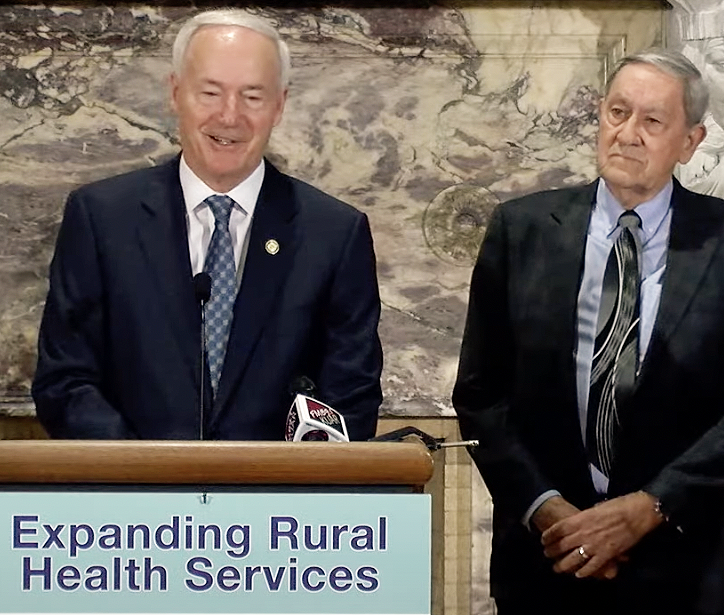
Gov. Asa Hutchinson and state Rep. Jack Ladyman
Gov. Asa Hutchinson of Arkansas, who expanded Medicaid in the largely rural and relatively poor state over objections from more conservative Republicans, is expanding it even more. A new program, financed mainly with federal money, aims to help women with high-risk pregnancies, rural residents with mental illness or substance-abuse disorders, and young adults deemed at risk for long-term poverty, such former foster children or the formerly incarcerated.
 
In announcing federal officials' approval Tuesday, Hutchinson said the program would focus primarily on rural areas: "We know that it will make a great difference for very vulnerable populations in Arkansas. . . . Arkansas’ maternal mortality rate is one of the highest in the nation. Our infant mortality rate is one of the highest in the nation."

The program "was one of the final outstanding portions of Arkansas’ Medicaid expansion waiver that the Centers for Medicare and Medicaid Services hadn’t approved," reports Hunter Field of the Arkansas Advocate. Medicaid in Arkansas is available to people in households with incomes up to 138 percent of the federal poverty level. "The program will cost north of $16 million, and as with the rest of Medicaid expansion, the state will shoulder 20% of the cost (about $3.2 million) and the federal government will cover 80%, or about $13.6 million."

State Rep. Jack Ladyman, R-Jonesboro, chairman of the House Public Health Committee, said the program would be a "game-changer. . . . We have to fix our worst problems, and we feel like these are the worst problems."

Thursday, July 14, 2022

Baby formula roundup: More robust shipments from other nations will boost supplies for low-income Americans

"New infant formula shipments landing this week from abroad will provide a small reprieve to the Biden administration and low-income Americans still struggling to find formula amid ongoing shortages," Meredith Lee reports for Politico.

Rural families enrolled in the Women with Infants and Children program are having a harder time finding formula. Read more here.

The formula shortage is also creating more stress for farmworker families. Read more here.

The Biden administration wants to permanently allow carefully vetted foreign suppliers to continue selling baby formula in the U.S. to prevent future formula shortages. Read more here.

The formula shortage highlights the fact that breastfeeding isn't an option for everyone, and that many workers don't receive the workplace support they need to do so, says one op-ed. Read more here.

A few weeks ago, Senate Republicans spiked a bill that would have protected more workers' right to breastfeed. Meanwhile, another bill that would increase job protections for pregnant workers was passed in the House in May, but has not advanced out of the Senate Committee on Health, Education, Labor and Pensions.

Friday, June 17, 2022

Abbott baby formula factory shuts down again after storm flooding; could start production again in a few weeks

Just weeks after the Abbott Nutrition baby formula plant in Sturgis, Mich., got back up and running, production has stalled again after a severe storm caused flooding in parts of the facility. "On Wednesday, the company said that it was assessing damage from the storm and cleaning the plant, which would delay production and distribution for a few weeks, but that it had sufficient supplies of EleCare and most of its specialty and metabolic formulas to meet demand until new formula is available," Christine Hauser reports for The New York Times

Food and Drug Administration Commissioner Robert M. Califf "said that the agency had been informed about the stoppage but that it was not expected to have much impact, given increased imports of formula as well as production by Abbott and other manufacturers," Hauser reports. The plant is expected to be up and running again in a few weeks. 


Thursday, May 19, 2022

Formula roundup: House passes bills to help FDA, expand WIC choices; Biden invokes Defense powers; plant could reopen soon; some infants and children hospitalized

Here are some significant new developments in the baby formula shortage:

Abbott Laboratories reached an agreement Monday to reopen its Sturgis, Michigan plant in the next few weeks, pending federal inspectors' approval. Today Food and Drug Administration commissioner Robert M. Califf told a House appropriations subcommittee that he expects the plant to be open again within two weeks, and begged for more funding so the agency can cope with its workload, Laura Reiley reports for The Washington Post.

"President Biden took urgent action on Wednesday to address the nationwide baby formula shortage, invoking the Defense Production Act to increase production and creating 'Operation Fly Formula' to deploy Defense Department planes and speed formula shipments into the United States from overseas," Annie Karni and Emily Cochrane report for The New York Times. "The White House announced its plan only hours before the House took action of its own, approving an emergency infusion of $28 million for the Food and Drug Administration and a bill to loosen restrictions on what kind of formula can be purchased through the federal food aid program for women and babies."

The $28 million is meant to help the FDA "beef up inspections of formula made at foreign plants and to guard against any future shortages by ensuring the agency is prepared for supply chain disruptions," Nathaniel Weixel and Mychael Schnell report for The Hill. The bill passed on a mainly party-line vote, though 12 Republicans supported the bill in defiance of party leadership.

House Minority Whip Steve Scalise (R-La.) urged House Republicans to oppose the bill, saying it was reckless spending that would provide political cover for the Biden administration while failing to hold the FDA accountable. "House Republicans knocked Democrats for giving money to the FDA without guardrails and without forcing the agency to develop a concrete plan to solve the shortage. At least two House committees are investigating manufacturers and the FDA," Weixel and Schnell report. However, "Democrats argued the FDA does not have enough resources to adequately inspect foreign manufacturers and make sure they meet agency safety standards. The $28 million in emergency funding would make sure the agency can handle those inspections quickly."

A recent Politico investigation found several reasons for the FDA's failure to quickly catch problems at the Abbott plant. The FDA has been underfunded for years, its leaders tend to have far more experience with regulating medications than food, and Trump-era changes in leadership left the agency adrift and—in some cases—caught up in turf wars between feuding officials. All of this happened as the agency was under unprecedented pressure to examine coronavirus vaccines, tests, and treatments.

Meanwhile, some babies and children have already been hurt by the shortage. Doctors in East Texas say they've treated infants who had had seizures after their parents fed them watered-down formula in an effort to stretch their supply. Watered-down formula (or homemade recipes) can endanger babies. And at least two children with intestinal conditions have been treated in a Tennessee hospital because their parents couldn't find the special formula they needed. The formula shortage affects children and even adults with medical conditions that leave them unable to digest regular food. It also disproportionately affects low-wage and other disadvantaged families, Mariel Padilla reports for The 19th. Rutgers University assistant history professor Carla Cevasco spoke with Padilla about the long-standing structural issues that have left low-income families more vulnerable to formula shortages.

Monday, May 16, 2022

The nationwide shortage of baby formula is probably hitting rural families hardest. Here's what they need to know.

Families nationwide are scrambling to find baby formula amid a widespread shortage. Rural families are likely having an even harder time since there are fewer local places to buy formula, and because families who use federal assistance can only buy certain formulas. It's even more difficult to find certain medically necessary specialty formulas. Here's what you—and your readers—need to know:

What happened: In February the Food and Drug Administration ordered Abbott Nutrition, the nation's leading formula maker, to shut down its plant in Sturgis, Michigan, after four infants were hospitalized with bacterial infections from contaminated formula and two of them died. The FDA issued a voluntary recall on three products (Similac, Alimentum, and EleCare) and warned customers not to use certain specialty formulas produced at the facility, but the warning didn't get much public attention, so parents didn't know to stock up. Formula was already low in stock since at least December because of inflation, supply-chain shortages and product recalls. 

How bad is it? Formula stockpiles in stores are 43 percent lower than normal, compared to 30-40% short in April, says retail data tracker Datasembly. Only about a quarter of children are exclusively breast-fed up to the age of six months, so most parents and caregivers depend at least partially on formula. 

Why not buy another brand? Almost all formula in the U.S. is manufactured domestically because of strict FDA standards, and 90% of the nation's supply comes from four companies. Abbott makes over 40% and Perrigo Nutritionals, Mead Johnson, Gerber (owned by Nestlé) combined account for another 50%. Perrigo makes store-brand formulas for stores such as Walmart, Kroger and Walgreens but that formula can't be purchased by people using federal assistance through the Women, Infants and Children nutrition program, which pays for about half of all formula. In addition, many babies require specialty formulas and can become very sick if they switch.

Why not breastfeed? Many babies who require specialty formulas can also get sick from drinking breast milk. Adoptive families and many others also have difficulty accessing or affording a reliable supply of breast milk, and some survivors of sexual violence may find it traumatizing. Some mothers find it difficult to maintain a steady supply of milk, and others can't breastfeed at all because they must take medications that would taint the milk. Though state and federal laws protect women's right to breastfeed in public—including at work—many women are embarrassed, intimidated, or even discouraged from the practice, and many women are not knowledgeable about the health benefits of breast milk.

Is homemade baby formula a safe alternative? No. Homemade formulas can be too high in sodium, too low in calcium, contaminated, and/or lack critical nutrients. Babies can suffer long-term damage after using homemade formula alternatives or straight cow's milk for even a few days, according to the National Committee on Nutrition for the American Academy of Pediatrics. It's also dangerous to dilute baby formula with too much water. If there is absolutely no other alternative, formula made for toddlers can be ok for a few days for infants who are close to a year of age. 

How long could the shortage last? At least 10 weeks. On Monday the FDA agreed to allow Abbott to reopen its Sturgis plant within two weeks, as long as it passes a safety inspection. After that it will take six to eight weeks for formula to hit store shelves. However, inspectors say there are still problems at the plant. In the meantime, Abbott says it's shipping in formula from its FDA-registered plant in Ireland on a daily basis. The FDA has been allowing more formula imports meant for the U.S. since February, and is now allowing some formula meant for foreign markets to enter the U.S., but only after a safety evaluation.

Could this have been prevented? Growing evidence indicates the FDA failed to act quickly about warnings of safety violations at the Sturgis plant. A whistleblower at the plant warned the FDA in October about safety problems, weeks after the children were hospitalized with bacterial infections, but the agency didn't interview the whistleblower until December and didn't inspect the plant until Jan. 31. That dovetails with a recent Politico investigation that revealed deep-seated issues with the FDA's plant inspections. Current and former employees described the agency as slow to make decisions and lacking enough staff or budget for years to deal with the modern food system even as its regulatory responsibilities have grown.

What the government is doing now: The FDA is expediting and streamlining some of its approval processes to speed up production. The Biden administration and lawmakers from both parties are also urging the Federal Trade Commission and state attorneys general to keep an eye out for price-gouging and increase formula imports to increase the domestic supply. The House Appropriations Committee will hold a hearing this week before introducing an emergency supplemental funding bill to help address the shortage. Late Monday, Abbott and the FDA announced an agreement to reopen the plant, but the company said it would be well over a month before new product ships from the site.
 
What the administration is not doing: Some right-wing politicians and pundits have blamed the Biden administration for the shortage, but no single politician or administration is causing the problem. Biden has also been accused of stockpiling baby formula for undocumented immigrants being detained at the border while American families go without. In fact, the Biden administration is following the law in shipping a limited supply of formula to infants at the border, as the Trump administration did. 

In the meantime, if you need formula, here are some do's and don'ts:
  • Check with your church or local nonprofits to see if they have any.
  • Shop online from reliable sources. 
  • Don't make your own.
  • Don't hoard formula.
  • Network with other families on social media.

Tuesday, April 05, 2022

Canadian study links living near hydraulic-fracturing wells before and during pregnancy to poor birth outcomes

Hydraulic-fracturing wells in relation to
communities in Alberta, 2013-2018
(University of Calgary map)
A newly published study adds to growing evidence that living near hydraulic fracturing wells can harm infants and children. University of Calgary researchers studied nearly 35,000 pregnancies in rural Alberta from 2013 to 2018, and found that people who lived within 10 kilometers of 100 or more fracking sites in the year before getting pregnant were significantly more likely to give birth to infants who were premature and/or small for their gestational age.

"Past studies conducted in California and Pennsylvania have linked exposure to fracking sites and risk of spontaneous preterm birth," Lei Lei Wu reports for MedPage Today. "In addition, previous U.S. studies have suggested that living near fracking sites is associated with greater risk of mortality among the elderly, as well as heightened risk of heart failure.

Several factors could explain the link between fracking wells and adverse birth outcomes, the researchers said. "The quality of water and air may be lower near fracking sites due to contamination and the constant activity of heavy trucks, they noted, adding that around 90% of rural Albertans rely on groundwater for drinking," Wu reports. "They also noted that of the 240 chemicals in fracking fluids with toxicity information available, 103 are linked to reproductive toxicity."

Tuesday, January 25, 2022

Cash aid to poor mothers benefits babies' brains, study finds

"A study that provided poor mothers with cash stipends for the first year of their children’s lives appears to have changed the babies’ brain activity in ways associated with stronger cognitive development, a finding with potential implications for safety net policy," Jason DeParle reports for The New York Times. "The differences were modest — researchers likened them in statistical magnitude to moving to the 75th position in a line of 100 from the 81st — and it remains to be seen if changes in brain patterns will translate to higher skills, as other research offers reason to expect. Still, evidence that a single year of subsidies could alter something as profound as brain functioning highlights the role that money may play in child development and comes as President Biden is pushing for a much larger program of subsidies for families with children."

Friday, January 07, 2022

Pandemic roundup: Omicron threatens economic recovery; there's good news about remdesivir; babies born to Covid-infected moms are at higher risk of health issues

Here's a roundup of recent news stories about the pandemic and vaccination efforts:

Maryland Gov. Larry Hogan declared a 30-day state of emergency Tuesday due to the coronavirus. Covid-19 hospitalizations rose more than 500% in the past seven weeks, overwhelming hospitals. 

Babies born to Covid-infected moms are 60% more likely to be born very prematurely, increasing their risk of death or long-term health problems such as cerebral palsy, asthma, hearing loss, depression, anxiety, heart disease, and kidney disease. Boys could be even more vulnerable. Read more here.

The pandemic is compounding rural hospitals' struggles with staffing and bed space. The Omicron variant is more contagious than previous iterations, but patients don't tend to get quite as ill. That means that, even when patients must go to the hospital, fewer are taking up intensive-care beds

Mounting Omicron infections among workers threaten economic recovery as businesses scramble to remain open. Read more here.

People who test positive for Covid-19 and stay home to recover and isolate are not eligible for unemployment insurance. Under federal law, Americans must be "able and available" to work to qualify for the assistance, but it's not meant to be a substitute for paid sick leave, said a Labor Department senior adviser. Read more here.

The antiviral drug remdesivir reduces recovery time in hospitalized Covid-19 patients, but a recently published study found that it's even more effective when administered earlier in the course of illness, before a patient must be hospitalized. Another recent study suggests that remdesivir could eventually be administered by inhalation instead of by infusion. That could make the drug more accessible to patients who aren't hospitalized. Two oral antiviral pills have just received emergency authorization but supplies are limited.

Though scientists have made remarkable breakthroughs in coronavirus treatments and preventatives, experts say it's just as important to increase funding for local health departments so testing, vaccines and treatments can be effectively administered. Read more here.

Friday, September 10, 2021

Covid roundup: Pediatric hospitalizations up; Christian broadcasting group's spokesman fired after pro-vax op-ed

Here's a roundup of recent news about the pandemic and immunization efforts:

The number of children hospitalized for Covid-19 has soared over the summer, especially in the least-vaccinated states, leaving some children's hospitals and intensive-care units stretched thin. Read more here and here.

Stillbirths have doubled during the pandemic in Mississippi, the least-vaccinated state. State officials have recorded 72 stillbirths (spontaneous miscarriages after 20 weeks of gestation) among unvaccinated pregnant people who were infected with the coronavirus. Eight infected pregnant people have also died over the past month. Pregnant and recently pregnant people have a higher risk of becoming severely ill from the coronavirus, studies show. Read more here.

The rate of new coronavirus infections among babies and children under age 4 recently surpassed the rate of new cases among seniors. Experts discuss what steps pregnant people and parents can take to be safe. Read more here.

The spokesperson for the National Religious Broadcasters (an association of more than 1,000 Christian new media professionals) was fired at the end of August after encouraging people to get their coronavirus vaccines in a USA Today op-ed and an appearance on MSNBC's "Morning Joe." He was fired for violating the company's policy of staying neutral on vaccination, the CEO said on social media. Read more here.

Crowded jails and prisons drove millions of coronavirus infections, a new study has found. Read more here.

Coronavirus testing, hospital stays and emergency-room visits are about to get much more expensive for many Americans, as major insurers end the temporary waivers that reduced costs. Read more here.

A recent study found that unvaccinated people are 29 times more likely to be hospitalized with Covid-19 than vaccinated people. Many vaccinated people worry about breakthrough infections, but the risk depends on factors such as overall health, where someone lives, and what other risks they take. Vaccinated people who do get infected tend to suffer only mild symptoms, if any. Read more here.

People who have survived a coronavirus infection and then gotten vaccinated have what's called "hybrid immunity," and studies show it's impressively potent—not just against the Delta variant, but possibly future variants as well. Read more here.

Experts say it's especially important to get a flu shot this year: with Covid cases surging across the country, it may be difficult to get treated if you get the flu and it takes a turn for the worse. Also, getting the flu can weaken your immune system and make you more susceptible to coronavirus infection—and getting both viruses one after the other could be dangerous. Read here for more answers to frequently asked questions.

Fully vaccinated people who get a breakthrough coronavirus infection are about half as likely as unvaccinated people to suffer from long Covid, a study has found. Read more here.

A respiratory therapist describes, in seven stages, how Covid-19 typically progresses among hospitalized patients. Read more here.

Experts recommend some tips for coping with pandemic anxiety this fall and winter. Read more here.

The share of American adults willing to get vaccinated rose 5 percentage points in the last month, according to a recent poll. Read more here.

People who were hospitalized for Covid-19 are twice as likely as usual to develop kidney disease afterward, researchers have found. Read more here.

Monday, January 04, 2021

New federal nutrition guides, which influence school lunches and food stamps, ignore experts' calls for less sugar, alcohol

New federal nutritional guidelines unveiled last week, which influence everything from school lunches and military rations to food stamps, ignored scientific advisers' calls to lower recommended sugar and alcohol intake. Agency officials said there wasn't enough evidence to advise stricter limits on sugar and alcohol, but emphasized that people should cut back on both.

"The updated guidelines are the first to include dietary advice for infants, toddlers and pregnant women," Ryan McCrimmon reports for Politico's Weekly Agriculture. "They also have a broader theme of encouraging consumers to “make every bite count” by choosing nutrient-rich foods and beverages, with five categories — fruits, vegetables, grains, dairy and protein — accounting for 85 percent of daily calories.

The Department of Agriculture and the Department for Health and Human Services have jointly released updated guidelines every five years since 1980. The federal government hired an independent panel of 20 doctors, nutritionists and public-health experts from major academic institutions to assist in creating the new guidelines. The Dietary Guidelines Advisory Committee "suggested the guidelines should take a harder line against added sugars, but USDA and HHS decided to keep the Obama-era advice that individuals try to not consume more than 10 percent of their calories from added sugars," Helena Bottemiller Evich reports for Politico. "The committee had recommended dropping the limit down even further to 6 percent."

The committee also "recommended in June that the guidelines should urge men to cut back on alcohol by reducing the government’s definition of 'moderate drinking' from two drinks per day to one. (At the time, the panel recommended keeping the definition of moderate drinking the same for women, at one drink per day.)," Evich reports. "Government officials ultimately decided to not adopt the stricter alcohol recommendation, which had sparked furious pushback and lobbying from the alcohol industry.

The dietary guidelines have long been a political football because of their influence over federal nutrition programs, Evich reports.

Friday, July 24, 2020

Study shows disparities that hurt rural children's health

Though rural living offers some benefits to health, such as increased community cohesion, many of the approximately 1 million infants and toddlers living in the rural U.S. face challenges that can hurt their health and stymie their development, Jessie Laurore, Gayane Baziyants, and Sarah Daily report for Child Trends.

The brief relies on national- and state-level data compiled by the State of Babies Yearbook 2020, which in turn gets its data from national data sets such as the U.S. Census Bureau's American Community Survey and the National Survey of Children's Health. Click here for state-level data about race, poverty, family structure, rurality, and more for infants and toddlers in each state.

Some key takeaways from the Child Trends report:

  • Rural ares have higher infant mortality and preterm birth rates.
  • Low birth weight is a significant challenge in rural areas for some states, more so than in urban areas.
  • Rural infants are less likely to be breastfed. 
  • Rural mothers are less likely receive timely prenatal care and more likely to give birth outside of the hospital. 
  • Rural infants and toddlers are less likely to receive preventative medical or dental care and less likely to receive recommended vaccines.
  • Rural infants and toddlers in low-income families are less likely to have health insurance than their urban counterparts.
The report recommends that lawmakers identify any existing barriers that rural families may face in enrolling their children in their state's Children's Health Insurance Program. CHIP covers families that make too much to qualify for Medicaid but don't earn enough to afford private health insurance. Medicaid and CHIP, which cover more than one-third of children in the U.S., can help ensure more children in rural areas can access health care, but rural families are less likely to be enrolled in CHIP.

The report also advocates options like mobile health clinics and telemedicine to increase rural access to health care. It also recommends promoting timely vaccinations for rural children and finding ways to pay for it using existing programs.

They also recommend that states identify whether there are gaps in how existing in-home visiting support programs serve rural children and families and, if so, find ways to bridge that gap.

Finally, the report recommends that states work to increase rural prenatal care by working with community hospitals, doulas, birthing centers, and mobile health clinics.

Thursday, June 18, 2020

Living near oil and gas wells linked to premature birth, especially among less-educated and non-white mothers

Living near an oil or gas well in California's San Joaquin Valley during pregnancy is linked to an increased risk of spontaneous premature birth, according to a newly published study in Environmental Epidemiology. The study may apply to the 17.6 million Americans living near active oil and gas wells throughout the U.S.

Previous studies have linked premature birth and other health problems with living near hydraulic fracturing, or fracking wells. This study, led by researchers at the March of Dimes Prematurity Center at Stanford University, focused on the San Joaquin Valley because most most oil and gas wells in California use conventional extraction methods (though some are fracking wells).

The study focused on spontaneous preterm births, meaning those that happen at least three weeks before the mother's due date for no known medical cause. Researchers examined 225,000 births from healthy mothers who lived within six miles of oil and gas wells in the San Joaquin Valley between 1998 and 2011. They found that women who lived near wells in their first and second trimesters were 8%-14% more likely to experience a spontaneous preterm birth, especially women who were non-white and/or didn't go to college, even after the researchers controlled for outside factors that could impact the health of such groups.

A secondary data analysis from Stanford's School of Earth, Energy & Environmental Sciences found a possible explanation for the preterm births: residents living near oil and gas wells may be exposed to more air pollution.