Showing posts with label forests. Show all posts

Tuesday, July 21, 2026

'Harm' under Endangared Species Act now means direct harm, not indirect, such as habitat loss; many states object

Protection of northern spotted owls in the Pacific Northwest
under the Endangered Species Act led to the end of logging
in their habitat. (U.S. Fish and Wildlife Service photo by Tom Kogut)
"The Trump administration is removing protections from the key places where endangered species live, saying states can keep the areas safe, but experts say states aren’t equipped for the task," Alex Brown reports for Stateline.

On July 10, the administration finalized regulations redefinng the word "harm" in the Endangered Species Act, to make it cover only cases where endangered animals are directly harmed. That ruled out such actvities as "logging projects that would cut old-growth trees where owls build their nests, and agriculture operations that diverted water from streams where salmon return to spawn," Brown explains.

A 2019 study of animals added to the Endangered Species List from 1975 to 2017 "found that only 17 percent of them faced threats from direct killing, while 81 percent faced habitat loss," Brown reports. The change means “You can destroy the resources a species requires as long as you don’t do it when the species is at home,” Karrigan Börk, a law professor and director of the Center for Watershed Sciences at the University of California Davis Institute of the Environment, told Brown.

"In public comments after the rule was initially proposed, wildlife agency leaders from both liberal and conservative states said the change would be a blow to their conservation efforts," Brown reports. "Wildlife officials in Arizona, Georgia, Louisiana, New Mexico, New Jersey, Vermont and Wyoming also expressed concern about the loss of habitat protections, as did the Association of Fish & Wildlife Agencies, a nonprofit that represents state wildlife managers. Of the public comments reviewed by Stateline, only Alaska’s wildlife agency leader offered wholehearted support for the change. . . . Even if states were to pass laws and invest in programs to protect wildlife habitat, they would be unable to enforce those measures on federal land."

Federal officials said the change would let states "manage wildlife without burdensome federal regulations," Brown writes.  "But legal experts and wildlife veterans say that almost no states have endangered-species laws on the books that allow state officials to prevent habitat destruction in the name of saving wildlife. . . . Many wildlife experts also noted that state wildlife agencies are already underfunded as it is. Taking on the massive regulatory system that prevents developers and extractive industries from destroying critical habitat would require far more resources than those agencies have available. A coalition of environmental groups and tribal nations have filed lawsuits challenging the federal rollback."

Thursday, July 09, 2026

8 rural-related stories win Sigma Delta Chi awards, including reports on ICE, inequalities, firefighters, environment, etc.

Illustration from ProPublica story about Hurricane Helene and Yancey County, North Carolina

Eight rural-related stories were among winners of Sigma Delta Chi Awards for 2025, announced Thursday night by the Society of Professional Journalists (formerly Sigma Delta Chi) and the SPJ Foundation.

Investigate TV+, a unit of Gray Television, and KFF Health News won the award for broadcast coverage of inequalities in society with a package of three stories called "Dead Zone," explaining that millions of Americans "live sicker, shorter lives in hundreds of rural counties where doctor shortages are the worst and poor internet connections mean little or no access to telehealth services."

The award for public-service radio reporting in small markets went to North Country Public Radio of upstate New York for its report on the ICE raid on a dairy farm, which led to the release of a motherf and three children who were in a detention center awating deportation. "This issue is one that's forcing dairy farmers to sell their herds," the judges wrote. Here's the summary of the coverage and reaction.

Jennifer Berry Hawes, Cassandra Garibay and Mollie Simon of ProPublica won for "Helene's Unheard Warnings" in the category of non-deadline reporting in a publication with a print circulation of more than 40,000 or an online-only piublication. Their package of stories spotlighted the lack of evacuation orders, the hurricane's devastation and survival stories in Yancey County, North Carolina.

Hannah Dreier of The New York Times won the Public Service in Journalism award for her stories on the suffering of firefighters sent into fires by the U.S. Forest Service without warnings of toxic smoke and gases, and with a ban on wearing masks.

Dave Biscobing of KNXV in Phoenix won the large-market TV feature reporting award for his investigation of the sheriff in Prescott, Ariz., pop. 46,000, and "one man’s fight to prove self-defense against a top small-town fire official," as the report describes it.

The award for TV feature in small markets went to Kevin Kelly of KLRT in Little Rock for his story about a family in Vilonia, Ark., who saw their home and classic-car collection devastated by a tornado that killed nine people and injured dozens more in the town of 4,500. They restored the four cars a second time.  

Elise Plunk of the Louisiana Illuminator, Eva Tesfaye of WWNO in New Orleans and Chas Sisk of the Mississippi River Basin Ag and Water Desk won an award for a story on how an accidental delta taught scientists how to rebuilt wetlands. They won in the category for science or environment reporting in a publication with a print circulation up to 40,000 or an affiliated website.

The broadcast award in that category also went to a Louisiana story, "The True Cost of Fertilizer,"
by Garrett Hazelwood and Eric Schmid of "Sea Change" at WRKF in Baton Rouge and WWNO, with support from the Mississippi River Basin Ag and Water Desk, based at the University of Missouri.

The awards program also included announcement of the top Mark of Excellence Award for College Journalism, which went to a rural story: "Broadband’s broken promise: How federal failures and funding fights keep Native and Black farmers offline," done by Melissa Dai of Northwestern University during her summer internship with Investgate Midwest. The story had won the MOE award for investigative reporting, then was judged to be the top piece of college journalism in 2025.

Tuesday, April 28, 2026

Timber giant doubles down on AI expansion plans to maximize profits

Weyerhaeuser plants more than 190 seedlings a 
minute. (Photo by Steven Kamenar, Unsplash)
Weyerhaeuser plans to use AI to amplify its forestry knowledge, building forests with greater scientific accuracy to maximize tree harvests and profits with fewer employees.

With AI efficiencies, company executives aim to "boost annual profits by $1 billion — roughly double 2025’s — by the end of the decade, independent of any increase in lumber prices," reports Ryan Dezember of The Wall Street Journal.

The AI rollout may sound like a science fiction novel written by a tree farmer, but Weyerhaeuser has already launched AI initiatives that will create a digital version of its "timberlands" with the help of satellites and drones. Dezember explains, "It will let Weyerhaeuser know the size and species of each tree, and how far it is from others."

The digital map will help manage tree growth and planned thinning. Dezember reports, "Weyerhaeuser trained an AI model to pore over drone footage and calculate seedling survival rates," replacing work that foresters would normally do. "For a company that plants more than a $100 million seedlings a year, or 190 a minute, the savings add up."

Another initiative will deploy autonomous skidders that drag felled trees with the help of a remote-working employee. "It isn’t just skidders heading toward autonomy," Dezember writes, "The whole logging process — from feller-bunchers that cut and stack tree trunks to delimbers that shear off the branches — could be operated by one person on-site with remote help from others."

Friday, March 13, 2026

Flora & Fauna: The grizzly of 2026 awakens; springtime woodpeckers; America dominates pistachio market; crime solving with moss; eagle research helps human PFAS study

The first grizzly bear of 2026 spotted in Yellowstone National Park left its den in search of lunch.                                     (Photo by Jim Peaco, National Park Service)        

Yellowstone Park researchers know winter is on the way out when they see a grizzly bear out of its den and feasting on lunch after its long months of hibernation. "Scientists spotted the first grizzly bear of 2026 earlier this week at Yellowstone National Park, marking the beginning of the end of hibernation season for the massive creatures," reports Emily Mae Czachor of CBS News. "The grizzly observed this year was seen in the backcountry, scavenging on the carcass of a bull bison, another species found in the park.

When spring starts its seasonal orchestra, the percussion section begins with the staccato drums of male woodpeckers trying to out "hammer" each other to win over female woodpeckers. "The emphatic drumming, meant to attract mates and drive off rival males, is by no means the only way woodpeckers are at the pulse of things," writes Margaret Roach of The New York Times. Abandoned woodpecker nests are repurposed into homes by "wood ducks, owls, bluebirds, tree swallows, squirrels, martens, bats and raccoons" to name a few. Woodpecker: A Year in the Life of North American Woodpeckers is a new book by author and wildlife photographer Paul Bannick that gives rich insight into how humans can help nature's amazing builders.

Chestnut trees that once filled American forests until an airborne blight and root rot pushed them to the brink of extinction might once again compete for space in forests from Maine to Mississippi. "A new study in the journal Science provides hope for its revitalization, finding that the genetic testing of individual trees can reveal which are most likely to resist disease and grow tall, thus shortening how long it takes to plant the next, more robust, generation," reports Michael Phillis of The Associated Press. "A smaller gap between generations means a faster path to lots of disease-resistant trees. . . . The authors hope that can occur in the coming decades."

U.S. pistachio production hit a record 1.57 
billion pounds last year. (USDA ARS photo)
They're cracked, green and more than a little nutty. Meet the American pistachio. It's an alternate-bearing crop that's gaining international popularity, especially when mixed with chocolate. "The U.S. pistachio industry appears to be attracting more demand as its supply could soon reach 2 billion pounds," reports Todd Fitchette of Western Farm Press. "The popularity of a chocolate bar created in Dubai with crushed pistachios in it has helped bolster global pistachio demand in other products. . . .The U.S. currently controls the world’s pistachio market share with about 63% of the global supply."

Moss can help 'track a suspect's movements' through
woods and water edges. (Photo by N. Macc, Unsplash

In some hard-to-crack crime cases, there's often a trail that leads to a remote location where a body is disposed of, leaving nearby flora as the only witness. And while plants can't talk, many a detective knows that foliage can still tell part of the story. More recently, forensic botanists are analyzing moss for clues. "Particles from the dense, green mats can easily attach to a suspect’s shoes or clothing, grow on human remains and survive in adverse conditions," reports Samantha Drake of The New York Times. Moss samples can help detectives determine postmortem timelines, "track a suspect’s movements and establish key links to help solve crimes including homicides, missing person cases and cemetery desecrations."

Research efforts in Wisconsin who are focused on bald eagle health are helping scientists determine PFAS levels in human populations across the state. "Dubbed 'forever chemicals,' PFAS don’t break down easily and are found in common household products," Sea Grant for the University of Wisconsin reports. "They’re harmful to human health and have been found in high concentrations in drinking water in communities across Wisconsin. The project's emerging contaminants specialist, Gavin Dehnert, said eagles are what’s known as a 'sentinel species,' organisms that can alert humans to environmental toxins. Due to their diet, bald eagles are particularly good indicators of how much PFAS are in the environment."

Friday, September 05, 2025

Flora & Fauna: Stealthy Eastern hellbenders; eavesdropping on forests; off-bottom oysters; what do wasps do?

Spotting an Eastern hellbender takes time, luck and 
snorkeling. (Adobe Stock photo) 
Taking a swim in an Appalachian river is the only way to get a glimpse of this stealthy animal that looks like it's part salamander and part alligator: the Eastern hellbender. "These rare salamanders, which can grow to over two feet long, lurk in the wild rivers of Appalachia. To spot one, you’ll need a snorkel, and some luck," reports Mihir Zaveri of The New York Times. "Hellbenders, which can live for 30 years or more, vaguely resemble large underwater lizards. . . . I heard a muffled yell from [my guide] who was floating upstream. I popped out of the water. 'Hellbender!' he shouted. 'Hellbender!'" Zavari's adventure with hellbender-in-action photos is here.

Researchers who want to know more about what's happening in Wisconsin forests have launched an eavesdropping system designed to record the sounds of birds, animals, people, weather and leaves 24/7. "Once a month, researchers hike through the woods in the Baraboo Hills to check on small boxes strapped to tree trunks. The boxes hold microphones that are running 24 hours a day, capturing the soundscape of the forest," reports Bridgit Bowden of Wisconsin Public Radio. "Bioacoustics enable researchers to get a fuller picture of the forest, the species that inhabit it and how they change over time."

Scientists seek ways for bees to spread pesticides that 
are safe for pollinators. (Offrange graphic)
To help crops stay safe from pests and molds, scientists suggest letting pollen-gathering bees do what they do best: The work. "A bumblebee prepares to leave its hive. But first, it passes through a dispenser and picks up a dusting of biofungicide, a pesticide made of mycelium, that it will soon pass on to every strawberry flower it visits," reports Leah Borts-Kuperman for Offrange. "The pest-control formula will then be transmitted from flower to flower by pollinators who will hopefully prevent the farm’s strawberries from developing the gray mold no one wants." Read more about "bee vectoring" here.

An off-bottom oyster harvesters pulls his crop from floating cages. (Photo by E. Plunk, Louisiana Illuminator)

Beset by changes in climate and natural disasters, some of Louisiana's oyster industry is delving into the off-bottom oyster business. "On-bottom culture, where oysters attach to reefs or substrate on the water’s bottom, is and has been the most popular method of oyster harvesting in Louisiana’s waters," reports Elise Plunk for New Orleans Public Radio. "The U.S. Army Corps of Engineers lists the state’s strong interest in off-bottom oyster cultivation as a way to help build resiliency into an industry under threat from sediment diversions. . . . Whether this technique can beat back worsening hurricanes, climate change and the impact of sediment diversions is still undetermined."

When I grow up, I want to be a garlic nerd. A stinky, vampire-busting garlic nerd who grows garlic from garlic seeds, which isn't common. Most garlic doesn't grow from seeds. "Ever since people began cultivating garlic — six millennia ago by some estimates. . . scarcely a single plant was coaxed to produce one solitary seed. And so it forgot how," writes Katherine Cusumano for Offrange. "About 15 years ago, a Missouri farmer named Mark Brown began trying to coax true seeds from his garlic — an attempt, essentially, to undo thousands of years of domestication." Brown's example has been followed by many garlic-obsessed planters working on their own seeds and ideas for improving the spice plant. 

The common wasp is an insect hunter.
(Adobe Stock photo)
Besides building nearly indestructible mud or paper nests and terrifying adults and children alike with the threat of their searingly painful stings, do wasps have a purpose? Ecology researcher and wasp expert Seirian Sumner wants people to know that in the world of insects, wasps are an apex predator. She told CNN News, "Wasps are nature’s pest controllers. Without wasps. . .we would be inclined to use more chemicals to control the populations of the other insects and creepy crawlies that we don’t like: caterpillars, aphids, spiders, beetles – you name it – there is a wasp that hunts it. So wasps are really important top predators in regulating all of those insect populations within the ecosystem.” 

Tuesday, August 26, 2025

Green funerals are cheaper, easier on the planet and increasingly an end-of-life option

Shrouded body prepared for green burial.
(Larkspur Conservation photo)
Americans may not be able to choose how and when they die, but they can make arrangements for what happens to their body afterward. For many people, the challenges involved in creating and paying for interment have led them away from traditional funeral preparations such as embalming, a casket and a plot of land. "More Americans are choosing burials in which everything is biodegradable," reports Paula Span of The New York Times.

Although a consumer survey conducted by the National Funeral Directors Association "found that fewer than 10% of respondents would prefer a green burial (compared to 43% favoring cremation and 24% opting for conventional burial), more than 60% said they would be interested in exploring green and natural alternatives," Span writes.

While some survey participants wanted to be buried naturally because it's environmentally friendly, "many survey participants attributed their interest in green burial to its lower cost," Span explains. "The median price of a funeral with burial in 2023 was about $10,000, not including the cemetery plot or a monument." Cremation requires fossil fuels and costs roughly $6,300.

Green burial expenses do depend on location, but they are generally cheaper than traditional burial and cremation costs. Span reports, "About 40 miles outside Nashville, a green burial at Larkspur Conservation costs $4,000, including the gravesite and just about everything else, except, if the family wants one, a flat, engraved native stone."

As one might expect, a green funeral is held in the woods where family and friends "tend to walk the trail to the burial site wearing denim and hiking boots, not black suits," Span adds. In some cases, mourners help lower the body into the ground and help shovel dirt over the grave. 

John Christian Phifer, Larkspur’s founder, gave Span a list of green funeral benefits: "No chemical embalming, no steel casket, no concrete vault. . . . It’s what keeps forests from becoming subdivisions."

Tuesday, June 17, 2025

U.S. Forest Service chief says it is ready for fire season; some staff disagree

USFS Chief Tom Schultz talk with Region 4 employees in Utah.
 (USFS photo via Route Fifty)
Despite shedding 5,000 employees in early 2025, the United States Forest Service leadership feels sufficiently staffed for this year's wildfire season, which started near the beginning of June, peaks in mid-summer and trickles down in late October. "USFS says it’s ready for fire season after asking separated employees to come back," reports Eric Katz for Route Fifty. "But employees say the losses have been 'crippling.'"

U.S. Forest Service Chief Tom Schultz admitted that staffing cuts and retirements had left shortages "though he said efforts to bring some of those employees back to work and shift others around to fill 'critical positions' will ensure its readiness," Katz explains. At a Senate Appropriations Committee meeting, Schultz reassured lawmakers that USFS is prepared.

While 2025 USFS staffing levels for firefighters and some deployment teams are comparable to those from 2024, they are just two parts of the operation. An entire team of fire experts, or "red card" holders, support firefighters behind the scenes, and both firefighters and red card holders "depend on support personnel who have left the agency in large numbers," Katz reports. USFS employees who actively fight fires rely on support staff for paychecks, supply purchases and contract management.

Schultz told Senate members that 1,400 [red card] employees will return for the upcoming fire season. He added that the USFS had "reassigned between 600 and 700 employees to move laterally to serve in critical areas," Katz writes. Schultz didn't comment on which areas would supply staff for the lateral move.

Even with the return of experienced key personnel, some active USFS firefighters don't think it will be enough. One firefighter told Katz, "We are not ready. The institutional knowledge of older people who left and the numbers of skilled people who left from all disciplines is crippling.”

Steve Guitierrez, a long-time federal firefighter who represents his colleagues through the National Federation of Federal Employees, told Katz, "I find it difficult to make that without all those employees that we will be fully staffed for this fire season. We were already low on numbers to begin with.” 

Wednesday, April 23, 2025

Forest plants and resources can help feed more marginalized people while supporting biodiversity conservation

Policies recognizing the value of
forests have multiple benefits.
(Photo by Ruta Celma, Unsplash)
The first humans didn’t have a Walmart or a convenience store, but they did have the forest, which has provided food, medicine and life since the dawn of time.

In an article for the Great Lakes Echo, Victoria Witke wrote that a “notable” number of people in the United States rely on “public forests for food and medicine.” Witke acknowledged that this is a low-cost option.

Jimmy Chamberlain, a researcher in a study conducted in the journal Trees, Forests and People, told Witke that, “policies should be created to recognize forest foods as valuable, thus supporting food production and biodiversity conservation.”

According to Witke's report, "A notable proportion of the U.S. population relies on public forests for food and medicine, but the forest products industry is 'not well served by institutions that set forest management policies,' according to a new study in the journal Trees, Forests and People."
 
Chamberlain said that if public land agencies don’t manage the plants and resources, there will be less food security for the people using them. However, “If we can begin to manage for food and medicine, then we meet the needs of a larger constituency. That constituency is typically economically marginalized – poor people.”

Not only would caring for the forest increase its value and help people, but it is also a meaningful practice that encourages giving care to what provides our resources and discourages greed.

Roger LaBine, of the Lac Vieux Desert Band, told Witke, "his tribe is taught that plants and animals sacrifice for humans, and it’s mankind’s responsibility to protect them."

Tuesday, March 19, 2024

Natural wonders: Mt. Rainer's glaciers; wacky animals decline; the little bat that could; repurposing waste wool

Mt. Rainer is an active volcano. (Photo by Tiffany Von Arnim
via the National Park Service, CC image)
At 14,410 feet, Mount Rainier is the highest volcanic peak in the contiguous United States. It boasts the largest alpine glacial system outside of Alaska and contains the world's largest volcanic glacier cave system. It is the Mount's unearthly "frozen labyrinth tucked within the majestic volcano's east crater" that scientists are now daring to explore, reports Rebecca Dzombak of National Geographic. "The glaciers atop Mount Rainer, which towers to the southeast of Seattle, Washington, contains clues about the volcano, the inner workings of glaciers, and even icy worlds far from Earth."

In 2002, America's wacky animals -- think the great American llama, ostriches and emus -- flourished in the lower 48 states, Alaska and even Hawaii. Today that is no longer the case. All our "looney" animal populations have collapsed while other farm animals continue to thrive, reports Andrew Van Dam of The Washington Post. "From 2002 to 2022, we lost 83 percent of our ostriches, 79 percent of our llamas, 74 percent of our emus and 63 percent of our elk. Over that period, cattle were down just 8 percent, poultry was up 16 percent, and hogs were up 22 percent." The farms in Alaska and Hawaii no longer exist.

Little brown bat weigh less than 10 grams.
(Photo by Michael Code, Ambrook Research)
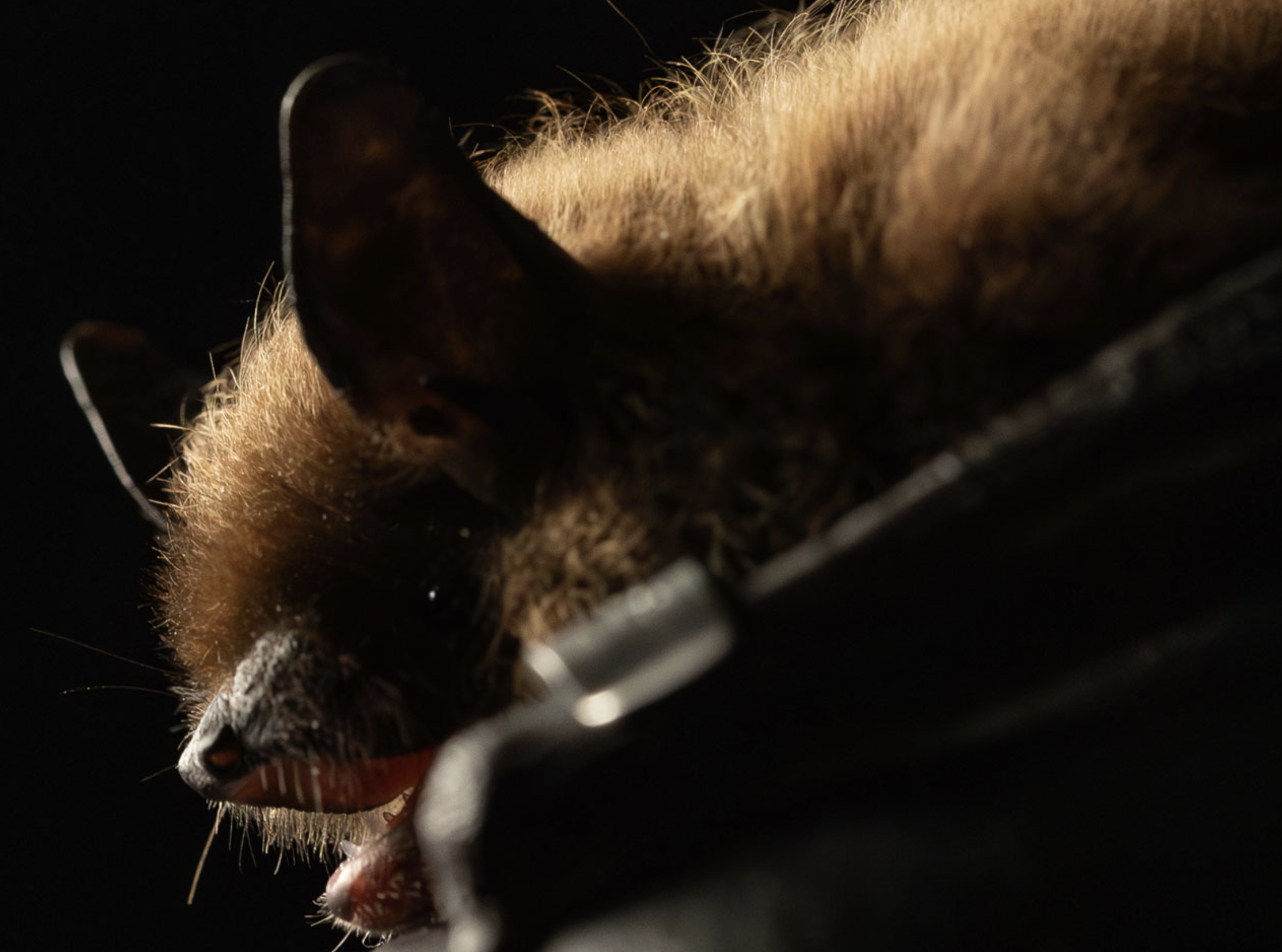
Cute as a button and confounding to scientists, Alaska's little brown bats have escaped white-nose syndrome. Can their "niche" in nature save them? "Meet Myotis lucifugus, commonly referred to as the little brown bat," reports Trina Moyles for Hakai magazine. Or, as chiropterologist (bat researcher) Jesika Reimer fondly calls it, 'the flying brown bear.'. . . Scientists know little about where [these bats] live at this far northern margin of the species' range."

Across North America, stands of trees of all different species are struggling to survive climate change. In response, scientists from the Cutfoot Experimental Forest are introducing some southern tree species to more northern regions, reports John H. Tibbetts of Knowable Magazine for Inverse. The survival of a grove of bitternut hickory trees, common to Illinois but transplanted to north-central Minnesota, is an example. "Normally, if a southern-adapted seedling is planted in an unsuitably cold climate like this one, it can risk frost damage, and its survival is threatened. . . . Today [scientists]can see the success of almost all the southern trees they planted."
Not all wool is usable for textiles, but it can make
'sweaters for the soil.' (Photo by Sam Carter, Unsplash)
Sheep farmers have developed a new way to repurpose coarser wool or "waste wool" that would have been thrown away by using a wool pelleting machine, reports Elise Konig for Ambrook Research. "A pelleting machine transforms the fleece’s long strands into cylinders that can more easily be handled. The pellets are then sold as soil amendments, providing water retention, nutrient recycling, and soil aeration."

Are you ready to clean, prune, test your soil, pick the plants and snuggle them in some soil? March is get-ready to garden month, and there's lots to do. "If you’ve been itching to get out and get gardening, we’re on the cusp of the season. This is the time to get organized and get ready because by the time we talk again in April, we will be in it, writes Amanda Blum for Lifehacker. From tidying the garden to splitting bulbs to fertilizing shrubs, Blum has a list of all the jobs to do before planting begins.

Thursday, November 30, 2023

Nature bits 'n bites: Unearthly fish; plant memories; forest tardigrades; gray wolves return; a very hungry beetle

(Photo by Dante Fenolio,
Science Photo Library via Hakai)
Creatures that dwell in the deep ocean may look like inedible Star Wars characters, but fish industry experts are looking into their potential. Scientists are also studying these fish in an attempt to protect them. "Mesopelagic fish are not yet commercially exploited, though projects are underway to investigate the marketability of the species and the best methods for harvesting them," reports Moira Donovan for Hakai magazine. "Scientists working in this area are, therefore, in the rare position of being able to assess potential impacts from fishing before they happen. But with so many unknowns, the question remains: can they do it in time — for the fish's sake and our own?" The telescopefish, above right,  has large tubular eyes to maximize light collection and a highly extensible jaw with needle-sharp teeth that ensure a firm grip on prey.

Plants aren't normally considered "learners," but maybe they should be. "In the study of the plant kingdom, a slow revolution is under way. Scientists are beginning to understand that plants have abilities, previously unnoticed and unimagined, that we've only ever associated with animals. In their own ways, plants can see, smell, feel, hear, and know where they are in the world," reports Sarah Laskow for Atlas Obscura. "Of the possible plant talents that have gone under-recognized, memory is one of the most intriguing."

Do dairy calves need more love to keep them from unhealthy oral habits? A new Florida study suggests that more pets can keep young calves happier and less likely to chew on everything out of boredom or frustration, reports Shea Swenson for Ambrook Research. "The presence of somebody scratching and having some contact with them reduced the duration of those pen-directed sucking behaviors, particularly for the individual housed calves."

Tardigrades are part of a forest's dynamic life forms.
(
Photo by Oliver Meckes and Nicole Ottowa, Nat Geo)
Mary, Mary, quite contrary, what makes a forest grow? Tardigrades! "A photographer and biologist put microscopic fungi, roots, and slime molds from Germany's Black Forest under a scanning electron microscope—and found creatures like this astounding tardigrade among the forest's essential, and often overlooked, life forms," report Oliver Meckes and Nicole Ottowa for National Geographic. "This discovery in the moss on a tree trunk, magnified 2,400 times, marked a newfound species among the 1,300 known types of tardigrades."

Next month, Colorado will begin its planned reintroduction of gray wolves, with the release of about 50 wolves captured in Oregon, reports Trevor Hughes of USA Today. "The exact [release] locations will be kept secret, but the wolves will generally be released on state or private land in a rural area of west-central Colorado. . . . Backers of Colorado's reintroduction plan say that wolves are a natural and important part of the ecosystem. . . . They argue that safety concerns are wildly overblown, and that ranchers and farmers who lose livestock will be fairly compensated by taxpayers. . . . But farmers and ranchers consider wolves a dangerous threat to wildlife and stock alike."

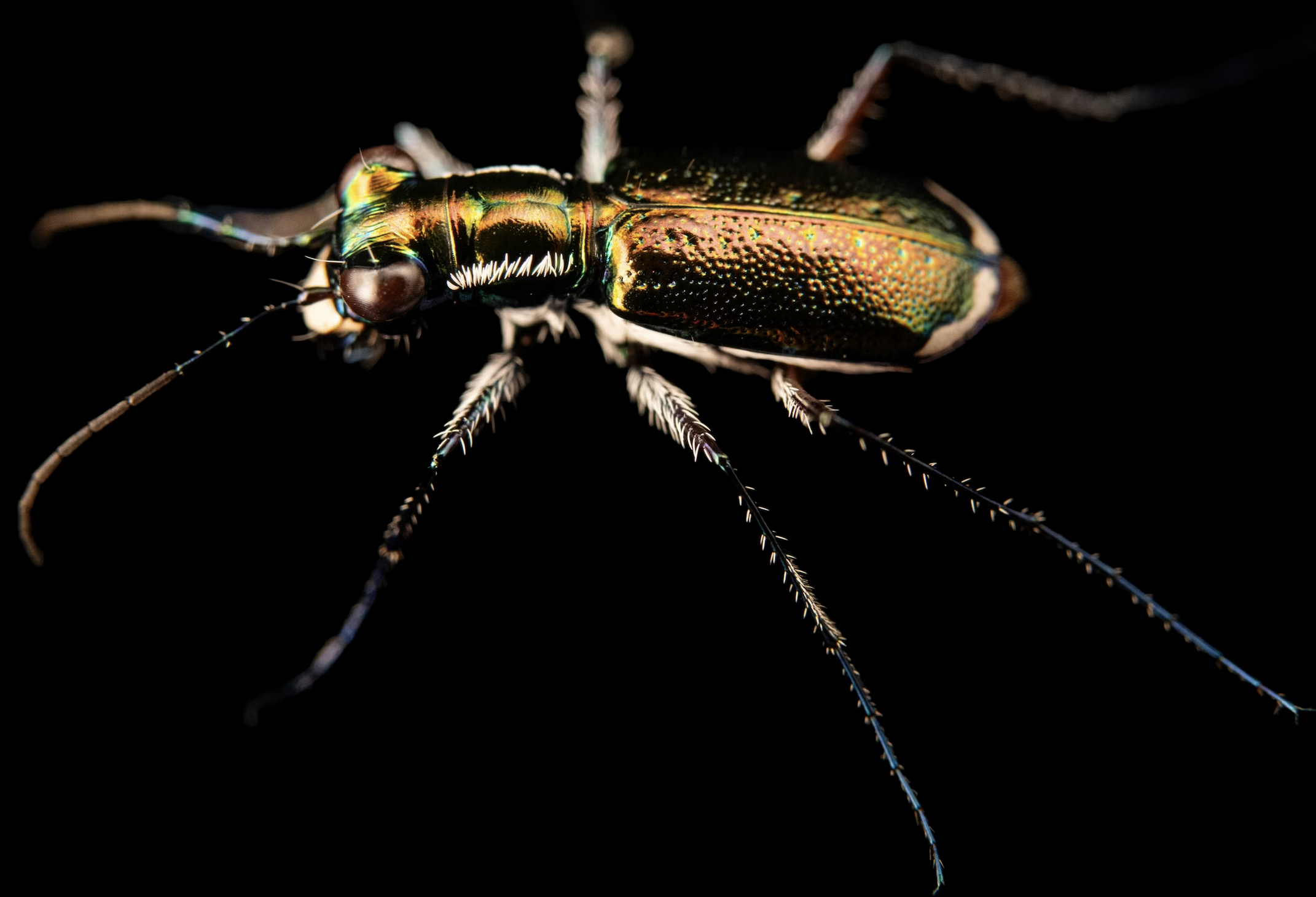
The Miami tiger beetle has 'big, serrated mandibles.'
(Photo by Joel Sartore, National Geographic, Photo Ark)
Meet the Miami tiger beetle, named for its 'highly voracious predatory behaviors, it's the 15,000th species in National Geographic's Photo Ark. "The beetle was rediscovered in 2007 after a more than 60-year absence," reports Rachel Fobar. "With its iridescent blue-green exterior and round, expressive eyes, some would call the Miami tiger beetle beautiful. . . . But when photographer Joel Sartore looks at one, he also sees carnage. . ."


Wednesday, November 08, 2023

Flora and fauna: Bird turned artist; land auctions; a fruit's 'ugly duckling phase;' animal days; can you 'migrate' trees?

Ferrisburgh with his first painting. (Courtesy photo 
 by Anna Morris via The Washington Post)
It's hard to keep a good bird down, and in the case of Ferrisburgh, an American kestrel with an injured wing, you also can't keep him from his dream of being an artist. "Ferrisburgh is headlining art classes in Vermont and drawing crowds with his talented talons," reports Cathy Free of The Washington Post. "A couple of his paintings are now being auctioned at a fundraiser online, and the raptor recently showed off his skills at the Vermont Institute of Natural Science."

Farmland sales hit their peak in the fall and even with today's high interest rates, business is brisk. Jim Rothermich from Iowa Appraisal is "keeping a close eye on this month's land auctions because, as he says, November is the busiest month for land auctions," reports Margy Eckelkamp of Farm Journal. Rothermich told Eckelkamp, "We're getting strong results. High interest rates and sub-$5 per bushel corn is not affecting land market conditions." Read two examples of recent Iowa land sales here. Read about big land auction sales in South Dakota here.

Even ripe quince is rock-hard and must be cooked to
be enjoyed. (Photo by Ralph Walden, The Seattle Times)
Neither apple nor pear, the quince is an exquisite fruit that takes patience and an open mind. "The bewitchingly fragrant fruit. . . does go through an ugly duckling phase, Orchardist Edith Walden acknowledges. The fruits are misshapen and fuzzy," reports Rebekah Dunn for The Seattle Times. "But at the last minute, the color matures to yellow. The fuzz retreats." Walden adds, "And then they start emitting this fragrance; people walk along the road, and they just want to know what that smell is. It's just entrancing."

What do free-range chickens munch on throughout winter? While there are few bugs, "they do like to scratch under a light snow and pick up seeds, and nibble on refuse from the fall garden," reports Jodi Henke of Successful Farming. Here are tips for keeping your chickens fed and safe during cold weather.

When things don't work out in one place -- be it a job, a school, or a region -- humans often move, but what about trees? Specifically, giant sequoias only grow in groves with unique climates and that climate is changing. "The largest trees on the planet can't easily 'migrate' — but in a warming world, some humans are helping them try to find new homes," reports Moises Velasquez-Manoff of The New York Times. "Millions of years ago, redwoods — or their close relatives — grew across the Pacific Northwest. By moving them, [tree ambassador] Philip Stielstra reasoned, he was helping the magnificent trees regain lost territory."

Days dedicated to animals are peppered throughout the year. This illustration features animals with their
own days. Can you find the sea monkey? (Illustration by Armando Veve, National Geographic)

If you love hedgehogs, bears or badgers (oh, my!), you're in luck because there's a day to celebrate almost any creature. Go online and "pick a random day, week, or month, and you'll find an almost disturbing number of observances. . .days referencing animals specifically are plentiful, even crowded," reports Oliver Whang of National Geographic. "The observances' intents are a mixture: altruistic, commercial, historical, fantastical, serious, funny. . . . National Sea Monkey Day exists to celebrate 'the tiny brine shrimp that swim around mail-order aquariums' -- and from little more than that, the holiday not only went viral, it appeared in Newsweek."

Thursday, October 12, 2023

Planning a trip to view fall leaves is all about timing, but predicting peak leaf color is getting harder

Plenty of rainfall can lead to brighter fall colors.
(Photo by Landon Speers, The Wall Street Journal)
Taking a trip to explore fall's vast array of leaf colors is a seasonal ritual for many people. With warmer temperatures occurring, finding the days when nature's dramatic shift is at its zenith has gotten trickier. "Millions of tourists travel to U.S. parks and parkways each year to glimpse the bright colors of autumn — but ecologists say the familiar reds, oranges and yellows of fall foliage are coming later in the season because of rising temperatures," reports Aylin Woodward of the Wall Street Journal. "Leaf senescence — the process that involves a tree's leaves changing color before eventually dropping off — has been pushed back about a week on average since the 1950s in New England, according to Colby College ecologist Amanda Gallinat."

When leaves turn and their colors' vibrancy "depends in part on the geographic area, the species in question and precipitation," Woodward explains. "Climate change can disrupt autumnal signals. Warmer fall nights can retard the cooling cue, delaying color changes. Ecologists say that extreme conditions associated with higher temperatures, such as drought or dry soil, stress tree health and trigger earlier, and duller, color change and leaf drop."

"Predicting how long fall colors will last is almost harder to predict than when the leaves will start to change color, said Mukund Rao, an eco-climatologist affiliated with Columbia University's Lamont-Doherty Earth Observatory and the Center for Ecological Research and Forestry Applications in Barcelona, Spain," Woodward reports. "Peak color used to last for about two weeks, according to Rao. For certain species, that period might become more condensed as higher temperatures persist later into the fall because the rate at which days get shorter throughout the season remains the same."

As climate change shifts periods of drought and rain, leaf-lookers could eventually have a hard time finding the magic window of glorious fall colors, which could cause a downturn in the "booming tourism industry surrounding leaf peeping, according to Sarah Blount, program director for research and evaluation at the National Environmental Education Foundation, a U.S.-based nonprofit focused on environmental education and conservation, who underscored how critical it is to try to improve peak timing predictions." Blount told Woodard: There's so much money attached to it. People want to buy a plane ticket to go somewhere and not have it turn out that it's too late and all the leaves are gone or it's too early, so there is a lot of focus on trying to improve the information we have about that."

Tuesday, September 05, 2023

Forest Service creates tools to give rural towns a better chance at wildfire resiliency grants; Oct. 31 next deadline

Smoke plume from Cal-Wood fire near Boulder, Colo.
(Photo by Malachi Brooks, Unsplash)
Rural communities looking to shore up financing wildfire prevention projects may have an improved chance of gaining grant dollars during the second application window of a federal grant program. The application period is open until Oct. 31, reports Claire Carlson of The Daily Yonder. Smaller communities often lack the capacity, such as additional staffing or grant expertise, to apply for and win grants despite their need for assistance.

Applying for a grant means communities must gather and supply data, which takes time smaller staff may not have. To combat this obstacle, the Forest Service has piloted the Community Wildfire Defense Grants Tool, which calculates the wildfire risk of every U.S. county. "The tool shows whether the county is considered low-income and has had any previous disasters, and if it’s ‘underserved’ as defined by the federally managed Climate & Economic Justice Screening Tool,” Carlson writes. Using the grant tool helps communities focus on getting and organizing data with few frustrations and fewer labor hours.

A second strategy deploys "'community navigators,' which are organizations that work directly with underserved communities to identify funding opportunities and help them through the grant application process," Carlson explains. "The navigators will also train community leaders to do this work on their own in the future." 

Grants requiring matching dollars from local coffers have kept poorer, more rural areas from accessing federal money, but waivers are an option. "Match waivers will be made available for communities that are underserved as defined by the Climate & Economic Justice Screening Tool or are nationally recognized tribes or Pacific Islands communities," Carlson adds. "The grant program is giving up to $250,000 to each community to develop wildfire protection plans and up to $10 million to each community to implement wildfire resiliency projects."

The CWDG calls for "community wildfire protection plans to focus on community-wide efforts to decrease wildfire risk, like improving emergency communications or identifying water sources," Carlson reports. "A comprehensive toolkit on how to create a community wildfire protection plan can be found here. For more information and access to the application, visit the Forest Service’s website."

Friday, August 18, 2023

Victims of 2016 wildfire that spread from Smokies park will get to pursue their claims against National Park Service

The town of Gatlinburg, Tennessee, was surrounded and invaded by wildfires that spread from the adjoining Great Smoky Mountains National Park in November 2016; 14 people died. (File photo by Pail Efird, Knoxville News Sentinel)

As the nation comes to grips with increased threat of wildfires, a federal court has reopened the door to damage claims from victims of a fire that burned part of a town next to the Great Smoky Mountains National Park almost seven years ago and may have been a harbinger of change.

Under a federal appeals court ruling Thursday, victims will still be able to sue the National Park Service for alleged mismanagement that led to the fire. The court "unanimously overruled a district judge who dismissed the suit over what amounted to a paperwork error," reports Tyler Whetstone of the Knoxville News Sentinel.

"U.S. District Judge Ronnie Greer ruled last year the families failed in court documents to include core assertions that are required to proceed with the lawsuit. . . . Officials have not been interviewed under oath. No one has had to answer for what went wrong that deadly Thanksgiving weekend," when 14 people died. The News Sentinel has reported that park officials were aware of the dangers the fire posed but failed to notify city or county officials until midday Nov. 28, 2016. By then fire was speeding toward Gatlinburg," a town of 4,000 that adjoins the park's main entrance.

The park's fire manager "saw weather reports calling for high winds ahead of predicted rainfall and knew trouble could be on its way" four days into the fire, Whetstone notes. "The fire was still small at the time. He texted a park firefighter saying things would be 'interesting with 60 mph gusts predicted ... not sure any of us can do much at this point.' A third-party report paid for by Gatlinburg and Sevier County after the fire said a lack of information led to the disaster."

Tuesday, July 11, 2023

A town of 400 in the Southern Cascades buys surrounding forest for wildfire protection, tourism, and to set an example

100-year-old Douglas firs in the Butte Falls Community Forest
(Photo by Amanda Loman via Columbia Insight)
The small town of Butte Falls, Oregon, decided to purchase its surrounding timber -- not to sell it, but to create an older, more wildfire-protected forest that also serves as recreational tourist destination, reports Grant Stringer for Columbia Insight, a Pacific Northwest environmental news source. "With a population of just 400 people, Butte Falls is a speck in an ocean of remote timberland, much of it burned. . . . Conventional wisdom in the region would have Butte Falls try to reclaim its former glory as a logging hub. . . . But community leaders plan to protect their future by looking to the forest itself. . . . Locals want to grow an older and biodiverse forest that they say will better protect the town from wildfires while attracting outdoor tourism."

Butte Falls' town leadership is onto something. "Conservationists and the state's top politicos say the small project playing out in a remote corner of Pacific Northwest forest can teach other communities how to adapt to climate disasters and hard times," Stringer writes. "It's a strategy some environmentalists want to implement across U.S. forests to sequester carbon, promote biodiversity and blunt severe wildfires. . . . In the new Butte Falls Community Forest, local foresters could build a trail network and recreation amenities near a roaring waterfall to bring outdoor tourism to the town, providing incomes without relying on dwindling timber jobs."

Map by Mackenzie Miller, Columbia Insight
The idea for a community forest came to Linda Spencer following the 2018 Camp Fire that destroyed Paradise, Calif., 250 milkes south. The blaze was "a wake-up call for Spencer, who was the mayor of Butte Falls at the time. . . . When the Seattle-based timber giant Weyerhaeuser informed the Butte Falls City Hall of plans to clear-cut and sell the cleared parcels surrounding the town, likely to another timber company, Spencer jumped at the opportunity to create a community-owned forest instead. . . [she saw] the project as a way for the community to assert control of a resource that is critical to the town's future and the quality of its environment." Spencer told Stringer: "We didn't want someone else managing the forest around us. We wanted to manage it ourselves."

Stringer reports, "Climate science is unpopular in Butte Falls, which is staunchly conservative, says Mike Smeltz, a local forester. . . . But when a group of locals visited the new community forest on a recent Saturday, there was broad agreement that the climate is less hospitable for certain conifers than it once was. . . . . If Butte Falls can weather this fire season, Smeltz will lead efforts to thin the forest by cutting down young trees and dead limbs. . . . That will help the largest trees, including mighty ponderosa pines towering above the thicket, to continue flourishing. According to Smeltz, the town already secured $450,000 from the Oregon Department of Forestry and another $450,000 from the Federal Emergency Management Agency for this work."

Tuesday, June 06, 2023

Shepherds aim to put 'Kentucky spring lamb' back on U.S. menus and truly reclaim Appalachian strip-mined land

Lester Brashear is one of 300 sheep farmers in southeastern Kentucky who are hoping to use reclaimed strip mines to create a new market for Kentucky spring lamb. (Photos by Sam Adams, The Mountain Eagle)

Small ruminants are domesticated animals like sheep and goats; they also might be the answer to restoring productivity to strip-mined Appalachian lands that once were forests, reports Sam Adams of The Mountain Eagle in Whitesburg, Ky.. Adams reports on Lester Brashear, "a retired coal miner and former biomedical equipment technician, and his brother, Larry, and his cousin Patrick Angel, who holds a bachelor's degree and a master's degree in forestry and a doctorate in soil science, and has farmed sheep for 43 years. The three formed the Southeast Kentucky Sheep Producers Association, which now boasts about 300 members across 56 counties in Appalachian Kentucky."

A curious ewe lamb peeks out.
(Photo by Sam Adams, The Mountain Eagle)
SEKSPA is working to rebuild some of the region's agricultural legacy. Adams explains, Angel, who is retired from the federal Office of Surface Mining Regulation and Enforcement, "called it a 'tragedy' that strip mines were reclaimed as grassland instead of forest, and said there are now about 750,000 acres of grassland in Appalachian Kentucky that used to be forests," Adams reports. "Only a fraction of that land has ever been used for agriculture, because even though some farmers have placed cattle and horses on strip mines, much of the land is too steep for large animals, and the ground dries out too quickly to support large-scale grazing of that size livestock."

That's where nimble-footed lambs and sheep come in handy. Angel explained, "The only way to correct that is by reforesting and/or doing large-scale, small-ruminant grazing as it's done in the Rockies, in the Carpathians in Central Europe." Adams reports, "And, he said, there is historical precedence for that working in the Appalachian Mountains of Eastern Kentucky. . . . It used to be known for lamb. He said customers at 'five-star, white-tablecloth restaurants' in New York, Boston and up and down the eastern seaboard depended on the lamb from this region from the 1880s until just after World War II. . . . 'At the top of the menu, you could see the three words "Kentucky spring lamb" and Eastern Kentucky was the supplier of Kentucky Spring Lamb,'" Angel said.

Eastern Kentucky's Cumberland Plateau can be divided into four sections,
increasingly mountainous the farther southeast. (University of Kentucky map)
Lester Brashear, of Letcher County, "has now obtained a trademark on a logo on behalf of the SEKSPA that capitalizes on the Kentucky spring lamb name," Adams reports. "The trademark will be on the packaging of lamb sold by members of the association, and members of the association must be in the 56 counties in Eastern Kentucky. Brashear said that most of the 'lamb' sold in supermarkets comes from Australia and is actually mutton."

What's the difference between lamb and mutton? Brashear explains: "A sheep 14 months or younger is a lamb, and after that, they become a hogget, and then after that, they become a sheep or a mutton." Adams adds, "Brashear explained that people who aren't used to the meat . . . assume that they won't like lamb because they had mutton and didn't like it. . . . SEKSPA members have been "cooking lamb at trainings and meetings across the region to give people a taste of what they've been missing. . . .This year, they plan to put a large flock of sheep on a strip mine in Perry County to see how it will fare. . . . . Both say if it works, it could give new life to strip mines that don't have trees and show other farmers they can make money from the practice."

Wednesday, May 17, 2023

Mountain Valley Pipeline gets key green-light decision, pleasing Sen. Joe Manchin, but more court action is in store

Pipes for the Mountain Valley Pipeline on Brush Mountain near
Blacksburg, Va. (Photo by Melissa Golden, The New York Times)
The Biden administration has again "granted a crucial permit for the Mountain Valley Pipeline, a project championed by U.S. Sen. Joe Manchin III of West Virginia," reports Lisa Friedman of The New York Times. The Forest Service's decision would allow the pipeline "to run through 3.5 miles of Jefferson National Forest, which straddles West Virginia and Virginia." The pipeline is "intended to carry gas about 300 miles from the Marcellus shale fields in West Virginia across nearly 1,000 streams and wetlands before ending in Virginia. It also delivers a significant victory to Manchin, a Democrat who strongly supports fossil fuels and who faces a potentially difficult re-election campaign next year. . . . Some are interpreting the approval as the administration's attempt to placate Manchin, who in recent weeks has railed against what he calls the Biden administration's 'radical climate agenda.'"

The administration has been repositioning some environmental policies, which disappoint environmentalists and scientists, but the president is working to straddle several camps. Friedman reports, "Biden needs Manchin, as well as moderate Republicans, to achieve his goals. They are considered key to passing legislation that the White House says is critical for speeding the construction of new wind, solar and other renewable energy projects. . . . Biden has taken steps to bolster fossil fuels and placate centrists while also trying to deflect Republican criticism that his climate policies are harming American energy security. His administration approved the enormous Willow oil project in Alaska and increased exports of liquefied natural gas from Alaska. Both projects were supported by Manchin and Sen. Lisa Murkowski, an Alaska Republican who is also an important swing vote for  Biden."

While the permitting decision is important, "The Mountain Valley Pipeline is not a done deal" because of court action, Friedman notes. A lawsuit is challenging the Fish and Wildlife Service's decision in favor of the pipeline," and more suits are expected. Also, "The Bureau of Land Management, which is responsible for approving pipelines that cross state lines, must decide whether to issue required permits."

Lawsuits warn of environmental damage. "Last year the U.S. Court of Appeals for the 4th Circuit ruled that the government's environmental reviews had 'inadequately' considered the impacts of erosion, among other issues. . . . The national forest is home to five protected species, including the endangered candy darter, a colorful freshwater fish, as well as old-growth forest. . . . Jessica Sims, Virginia Field Coordinator for Appalachian Voices, an environmental group that opposes the pipeline, said the Biden administration decision "'grossly underestimates the lasting environmental harms from the project.'"