Showing posts with label sexual misconduct. Show all posts

Monday, June 12, 2023

Southern Baptist Convention faces issues of declining numbers, women pastors, use of 'abuse reform' database

Saddleback Church has a broad reach. (Photo via saddleback.com)
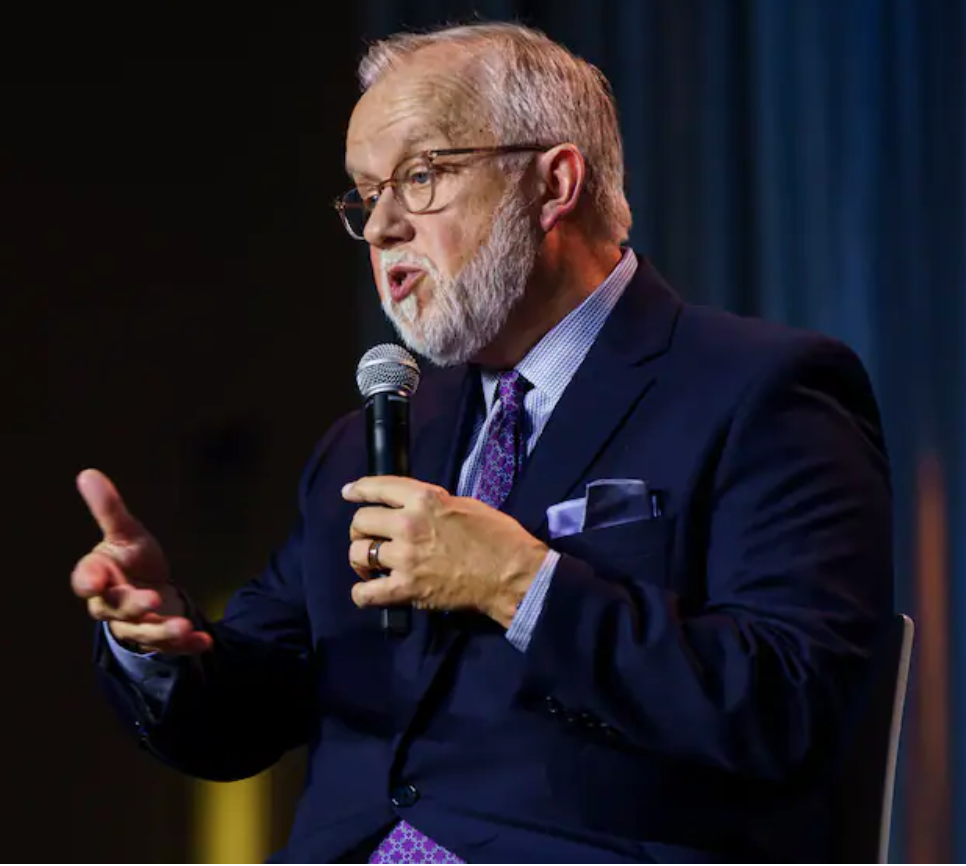
The Southern Baptist Convention faces pivotal decisions on female pastors and sexual abuse oversight at this week's yearly gathering in New Orleans. "Messengers, as representatives from thousands of Southern Baptist churches are called, will vote on whether to sustain the convention's executive-committee decision to expel some churches from the denomination because they had women serving as pastors," reports Adolfo Flores of The Wall Street Journal. "This year's election for president is being seen as a referendum on the denomination's efforts over the past year to hold abusers accountable and protect members of the church."

In February, the convention's Executive Committee voted to exclude Fern Creek Baptist Church in Louisville "for having a woman pastor — the same issue it cited for expelling four other churches," including the huge Saddleback Church in Southern California, reports Peter Smith of The Associated Press. "All Baptist churches are independent, so the convention can't tell them what to do; however, it can decide which churches are 'not in friendly cooperation,' the official verbiage for an expulsion."

The issue of women as lead pastors is emotionally and theologically debated. "The SBC's official statement of faith says the office of pastor is reserved for men, but this is believed to be the first time the convention has expelled any churches over it. Both of the congregations say Baptists should be able to agree to disagree — while making a common cause for evangelism," Smith reports. Rev. Linda Barnes Popham, pastor of Fern Creek for the past 30 years, told him: "I want to worship under that same umbrella and do missions together like Southern Baptists have done all of these years. . . .We want women to rise up and be able to answer God's call, just like men do."

Convention members will also decide whether to approve continuation of the convention’s Abuse Reform Implementation Task Force, Flores writes: "The task force is expected to present a database it has been developing over the past year of pastors, denominational workers, ministry employees and volunteers who have been credibly accused of sexual abuse." Jason DeRose of NPR notes, "Parts of this church are under investigation by the U.S. Justice Department because of the way it handled earlier sexual misconduct. And all of this is happening at the same time as an election to decide the [convention's] next president. . . . The incumbent is facing a challenger."

The deployment and use of the Abuse Reform Implementation Task Force's database is a sticking point in the election, alongside declining membership. "Bart Barber, the sitting president, is being challenged for a second term by an opponent who has questioned aspects of the database," Flores reports. Mike Stone, pastor of Emmanuel Baptist Church in Blackshear, Ga. . . . said he sought the nomination, in part, because an audit of the SBC Executive Committee found that it was on an unsustainable financial trajectory. The troubling finances, Stone said, are part of an overall decline in the number of members and churches that he said he would rectify through an evangelistic outreach initiative."

Wednesday, January 04, 2023

Sexual assault victims in some rural areas are now able to get examinations through telemedicine services

Nurse Lindee Miller stands with the cart used for teleSANE exams at
Avera St. Mary’s Hospital in Pierre, S.D. (Photo by Arielle Zionts, KHN)
Until recently, rural sexual assault victims who sought medical care faced multiple hurdles to simply get to a hospital. Through advances in telehealth exams, that reality is changing, reports Arielle Zionts of Kaiser Health News.

Zionts presents the example of a nurse in Eagle County, Colorado: "Amanda Shelley was sitting in her dentist’s waiting room when she received a call from the police. A local teenage girl had been sexually assaulted and needed an exam. . . . She went to her car and called a telehealth company to arrange an appointment with a sexual assault nurse examiner, or SANE. The nurse examiners have extensive training in how to care for assault survivors and collect evidence for possible criminal prosecution. . . . About an hour later, Shelley met the patient at the Colorado Mountain Medical urgent care clinic in the small town of Avon. She used a tablet to connect by video with a SANE about 2,000 miles away, in New Hampshire."

The exam process involves "the remote nurse using the video technology to speak with the patient and guide Shelley through each step of a two-hour exam. One of those steps was a colposcopy," Zionts reports. "The remote nurse saw, in real-time, what Shelley could see, with the help of a video camera attached to the machine."

Zionts writes, "The service, known as 'teleSANE,' is new at Shelley’s hospital. Before, sexual assault patients faced mountains of obstacles — literally — when they had to travel to a hospital in another county for care." Shelley told Zionts, "We’re asking them to drive maybe over snowy passes and then [be there] three to four hours for this exam and then drive back home — it’s disheartening for them. They want to start the healing process and go home and shower.”

TeleSANE services are "expanding across the country in rural, sparsely populated areas," Zionts reports. "Research shows SANE programs encourage psychological healing, provide comprehensive health care, allow for professional evidence collection, and improve the chance of a successful prosecution."

Tuesday, December 06, 2022

Misbehaving teachers move from district to district and state to state with relatively little scrutiny

Teachers who have committed sexual misconduct are able to move from district to district and state to state without close checking by school administrators and state governments, and the issue appears to have been widely ignored.

In Kentucky, the Lexington Herald-Leader "found that over a five-year period, the top reason the majority of teachers voluntarily gave up their licenses or had them revoked or suspended was due to sexual misconduct," report the paper's Beth Musgrave and Valarie Honeycutt Spears. Despite some teachers eventually leaving the profession, many are allowed to move to multiple teaching posts without consequences for prior abuse even when the abuse resulted in suspensions.

Take the case of Kentucky teacher Jason Earlywine who was "a physical education and health teacher, was disciplined for sending a student more than 1,700 voice or text messages in 2011 and 2012 and for other inappropriate conduct while a teacher at Paris Independent School District," Musgrave and Spears write. "He eventually left the district and got a job at West Jessamine High School in 2019. Students said in the first several months on the job that Earlywine made inappropriate comments to female students. . . . according to Kentucky Education Professional Standards Board documents."

Kentucky does not have enough prevention policies or training that would help keep possible abusers out of the school system and prevent those that do gain access from traveling from school to school. "Kentucky teachers receive training on sexual harassment but has no requirement that they undergo training on sexual abuse or appropriate boundaries between teachers and students," Musgrave and Spears report. "33 states and the District of Columbia mandate that training."

Kentucky is not alone. Many states that struggle to prevent the hiring or discipline of teachers who act inappropriately with students. In Cabell County, W.Va., a gym teacher faced charges for sexually abusing multiple students. "The alleged incidents happened from August 2019 through January of 2022, according to the criminal complaint," says Eric Fossell for WSAZ-TV. "It also states that an administrator with Cabell County Schools told investigators that Miles had been reprimanded before for similar allegations. That administrator asked Miles in a letter to refrain from 'jovial touching of students' or the matter would be referred to the superintendent."

A Montana school district was sued in 2020, "over its hiring of a teacher and coach who was accused of sending sexual messages to the student," reports The Associated Press. The suit said the teacher "had a pattern of inappropriate behavior toward underaged girls and that the school district was negligent in hiring him. . . . Botsford had been fired from a different high school in 1999 after two girls reported him for inappropriate contact. . . . Centerville Supt. Jan Cahill investigated the reports and found Botsford had 'unethical and immoral relationships' with at least three students, the lawsuit said."

While laws can be passed, it's up to school boards and administrators to set policies and stop abuse. For instance, the Montana legislature passed the "Creating a student safety accountability act" in May of 2019, but it did it keep the teacher from continuing his pattern of abuse.

Wednesday, June 15, 2022

A relative moderate with rural roots is elected president of the Southern Baptist Convention, by a wide margin

Pastor Bart Barber (Baptist Press photo via Kentucky Today)
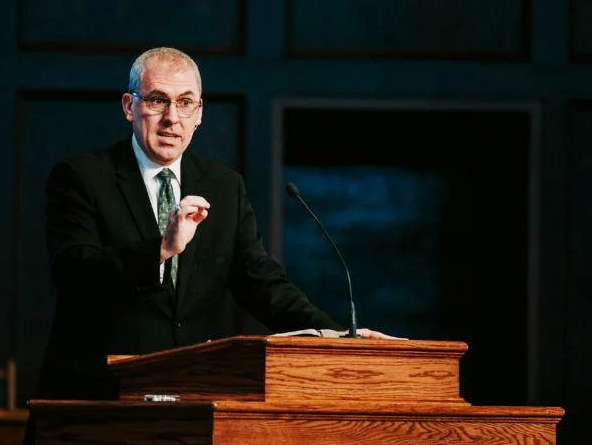
An exurban pastor with rural roots and a relatively moderate stance on issues facing the Southern Baptist Convention was elected president of the nation's largest Protestant denomination Tuesday night.

Bart Barber is pastor of First Baptist Church in Farmersville, Texas, population 3,612, an exurb of Dallas. He is from Lake City, Ark., pop. 2,326, just east of Jonesboro.

Barber, who strongly supported conclusions of the SBC's Sexual Abuse Task Force, was elected on the second ballot, defeating Pastor Tom Ascol of Grace Baptist Church in Cape Coral, Fla., by 61 to 39 percent. Barber got almost 48% on the first ballot. Other candidates were "former foreign missionary Robin Hadaway of Oceanside, Calif., and Pastor Frank Cox of North Metro Baptist Church near Atlanta, a last-minute entrant into the race," reports Frank Lockwood of the Arkansas Democrat-Gazette.

"Ascol, favored by Baptists who want to move their denomination further to the right, had adopted the campaign theme 'change the direction.' Barber, on the other hand, urged fellow Baptists to set their differences aside and focus on the gospel, calling on 'an army of peacemakers' to help unify the 13.7 million-member body."

Lockwood gives Barber's Baptist bio: "Barber was 5 years old when he responded to the altar call at Bethabara Baptist Church, a small congregation on the east side of the St. Francis River, roughly four miles north of Lake City. He was 11 when he first felt the call to ministry, a call that was confirmed while attending summer church camp three years later. While still in high school, he was 'licensed to preach the Gospel' by First Baptist Church in Lake City. Barber preached his first sermon while in high school and soon was asked to serve as interim pastor at New Hope Baptist Church near Black Oak, according to [Traci] Smith, his sister. Barber went to Texas to attend Baylor University, preaching at a small country church on the weekends. He's been ministering ever since." For more bio, from Baptist Press, click here.

Monday, May 23, 2022

New report has shocking details about cover-ups of sex-abuse cases by leaders of the Southern Baptist Convention

Southern Baptist Convention leaders routinely ignored, pressured, and/or discredited people who said they had been sexually abused by pastors and other church staff since 2000, according to a third-party investigation released Sunday. "The report also names several senior SBC leaders who protected and even supported alleged abusers, including three past presidents of the convention, a former vice president and the former head of the SBC’s administrative arm," reports The Washington Post's Sarah Pulliam Bailey, who has chronicled the scandal in depth.

The nearly 300-page report, compiled by Guidepost Solutions at SBC's request, includes "shocking new details about specific abuse cases and shine a light on how denominational leaders for decades actively resisted calls for abuse prevention and reform. Evidence in the report suggests leaders also lied to Southern Baptists over whether they could maintain a database of offenders to prevent more abuse when top leaders were secretly keeping a private list for years," Bailey writes. "The report — the first investigation of its kind in a massive Protestant denomination like the SBC — is expected to send shock waves throughout a conservative Christian community that has had intense internal battles over how to handle sex abuse."

The investigation roiled SBC even before it was published. Leadership approved the investigation after an explosive 2019 Houston Chronicle investigation that detailed hundreds of sexual abuse reports. Many in the denomination's Executive Committee, including SBC President Ed Litton, supported waiving attorney-client privilege so investigators could have on-record conversations with leadership about what they knew. But the committee's acting CEO, Ronnie Floyd, resigned in October, saying that waiving attorney-client privilege would expose them to lawsuits that could bankrupt the SBC. 

"Sex-abuse survivors, many of whom have been sharing their stories for years, anticipated Sunday’s release would confirm the facts around many of the stories they have already shared, but many were still surprised to see the pattern of coverups by the highest levels of leadership," Bailey reports.

Executive Committee leaders "knew the scope of the problem. But, working closely with their lawyers, they maligned the people who wanted to do something about abuse and repeatedly rejected pleas for help and reform," Kate Shellnutt reports for Christianity Today.

Christianity Today's Russell Moore, who resigned last year as president of the SBC's public-policy office, had long called for more accountability amid what he described as a culture of ignoring and mishandling sex abuse claims. But what the investigation uncovered was even worse than what he had imagined, and throws into sharp relief a denomination with badly misplaced priorities, he writes: "Who cannot now see the rot in a culture that mobilizes to exile churches that call a woman on staff a 'pastor' or that invite a woman to speak from the pulpit on Mother’s Day, but dismisses rape and molestation as 'distractions' and efforts to address them as violations of cherished church autonomy? In sectors of today’s SBC, women wearing leggings is a social media crisis; dealing with rape in the church is a distraction."

One of the worst results of the investigation, Moore writes, is that it has made clear that SBC leadership took advantage of innocent supporters. Most of the people in the pews believed the Bible and wanted to support the leaders who did also. They didn’t know that some would use the truth of the Bible to prop up a lie about themselves," Moore writes. "We were told they wanted to conserve the old time religion. What they wanted was to conquer their enemies and to make stained-glass windows honoring themselves—no matter who was hurt along the way."

Wednesday, June 16, 2021

Pastor known for racial reconciliation work is narrowly elected president of the Southern Baptist Convention

Ed Litton speaks at a Southern Baptist Convention luncheon.
(Washington Post photo by William DeShazer)
The Southern Baptist Convention elected the Rev. Ed Litton as its president Tuesday, signaling a defeat for the "hard right" in the nation’s largest Protestant denomination, Sarah Pulliam Bailey reports for The Washington Post.

Litton narrowly defeated Georgia pastor Mike Stone, the favored candidate of the right wing, with 52 percent of the vote in a runoff election at the group's annual meeting in Nashville

"For the past few years, the convention has been mired in debates over racism, politics and sexual misconduct that mirror many of the same debates in the Republican Party," Bailey writes. "In recent weeks, as leaked letters and backroom deals dominated conversations among Southern Baptists, Litton, pastor of First Baptist Church North Mobile in Alabama, pitched himself as someone who would lead the convention toward more racial reconciliation. Fred Luter, the first and only Black pastor to serve as president of the SBC, nominated Litton for the position."

Critical race theory, a framework for examining structural racism, was a hot topic at the meeting. "Opposition to CRT among SBC leaders led to an exodus of Black pastors over the past year and some feared more would leave if the convention had voted to condemn it," Bailey notes. SBC considered several proposed resolutions concerning the notion, but ultimately adopted a resolution that condemned racism but didn't address CRT specifically.

Ed Stetzer, who once led the SBC's research arm, LifeWay Research, said there was some concern before the meeting that more conservative members would push back against recent SBC efforts to advance racial reconciliation. But "the crowd was younger and more diverse than most expected, and that crowd carried the day," he told Bailey.

Sunday, June 13, 2021

Southern Baptists gather as race, gender issues and politics tribulate their convention and other evangelical churches

Revs. Ronnie Floyd and Dwight McKissic in 2014
after Floyd was elected president of the Southern
Baptist Convention. (AP photo by Steve Ruark)
The Southern Baptist Convention, which was created because of race and slavery 15 years before the Civil War, is arguing about race, sex and other touchy social issues as it prepares to convene Tuesday in Nashville. And it reflects simmering political conflicts in much of American evangelicalism.

With talk of critical race theory, "demands for political loyalty" and "a fight between conservatives and ultraconservatives, it sounds like current debates within the Republican Party," writes Sarah Pulliam Bailey of The Washington Post. The meeting will shape the future of the 14-million-member denomination, and will be "probably the largest religious gathering since the pandemic, as well as the biggest Baptist meeting in decades," with 16,000 attendees expected.

"What is especially unusual about the meeting is infighting at the highest levels of leadership that has become public in recent weeks," Bailey reports. "New details released to news-media outlets have shined a light on the backroom dealings of several of its high-profile leaders." Russell Moore, who ran the SBC's public-policy office, "recently left his position and his church for a new position at Christianity Today magazine. On his way out, two letters he sent to SBC leadership were leaked to media, in which Moore described a culture of racism and mishandling of sexual-abuse claims."

The current flash point is critical race theory, the concept that racism is a product of society, not only individuals, and is often embedded in societal institutions. "Prominent members of the SBC, including Albert Mohler, the president of the Southern Baptist Theological Seminary, the denomination’s oldest academic institution, have demonized C.R.T., calling it, among other things, Marxist and anti-Biblical. Mohler, of Louisville, and south Georgia pastor Mike Stone, who has called CRT a “weapon of division,” are running for SBC president. The other candidate is Ed Litton, "a soft-spoken pastor who has been involved in racial-reconciliation efforts in Mobile, and who believes that the fight over CRT has become a way to avoid talking about the need for structural change" in the convention, Eliza Griswold reports for The New Yorker magazine.

If Litton doesn't win, that is expected to accelerate the departure of Black pastors and congregations, Griswold reports. Her object example is the Rev. Dwight McKissic of Arlington, Texas, who got SBC help to start his church 38 years ago but isn't going to the convention: "Until recently, much of the racism that he’d encountered in the SBC was 'passive,' McKissic said. But after the election of Donald Trump, in 2016, he felt that the racist rhetoric became more overt. McKissic was also unsettled by what he saw as a growing antipathy toward allowing women to serve in leadership roles in the church."

The long-simmering gender conflict in the denomination, which limits the roles of women, was highlighted this spring when "Beth Moore, a hugely popular speaker and author, stepped away from the SBC because of what she saw as its continued racism and sexism," Griswold notes.

Bailey notes that the convention, like most evangelical groups, is less of a denomination than most denominations: "The SBC prides itself in the 'autonomy' of individual churches, which operate independently but contribute to multi-million-dollar budgets for missions, seminaries and other collective efforts" of the convention. "The transactional nature of the denomination allows pastors and lay members to financially benefit from things such as pastors’ health insurance and reduced tuition rates at its schools. What matters at the convention is that individual members come forward and vote collectively to find a unifying voice on different matters and to vote for its next president."

The tribulations of the SBC reflect those in other evangelical groups and society, Baptist professors told Griswold. Karen Swallow Prior, a professor at Southeastern Baptist Theological Seminary in Wake Forest, N.C., said she sees an “evangelical reckoning . . . These tensions reflect an emerging schism in what it means to be an evangelical. Theological conservatives are reclaiming the moral authority of following Jesus without blindly following the old battle lines of the culture wars.”

Keith Whitfield, a theology professor at Southeastern, told Griswold, “We’ve understood since 1995 that we have to open the doors for other people to come in if we’re going to remain viable for the future—if not, the effectiveness of our gospel witness will be compromised. . . . The SBC is a mirror for what’s happening in American evangelicalism, and the culture writ large.”

Ed Stetzer, a Southern Baptist who runs the Wheaton College Billy Graham Center, told Griswold that churches have become increasingly politicized: “People are now sorting themselves into churches that align more with their political ideology than their theology They want the sermons they hear on Sundays to align with what they hear on cable news all week.”

Thursday, September 10, 2020

National Farm Safety and Health Week is Sept. 20-26

It's time to start planning coverage for National Farm Safety and Health Week, which will be observed Sept. 20-26.

This year's theme is "Every Farmer Counts." The National Education Center for Agricultural Safety, which organizes the observance, says the theme is meant to "acknowledge, celebrate, and uplift America’s farmers and ranchers who have encountered many challenges over the past couple of years, yet continue to work hard to provide the food, fiber, and fuel that we need," according to the website.

NECAS will host at least one free, one-hour webinar each business day during the week to discuss different topics. Click here for more information about the webinars or to register. Here's the schedule:
  • Mon., Sept. 21, noon Central Time: Planting the seeds of tractor and machinery safety
  • Tues., Sept. 22, noon CT: Lessons learned in covid-19 prevention in agriculture work
  • Tues., Sept. 22, 2 p.m. CT: Mental health innovations in agricultural communities
  • Wed., Sept. 23, noon CT: Building a toolkit for child safety and health in agriculture
  • Wed., Sept. 23, 2 p.m. CT: Open-source ag health and safety curriculum
  • Thur., Sept. 24, noon CT: Emergency planning for farm operations
  • Thur., Sept. 24, 2 p.m. CT: Respiratory protection issues: What to wear and does it fit?
  • Fri., Sept. 25, 10 a.m. CT: Addressing workplace sexual harassment for farm workers
  • Fri., Sept. 25, Noon CT: Prevention and understanding of back injuries

Friday, March 13, 2020

Series about the sexual assault crisis in rural Alaska up for annual Goldsmith Prize for Investigative Reporting

A newspaper series about the sexual assault crisis in rural Alaska is one of six finalists for the annual Goldsmith Prize for Investigative Reporting, awarded by Harvard University's Shorenstein Center on Media, Politics and Public Policy.

The Anchorage Daily News partnered with ProPublica's Local Reporting Network to produce "Lawless," a series that uncovered a sexual-assault crisis in rural Alaska and how the lack of public-safety services makes it worse. After the series ran, Attorney General William Barr declared the lack of law enforcement in rural Alaska a federal emergency, and his Department of Justice promised more than $52 million to improve the situation. The U.S. attorney in Anchorage announced the hiring of more rural prosecutors, and Gov. Mike Dunleavy said the state will hire 15 more state troopers.

Daily News reporter Kyle Hopkins pursued the story after he discovered that more than 70 rural towns didn't have local law enforcement, and that the state hadn't enforced village police hiring standards. In some towns, convicted criminals, including sex offenders, had been hired as police officers, Clark Merrefield reports for Journalist's Resource.

The series also recently won a Scripps Howard Award in the Community Journalism category. The Goldsmith Prize winner receives $25,000, and the other five finalists receive $10,000. The prize is funded by the Greenfield Foundation. The winner was meant to be announced Thursday, but the awards ceremony was canceled because of coronavirus precautions. The winner will be announced soon online, according to the Goldsmith Awards website.

Wednesday, February 12, 2020

Database tracks Catholic priests accused of abuse; some names may not appear in your local diocese's list

When Catholic priests sexually abuse parishioners, too often the church transfers them to another diocese instead of defrocking them, and their crimes are rarely publicized. That can endanger the priests' new flock. So, ProPublica has created the first central, searchable database of 6,000-plus priests who have been credibly accused of sexual abuse or misconduct, Lexi Churchill reports.

In 2018, a grand jury report in Pennsylvania named a lot of names, and prompted at least 178 Catholic community leaders across the nation to publish their own lists. ProPublica spent more than a year cataloguing those lists, resulting in a database with over 6,600 names, Churchill reports.

There was no central standard for who and what should be included in those lists, which led to incomplete and inconsistent reports that sometimes lack important details. "Several categories of clergy members are frequently left off lists. At least three dozen lists exclude members of religious order who were accused within their jurisdiction," Churchill reports. "Similarly, your diocese may leave off extern priests, who came to serve from another diocese or country, and priests who died before accusations were reported."

If your local diocese hasn't released a list, you can search state, city or nearby parishes and see if there is any overlap. You can also conduct your own public records searches for lawsuits against local Catholic churches and look into other resources. "BishopAccountability.org gathers information from a wide range of sources beyond official lists. It can be a useful resource as you try to figure out who may be on an unreleased list," Churchill writes.

Reporters can also pressure local church leaders on whether and when they plan to release a list. Of the 41 dioceses that haven't published a list, many have said they plan to publish one soon, but many have gone long past their initial deadlines. If your diocese has released a list, it may still be missing names, so keep digging, Churchill advises.

Thursday, October 10, 2019

Failed libel suit by ex-police officer it probed costs rural Iowa weekly big legal bills and lost ads, so it seeks donations

Doug Burns
An award-winning twice-weekly newspaper in rural Iowa is in financial trouble after a failed libel lawsuit drained its coffers. Reporter Jared Strong and co-owner Doug Burns of the Carroll Times Herald spent more than two months investigating a tip that police officer Jacob Smith was having an inappropriate relationship with teenage girls. Just before they published their story in July 2017, Smith resigned—and immediately filed a libel lawsuit, Meagan Flynn reports for The Washington Post.

A judge dismissed the suit in 2018, but the paper's legal expenses were huge. Burns, whose family has owned the paper since 1944, created a GoFundMe page seeking $140,000 to cover expenses. Flynn writes, "In an interview Wednesday, Burns said the $140,000 represents expenses not covered by libel insurance as well as lost advertising revenue and subscribers, who doubted the paper’s reporting on Smith."

The Times Herald's troubles show why many rural papers avoid doing such stories. "Standing up to the patriarchy, particularly in a rural reach of the nation, and especially now, is a financially perilous choice, one fraught with pressures from a host of sources and power centers, many of whom sought to kill the story and then retaliated against the newspaper," Burns wrote on the GoFundMe page. "We published the stories, and would again, but the legal bills and other expenses and losses, even after our libel insurance, jeopardize the local ownership of the newspaper."

Burns and his staff are no strangers to gutsy reporting. The Times Herald received plenty of pushback in the town of 10,000 after covering a school superintendent who sent a sexually suggestive email to a teacher and then collected a large salary for months while on leave. Some of the blowback bordered on calls for violence to the reporters, but rural journalists owe it to their readers to keep local leaders accountable, Burns wrote in an editorial: "We think you deserve better."

The GoFundMe page had raised $44,127 as of 5:30 p.m. ET Thursday. "I am donating, and I encourage all supporters of good rural journalism to do likewise," said Al Cross, director of the Institute for Rural Journalism and Community Issues, publisher of The Rural Blog. "It's more difficult to do good journalism in rural areas, especially accountability journalism, and those who take the risks often associated with that need the public's support."

UPDATE, Oct. 11: Burns writes on the GoFundMe page, "I had a tearful interaction Friday with a talented young reporter who can remain on our staff as a result of this funding. This reporter produces excellent accountability journalism and asked me for an expanded role in that regard. This not only boosts our paper but benefits others as the reporter has an enormously promising career and will no doubt excel at other newspapers someday." Just before noon Central Time on Oct. 11, $70,038 had been raised, just over half the goal.

Monday, February 11, 2019

Newspapers' probe details decades of sexual abuse by Southern Baptist pastors and staff, and leaders' failure to act

The headquarters of the Southern Baptist Convention in
Nashville (Associated Press photo by Mark Humphrey)
Nearly 400 Southern Baptist leaders and volunteers have been accused — and about 220 took plea deals or were convicted of — sexually abusing as many as 700 victims in 20 states, some of them children as young as 3 years old, over the past two decades, and dozens of cases are still pending, says an investigation by the Houston Chronicle and the San Antonio Express-News.

The problem has persisted because the denomination has an informal ordination process, pastors tend to move around frequently, and church leaders have mishandled, hidden or ignored complaints —and because the Southern Baptist Convention has refused to enact substantive reforms.

The newspapers dug deep, spending more than six months collecting and cross-checking news stories, prison and court records, sex offender registries, and other documents, as well as conducting hundreds of interviews with victims, church leaders, offenders and investigators. They focused on Texas, but looked at documents from 20 states and cited examples from several, and produced an online database and multimedia package in their three-part report, the first piece of which ran Sunday.

Since 1998, more than 380 people who worked or volunteered at Southern Baptist churches have been charged with sex crimes. Many confessed, or were convicted or successfully sued, and more than 90 are in prison today. "Scores of others cut deals and served no time. More than 100 are registered sex offenders. Some still work in Southern Baptist churches today," the papers report. Many of the more than 700 victims were shunned by their churches, encouraged to forgive their abusers or even get abortions following rape. The news package includes a database of 220 convicted church officials.

The Southern Baptist Convention has 47,000 churches, but its oversight of them is almost nonexistent. The churches are particularly vulnerable to predators because of the denomination's practice of local ordination. "It's a perfect profession for a con artist, because all he has to do is talk a good talk and convince people that he's been called by God, and bingo, he gets to be a Southern Baptist minister," said Christa Brown, who wrote a book about being molested as a child by her Southern Baptist pastor. "Then he can infiltrate the entirety of the SBC, move from church to church, from state to state, go to bigger churches and more prominent churches where he has more influence and power, and it all starts in some small church. It's a porous sieve of a denomination."

Victims have pressed for reforms for years with little success; several of the perpetrators have been presidents and prominent leaders in the SBC. In 2007, victims asked SBC leaders to create a registry of current and former pastors or volunteers who had been convicted or credibly accused, but it didn't happen. In 2008, victims asked SBC leaders to track sexual predators and take action against churches that harbor or hide predators, but the leaders rejected almost every proposed reform. In 2018, victims once again asked leaders for such a registry but were denied. Wade Burleson, former president of Oklahoma's Baptist convention, told the papers that leaders rejected the reforms because of the local autonomy that is fundamental to the denomination, and because some feared lawsuits if the reforms didn't prevent sexual abuse.

August Boto, interim president of the SBC's Executive Committee, helped write the rejection of reforms proposed in 2008. He told the Chronicle and the Express-News that there is only so much SBC leadership can do to stop sexual abuse: "The fact that criminal activity occurs in a church context is always the basis of grief. But it's going to happen. And that statement does not mean that we must be resigned to it." 

Though SBC leaders said they were troubled by predators, they said they couldn't interfere with local church problems. However, the papers note that the SBC has dis-affiliated from at least four churches in the past 10 years for welcoming homosexuals. "The SBC governing documents ban gay or female pastors, but they do not outlaw convicted sex offenders from working in churches," the papers note.

Meanwhile, "At least 35 church pastors, employees and volunteers who exhibited predatory behavior were still able to find jobs at churches during the past two decades. In some cases, church leaders apparently failed to alert law enforcement about complaints or to warn other congregations about allegations of misconduct," the papers report. "Some registered sex offenders returned to the pulpit. Others remain there, including a Houston preacher who sexually assaulted a teenager and now is the principal officer of a Houston nonprofit that works with student organizations, federal records show. Its name: Touching the Future Today Inc."

Southern Baptist leaders have appeared more concerned about public blowback than in reform. A few years after popular Southern Baptist preacher Leslie Mason's 2003 conviction on two counts of sexual assault, he returned to the pulpit. When Michael Leathers, then the editor of the Illinois Baptist State Association's newspaper, published a story about it, state Baptist leaders told him he might be fired and lose his severance pay. Leathers resigned. 

J.D. Greear
SBC President J.D. Greear of North Carolina told the Chronicle in an email that any church that "proves a pattern of sinful neglect — regarding abuse or any other matter — should absolutely be removed from fellowship from the broader denomination." But he also wrote in the email that his authority is limited because of local autonomy. "Change has to begin at the ground level with churches and organizations," Greear wrote. "Our churches must start standing together with a commitment to take this issue much more seriously than ever before." Greear, 45, was elected last year on a platform of reaching out to and listening to women and minorities. 

One victim, Anne Marie Miller, said Greear has been supportive of her pending case against a missionary whom she says assaulted her as a teenager in the late 1990s, but that she doubts Greear's election will bring about change. "I was really, really hopeful that it was a turning point, but I've been disappointed that there hasn't been any meaningful action other than forming committees and assigning budgets, which is just good old Baptist red tape," Miller told the papers. "That's just what you do — you form a committee, and you put some money towards it and no change actually happens."

UPDATE, Feb. 12: How did Baptist media operations handle the story? A senior editor at Baptist Press wrote an 1,170-word story focusing on Greear's reaction; at midday Tuesday, it was the top-trending story on Kentucky Today, an online newspaper of the Kentucky Baptist Convention. It did not have a story on Kentuckians in the database, as the Louisville Courier Journal did.

Friday, August 10, 2018

Southern Baptist Convention distances itself from the GOP

J.D. Greear, new president
of Southern Baptist Convention
Out of a mix of "pragmatism and principle," the Southern Baptist Convention is distancing itself from the Republican Party and making serious efforts to reach out to minorities and women. Without a fresh infusion of members, it fears that its future is in jeopardy:

"For more than a decade, the denomination has been experiencing precipitous decline by almost every metric. Baptisms are at a 70-year low, and Sunday attendance is at a 20-year low," Jonathan Merritt reports for The Atlantic. "Southern Baptist churches lost almost 80,000 members from 2016 to 2017 and they have hemorrhaged a whopping 1 million members since 2003. For years, Southern Baptists have criticized more liberal denominations for their declines, but their own trends are now running parallel. The next crop of leaders knows something must be done."

In the last 30 years, SBC leaders have purged moderate cultural and political viewpoints from the denomination and become a powerful ally to the Republican Party. But two leaders of that movement have been shunned because of recent scandals: several men accused Paul Pressler of sexually abusing them or soliciting them for sex, and Paige Patterson was dismissed as president of Southwestern Baptist Theological Seminary after being accused of not properly reporting rape allegations (more than 3,000 Southern Baptist women signed a petition calling for his resignation). Patterson was also criticized for encouraging abused women to submit to their violent husbands, Merritt reports.

Patterson's ouster signaled a sea change in the SBC, as its membership continued shifting to younger Southern Baptists who think differently about culture and politics than older members. With the backing of such young members, 45-year-old megachurch pastor J.D. Greear of North Carolina won 69 percent of the vote in June to become the convention's new president. In a campaign video, Greear called for a "new culture and a new posture" in the SBC, and promised to listen to, honor, and include in top leadership roles women and minorities, Merritt reports.

The convention made some strides in that direction at this year's meeting. "This included resolutions that condemned the abuse of women, affirmed the importance of women’s contributions to churches, and offered a confession that Baptists have often “wronged women, abused women, silenced women, objectified women," Merritt reports. "The Ethics and Religious Liberty Commission, which is the denomination’s public-policy arm, hosted a packed #metoo panel discussion. And several leaders publicly suggested that women must be included in top levels of leadership. Multiple prominent leaders even insinuated that it may be time to elect a woman as SBC president, a notion that would have been considered unthinkable, if not heretical, even a decade ago.

The convention took steps to increase minorities' role as well: the SBC pastors' meeting was led by an African American, and half its speakers were people of color. That could be a step toward political change. "This predominately white denomination knows that it must reach out to Baptists of color, but if it takes Baptists of color’s concerns seriously, it is going to have to change in other ways, including politically," says Bill Leonard, a professor of Baptist studies and church history at Wake Forest University.

It's unclear how such a change would play out. Though many Southern Baptists believe endorsing President Trump puts their moral credibility at risk, most are still politically and culturally conservative. But, "this shift away from a more culturally strident and politically partisan stance is significant," Merritt reports. "In Trump’s America, where the religious right wields outsized influence, the shifts among Southern Baptists could be a harbinger of broader change among evangelicals."

Sunday, May 13, 2018

Ala. editor who dealt with owner's long-ago misconduct leaves the paper and the South for High Plains Radio

Bob Davis (Anniston Star photo by Trent Penny)
The Alabama editor-publisher who had to deal with reports of sexual misconduct by the newspaper's owner has quit to become executive director of High Plains Public Radio, comprising stations in Colorado, Nebraska, Kansas, Oklahoma and Texas.

Bob Davis announced his resignation as editor and publisher of The Anniston Star, long considered one of the nation's best small dailies, in Saturday's edition. The paper reported that the new publisher will be Josephine "Josie" Ayers, who became chairman of the family-owned Consolidated Publishing Co. after her husband, H. Brandt "Brandy" Ayers, resigned following reports of him spanking female employees in the 1970s. His name did not appear in Saturday's story.

Davis had been at the paper for 15 years; the last was surely his most difficult. When a former Star reporter Joey Kennedy of Alabama Political Reporter wrote in a November column that his wife had been spanked by her employer at her first newspaper job, a Star reporter recognized that was Ayers, and chased the story. Editors told him to wait until they could discuss how to treat "sources who wished to remain anonymous and inquiring into events alleged to have happened more than 40 years ago," Davis wrote in a January column, in which he said he had never heard such allegations in his 14 years at the paper.

Reporter Eddie Burkhalter, who said such talk was "common knowledge" in the newsroom, resigned after admitting that he had continued to pursue the story, and told Kennedy that he thought it was being dropped. Davis wrote that no decision had been made. When APR broke the story with a Dec. 28 column and a Jan. 1 story by Burkhalter, the Star quickly published its own story about Kennedy's wife and mentioned other victims but said it lacked permission to use their names. Ayers said he didn't recall such incidents, but in a later Star story he said that had spanked a female reporter on doctor's orders, claiming that she had been out of work because of a psychological problem.

The Star's new editor will be Anthony Cook, who was a reporter and editor at the paper before moving to The Birmingham News and The Huntsville Times, sister papers in the Newhouse family's Advance Publications. "He returned to Consolidated in 2015 as editor of The Daily Home" in nearby Talladega, the Star reports, and will be executive editor of the two dailies and its weeklies, The Cleburne News, The Jacksonville News, The Piedmont Journal and The St. Clair Times.

Wednesday, January 03, 2018

Alabama newspaper owner admits spanking female employees; his paper struggled with reporting it

H. Brandt "Brandy" Ayers
The owner of an Alabama newspaper long considered one of the nation's best small dailies has acknowledged spanking at least one of his young female reporters at her home in the 1970s. H. Brandt "Brandy" Ayers, until 2016 the publisher of The Anniston Star, left unchallenged a story that he spanked another young female reporter in the newsroom.

The story began emerging in mid-November, when Joey Kennedy, a columnist for the Alabama Political Reporter and a former Star reporter, published a column largely about the allegations facing U.S. Senate candidate Roy Moore, in which he said his wife, Veronica Pike Kennedy, had been spanked by her employer when she was first starting out at a newspaper.

Eddie Burkhalter, then a reporter at the Star, noticed the column and started to pursue the story. Kennedy wrote in a Jan. 1 column, "It was pretty much common knowledge in The Star newsroom that Ayers had this strange proclivity. Women were warned not to be alone with him, if they could help it." Star Editor and Publisher Bob Davis says in a column that he had never heard such allegations in his 14 years at the paper.

Davis writes that Managing Editor Ben Cunningham told Burkhalter "to suspend work on the story for a few days until we had a chance to sit down and discuss it the following week," and "to review how we would go about treating sources who wished to remain anonymous and inquiring into events alleged to have happened more than 40 years ago." At a subsequent meeting, Davis says Burkhalter revealed that he had continued to gather information despite agreeing not to do so, and resigned.

Kennedy said in his Jan. 1 column, "Burkhalter said he believes management thought he would just drop the story, and, indeed, ordered him to." Davis says in his column that the paper had made no decision to publish or not publish. Cunningham, in his own column, says the charges were "flatly false, and were delivered without any attempt to verify their accuracy or opportunity to respond." He also writes, "As of Monday morning we felt we needed more before we could publish — more women willing to share their stories and their names with our readers. Our hand was forced, though, when another outlet published its version of the story first."

After Burkhalter quit, he continued to gather sources, contacting Kennedy to compare notes. The Alabama Political Reporter first broke the story with a Dec. 28 column by Kennedy. On Jan. 1 Burkhalter published a more extensive story in APR naming both Ayers and some of his alleged victims who had agreed to speak up. He recounted the assaults in detail: "Kennedy said Ayers picked up the chair with her in it, wrested it out from under her, bent her over the desk behind and spanked her hard 18 times with a metal pica pole, leaving marks," Burkhalter reports. Another reporter in a corner of the otherwise deserted newsroom saw the incident but didn't report it. Kennedy says she didn't report it because she was afraid she would lose her job and feared that her father would kill Ayers and be put in prison for it. Burkhalter reported that another woman who didn't want to be named said Ayers spanked her in his office in 1975. Another woman named Wendy Sigal, now apparently deceased, told colleagues that Ayers had come to her apartment, told her she had been bad, and spanked her.

The Star quickly followed up with its own story about Veronica Kennedy; it mentioned other victims but said the paper did not have permission to publish their names. Ayers first denied any memory of the incidents, but in a later Star story by Tim Lockette he said that had spanked Sigal on doctor's orders, claiming that she had been out of work because of a psychological problem.

Ayers took over as publisher of the paper in 1969 from his father Harry Ayers and stayed on until 2016. He's now chairman of Consolidated Publishing, which owns five other papers, and writes occasional columns for the Star. He told Burkhalter that has no intention of stepping down as chairman. He later told the Star, "As a very young man with more authority than judgment, I did some things I regret. At my advanced age I wish I could relive those days again, knowing the seriousness of my position and with the accumulated judgment that goes with age." He is 82.

Tuesday, December 12, 2017

Alabama Senate race highlights urban-rural divide, other divisions of politics and culture

UPDATE: Jones won, in "nothing short of a political earthquake for Alabama," The Anniston Star reports, noting that the state "has trended ever more strongly toward Republicans since the 1960s."

Moore in Midland City (Photo: Luke Sharrett, Bloomberg)
Today's special election for a U.S. Senate seat from Alabama is the latest example of the urban and rural divide in American politics. Even the candidates' Election Eve events bore it out: Democrat Doug Jones held his bash in the state's biggest city, Birmingham. Republican Roy Moore held his event in a barn in the small town of Midland City, in the Wiregrass region of rural southeast Alabama, which is the ninth most rural state, with 41 percent of the population living in rural areas.

The settings "evoked the cultural and political divide that’s come to define the two parties in modern America," Arit John reports for Bloomberg. The race will likely be decided "along the urban-rural lines that played a major role in last year’s presidential election and the votes are being cast amid shifting attitudes about sexual misconduct, intense partisanship and deep anti-establishment resentment in parts of the electorate." That narrative has been accentuated since President Trump stepped into the fray and stumped for Moore.

Many view the race as a lot more than one race between two candidates. The national parties (and most onlookers) see the race as a possible indicator for how the winds will blow in the 2018 midterm elections, especially since rural voters were critical to President Trump's success.

Doug Jones (Photo: Birmingham Times)
The race could also be seen as a test of the power of partisanship and tribalism. Moore has been deviled by accusations of sexually harassing and assaulting teenage girls when he was in his 30s, as revealed by The Washington Post. And most Republican senators refused to endorse Moore. But the pull of party is strong in a state where no Democrat has been elected to a statewide position in more than a decade and Moore is a folk hero to many for his jousts with judicial authorities as a judge. Former White House chief strategist Steve Bannon emphasized the importance of keeping the seat in Republican hands when he campaigned for Moore. "They want to destroy Judge Roy Moore and they want to take your voice away," Bannon said at a recent rally in Fairhope.

The race could also be construed as a referendum on the way rural residents view the news media. Many Alabama Republicans view the accusations against Moore to be a liberal hit job. Bannon, a vocal ally of Moore, said Moore is the victim of an orchestrated conspiracy between the mainstream media and establishment Republicans.

And finally, many view the race as an indicator of how seriously people are willing to take survivors of sexual harassment and assault. As we have reported, victims in rural areas may face additional obstacles because of limited access to support and resources.

Thursday, December 07, 2017

Time gives rural America its due in 'Person of the Year' story about 'The Silence Breakers'

Isabel Pascual (Time photo)
When Time magazine announced that its Persons of the Year were "The Silence Breakers," the victims of sexual harassment and assault who came forward with their stories, some were quick to dismiss it as a celebrity-oriented movement. Yes, two women on the cover are entertainers Ashley Judd and Taylor Swift. But sexual misconduct affects men and women all over the country, and the story included rural residents and concerns.

On the left side of the cover photo is a woman, originally from Mexico, who picks strawberries in California. Her name is given as Isabel Pascual, but it's a pseudonym to protect her family from reprisal after she spoke out about the dangers faced by migrant farmworkers.

An anonymous victim from rural
Texas, on the cover. (Time photo)
And at the far right, not even a face: an elbow. Time explained in an editorial that the arm belongs to an anonymous young hospital worker from Texas who fears that coming forward about being harassed would subject her family to reprisal. "She is faceless on the cover and remains nameless inside Time’s red borders, but her appearance is an act of solidarity, representing all those who are not yet able to come forward and reveal their identities," Melissa Chan writes for the magazine.

MSNBC's Joe Scarborough addressed the point directly yesterday during a "Morning Joe" interview with some of the editors at Time: "So the question is, we certainly have heard from a lot of people who've been harassed by famous people in the media and politics and in Hollywood. How does this movement spread to Middle America, where people who aren't working for the rich and famous get just as much justice from somebody that's harassing them in Demopolis, Alabama?"

The magazine's representation of the anonymous Native American
Kira Pollack, director of photography and visual enterprise at Time, replied, "It was really important to us to report not only the famous and the notable but also the unknown, the women who represent a much larger swath of the culture." For example, a young Native American office assistant who spoke to the magazine said she quit her job after a co-worker began harassing her. She says she felt trapped because she didn't think her colleagues or family on her small, conservative reservation would believe her.

Sexual harassment or assault survivors in rural areas may face additional obstacles because of "limited access to support services for victims, familial connections with those in positions of authority, a lack of cultural acceptance for alternative lifestyles, distance, transportation barriers, the stigma of abuse, lack of available shelters, and poverty as a barrier to care, among other challenges," the Rural Health Information Hub reports. "In small communities there is often an overlap among health-care providers, law enforcement officers, and abuse victims. Therefore, some people may be reluctant to report abuse, fearing that their concerns will not be taken seriously or that their reputations may be damaged."

Monday, November 27, 2017

AP uses 'sexual misconduct' as broad label for topic

It's the biggest topic in the news, but we don't seem sure what to call it. Sexual harassment? Sexual misbehavior? Sexual misconduct?

As it often does, The Associated Press has stepped in to provide some guidance and set some standards, which can be followed by all journalists, not just AP members. In a blog post last week, AP Standards Vice President John Daniszewski said the broadest term, and this the best, is "sexual misconduct." He wrote:
“Sexual harassment” has a particular legal meaning. It is, per Webster’s New World College Dictionary, “inappropriate, unwelcome, and, typically, persistent behavior, as by an employer or co-worker, that is sexual in nature, specifically when actionable under federal or state statutes.”
While that definition is broad, encompassing many kinds of misbehavior, the word “harassment” is too mild to describe some of the activities that have been alleged in recent weeks. Beyond mere harassment, these have ranged to allegations of assault, serious abuse, pedophilia and even rape.
In our individual stories, we should be as specific as possible in describing the kinds of behavior that is being alleged or admitted — such as groping, unwanted kissing, disrobing, or verbal or physical abuse or assault.
In slugs and headlines, we have decided to adopt the generalized description “sexual misconduct,” rather than “sexual harassment,” because it encompasses a broader range of sexual misbehavior and does not run the risk of diminishing some of the alleged acts. 
Veteran editor Anne Glover writes for The Poynter Institute, "You could probably make a point that misconduct doesn't quite capture the depth of the experience for the victim, either. After all, the definition for that is ';unacceptable or improper behavior, especially by an employee or professional person.' Unacceptable is pretty strong, but improper is weaker than harassment. And yet, other synonyms fall short or seem stilted as well. Put 'sexual' in front of these and see how it sounds:
misdeeds; offenses; misbehavior; transgressions; wrongdoing. So misconduct, while not perfect, seems as good a word as any to use in headlines, display type, chyrons or stories."