Showing posts with label horses. Show all posts

Friday, January 24, 2025

Flora & Fauna: Officer coaxes tutu-clad monkey to safety; plant of the year; the Chile Pepper Institute; meet Poppy!

This little monkey let herself out the door and headed to
the highway. (Jefferson County Sheriff Office photo via AP)
Every job has its challenges, but most employees aren't tasked with apprehending a tutu-clad spider monkey. "The spider monkey was spotted at the intersection of two highways near the small town of Otto, Missouri," reports Heather Hollingsworth of The Associated Press. "The monkey had been staying at a nearby home when it managed to open a door and get outside. . . . The local sheriff's office said the capture was ‘bananas.'"

U.S. health professionals often experience on-the-job mental stress, which can cause high rates of depression, anxiety, stress, suicidal ideation and burnout. In response, some employers hired furry "stress-reliever" employees to buoy their staff and cheer their patients, reports John Daley of Colorado Public Radio. "A pair of dogs, tails wagging, had come by a nearby nursing station, causing about a dozen medical professionals to melt into a collective puddle of affection. A yellow Lab named Peppi showered nuzzles and kisses."

Some horse lovers spend years hoping to one day own their very own horse. The federal government has a plan to help make their dreams come true. "Adopting a wild horse or burro can be intimidating — how do you tame them? But a new $25 million BLM grant aims to help with gentling and finding long-term homes," reports Lena Beck of Ambrook Research. "The goal of this funding is to help whittle away at the bottleneck of horses and burros that live at BLM holding facilities — over 60,000 animals — stuck in limbo. . . .The BLM estimates this award can help place an additional 11,000 horses and burros."

A Monstera plant basks in the limelight.
(Lancaster Farming photo)
The Monstera plant has always been an overachiever, and this year its self-promotion has paid off. "Each year, the National Garden Bureau selects a 'Year of the Plant' in each of six categories — annuals, edibles, perennials, bulbs, shrubs, and houseplants," reports Susan Marquesen for Lancaster Farming. "For houseplants, the bureau deemed 2025 the 'Year of the Monstera. . . . Monstera is commonly known as split-leaf philodendron, cut-leaf philodendron, and Swiss cheese plant, due to the structure of its leaves."

When it comes to extreme pepper experts, there's really only one place to go -- New Mexico State University's Chile Pepper Institute. "It's the only research institution in the world solely dedicated to chiles," reports Anne Ewbank for Atlas Obscura. "The center’s roots go back to the school’s first horticulturist, Fabian Garcia, whose influence on spicy, pepper-bearing foods and products was seminal." Garcia created the New Mexican chile pepper." Caliente! 


She's so cute! One of us at The Rural Blog can't stop watching her video. Meet Poppy the pygmy hippo. Poppy was "named by 116,000 fans worldwide. . . . a tribute to her mom, Iris," reports CNN. Iris and Poppy live at the Metro Richmond Zoo in Virginia where they spend their days exploring, swimming and entertaining their doting fans. Poppy was born on Dec. 9 to parents Iris and Corwin.

Tuesday, July 16, 2024

Flora & Fauna: Delightful fireflies may decline; a donkey's tale; cats chose people; still time to plant; reuniting horses

Fireflies can make an evening forest magical.
(Photo by Tony Phan, Unsplash)
One of the most beguiling insects in the United States very well might be the firefly. Bright, blinking and full of light, the males put on a show hoping to win a mate. For humans, the creatures' harmless nature and luminous joy make them irresistibly charming. But their existence is threatened. "Researchers found that climate change is among the most serious threats to firefly populations in the United States," reports Kiley Bense for Inside Climate News. Darin McNeil, the study’s lead investigator, told Bense, "What we were really surprised to find is it’s also long-term weather patterns, like averages and things that are expected to change with climate change, that are actually the number one drivers of firefly populations." Bense adds, "As some places become hotter and drier, their firefly populations could disappear."

Once upon a time, Diesel the Donkey ran away from home and joined an elk herd in Northern California. He had always longed to live free. "Diesel’s story has made headlines for years. It first did so in 2019, when he ran away from Terrie and her husband, Dave, who after months of searching for their new pet, gave him up for dead," reports Jonathan Edwards of The Washington Post. "Five years later, a video of Diesel roving the California wilderness as a fully enmeshed member of an elk herd [surfaced]. . . . The video, taken by a hunter, shows Diesel turning, trotting and running with his more graceful-looking herd mates." Some of us are born to be wild. Watch the video here.

Driscoll's has worked for years to breed the
perfect berries. (Photo by Maksim Shutov, Unsplash)
Sumptuous and sweet -- it's hard to resist the delights of fresh berries. From the lush decadence of strawberries and cream to the perky freshness of a juicy blueberry in a warm muffin, America's berries have never tasted so good, reports Ben Cohen of The Wall Street Journal. "Driscoll’s had to figure out how to breed, produce and sell its most flavorful strawberries and raspberries. . . . [It's] is now selling those ultraflavorful strawberries, blueberries, raspberries and blackberries under a fitting label: "Sweetest Batch." . . . They’re expensive and available only in limited quantities. . . but Americans are stretching their berry budgets to buy them."

Why cats decided to befriend humans isn't clear.
Maybe it's the beds. (Photo by K.S. Matheson, Unsplash)

In terms of evolution, people didn't choose to hang out with other people. Instead, survival mandated that humans stay together in groups. That's not true for felines. Solitary and smart, cats decided to live among people, "domesticate themselves," and even fine-tune their meows to communicate with humans, writes Grace Carroll for The Conversation, a journalist platform for academics. "Originally, cats were solitary creatures. Most of their social behavior was restricted to mother-kitten interactions. Outside of this relationship, cats rarely meow at each other. . . . However, as cats began to live alongside humans, these vocalizations took on new meanings. . . . Over time, cats have evolved to use vocal signals that resonate with our nurturing instincts."

In the American West, many wild mustang herds are rounded up each year to be divided and sold at auction. Clare Staples is working through her sanctuary to return horses to their long-lost herds, reports Cathy Free of The Washington Post. "Staples began purchasing the horses and working to reunite as many of them as possible with members of their original herds at her 9,000-acre ranch in Bend, Ore. She also rescued wild donkeys from kill pens and took in horses that had been relinquished to other animal rescue agencies."

Carrots can be grown the in the spring and fall.
(Photo by Julian Hochgesang, Unsplash)
It may be mid-July, but there's still time to grow your own produce or herbs. "It is never too late to start a garden," writes Nicole Burke, owner of the Gardenary. "Don't believe me? I'll explain. First, let's talk about what your first frost date means (and doesn't mean) because most of us have the completely wrong idea about the 'end' of gardening season. . . . You can absolutely continue to garden after your first frost date in the fall or winter and then begin to plant before your last frost date in the late winter or spring. The only thing your first frost date tells you is when your warm season ends and your cool season begins." Hoping to plant this month or in the fall? Click here.

Friday, February 23, 2024

All creatures: Thousands of boar hybrids; loss for Cajun cooking; the better animal spy; is too much bacon possible?

A herd of boars roaming through a forest.
(Photo by Rolf Scmidbauer, Unsplash)
With thick fur to guard against stifling cold, keen minds and tusks as sharp "as steak knives," wild boar hybrids are "raising hell on the Canadian prairies," reports The Economist. "It seemed like a good idea at the time. When Canadian pig farmers were told in the 1980s that their animals' gene pool was thin, they turned to wild boars from Britain for fortification. . . . In 2001, the boar-meat market plunged. Some farmers, unable to sell their stock, simply released their hybrid pigs into the wild. . . .Today, those pigs' descendants roam the Canadian prairie provinces, a horde some 62,000 strong."

From East Texas to Louisiana's Acadiana region beats the heart of Cajun cooking, where recipes are usually chockablock full of boiled crawfish. But this year, Procambarus clarkii, also known as the red swamp crawfish, crayfish, mudbugs or crawdads, is not affordable for most. Its price is up nearly 500%. "Drought and last winter's hard freeze forced crawfish spawn die-offs ahead of their ongoing harvest time," reports Xander Peters of National Geographic. "The shock felt throughout the U.S. crawfish market is absorbed by its blue-collar producers and restaurant owners, as well as folks working in processing plants, deshelling crawfish, and delivery-truck drivers."

Photo by Marco Ugarte, AP
Crawfish aren't the only species having a hard time surviving extreme weather. The annual survey of monarch butterflies "found the second-lowest number of monarchs on record," reports Jenny Peek of Wisconsin Public Radio. "Monarch populations are extremely sensitive to high heat and drought — both of which are becoming more common with climate change. Habitat loss is also a major contributing factor to the species' decline."


Understanding chicken life and egg cartons
can be perplexing. (Unsplash photo)
Do happier chickens mean better eggs? Maybe. Read here to find out what kind of "wide open spaces" chickens like and what "label" is the best chicken environment. Still, even with that information, you may need help deciphering the egg carton. Read here to decode egg carton descriptions.

We have too much bacon. Whaattt? Bacon fans might be shocked, but talk to a U.S. pork producer, who will confirm that the nation has more pork than it can eat. "From giant processors to the farmers, they've made production so efficient that demand can’t keep up with supply," reports Patrick Thomas of The Wall Street Journal. "In search of solutions, farmers and processors are looking at everything from new overseas markets to fattier, tastier pigs."

Pigeons are better spies.
(Photo by
Rorhof via NG)
Not all spies are Jason Bourne or Ethan Hunt. Some have fur, and others have feathers. But which is better? "Amid the high stakes and desperation of the Cold War, the U.S. Central Intelligence Agency faced a perpetual espionage challenge: access," writes Christian Elliott of National Geographic. "How do you get a spy inside the secure inner sanctum of a foreign head of state. . . .You send in a feline spy. The CIA called the operation 'Acoustic Kitty.'" Spying kitties didn't share the CIA's agenda. "To find a more promising animal secret agent candidate, the CIA needed look no further than Acoustic Kitty's natural enemy: birds. Specifically, the humble pigeon." 


Human actors might learn a trick or two from this smart, charismatic group.
(Anheuser-Busch photo, AP via The Wall Street Journal)
The Super Bowl might be over, but this herd still deserves applause for elegance, a spot-on performance, and getting beer delivered to a small town in need. It's the famous Budweiser Clydesdale horses. "Less known is their reputation as perhaps the most consummate professionals on the advertising circuit," reports Katie Deighton of The Wall Street Journal. "Industry veterans who shoot commercials consider working with the horses a career pinnacle, like a movie director who finally gets to direct Meryl Streep." 

Tuesday, February 13, 2024

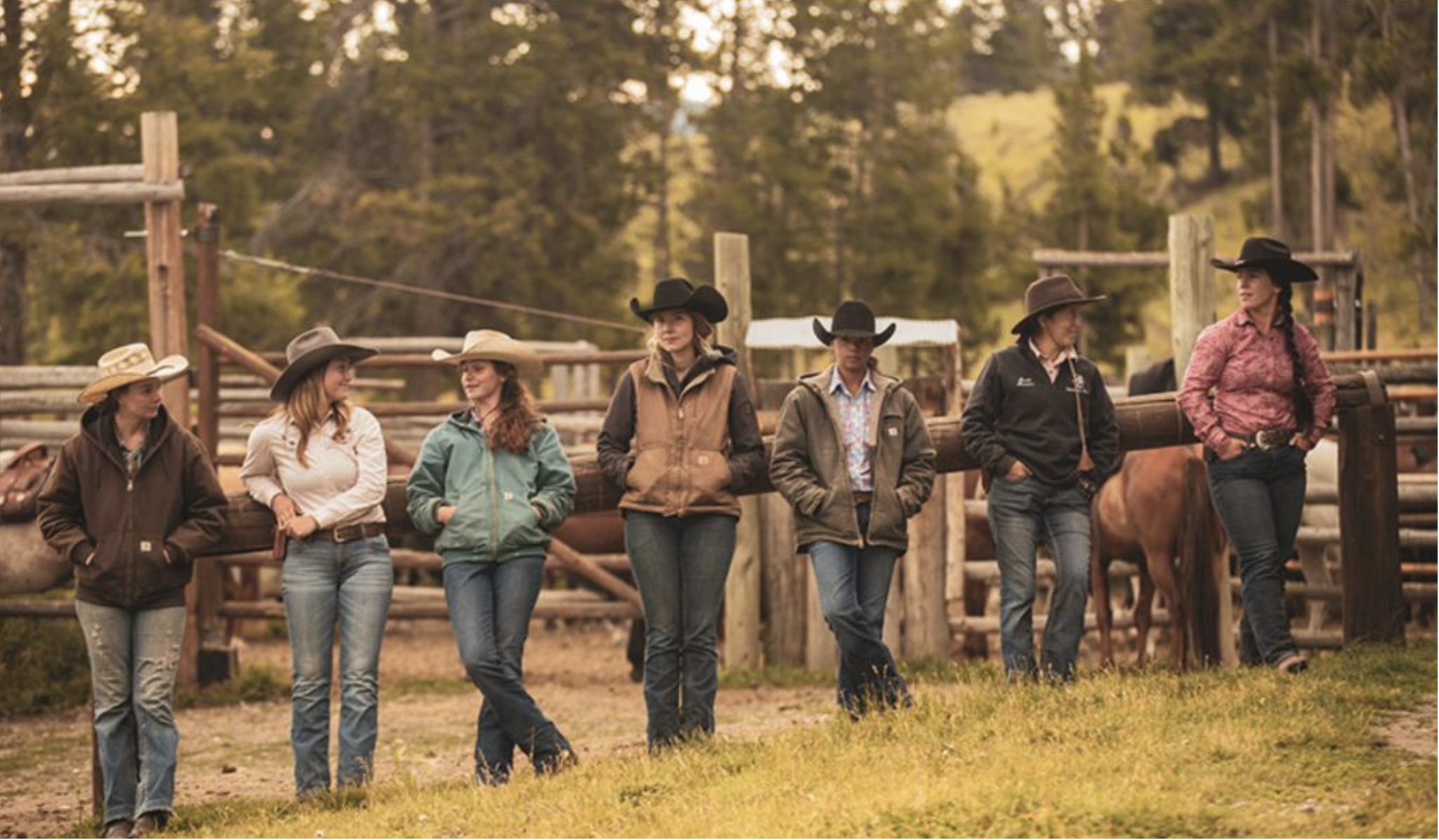
Dude ranches offer guests 'authentic Western experiences' and support local communities

Dude ranches teach city folk about Western living and promote
land conservation. (Nine Quarter Circle Ranch photo)
Windswept, vast and timeless, the American dude ranch is where guests learn to be cowboys and explore the  outdoors while supporting a Western business that has gained popularity over the past century.

"The very first 'dudes,' as visitors were called, were mostly folks from East Coast cities enamored with the Western lifestyle. They felt drawn to the romantic image of the cowboy, a figure somehow unchanged by the quickening urban sprawl of eastern cities," reports Graham Marema for Western Confluence. "While some forms of outdoor recreation balance negative and positive impacts on local systems by introducing something new — dude ranches contend with all three pillars of sustainability by embracing something old, traditional, and relatively unchanged."

Bryce Albright, director of the Dude Ranchers' Association, which provides membership to more than 90 dude ranches across the West, told Marema, "It's a different type of vacation. They're more of an authentic Western experience, which you can't get anywhere else. When people come out West, yes, you'll see the cowboys, and you'll see the rodeos, but until you get immersed in that kind of culture, you won't really have respect for it."

Dude ranch visitors come away with a different sense of why these parts are worth saving or may need protection. Sally Kelsey of Nine Quarter Circle Ranch, a Montana dude ranch near Yellowstone National Park, told Marema, "Something that is undervalued when it comes to our impact on conservation is our guests get to take rides in the country and learn to value a place that's very different from where they come from."

Over the past few decades, dude ranching has become a growing sector in ranching communities. Marema explains, "For some ranches, opening their doors to guests has provided an economically viable alternative or supplement to raising cattle. 'Agritourism,' which invites guests to vacation on farms and ranches, has grown in popularity among tourists and their hosts with revenue tripling in the U.S. between 2002 and 2017."

Marema writes, "Dude ranch guests spend most of their time on private land, partaking in low-impact activities like horseback riding or branding their initials into leather belts. They aren't as likely to leave trash on public trails or overburden the infrastructure of small mountain towns to the extent of other industries that rely on those towns to house, feed, and sustain their guests."

Friday, December 08, 2023

L.A. bans rodeos, becoming the latest city to limit or prohibit the shows; rodeo supporters call it an attack on their culture

Supporters of rodeos rally outside Los Angeles City Hall.
(Photo by Irfan Khan, Los Angeles Times)
Despite the role of rodeos in much of California's rural Western culture, certain show practices paired with documented animal injuries led the city of Los Angeles to ban rodeos, report Susanne Rust and Dakota Smith of the L.A. Times. "The Los Angeles City Council voted unanimously to ban rodeos in the city despite opposition by some in L.A.'s Latino equestrian community, who painted the crackdown as an attack on their culture. . . . Councilmember Bob Blumenfield led the council in passing the ban, describing in graphic detail the broken bones and pain endured by rodeo animals."

The ban carved out exceptions intended to "assuage concerns that the ban would prevent cultural events such as charrería, which is popular in Mexico, as well as the Bill Pickett Rodeo, a national event for Black riders scheduled for February in the City of Industry," Rust and Smith write. "More than 100 people signed up to speak in council chambers before the vote, many wearing cowboy hats and boots."

L.A. is one of many cities that have taken a deeper look at rodeo shows. "Other jurisdictions throughout the state and nation have put limits on or banned rodeos, including San Francisco, San Juan Capistrano and Pasadena, as well as Pittsburgh, Penn.; Baltimore County, Md.; Leesburg, Va.; and Fort Wayne, Ind.," the L.A. Times reports. "In response to concerns that a ban would be akin to an attack on Latino culture, Blumenfield said, 'This is not about culture. This is about animal cruelty. There are Black rodeos. There are Latino rodeos. There are gay rodeos. . . nobody is trying to go after a culture. We're saying that animal cruelty is something that we, in 2023, should not be supporting,' he said."

"Longtime equestrian Geronimo Bugarin said there are nine elements of charrería, including bull riding, mare riding and calf roping, and appeared dismayed at the prospect of not being able to continue those activities," Rust and Smith add. He said: "If we lose one of our key elements of charrería, it's like you don't have a charrería."

Tuesday, August 22, 2023

Facing the complex problem of too many wild horses

In Nevada, there are more wild horses than all game animals combined. (Photo by Melissa Farlow, Sierra Club)

"Wild horses couldn't keep me away" is a saying, but in real life, plenty of people would like to keep wild horses--otherwise known as mustangs--further away. "The number of horses—along with all the cattle grazing on public lands—has led to a calamity on the rangeland. Wild horses are reproducing at unsustainable rates; between 2007 and 2021, their numbers more than tripled," reports Heather Hansman of Sierra magazine. "In their search for forage, wild horses are tearing up high-desert vegetation, degrading riparian areas, and trampling fragile native plants. . . . As climate change makes the West hotter and drier, the animals are struggling to find water too. In some places, horses have been known to die of starvation and dehydration."

Solutions have proved difficult to find between land stakeholders and horse advocates. Hansman explains, "Roundups for slaughter are off the table—as a matter of humane treatment and U.S. law. Birth-control programs have shown promise, but they are difficult to carry out and are opposed by some horse advocates who express worries about horse health, genetic diversity, and unintentional sterilization. Some horse advocates complain that the Bureau of Land Management's annual roundups can be inhumane."

"One thing that horse people and ecologists agree on is that this situation is a mess. The system is so broken that Congress has called it a 'national crisis,'" Hansman writes. "... the magic and myth of the mustangs seem to collide with the realities of landscape management, policy tussles, and laws that haven't been meaningfully updated since the 1970s."

What does everyone want? "Healthy horses on healthy landscapes is what they say," Hansman reports. "But how can we reach that goal? Especially in the era of climate chaos, especially with an animal that sparks such intense emotions. . . .The story of wild horses is also the story of water and space and the ideal of wildness—the hope that the American West is still big enough for everyone who wants a slice and that last century's laws are adequate for 21st-century complexities. But on the range today, there is not enough to go around, and our ideas about wildness must be constrained by reality. How can we know what the reality is when we've been operating on stories for so long?"

Thursday, May 04, 2023

Horses are a lot of work, and so is recovery from addiction; the two fit together like hoof and horseshoe in Kentucky

Stable Recovery has been transformative for Tyler Harris.
(Photo by Anya Slepyan, The Daily Yonder)
One of the most complex parts of any recovery is staying in recovery. For men leaving prison, that's a tall order. To give them a leg up, some areas of Kentucky have worked out a healing combination that helps these men stay out of prison and addresses the state's horse-industry labor shortage.

"Tyler Harris has been to rehab six times in the last 10 years. At one point, he had nearly five years of sobriety. But he could never get it to stick," reports Anya Slepyan of The Daily Yonder. "This time, he's trying something new. Harris is one of 26 men currently participating in the Stable Recovery program in Lexington, Ky. The program combines housing and recovery support with job training, preparing participants to work in the equine industry."

"Stable Recovery founder Christian Countzler said the program's built-in therapeutic community and emphasis on job training provide an alternative model of recovery," Slepyan writes. Countzler told her, "You don't necessarily need to go to a $30,000-a-year treatment facility. You don't necessarily need to go to prison or a hospital. . . .If you get a job that means something to you and you live in an environment that supports you, you will be able to recover."

As part of their job training, Stable Recovery participants spend their first three months "enrolled in the School of Horsemanship at Taylor Made Farm, which trains people in recovery to work as grooms," Slepyan reports. "Program founder Frank Taylor said he started the school to help solve what he sees as two interrelated crises—high rates of opioid and alcohol addiction, exacerbated by the Covid-19 pandemic, and a labor shortage in the equine industry."

Horses need people, and Kentucky has lots of horses. "Kentucky's horse industry employs nearly 60,500 people and contributes $6.5 billion in direct and indirect annual economic activity, according to the Kentucky Thoroughbred Association. Although the industry is most concentrated in Central Kentucky, over 1 million acres across the state are used to keep, breed, and train horses, from Lexington to rural counties like Grayson, Pulaski, and Adair," Slepyan adds. "In response to the industry's labor shortage, the Kentucky Chamber of Commerce has also helped develop an employment pipeline for graduates of an equine program in the state Blackburn Correctional Complex. . . . Since 2019, more than 110 graduates of these three programs—all of whom are in recovery or recently released from prison, or both—have gotten jobs in the horse industry. . . . no TRF participants have ended up back in prison since the talent pipeline was established. This is especially notable given that nearly 30% of people released from Kentucky prisons will return there."

The School of Horsemanship has had similar success. "Around 70 students have graduated from the School of Horsemanship, several dozen of whom are now employed at Taylor Made Farm or elsewhere in the horse industry. Taylor Made Farm's staffing shortage has been addressed, and the demand for graduates of the program has spread to other farms," Slepyan reports. "By the end of the 90-day training, they are equipped to work as an entry-level groom in a range of facilities, from breeding and training farms to equine hospitals." Lewis Germany, who has been part of the Stable Recovery program for eight months, told Slepyan, "The outside of a horse is real good for the inside of a man."

Thursday, March 09, 2023

Flora/fauna quickies: Holding a baby goat can cheer you; corvid birds can 'ponder the content of their own minds'

Baby goats (Photo by Rachel Schlegel)
"Holding a baby goat is very therapeutic. It calms you and brings you so much joy. It does wonders for coping with anxiety and depression.,” says Friends of the Pennsylvania Farm Show Foundation. And baby goats aren’t cranky and stubborn like their elders!

To the south, pigs "play in the mud, run around the large field they’re sectioned off in, and enjoy the nutritious food given to them daily. Eventually, they will be sold to fine dining restaurants and artisan butcher houses throughout the D.C., Maryland and Virginia area," reports Paula Phounsavath of The News Virginian of Waynesboro, where "a family-owned pig farm has created a sustainable pork production."

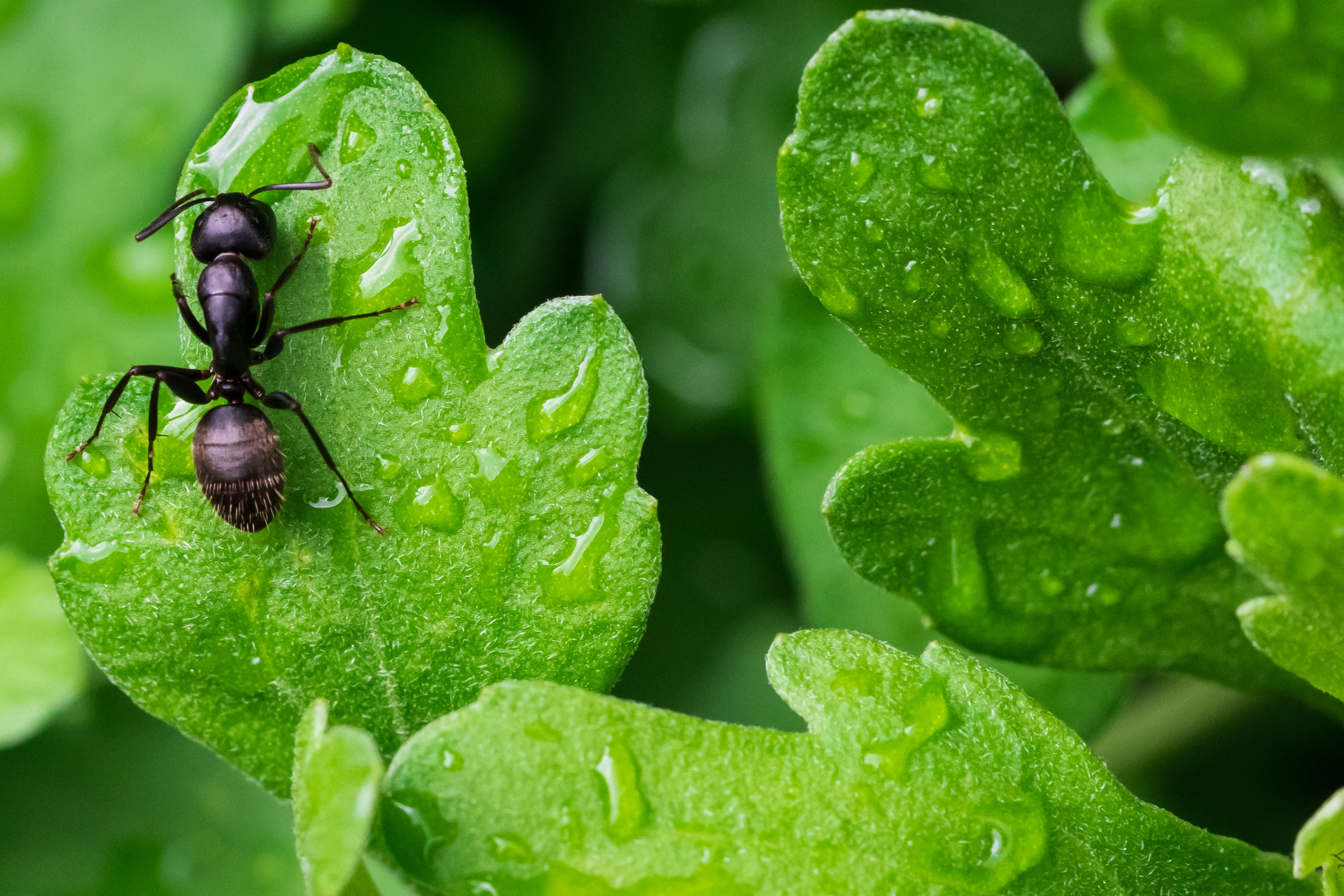
An ant at work (Photo by Shannon Potter, Unsplash)
Dogs, worms and ants have an amazing thing in common: They can be trained to detect markers of illness, from Covid-19 to tuberculosis. "Next time you’re irritated that ants have gotten into your kitchen, you might take a moment to consider their extraordinary powers of perception," reports Liz Langley of National Geographic.

What can bring your hope for humanity back? A horse show. The Horse World Expo returned to Pennsylvania for nickers, neighs and whole lot of horsing around.

Time to cook cabbage. Rumor is that cauliflower and Brussels sprouts may have been ousted. "Cooked the right way, cabbage can more than rise to the occasion." We agree.

Virginia is expecting its best oyster harvest in 35 years, the Richmond Times-Dispatch reports.

The rare Steller's sea eagle has returned to Maine.
(Photo by Zachary Holderby, The Associated Press)
Enjoy the Great Backyard Bird Count? Here's some more fun. "A rare Steller’s sea eagle native to the eastern coast of Asia, which caused a birding frenzy last winter, has returned to Maine. . . . If you're taking a specific trip, like to Japan in the winter, going out on a boat to some ice floes, that’s kind of your only chance to see one . . . But now, it’s just hanging out in Midcoast Maine.”

Of woods and men. Sounds more exciting than mice. The Conversation discusses the reintroduction of wolves in Colorado. "Aldo Leopold, the famed conservationist and professor of game management at the University of Wisconsin, believed that moral beliefs evolve over time to become more inclusive of the natural world. And what’s happening in Colorado suggests Leopold was right."

Crows are more intelligent than we thought. "New research shows that crows and other corvids "know what they know and can ponder the content of their own minds . . . This is considered a cornerstone of self-awareness and shared by just a handful of animal species besides humans."

With extra work and a little green thumb, you can make money from your garden. Consider growing perennial crops as a side hustle.

The glorious night sky! Eleven fantastic things to write on your calendar. "In the coming year, planetary alignments, perfectly timed meteor showers, and a pair of solar eclipses will delight stargazers around the world."

Friday, February 17, 2023

Friday's quick hits: All's quiet with rural reticence; celebrating Nina Simone; want your own Tiny Desk concert?

Nina Simone statue in Tryon, N.C. (Photo by Annie Chester)
Born in 1933, Eunice Kathleen Waymon was born in the quaint Appalachian town of Tryon, North Carolina. A rare musical talent, Eunice's first stage was the church before she became the Black nationalist known professionally as Nina Simone, Expatalachians recalls. Simone's sultry, distinct voice made her famous, and she used her music to fight against injustice, penning songs like “Mississippi Goddamn," which was her response to a 1963 white-supremacist terror attack in Birmingham, Alabama that killed four young Black girls. She died in 2003.

Rural America has a magic that spills into its music. From Bluegrass to folk to Appalachian roots to harmonica duos, you name it, there's a unique spirit to it. Consider sharing that spirit and enter to have your own "Tiny Desk" performance. Rural has a lot to share.

On Friday, it's good to take a breath. Maybe take a moment to read Maddy Butcher's piece on
rural reticence. . . In the rural West, quiet reserve is an essential skill and a fading art form, lost on people, like me, who rush to react and to be heard. Inevitably, it is rapidly losing ground to a louder, vainer way of being. 

A bachelor’s degree in automotive restoration has put a tiny Kansas school on the map. At a time when college enrollments are diving, McPherson College’s enrollment has been steadily increasing. Because its program is unique, it can cast a wider net than other colleges its size; it has 851 students — up 18 percent over the last five years. Check out that 1953 Mercedes-Benz 300S Cabriolet and status symbols by the likes of Clark Gable, Bing Crosby, Cary Grant and Gary Cooper.

The sign said, "Flowers are the Answer." What’s not to love? Floral foam, also known as "green fine-celled thermoset phenolic plastic foam" is particularly not lovable, writes Adrienne Mason for Hakai magazine. Flowers are beautiful, they’re natural, they lift our spirits and fill interior spaces. They let us say things without having to say too much. Mason says florists need to forget foam, embrace new—or re-embrace old—techniques, and educate their customers.

The English village of Lostwithiel is looking for a new general practitioner amid a national shortage of primary-care doctors. Residents hope a music video will do the trick. See what we did there: rural people know how to use music to create some magic. And maybe, just maybe, land a new doctor.

Do you have a friend who can do six degrees of Secretariat instead of six degrees of separation? Some people do not know a person like that, or anything about horse racing. Well, giddy up! Horse racing is set to join Netflix's stable of sports documentaries. Filming on what is understood to be a four-part series on the "Race to the Kentucky Derby" is set to start next month and the casting process has begun, with the series looking to tell the stories behind the owners, trainers, breeders, and jockeys involved.

Friday, February 10, 2023

Quick hits: Health benefits of outdoors; dealing with yard pests and winter blahs; can a state have an official aroma?

   "Yellowstone" cast (Paramount Network photo via IMDb)
Get rural-centric with "Yellowstone." Part Western, part soap opera, it's one of the most-watched shows on TV. It’s also the centerpiece of the growing rural entertainment empire.

The smell of roasting chile peppers is what draws people to parking lots across New Mexico. That sweet, spicy aroma that brings watering mouths and nostalgia for home; so it makes sense that lawmakers are weighing whether to make green chile the state’s official aroma. . . . It all began with a classroom of fifth graders. 

Speaking of veggies, the Rural Mom has some tips for supporting your local farmers' markets. They will be coming soon.

Spending time in nature can be relaxing and rejuvenating. It might even lower a person's rate of hospitalization for Parkinson’s, Alzheimer’s and related dementias, a large study showed.

Rendering from Encyclopedia Britannica
The University of Texas hosts an immersive summer Shakespeare program for rural Fayette County, Texas students to experience the Bard's work first hand. Professor Emeritus “Doc” Ayres at UT and his students are the subject of documentary called “Take Pains, Be Perfect,” which celebrates the half-century of performance and connection fostered in this theater barn in the country.

Fie, fie! Unknit those rows of mounded dirt that once were manicured lawn,
And dart not away from my hose and trap, oh, stealthy moles and voles,
To wound my yard so keenly, untamed shrews!

(Our adaptation of lines from Katherina in Act 5, Scene 1 of The Taming of the Shrew; for actual shrews and other yardly pests, read here on how to deal with them)

Head to the conjunction of folk-and-jazz-for-rock-but-pop that meets up at Western Animation Junction. And there you go. Schoolhouse Rock is 50 years old.

Snort. Whinny. Nicker. Neigh. Bray. Squeal. A visit to a horse barn, usually includes some comments from the four-legged creatures who are known to be curious and opinionated. These native and visiting horses weigh in on Lexington, Kentucky, which calls itself "Horse Capital of the World."

Salt. Sand. Pebbles. Cat litter. Yes, it's still snowing in some regions. "In these parts, driveways can break you or make you into a minor god worshiped by UPS and FedEx drivers, beloved of propane delivery personnel, and heavily recruited by rural volunteer fire departments. Here's how to keep on, keeping on as winter continues.

Science explains seasonal affective disorder, which can occur in both winter and summer. Here's why it happens, and how you might treat it.

Friday, December 23, 2022

Quick hits: Chestnuts, horses, igloos, poinsettias, karaoke, cancer vaccines, vertical farms, fantastic beasts, kids' books

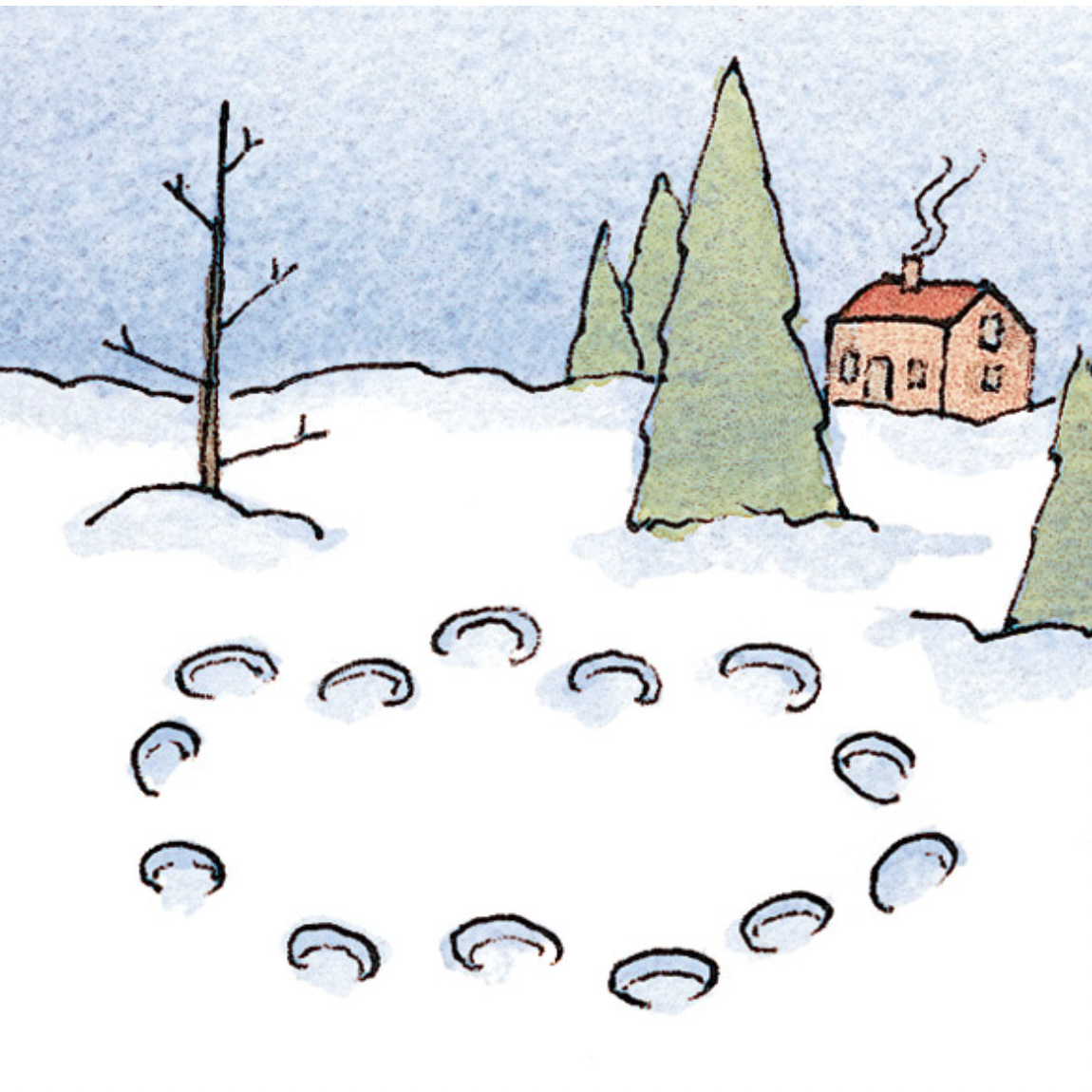
How to build an igloo in 10 steps.
(Art by Gil Martinez, New England Today)
This is our last Rural Blog quick hits of the year: from cheer to overcome the holiday slog to discussions by karaoke enthusiasts. Here's to remembering the good and heading into 2023 with hopeful hearts.

When it snows, build an igloo. Rural New Englanders know how.

The American chestnut tree is not quite extinct, and the struggle to bring it back to its former glory is ongoing. To celebrate the chestnuts part in rural history, roast some that Nat King Cole or Mel Torme would be proud of. This Masterclass can help.

Everybody's favorite animal ought to be a horse! Here's how to convert the world.

A cure to cancer? How about a vaccine to prevent cancer? For some cancers, yes. Here's how they work.

In many produce sections, there's often not much to pick from. One company aims to remedy that by building indoor vertical farms, each capable of producing seven tons of greens daily. 

J.K. Rowling isn't the only one with "fantastic beasts." The New Yorker has some lovable, imperiled fantastical beasts drawn by a great illustrator. 

Indigenous to Mexico and Central America, poinsettias herald the festive spirit of Christmas. Read the history of how this shaggy-leaved plant became cherished holiday decor.

Glenn Highway tree (Photo by Bill Roth, Anchorage Daily News, via Washington Post)
In south-central Alaska, which has about five and a half hours of daylight right now, commuters to and from Anchorage may never see daylight -- but they see the Glenn Highway Christmas tree.

The holidays can be lonely, cold or filled with family that stress you out. Holiday movies and songs can help, or at least distract, The Daily Yonder has it covered.

Planning a karaoke night? Here's the ultimate guide to finding your go-to karaoke songs with the help of reader suggestions, a panel of karaoke enthusiasts and Pandora music analysts.

The Three Billy Goats Gruff are back!  For gift ideas or delightful 2023 reading, The New York Times Best Children's Books of 2022 is here.

Friday, December 16, 2022

Friday flora/fauna: Invasive black carp thrive in mid-America; homes found for L.A. ponies, ousted as city ends rides

Black carp (U.S. Geological Survey photo)
Invasive and damaging black carp have established themselves in the Mississippi, Ohio and Illinois rivers, according to a study that is "the first to identify an established population, or one that is naturally reproducing and living to adulthood, anywhere in the U.S.," reports Meredith Howard of the Belleville News-Democrat in Illinois. The study was done by Southern Illinois University, the U.S. Geological Survey, the U.S. Fish and Wildlife ServiceMissouri State University and the Missouri Department of Conservation.

USGS said the carp “prey on species such as snails and mussels and pose a risk to many already imperiled native mussels in this region.” Howard notes, "Mussels improve water quality by filtering out algae, bacteria and pollutants and they also provide nutrition for other species." The carp, native to east Asia, were imported to control vegetation in Southern fish farms. Senate Majority Leader Mitch McConnell said the recently passed water-resources appropriation expands federal efforts to control Asian carp.

Alessia Del Val, 4, on a Griffith Park pony. (LAT/Christina House)
Since 1948, pony rides have been available in Griffith Park in Los Angeles, but under pressure from animal-welfare activists who said (sometimes yelling at children during rides) that the horses were overworked, the city didn't renew the contract for the petting zoo, which expires Dec. 21. A veterinary inspection "did not show any outright signs of neglect or animal abuse, the expert found some animals were in need of help for saddle sores, as well as hoof and dental care," the Los Angeles Times reports. "The expert recommended better shelter and amenities, such as easier access to lower water troughs."

Owner Stephen Weeks worried that he wouldn't be able to find homes for more than 30 ponies, but he said he got 50 calls a day, and by Wednesday 25 had homes. Weeks told the Times the rest will probably go to a sanctuary so they can get medical care, and he chose not to sell any for auction or to another horse-ride business. “Some ponies are obviously capable of working, but as far as commercially working, it’s just my preference,” he said. “They’ve done that, and now they should experience something new in life, less work. ... It's almost like saying goodbye to a family pet.”

Photo from The Notebook by Poplar Terrace and Friends
Bradford pear trees were once a popular landscape planting, but they turned out to have several problems, including being invasive and hurting other species. It got so bad in Kentucky that the University of Kentucky is offering a bounty (seedlings of better species) for proof of destruction of Bradfords, a cultivar of the callery pear. In Louisville, "Bradford pears were aggressively growing into a field of white flowering trees on River Road, resulting in the destruction of the much-needed native species and the surrounding forest land," so they were removed, local philanthropist Christy Brown reports in her latest Poplar Terrace newsletter. "Ultimately, while it may be alarming to see so many trees uprooted, bear in mind that removing invasive species helps protect the biodiversity our River City relies on. In order to protect the resilience of our environment, we must protect the wild lands which enrich our health, culture, and economy."

Thursday, December 08, 2022

Black cowboys and cowgirls are not unusual in California

A touring event for Black cowboys and cowgirls from across
California and the nation. (Photo by Jason Armond, Los Angeles Times)
Actors like the late John Wayne are considered quintessential American cowboys, but that view may be changing. "Black cowboys and cowgirls are finally getting their moment to shine in the mainstream," writes Tyrone Beason of the Los Angeles Times. "The recent films 'Nope,' 'The Harder They Fall' and 'Concrete Cowboy' have burned images of Black ranchers, settlers and riders into the public’s consciousness."

Thirty years ago, seeing a Black cowboy was thought 'odd' but "Ron Jennings grew up in Los Angeles, but he’s all country, right down to his cowboy hat and folksy twang," Beason writes. "The 42-year-old smiles when recounting the strange looks he got from fellow passengers during bus rides to his grandfather’s horse stable in Gardena or to participate in rodeos at Griffith Park when he was a teen. The cowboy hat, the bell clanging against the rodeo gear in his bull bag — he came across as an oddity in the city, even more so because he is Black." 

In California, there are Black rodeos that attract African Americans from all over the nation: "At the Bill Pickett Invitational Rodeo’s latest stop in Los Angeles, not only are all of the cowboys and cowgirls Black — so are most of the 3,500 spectators," Beason reports. "The air smells of catfish frying and barbecue simmering."

Spectators come from all over to enjoy horses and history. Kairis Chiaji, who belongs to a Black trail riding club outside Sacramento, told Beason, "There’s something special about Black people coming together to revel in this heritage. In these spaces, it’s safe to be us.” Beason writes, "Most of those gathered express a determination to expose Americans to another facet of the West — and the Black experience."

Byron Levy, whose wife also rides, told Beason: “What’s televised about our culture, it’s always negative — Black-on-Black murders, but none of this is ever televised — how we get together with four or five hundred Black cowboys and cowgirls and there’s no incidents. . . . Al Sharpton don’t have to show up."

Friday, November 25, 2022

Nature nips: Ode to a maple; one horse saved; series on hog production summarized; wild turkeys rule New England

Darlyn Brewer Hoffstott's maple (Photo: Kristian Thacker, NYT)
In an ode to a huge, dying maple tree in Pennsylvania, Daryln Brewer Hoffstot writes for The New York Times, "'Standing people' is what the Cherokee called trees. I feel as if I am losing a member of the family."

Ever wondered how that jellied cranberry sauce is made? The Times tells us.

A horse won races, was retired and sold to farmers who sent him to a kill pen when he wore out. Donors to animal sanctuary in New York saved him, Rural Intelligence reports.

Madison McVan of Investigate Midwest has summarized the four-part series he did this fall about changes in hog production.

In New England, wild turkeys "were once hunted nearly to extinction; now they’re swarming the streets like they own the place," The New Yorker reports. "Sometimes turnabout is fowl play."

Friday, August 12, 2022

Quick hits: Q&A on Mar-a-Lago search; 'corn sweat' boosts Midwest heat wave; rural German gun culture different

Here's a roundup of stories with rural resonance; if you do or see similar work that should be shared on The Rural Blog, email us at heather.chapman@uky.edu.

FactCheck.org has a Q&A on the search of Mar-a-Lago. Read more here.

Many suspected the story of a 10-year-old rape victim in Ohio who sought an abortion in Indiana was a hoax, but local journalists were the key to proving it wasn't. Read more here.

One more reason for the heatwave in the Midwest: 'corn sweat' is making the air incredibly humid. Read more here.

Westerners struggle to manage booming wild horse populations. Read more here.

Nearly 40% of Americans in a recent poll said they're tired of the two-party political system. Read more here.

A writer who grew up in rural Germany says guns were ubiquitous there but mass shootings weren't. That's because of key differences in gun culture and government regulation, she writes. Read more here.