Showing posts with label pets. Show all posts

Tuesday, October 17, 2023

Veterinarians face pet owners who reject vaccinations; research shows fewer vaccinations could be dangerous

Forty percent of dog owners distrust vaccines, new research
shows. (Photo by Karsten Winegeart, Unsplash)


New research shows that more pet owners are resisting traditional vaccines, which could cause disease outbreaks in animals and people. "Researchers who have studied vaccine hesitancy since the onset of the Covid-19 pandemic say a growing body of evidence shows a surprisingly high level of mistrust among pet owners over vaccines for cats and dogs," reports Stephanie Armour of The Wall Street Journal. "Almost 40% of dog owners believe that canine vaccines are unsafe, more than 20% believe these vaccines are ineffective and 30% consider them to be medically unnecessary, according to a new study published in the journal Vaccine."

Commenting on the study's anti-vax skew, its lead author, Matthew Motta, an assistant professor of health law, policy and management at Boston University, told Armour, "We were shocked. In a world where mandates are being dialed back, and more pets go unvaccinated. . . .That’s a threat to our pets but also a public health threat to you and me.”

If fewer animals are vaccinated, the chance for previously controlled diseases such as rabies to return dramatically increases. Rena Carlson, a veterinarian and president of the American Veterinary Medical Association, told Armour, "We’re going to see more and more disease as we see vaccine compliance drop. . . . Vaccines can really prevent severe disease.” Armour reports, "Seventy percent of dogs in a population should be vaccinated against rabies to prevent outbreaks, according to the World Health Organization."

Social media postings about the potential harm vaccines "could do" has contributed to the anti-vaccine movement. Armour writes, "A pet owner in California with a Chihuahua said she always takes her dogs 'off the system' because she said vaccines can cause cancer, seizures or death. . . . Misinformation and misperceptions are driving a lot of the skepticism, veterinarians say. Thirty-seven percent of dog owners believe vaccines could cause cognitive problems such as autism, according to the study in Vaccine. No scientific data exists that validates the risk for people or animals."

Friday, September 08, 2023

Friday Fauna: World's oldest chicken; island for cows; dog escapes to nursing home; giraffe with no spots?

Peanut eats blueberry yogurt, grapes, bananas and vegetables.
(Photo via Smithsonian)
Meet "Peanut," the world's oldest chicken. She's sassy and just celebrated her 21st birthday, reports Sarah Kuta of Smithsonian magazine. Peanut loves her morning blueberry yogurt, muttering in the garden, possibly doing Chicken Little re-writes. The bantam hen is a "character" with a "ragtag group of chicken friends," reports Bridge Michigan. In addition to not being afraid to peck at cats, Peanut just earned another distinction: Guinness World Records has named her the world's oldest living chicken.

Chirikof Island sits in the Gulf of Alaska, a verdant home to over 2,000 feral bulls and cows, reports Jude Isabella of Hakai magazine. The remote island, affectionately known as the "Republic of Cows," has been a bovine home for 200 years, perhaps more.

This dog's first nursing home break-in was back in 2017. "He leaped over two fences and crossed a highway, then sauntered into the nursing home lobby through an automatic revolving door and parked himself on a brown-colored couch," reports Sydney Page of The Washington Post. Find out what happened next.

The spotless giraffe is ​the first one seen in 50 years.
(AP photo via National Geographic)
Spots, stripes, glow in the dark--nature has relentless creature fashion, but sometimes, less is more. This baby giraffe was born without blocked spots. It's a phenomenon that "hasn't been observed in any giraffe for more than 50 years," reports Dina Fine Maron of National Geographic. "She was born last month at Brights Zoo, a family-owned facility in Limestone, Tennessee. A spotless giraffe was last reported at a Tokyo zoo in 1972."

Well, meow--think you know everything about cats? This article thinks maybe you don't. "What makes cats even more interesting is that there are so many things we don't know about them despite their popularity. So, here are some of the most intriguing facts about cats that even their biggest fans don't know," writes Nancy Truman of Last Night On. "Your cat thinks you're bad at hunting . . ."

In 2021, Brood emerged throughout the Eastern U.S. in the trillions.
(Photo by Rebecca Hale, Nat Geo Image Collection)
If you thought there were more cicadas this year, you're right. "Some Americans are getting a preview of summer 2024, when two periodical cicada broods will emerge simultaneously for the first time in 221 years—an event rarer than Halley's comet," reports Kiley Price of National Geographic. Find out what's in store for 2024 here.

There are reasons to scout for whitetail deer year round. The animal needs hunters to keep its numbers in check and people need the food. There's even an app to aid in the scouting.

Monday, August 21, 2023

Flora and fauna: Why dogs tilt their heads; women lobster boat leaders; cacti losing their arms; what do moths do?

Photo by Lourdes Balduque, Getty Images via Scientific American
One of the cutest things a dog can do is the signature "doggy head tilt." You know the one--you ask your pup a question and bloop--head tilts, ears perk and eyes lock in a curious stare. Scientists who wondered what this endearing move means "have published just one study focusing on possible reasons for head tilting in dogs," reports Stephanie Pappas of Scientific American. "That research suggests the animals might cock their furry noggins when processing familiar words."

Who's super strong, tough and deals with clawed crustaceans? Women lobster boat captains. "On the boat, you must always have one eye on the trap lines that threaten to entangle you and pull you overboard. There is paperwork, too: You must complete an apprenticeship, and you will have to pass the U.S. Coast Guard's captain's test," reports Kirsten Lie-Nielsen of Modern Farmer. "If you are a woman, the challenges don't stop there. You may be the only woman fishing out of your harbor, vying for respect in an industry that, throughout its long history, has welcomed only men onboard. Every day, you'll be working to prove you belong on the boat and not keeping the books back at the wharf."

View of a Saguaro affected by Arizona's extreme heat.
(Photo by Liliana Salgado, Reuters)

This summer's extreme heat has done more than exhaust people. It has parched plant life--even to the point these cacti's arms have fallen off. "Arizona's saguaro cacti, a symbol of the U.S. West, are leaning, losing arms and in some cases falling over during the state's record streak of extreme heat, a scientist said," reports Liliana Salgado of Reuters. "Plant physiologists at the Phoenix garden are studying how much heat cacti can take. Until recently, many thought the plants were perfectly adapted to high temperatures and drought. Arizona's heat wave is testing those assumptions."

Sometimes it feels as if nothing is safe anymore--not even mowing the lawn. "Peggy Jones was mowing her lawn when a snake fell from the sky. It quickly wrapped itself around her right forearm, striking at her face. The snake spewed venom on her glasses lenses," reports Allie Kelly of The Dallas Morning News. "Seconds later, a hawk swooped down to collect its prey. The bird began clawing at Jones' forearm and cut her as it tried to grab the snake."

The painted lichen moth has technicolor wings.
(Photo by Carla Rhodes, The Washington Post)
Moths are underappreciated, beautiful and essential ecosystem insects. "Their sheer numbers only begin to speak to their relevance: One in 10 described species of organisms on Earth is a moth, and a recent study from the University of Sussex in Britain showed that moths are more efficient pollinators than bees," reports Akito Kawahara of The Washington Post. "Moths also contribute directly to our lives; they produce silk we use for our clothing, for example. Did you know that the worm in a bottle of tequila is also a moth caterpillar?"

A little used method to protect livestock from the heat is "silvopasture'. . . the method involves intentionally incorporating trees on the same land used by grazing livestock, in a way that benefits both," reports John McCracken of Grist. "Researchers and farmers say silvopastures help improve the health of the soil by protecting it from wind and water while encouraging an increase of nutrient-rich organic matter, like cow manure, onto the land."

Tuesday, August 01, 2023

Flora and fauna: Cat is a shepherd; your fruit is sweeter; the American Serengeti; wild boar for dinner; Vt. prefers cats

Bodacious loves his sheep.
(Photo by Jesse Hirsch, Modern Farmer)
You heard it here first. A cat in Ireland is a shepherd. "If you've ever owned (or met) a cat, the idea of using one like a sheepdog is absurd. Cats hate to be bossed, they're too puny to scare a sheep, and they'd much rather take a sunshine nap than run around doing farmwork. Even though they have evolved to recognize their owner's voices, studies say that they just don't care," yarns Jesse Hirsch for Modern Farmer. "Still, as cat shepherds go, Bodacious is at the top of his field. He's assisted in lamb births, barbed wire sheep rescues and hypothermia resuscitations, to name a few. His owner, Irish farmer Suzanna Crampton, says she could not function without him."

Do your "cotton candy" grapes taste as sweet as cotton candy? Is fruit sweeter now? "Yes, though the longer answer is more complicated. Some of the most powerful evidence that fruit is sweeter than before comes from zoos," reports Bee Wilson of The Wall Street Journal. "In 2018, it was reported that Melbourne Zoo in Australia had stopped giving fruit to most of its animals because cultivated fruit was now so sweet that it was causing tooth decay and weight gain. . . . Among fruit breeders, the word 'quality' is now routinely used as a synonym for 'high in sugar.'"

Where the buffalo roam: Charles M. Russell National Wildlife Refuge.
(Photo by Katie Butts, Fish and Wildlife Service, via the Revelator)
Efforts to bring back the American version of Africa's Serengeti Plain are underway. The project is "a call to protect and restore the northern Great Plains and the biodiversity it once held in great numbers. That includes swift foxes, beavers, river otters, bison, elk, pronghorn, black-footed ferrets, grizzly bears, wolves and numerous species of grassland birds," reports Tara Lohan of The Revelator. "In 2002, Curtis Freese helped launch the nonprofit American Prairie, which aims to establish a preserve of 3.2 million acres in northeast Montana. . . .The group's about halfway to its goal."

Wild hogs in a swamp near Slidell, Louisiana.
(Photo by Laura Prieto, Alamy via The Guardian)
Tired of wild boar committing rampant land destruction? Warm up the golden pipes, sing the ultimate Christmas carol, and then get ready for a feast. Here it goes: The boar's head in hand bring I, Bedeck'd with bays and rosemary. And I pray you, my masters, be merry, Quot estis in convivio ("As many as are at the feast"). "Some chefs, farmers and meat purveyors in southern wild-boar hotspots are bringing feral hogs into the food chain," reports Sara Ventiera of The Guardian. "They're transforming a nuisance species into a sustainable protein for human consumption. Chef Jesse Griffiths, co-owner of Dai Due and author of James Beard-winning The Hog Book and Afield, is one of the hospitality industry's biggest advocates for consuming wild hog." Menu ideas here.

It's raining cats and dogs. Well, maybe not raining, but there's a lot of 'em. "In most states, the percentage of households with pets is higher than the percentage of voters who voted in the last election. Dogs hold the lead in every state but Vermont," reports State Legislatures News. "And the percentages of cats and dogs don’t add up to 100% in any state due to the ownership of other pets that are neither feline nor canine. All those pets cost money, to the tune of $136.8 billion in 2022, according to the American Pet Products Association. Click meow to get the map.
Tuesday, April 25, 2023

Flora/fauna: The grizzly bear may return to the Cascades; revelations in 'chicken-speak,' how to repel mosquitoes . . .

U.S. Fish and Wildlife Service map via National Geographic shows
current grizzly range in dark brown, historic range in light brown.
Grizzly bears may return to the Pacific Northwest. "Across 6.3 million acres of forest home to the nation’s most imperiled grizzly-bear population, there has not been a confirmed sighting of Ursus arctos horribilis since 1996," reports Craig Welch of National Geographic. "So the Biden administration is working on a last-ditch effort to bring grizzlies back. Much as federal agencies reintroduced wolves to Yellowstone National Park, scientists hope in coming years to pluck grizzlies from healthy populations in Canada or Montana and transplant them to the Pacific Northwest. . . . The government has a plan to bring these animals back to an ecosystem that needs them." The bears are top predators, but 90 percent of their diet is plants.

Image courtesy of Agate Surrey
"Chill Phyllis" was a backyard chicken who moaned and muttered a lot -- in chicken-speak, of course. . . . People said Chill Phyllis was simply exhausted from laying eggs, but they really weren't sure. . . . Now there's a book that might share some clues about such fowl. "Clucking, trilling, grumbling: The language of chickens was just one of the revelations that struck Tove Danovich as she raised three chicks in her Portland yard," Rebekah Denn writes for The Seattle Times. Danovich's book, Under The Henfluence: Inside the World of Backyard Chickens and the People Who Love Them began as a "quest for eggs," but the project hatched into research and a resource with "with notes on hatchery ethics, therapy chickens, and rescued battery hens."

Why do mosquitoes buzz in people's ears? Because they're obnoxious (unless you're a bird; then they're dinner). Here are some nature-friendly tips on plants such as rosemary and lavender that can keep the buzzing, biting and disease-carrying party crashers at bay.

Wool can be a magical material for warmth, dryness and the general coziness, but in some places it needs a little more recognition. "There isn’t a great market for much of the wool produced in the Upper Midwest. The price per pound of raw (greasy) wool is unlikely to cover the cost of raising and shearing the animal. . . . Some farms just compost or burn their clip," reports Donna Kallner of The Daily Yonder. "The Fibershed movement is working to change that. The non-profit organization’s mission is to transform regional fiber systems through climate-beneficial agriculture, rebuilding regional manufacturing, and reconnecting end-users with the source of their fiber."

"Massive," "font of life" and "wild ox" are all names for the bison. "The American bison stands at the crossroads of the animal, plant, and human worlds. It is part of an integrated ecosystem that includes people as much as it does bobcats, finches, and sunflowers," reports Nathan Beacom for Plough magazine. "In the Great Plains, scientists and small farmers bring back a mythic beast and a lost ecosystem. . . . Finding the right way to relate to this, our national mammal, might show the way to a healthy relationship with the natural world of the American West."

Photo by Matthew Modoono,
Northeastern University

Parrots are fun, social pets but also intelligent and need social interactions. These parrots participated in video chats with fellow feathered friends. For many, it turns out "Polly does want to video chat. . . . a lot," reports Emily Athens of The New York Times. "They mirrored each other's behavior grooming together . . . and singing together. . . . Some of the birds quickly made favorite friends."

Not all cats hate water. This story recalls "The forgotten history of cats in the navy. . . . Sailors embraced their feline colleagues, giving them tiny uniforms and their very own hammocks," reports Scot Christenson of National Geographic. "But cats are natural outlaws—so it couldn’t last forever."

Wednesday, April 05, 2023

Goat's 9-year-old keeper didn't want her slaughtered, so Mom saved the animal; then the law came with a warrant

Jessica Long’s 9-year-old daughter with her goat, Cedar.
(Photo courtesy of Advancing Law for Animals)
A mother saved her daughter's goat, sold at auction, from the slaughterhouse. County-fair officials took offense and sent detectives to apprehend it.

"Thus began the legal saga of Cedar the goat, a 7-month-old white Boer goat with chocolate markings framing its face who is now the subject of a federal civil rights lawsuit naming Shasta sheriff's officials, Shasta County, the Shasta District Fair and other defendants who are accused of involvement in the apparent slaughter of Cedar for a community barbecue," reports Sam Stanton of The Sacramento Bee. 

"Every day for three months, Jessica Long's young daughter walked and fed her goat. . . But when it was time for Cedar to be sold and slaughtered at the Shasta District Fair last year, the 9-year-old just couldn't go through with it," Stanton reports. "The animals are then entered in an auction to be sold and slaughtered for meat in hopes of teaching children about the work and care needed to raise livestock and provide food."

Once Long realized her daughter was not ready to part with her goat, she "decided to break the rules and take the goat that night and deal with the consequences later," reports Salvador Hernandez of the Los Angeles Times. Long wrote Shasta District Fair Chief Executive Melanie Silva, offering to reimburse the buyer the winning $902 bid and saying, "Our daughter lost three grandparents within the last year. . . . I couldn't bear the thought of the following weeks of sadness after the slaughter of her first livestock animal." Silva replied, "Making an exception for you will only teach [our] youth that they do not have to abide by the rules. . . . This has been a negative experience for the fairgrounds as this has been all over Facebook and Instagram."

When Long did not return Cedar, B.J. Macfarlane, livestock manager for the Shasta Fair Association, called the cops. "Armed with a search warrant, detectives drove more than 500 miles across Northern California in search of the goat," Stanton writes. "Echoing language used when law enforcement searches a home for drugs, the warrant allowed deputies to 'utilize breaching equipment to force open doorway(s), entry doors, exit doors, and locked containers' and to search all rooms. . . . any kind large enough to accommodate a small goat'." 

Cedar was found, "taken and slaughtered," Hernandez reports. Long's suit claims fair officials and the county "committed an 'egregious waste of police resources' and violated her and her daughter's Fourth Amendment and 14th Amendment rights protecting them from unreasonable searches and seizures, and due process. Long and her attorneys allege the dispute was a civil matter she was willing to resolve."

Officials declined to comment. Ryan Gordon, an attorney with Advancing Law for Animals, told Hernandez, "A child can't be held to the same standard as an adult can. When she wanted out, she had an absolute right. . . . It's shocking. It's a little girl's goat, not Pablo Escobar."

Flora/fauna quickies: How snails travel so far, pet-inspired art, what to do when baby bird falls from a nest, and more

Sybil Gorby with an heirloom tomato she grew
in her garden. (Courtesy family photo)
Big-vegetable photos aren't just for rural weeklies. The Washington Post spotlights Sybil Gorby, 92, who has been planting tomato seeds from the same lineage since 1965. "Sometimes, the seeds turn into giant heirloom tomatoes, including one from last year's harvest," reports Sydney Page. Gorby's daughter, Sandy Marody, "shared a photo of her mother holding the large fruit in a Facebook group called 'Appalachian Americans.'. . . . People were quite impressed with the photo of Gorby proudly cupping the supersized tomato in her hands."

The "alpha wolf" myth has a long history as a paragon of power and dominance. But new research shows the myth is false. Researcher David Mech describes the wolf as "one of the wildest and shyest of all the animals in the northern wilderness," reports Rivka Galchen of The New Yorker.


Thom van Dooren wonders this about snails: "How do organisms that are so sedentary end up being so incredibly widely dispersed?" Find out how these notoriously slow animals get around.


Robin fledgling (Photo by Jeanette Tasey, Audubon)
A baby bird is out of its nest. Now what? Do you attempt to help? Walk away feeling bad but not wanting to make things worse for the little guy? This timely article gives some advice

As a child, Jessica Gauley, a kayak tour operator, once romped about Honey Island Swamp in Louisiana. Now she's working to reclaim a wetland, reports Anya Slepyan of The Daily Yonder. "Poisonous pollutants from industrial plants had turned nearly 10 acres of the healthy, primeval swamp into a toxic wasteland. . . . She calls the area the 'kill zone' because of the contaminants' toll on the local wildlife. . . . Gauley began cleaning up the kill zone, one kayak-load of trash at a time. . . . . a tour group she lead offered to help her. . . .The zone still has a long way to go, but Gauley has already started workshopping a new name for the area: the resurrection swamp."


Calling all pet artwork! Beth Novey of National Public Radio zipped out a missive asking for submissions, "We were curious to see what other pet-inspired artworks were out there, so we asked you to share some of yours, and dear readers, you did not disappoint. Below is just a small sampling of the hundreds of masterpieces we received." They've got a cat snow sculpture, "The Goatie Boys" Christmas drawing, Meow Lisa, and artwork with real horse hair.


Billy the Goat was a popular sight on Lake Cumberland
in Southern Kentucky. (Photo courtesy of Matthew Blum)
A huge Kentucky lake has lost one of its longtime fauna friends. "Billy the Goat, a wild creature who had made his home along the busy shores of Lake Cumberland, is being mourned and remembered by the legions of lake users who had taken a shine to him, after recently being found dead, apparently by gunshot," reports Christopher Harris of the Somerset Commonwealth Journal. "And like Billy's exploits in life, the news of his death has become something of a local viral sensation."

There's just no explaining some couples. "A rescue dog and goat are best friends. A shelter put them up for adoption as a pair," Cathy Free of The Washington Post reports. Jennifer Federico, director of animal services at the Wake County Animal Center, told Free, "It's a weird duo, but it works for them. Who are we to judge? They obviously love each other."

Friday, February 24, 2023

Flora/fauna quickies: Watching hybrid hogs from Canada, snaring pythons in Florida, protecting pets from coyotes

A long-exposure image shows Phacelia flowers waving in the wind. (Photo by Justin Benttinen, National Geographic)
Super. Fantastical. Fabulously. Epic. California is about to bloom! The state has received abundant rains and Mother Nature is planning a luscious “sea of flowers” this spring. Here’s how to soak in this increasingly rare phenomenon. California is also having an epic 'supershroom' season. These mushrooms are breaking records.

Invasive and "highly intelligent," a hungry, hybrid breed of pigs, created by matings of wild boars and domesticated sows, has gone feral. They are making their way from Canada, where they were bred for cold-hardiness and released when the hog market fell, and have been found in North Dakota.

As we ease into spring, it might be time to think about honey bees. You know, those highly social insects with a work ethic that makes even the most industrious human look lazy. Want to know how to become a beekeeper? Try a Cooperative Extension Service website. Want to read a wryly humorous book on beekeeping? Pick this one up.

Pythons are an invasive predator in the Florida Keys that have proved difficult to catch; however, researchers devised a way. They began "strapping GPS collars to opossums and raccoons. When one was eaten by a python, researchers programmed the device to notify them from within the snake’s stomach," reports Kyle Melnick of The Washington Post. "After roughly six weeks of searching for the python that activated the alarm, research technicians located the 66-pound snake hiding underground. . . . In her stomach, researchers discovered the collar — confirmation their plan worked."

A nuisance-animal bill aims to make farmers "honest folks," or at least that's what Iowa Rep. Dean Fisher thinks. House File 118 would allow farmers to trap and kill wild animals — such as groundhogs, opossums, raccoons, and skunks — without first contacting the Iowa Department of Natural Resources if they are a “nuisance.” Of course, there's controversy, “Because there’s a culture of breaking the rules or the law, we change the law?” said Rep. Elinor Levin, D-Iowa City." Story by Iowa Capital Dispatch here.

"Goran the bull escaped from his barn one Easter Sunday," chaos ensued, and everybody came to watch. Read selections from The Fearless Little Farm Boy by Astrid Lindgren, illustrated by Marit Törnqvist.

Coyotes are on the move. (Photo by Carolyn Cole, Los Angeles Times)
If you have pets, perk your ears up and prepare to protect them from coyotes. "Wildlife officials warn people to protect their pets during coyote mating season, which lasts from January to March. During that period, the males are particularly bold and aggressive," Sandy Banks of the Los Angeles Times reports, The Kentucky Department of Fish and Wildlife Resources warns, "Coyotes roam more to search for suitable partners and to establish territory, and as such, they find themselves in rural and urban areas."

Falco the Owl update: he will remain free and under observation. Falco is the Eurasian eagle owl that escaped from the Central Park Zoo in New York City after his enclosure was vandalized. Zookeepers tried to capture him "but Flaco eschewed the bait, and instead adeptly navigated the park and supped on the park’s many rats," reports Dina Fine Maron of National Geographic.

Thursday, April 28, 2022

Applications open for Farm Bureau Farm Dog of the Year

Fit, the 2022 Farm Bureau Farm Dog of the Year,
with her owner Cindy Deak (Farm Bureau photo)
The American Farm Bureau Federation is accepting entries in its annual Farm Dog of the Year contest until July 1. The grand prize winner will get a year's worth of Purina dog food and $5,000, and will be recognized at an award ceremony during AFBF's annual convention in January 2023. Four regional runners-up will each get $1,000. A panel of AFBF judges will pick the winners; desired traits are helpfulness to the farmer and their family, playfulness and obedience. "All entrants retain the title of Very Good Dog," Farm Bureau says.

Entrants can also vie for the coveted People's Choice Pup award, on which the public votes, beginning in October. The winning pooch will get bragging rights and a year's worth of Purina dog food. 

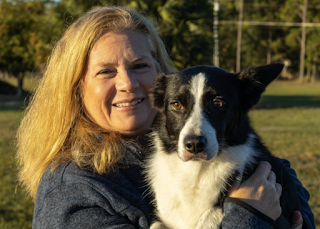
Click here for more information or to enter, along with footage of the current Farm Dog of the Year: a 5-year-old border collie named Fit who helps her owners move sheep on their Florida farm.

Friday, April 09, 2021

Quick hits: Relationships still strained after Trump presidency; Farm Dog of the Year entries sought . . .

Chuck the tortoise
(Photo by Berkshire Museum staff)
Here's a roundup of stories with rural resonance; if you do or see similar work that should be shared on The Rural Blog, email us at heather.chapman@uky.edu.

Global agricultural productivity is 21% lower than it could have been without climate change according to a newly published study. Read more here.

Opinion: Democrats' next big spending plan should include money to help local journalism. Read more here.

Chuck, the beloved 80-year-old tortoise at the Berkshire Museum's in Pittsfield, Mass., has passed. Read more here.

The Federal Emergency Management Agency has unveiled changes to the National Flood Insurance Program that it says will be more equitable. The rural poor in coastal and other flood-prone areas can have a harder time getting back on their feet after floods or hurricanes if they were not required to purchase flood insurance. Read more here.

President Biden has allowed the Trump administration's freeze on skilled-worker visas to expire. This could especially affect rural areas that hire foreign medical workers. Read more here.

The American Farm Bureau Federation is accepting nominations for its 2022 Farm Dog of the Year contest. Read more here.

Months after the end of the Trump presidency, friends and family members remain estranged over political views. Read more here.

One good thing for the meat industry: consumers increased their meat consumption during the pandemic. Read more here.

The Appalachian Gothic aesthetic is trending on TikTok. Read more here.

A bipartisan think tank is doing deep-dive research into rural America, with emphasis on the economy. Read more here.

Monday, November 09, 2020

Purina to launch pet food with protein from bugs, Asian carp

Nestle Purina PetCare is launching a new line of cat food and dog food made with larvae of black soldier flies, and plans to offer other lines soon based on Asian carp. It's all part of a push to find protein from cheaper, more sustainable sources.

The Beyond Nature's Protein line will hit stores in Switzerland this month, and the company plans to expand to other European markets, Jaclyn Diaz reports for NPR. Purina spokesperson Lorie Westhoff said the company will offer U.S. customers an insect-based dry dog food in January, sold online only, along with several other formulas using protein alternatives such as Asian carp, an invasive species.

Purina "is embracing what the company views as a growing trend among consumers seeking protein alternatives for their cats and dogs, company representatives told NPR," Diaz reports. "A desire to be more environmentally conscious drives the consumer change, as does a perceived health benefit from a diet that substitutes meat."

The United Nations has warned that it will be increasingly difficult to find cheap, reliable protein sources as the world's population grows and resources are stretched, and recommends insects as a meat alternative. That could help with global warming too, the UN says, since meat production is responsible for releasing large quantities of the greenhouse gas methane, Diaz reports.

Scientists have had their eyes on fly larvae for a while now. "That’s because of the black soldier fly larva’s remarkable ability to transform nearly any kind of organic waste — cafeteria refuse, manure, even toxic algae — into high-quality protein, all while leaving a smaller carbon footprint than it found," Christopher Ingraham reports for The Washington Post. "In one week, a soldier fly colony of modest size can turn a ton of waste into 100 pounds of protein and 400 pounds of compost . . . In one year, a single acre of black soldier fly larvae can produce more protein than 3,000 acres of cattle or 130 acres of soybeans."

Asian carp could be a promising source for pet-food protein too. State and federal agencies have spent more than $600 million since 2004 trying to halt the spread of the invasive species, but they're having a hard time figuring out what to do with all the fish. A pioneering public-private program in Kentucky pays anglers for carp and auctions the catches online, mostly to Chinese buyers.

Monday, January 23, 2017

Opioid epidemic giving rise to addicts who go 'vet shopping' for drugs

The opioid epidemic has given rise to a new breed of drug addicts, ones who go "vet shopping" to secure drugs for their pets that they plan to take themselves, Lindsey Bever reports for The Washington Post. "It is not known how widespread the problem really is because there is no conclusive data tracking cases of vet shopping . . . Drugs such as Ketamine, Tramadol and Valium, which are sometimes prescribed to pets, are used by drug addicts either by themselves or in conjunction with other opioids to enhance the effects."

All 50 states and Washington D.C. "have electronic databases known as Prescription Drug Monitoring Programs in which physicians can track controlled prescription drugs that are prescribed to patients," Bever writes. "But most states do not require veterinarians to report the prescribing and dispensing of these drugs. And some veterinarians argue that forcing them to do so would put an unnecessary burden on them and keep them from focusing on their jobs—caring for the animals."

But the problem persists, even if it is in its infancy, Bever writes. For example, a veterinarian in Elizabethtown, Ky. in 2014 became suspicious when a patient three times within three months requested Tramadol for their injured golden retriever. Veterinarian Chad Bailey told the Post, “That’s when I took notice. The cut looked sharp and clean—not like the kind in nature when a dog is cut on a fence or in a fight.”

The owner in 2015 was "sentenced to four years on five counts of obtaining a controlled substance by making false statements, a Class D felony, and three counts of torture of a cat or a dog, a Class A misdemeanor," Jeff D'Alessio reports for The News-Enterprise in Elizabethtown. Bever notes that the owner was released last month after serving about two years.

Monday, December 05, 2016

Lack of after hours emergency pet care in some rural areas putting owners in tight spots

Astoria, Ore. (Best Places map)
Some rural pet owners facing an emergency are reduced to either driving to an urban center or waiting until the morning to see a local veterinarian, Erick Bengel writes for The Daily Astorian: "It takes a fairly large population center to support around-the-clock emergency clinics. On the North Coast, there simply aren’t enough pet emergencies to justify keeping an animal hospital open through the night."

Five regional vet offices in Clatsop and Pacific counties, with about 58,000 total residents, have an on-call rotation, with each office deciding its hours, Bengel writes. Some take calls all night, some until 10 p.m., but the clinics usually don't remain open all night. Dr. Brad Pope, founder and hospital director at Bayshore Animal Hospital, one of the five, told Bengel, "To have a 24-hour emergency clinic open, to pay somebody to answer the phone two times a night, would never be economically feasible." Dr. Dannell Davis, owner of Astoria Animal Hospital, added that "The people that have the skills, that are willing to work in the middle of the night—guess what—are expensive. You can’t pay them minimum wage. They won’t do it.”

That means pet owners in an emergency most likely have to drive to Portland, about 97 miles from Astoria. That doesn't work for pet owners such as Erin Anderson, who was unable to reach a vet after her cat had a late-night stroke and her night vision problems prevented her from driving to Portland, Bengel writes. The cat died. Anderson told Bengel, “I like the vets here. All the vets are very nice people. I’m not knocking any one of them. I admire what they do. I know it’s tough on a rural area. But it’s tougher on us whose pets die in our arms.” (Read more)

Friday, August 12, 2016

Is the crazy cat lady mentally ill? When is animal hoarding, which is on the rise, a crime?

Should animal hording, which is on the rise, be considered a crime or a sign of mental illness that needs to be treated? There are an estimated 2,000 to 5,000 animal hording cases each year, according to the American Society for the Prevention of Cruelty to Animals (ASPCA), Sarah Breitenbach reports for Stateline. Those cases involve 250,000 animals, with the average number of animals involved per case being 50, with some cases involving thousands of animals. (ASPCA photo)

Despite the rise in cases, only two states—Hawaii and Illinois—have explicitly prohibited animal hording, Breitenbach writes. "Others rely on animal-neglect statutes that prosecute hoarders for failing to provide adequate food, water, veterinary and other care. But prosecutors are often hesitant to pursue these time-consuming cases because they require finding care for living animals and filing separate charges for each animal victim. So, groups like the Animal Legal Defense Fund are pushing states to adopt laws that could end hoarding in other ways."

ALDF lawyer Lora Dunn said "prosecuting animal hoarding cases is important, because without long-term intervention animal hoarders are all but guaranteed to re-offend," Breitenbach writes. "They need to be monitored for future instances of hoarding, she said."

"But stopping animal hoarding cases is more complicated than just filing criminal charges and taking away beloved, though neglected, pets, said Randall Lockwood, a psychologist working on anti-cruelty projects at the ASPCA," Breitenbach writes. "Prosecuting animal hoarders is equivalent to criminalizing a mental health disorder, he said. In 2013, 'hoarding disorder' was added to the Diagnostic and Statistical Manual of Mental Disorders. It was linked to obsessive-compulsive disorder, addictive disorders and personal trauma, like the loss of a spouse."

"Many animal hoarders he has encountered suffered abuse as children and had parents who were alcoholics or drug addicts. Often, they were looking to pets to fill the void of human bonds," Breitenbach writes. "That attachment persists even after the animals are dead, he said, pointing to a case in which an animal hoarder in Virginia made individual coffins for his 'dozens and dozens' of cats, keeping their remains in a shed." (Read more)

Thursday, January 14, 2016

State law does not prohibit Ohio residents from owning bobcats, appeals court rules

Ohio residents can now own bobcats, Eric Freedman reports for the Great Lakes Echo, a project of the journalism department at Michigan State University. The state Court of Appeals ruled "that private ownership of a bobcat isn’t banned because the Ohio legislature didn’t explicitly include it in a 2012 law regulating possession of dangerous wild animals." Adam Federer had sued after the Ohio Department of Natural Resources (DNR) "refused to renew his annual license because scientists and the state Agriculture Department classify the bobcat is a lynx and thus a 'dangerous wild animal.'" (DNR photo)

Federer, who has owned the bobcat since 2003, said he had "no problems getting an annual license from the DNR until 2014, when the agency denied his application based on the 2012 law," Freedman writes. "That law requires a permit from the state Agriculture Department to get a DNR license. The legislative roster of taboo animals lists 'lynxes, including Canadian lynxes, Eurasian lynxes and Iberian lynxes' but doesn’t mention bobcats, Among the other animals banned for private ownership and sale are bears, lions, jaguars, Cape buffaloes, elephants, crocodiles, rhinoceroses, leopards, Komodo dragons, tigers and northern night monkeys. The law makes exceptions, including for accredited zoos, aquariums and wildlife shelters, research facilities, licensed circuses and veterinarians temporarily caring for the animals."

There are between 725,000 to 1,020,000 bobcats in the wild, states Defenders of Wildlife. Males typically weigh between 16 to 28 pounds and females 10 to 18 pounds. The animals, which live 12 to 13 years, are typically 17 to 23 inches tall and 25 to 41 inches in length. Bobcats mainly hunt rabbits and hares but are also known to eat rodents, birds, bats, adult deer and lamb, poultry and young pigs.

Wednesday, December 30, 2015

Goodbye to a barn cat: 'It was a strange but very fulfilling relationship'

Donald Gregg with Shadow (undated photo)
Barn cats have long been a staple of rural life, but are less a part of daily life than house cats, because they have their own territory and are usually wary of humans, even those whose property they share. But that doesn't keep them and their human neighbors from forming attachments, perhaps at arm's length but with a certain connection. Such a cat, named Shadow, was the frequent companion of Donald Gregg, the father of John Gregg, news editor of the Valley News in Lebanon, N.H., and White River Junction, Vt. When Shadow died recently, Donald Gregg emailed his family and friends a remembrance, and his son turned it into a Christmas Eve column for the newspaper. Here are exceprts:
Shadow, our feral cat, passed away earlier this month, very peacefully. She had been shutting down for a couple of weeks, eating less and less, and moving with a bit of stiffness. My wife, Meg, and I found her about noon, when we returned from yoga class, lying very gracefully, as though asleep.
The ground was soft, so I was able to dig her grave easily, near a favorite tree she used to scamper up, close to the old play house. . . . A few hours before Shadow died, for some strange reason I remember what we would say as children when on a swing, and we stopped pumping: “Let the old cat die.”
Well, die she did, and the first time I ever picked her up was to lay her in her shroud to be buried.
Shadow, true to her name, has slipped away. It was a strange but very fulfilling relationship. We shall miss her.
Donald Gregg, 88, lives in Westchester County, New York. He was a CIA official, national security adviser and ambassador to South Korea.

Wednesday, September 23, 2015

Large animal veterinarians are becoming a vanishing breed in underserved areas in the heartland

Large animal veterinarians are becoming scarce in the heartland, "as agribusiness changed the employment picture and people left the region," Ted Conover reports for Harper's Magazine. "Many vets simply close shop when they retire; private practice is too hard a way to make a living. Meanwhile, the U.S. Department of Agriculture’s Food Safety and Inspection Service has become the nation’s largest single employer of vets, most of whom work in meat and poultry plants, where they oversee not animal husbandry but slaughter." (Iowa veterinarian Zach Vosburg talks with the owner of a cow during a pregnancy check)

"Today’s vet-school grads, about 80 percent of them women, head overwhelmingly to jobs in cities and suburbs, to work with pets," Conover writes. The main reason is that "fees aren’t tied to the market value of the animal; people spend more on critters that share their homes. With food animals, a farmer’s decision to summon the vet necessarily involves a calculation of profit and loss. In addition, the hours are better for an urban vet. A large-animal practitioner is usually on call twenty-four hours a day, seven days a week—and typical days involve a lot of highway driving."

Another problem is cost, Conover writes. When vet Zach Vosburg wanted to buy the north-central  Hampton Veterinary Center where he worked, he was facing student loan debts of almost $100,000. He gained some relief in 2013 after being awarded $75,000 from the USDA’s Veterinary Medicine Loan Repayment Program, which "pays off $25,000 of debt each year for three years if a practitioner relocates or extends his practice to an underserved area. To meet these guidelines, Vosburg agreed to serve the residents of Butler County, just east of Franklin County, where his clinic is located."

The clinic is a mixed-animal practice, Conover writes. Vosburg told him, “Anything can walk through that door." Vosburg treats household pets year round, "but a surge of farm work begins in the fall, when cattle need vaccinating and preg checking, and continues through the spring, when cows calve, horses foal and goats kid."

Tuesday, May 27, 2014

Rescue groups fill demand for pets by transporting more-at-risk Southern dogs to the Northeast

In some rural areas, especially in the South, it's not unusual to see stray dogs roaming towns or countrysides in search of food and shelter. In many cases, those dogs are former pets left to fend for themselves because of the high costs of caring for them. In other instances, unsterilized dogs have reproduced, overcrowding shelters and forcing large numbers of animals to be euthanized.

But some organizations have discovered that the South's overcrowded animal population can be a blessing for other areas where pets are in low supply, novelist J. Courtney Sullivan writes for The New York Times. "Many of the dogs that are routinely euthanized in Southern states—healthy Labs, hounds, shepherds and others, including puppies of various breeds—are in high demand in the Northeast, where low-cost spay and neuter services are the norm, kill rates are down and there are exponentially more potential adopters."

Last year, Long Island's North Shore Animal League America, a no-kill rescue and adoption organization, placed 6,672 dogs from Southern states, more than 5,000 of them puppies, in homes in New York, Sullivan writes. (NSALA photo: This puppy was one of 63 dogs rescued from a Mississippi shelter damaged by a tornado)

Volunteers have also been key, she writes. "People in Southern states are using Facebook and Petfinder to post pictures of homeless dogs. They find local volunteers who agree to temporarily foster the animals and make connections with groups like Badass Brooklyn Animal Rescue. Despite having little funding and no formal shelter space, the group has found homes for 1,200 Southern dogs since 2011."

Another group, P.E.T.S., based in Tennessee, "makes weekly pickups in seven Southern states and drop-offs in New Jersey, Pennsylvania, New England and New York," Sullivan writes. "P.E.T.S. has relocated more than 50,000 dogs in 10 years." (Read more)

Wednesday, July 03, 2013

Volunteers bringing veterinarian care to pets, owners in remote areas of Alaska

Pet owners in remote areas of Alaska have long struggled to get routine medical care for their pets, and the lack of spay-and-neuter procedures has led to an overabundance of animals, many of whom are sick, the Anchorage Daily News reports. Alaska Rural Veterinary Outreach, a non-profit organization, is trying to improve the quality of life for pets by bringing veterinary services to areas in need (Photo by College Village Animal Clinic: Veterinarians providing service in Nondalton)

Nondalton, located on the western shore of the Cook Inlet, has a population of 167, but no resources for pets. The outreach program, manned by volunteers, recently visited the village, providing care for 28 dogs in desperate need of basic services, such as vaccines, the News reports. Nondalton’s community health aide, Ron Lotsfeld said, “Our community has needed this service for a very long time. Their efforts will result in a healthier canine community here, and a more manageable dog population. We hope they can do the same thing for many other villages.”

Outreach founder and President Sally Clampitt said "Reaching out to Alaska’s rural pets and their people is long overdue. We are just getting started, but have received requests for help from all across Alaska.” The group said their biggest challenge is finding "enough veterinarians and trained volunteers willing to donate their time, and sponsors who are willing to pick up the cost of the needed medications and supplies." (Read more)

Friday, May 10, 2013

Mich. governor signs law letting board decide what wolves will be hunted, when and where

Gray wolves in northern Michigan.
(John Vucetich/Michigan Technological University)
Gov. Rick Snyder signed legislation Wednesday allowing the Michigan Natural Resources Commission to determine which species of wolf are considered game, thus blocking efforts by an animal-rights group to try to overturn a 2012 wolf-hunting law, reports Gary Heinlein for The Detroit News.

Keep Michigan Wolves Protected had asked the commission to delay any decision on wolf hunting until after the 2014 election, and to force a re-vote on the hunting law passed in December, reports Heinlein. The new law ends any hope of that.

The commission "plans to vote on a proposal that will lead to wolf hunting this fall in selected Upper Peninsula areas where wolves have been a problem," reports Heinlein. Supporters say wolves have been attacking livestock and pets. (Read more)