Showing posts with label nuclear power. Show all posts

Friday, March 06, 2026

Rural towns provide land, workforce and a unique energy supply to support a new type of nuclear power plant

The Natrium facility divides nuclear and nonnuclear sections of the plant, which leads to more
reliable energy output at lower cost. (TerraPower design graphic)

TerraPower plans to build smaller nuclear power plants in declining coal towns across the U.S., and it needs land, a reliable workforce, and a uniquely enriched uranium to get the job done. Rural towns more than 1,500 miles apart will provide all three for the first reactor.

Kemmerer, Wyoming, is providing the site, many of the workers, and infrastructure supports for TerraPower's first power plant, called Natrium, which recently became "the first new commercial reactor to receive federal approval in nearly a decade," reports Brad Plumer for The New York Times.

The federal permit allows the company to begin construction on Natrium's nuclear components. "The company had already broken ground on the site in 2024 and had begun building the non-nuclear parts of the plant," Plumer explains. Natrium is slated to go online in 2031, just a couple of years before the town's coal plant is expected to be retired.

The plant's designs are novel and will allow smaller, less expensive reactors to be built; however, when the company broke ground on its Kemmerer plant, it didn't have an American supplier for the reactor's unique enriched Uranium known as HALEU.

At the time, only Russia was making HALEU. As TerraPower searched for a solution, a uranium enrichment facility in the rural town of Piketon, Ohio, said it could step up to produce HALEU before the reactor went online.

TerraPower is now "partnering through a memorandum of understanding with Centrus, a company in Ohio, that will likely be the first in the U.S. to make the fuel on a commercial scale," reports of Caitlin Tan of Wyoming Public Radio

Tuesday, September 10, 2024

'On the Front Porch' conversation will explore rural clean energy transitions and how communities can benefit

Tony Pipa and Sarah Mills will discuss energy transitions
in rural America. (Brookings photos)
"On the Front Porch" host Tony Pipa will discuss the ways, means and challenges of energy transitions in rural America with Sarah Mills, an energy policy and land-use expert from the University of Michigan. The event is on Sept. 18 at 4 p.m., E.T. Register here to watch online.

To take an "on the ground look" at rural energy decisions in action, Pipa and Mills will examine the benefits and pitfalls of a wind farming venture led by a small group of farmers in rural Michigan. Their conversation also will examine:

  • The centrality of rural America in the country's transition to clean energy
  • Trade-offs rural communities face when considering energy projects
  • How community-centered approaches can help rural places maximize the community and economic development benefits

This event is a part of Election ’24: Issues at Stake, a Brookings initiative aimed to bring public attention to consequential policy issues confronting voters and policymakers in the run-up to the 2024 election.

Earlier conversations from On the Front Porch can be found here.  

Tuesday, September 03, 2024

In a global first, a nuclear power plant in tiny Covert Township, Michigan, will be restarted to produce energy

Holtec Palisades is an 800-megawatt facility that is being prepared for a second chance.
(Holtec Palisades photo)

Covert Township, Michigan, has a way to make more green electricity than most small towns could ever dream up. The quiet community of 2,510 people is home to the Palisades Nuclear Generating Plant, which was closed in 2022, but has been given the green light to reopen, reports Eric Niiler of The Wall Street Journal. "When it reopens, Palisades will become the first decommissioned nuclear plant anywhere to be put back to work."

The Palisades Nuclear plant may look like a 1970s relic, but the federal government and the state of Michigan are working together to finance the reactor's second life. The reasons to reignite the plant are simple: "Soaring demand . . . and billions on offer in state and federal loans and tax subsidies for nuclear energy in infrastructure and green power investment programs, "Niiler explains. "Nuclear-produced electricity is also seen as more consistent than wind or solar."

Wikipedia map
The residents of Covert and surrounding areas have had mixed responses to reopening plans. "Beyond Nuclear filed a petition last week asking the federal Nuclear Regulatory Commission for a hearing to make their case against the restart of the plant," reports Dustin Dwyer of Michigan Public Radio. "Despite the opposition. . . The plan to restart Palisades has gotten broad support from local leaders. . . .The Covert Township board passed a resolution supporting the restart, and so has the city council in nearby South Haven."

Meanwhile, the company in charge of the Palisades' return to power, Holtec, has "experience only in decommissioning nuclear reactors. Restarting and operating Palisades would be its first such job," Niiler reports. Adam Eastridge, a senior operations manager for Holtec, told Niiler, "Being the first to restart a decommissioned nuclear plant, everybody is looking at us. We don’t let that distract us.”

Friday, August 30, 2024

In a first, the Conservative Energy Network hosts a national conference to promote 'eco-right' agenda

Participants at this year's Conservative Energy Summit.
(CEN photo via USA Today)
These "going green" supporters aren't touting climate change as their reason for supporting renewable energy. Instead, they are making a case for solar, wind and nuclear power because they believe those energy sources will help make and save Americans money, reports Elizabeth Weise of USA Today. "Conservative voices have never been absent from discussions around clean energy, but the Conservative Energy Network is part of a new 'eco-right' that's emerged."

The CEN sponsored the Conservative Energy Summit in Houston, Texas, this month, which was the first time "it brought together more than 200 people from around the country to discuss how best to champion energy sources they believe will restore American energy leadership, save people money, create jobs and secure the power grid," Weise explains. "That doesn't necessarily mean believing in climate change, speakers said. Anyone who supports free markets can see that cheap, renewable energy is the future."

Pat Wood of the Hunt Energy Network in Dallas told Weise, "We need to get the politics out of the energy business." Weise reports, "Speaker after speaker argued that free market competition, consumer choice, private property rights and cutting government overregulation are fundamentally Republican values. If those principles prevail, clean energy will thrive in the U.S., they believe."

Marshall Conrad, vice president of government relations at Strata Clean Energy in North Carolina, told Weise, "In rural, red areas, we’ve got to repudiate the feeling that Democrats are trying to force clean energy projects down our throats." Weise adds, "The Conservative Energy Network came into existence to help provide an alternative view of renewable energy at the state and county level."

Some of the CEN and its offshoots efforts include "championing the property rights of farmers and ranchers to build solar or wind on their property, fighting over-regulation and getting power projects built that bring significant revenue to rural communities without raising taxes, said Bradley Pischea, national director of the Land & Liberty Coalition," Weise explains. "They also spend a lot of time fighting misinformation about new kinds of energy."

Friday, May 05, 2023

Flora/fauna nips: 4 apps to know them all; bunny rescues; Schmidt Sting Pain Index has marvelous descriptions

Image from Justin Schmidt's 2016 book The Sting of the Wild

Ever considered ranking the pain of insect stings? Entomologist Justin Schmidt did. He poetically described and ranked stinging powers from 'spicy' to 'shockingly electric' on his Schmidt Sting Pain Index, reports Lauren Young of Atlas Obscura. After being stung by a "fierce black polybia wasp," he had this to say. "A ritual gone wrong, satanic. The gas lamp in the old church explodes in your face when you light it." The index is featured in Schmidt's 2016 book The Sting of the Wild.

Arbor Day may have passed, but loving trees is timeless. Here's a delightfully deciduous list of tree reads. "Trees are fascinating: The oldest living organism on Earth is a tree, and forest biomes cover one-third of the Earth's surface. Trees provide fruit, spices, nuts, timber, shade, habitats, and oxygen, as well as absorbing carbon dioxide from the atmosphere."--Trees: An Illustrated Celebration by Kelsey Oseid.

Male Eastern Box Turtle (Box Turtle Conservation photo)
Box turtles need our help. "Various factors, most of them human-related such as exports for the pet trade and loss of habitat are causing the population of box turtles to dwindle. . . . If you do take a box turtle as a pet, do plenty of research in advance to know exactly what its needs are. The Box Turtle Conservation website is a great place to start. Another great resource to follow is Reptile.Guide.

Every flower, every plant, every tree: These four apps can help you identify them all, reports Michael J. Coren of The Washington Post. "Thanks to artificial intelligence trained on millions of observations, anyone with a smartphone can snap a picture or record a sound to identify tens of thousands of species, from field bluebells to native bumblebees. . . . I'm now on a first-name basis with most of my wild neighbors. It has reconnected me to a natural world I love, yet never studied deeply enough to know all its characters and settings. . . . The easiest to use is Seek."

Some rabbits have been rescued from tree branches.
(Photo by Eric Hopson, San Luis National Wildlife Refuge )
California's record-setting snowpack melt is great for ducks and fish. "Still for other animals, the rising waters are perilous. Just ask the bunnies," reports Lauren Sommer of NPR. "In the Central Valley, evacuations are underway for endangered riparian brush rabbits. The small brown cottontails, only about a foot long, are finding themselves stranded on small areas of dry land as nearby rivers overtop their banks. . . . A team from the U.S. Fish and Wildlife Service has captured and moved more than 360 rabbits to higher ground to protect a species that's coming back from the brink of extinction."

Radioactive dogs? "What we can learn from Chernobyl's strays . . . They've lived and bred inside the Exclusion Zone for generations—and scientists believe their DNA may transform our knowledge about the effects of radiation," reports Sharon Guynup of National Geographic. Elaine Ostrander, who runs the Dog Genome Project at the National Human Genome Research Institute, told her, "These Chernobyl dogs are valuable to science because they've lived and evolved in isolation for 15 generations since the disaster. They die young, by three or four years old; 10 to 12 is normal for 75-pound dogs. . . . Ultimately, we want to know what happened to the genomic DNA that allowed [the dogs] to live and breed and survive in a radioactive environment."

How old must "a cultivar" be to be considered an heirloom? "Some experts say it is those that existed before 1951, when the first hybrid vegetable cultivars were developed. Others define it as any cultivar dating to 1940 or before. . . . Heirlooms are plant cultivars (cultivated varieties) that have been grown for decades, even centuries, and their seeds saved and passed down through families or communities," reports Therese Ciesinski of Lancaster Farming. "Heirlooms have a lot more going for them than simply adaptation. They are time-tested, with intense flavors that surpass anything at the supermarket. They are often more nutritious. You can save the seeds and grow the variety in the future . . . And growing heirlooms help preserve biodiversity and history."

Wednesday, April 20, 2022

Wind generated more electricity than coal or nuclear for first day in U.S. on March 29, amid favorable spring weather

"Winds of March, we welcome you; there is work for you to do . . . " --Unknown author

More wind turbines are being built offshore.
(National Renewable Energy Laboratory photo)
On March 29, wind power was the second-biggest source of power generation in the U.S. for the first time ever, surpassing coal and nuclear power, says the Energy Information Administration. Natural gas remained in the top spot that day, accounting for 31 percent of power generation.

"Wind turbines in the continental U.S. produced 2,017 gigawatthours of electricity on the 29th, according to data from the EIA. While there have been days in the past when wind generation separately outpaced coal and nuclear generation, the 29th marked the first day that it surpassed both power sources," Zack Budryk reports for The Hill. "The milestone comes a little more than two years after nationwide wind capacity outstripped nuclear capacity in September 2019. This did not immediately result in higher wind power output than nuclear, because wind generators are designed to run at lower capacity than nuclear generators."

The ascension was brief, and influenced strongly by seasonal forces: Wind speeds are generally high in the spring and weather is temperate; that means wind power is often at its annual peak just as nuclear and coal reduce output, Budryk reports. EIA does not forecast that wind will pass up coal or nuclear for a full month anytime in the next two years.

Still, the milestone is a harbinger of greater reliance on wind power. "The Biden administration has made increased wind-power installations a central part of its agenda to reduce U.S. carbon emissions by half by the end of the decade," Budryk reports. "The Interior Department has signed off on a number of offshore wind projects, including most recently the first wind power lease off the Carolinas in late March. The Biden administration has set a goal of leasing 30 gigawatts’ worth of offshore wind power."

Friday, March 27, 2020

Last coal unit at iconic Paradise plant shuts down; U.S. coal production and employment keep going down

The Paradise Fossil Plant was the Tennessee Valley Authority's only coal-fired plant with cooling towers, typically used at nuclear power plants, because its coal burners were so big. (Associated Press photo by Dylan Lovan)
Despite Republican lawmakers' "best efforts to make good on Trump’s campaign promise to save the beleaguered coal industry, including an eleventh-hour pressure campaign, the Tennessee Valley Authority power plant at Paradise burned its last load of coal last month," Dylan Lovan reports for The Associated Press. "The plant’s closure — in a county that once mined more coal than any other in the nation — is emblematic of the industry’s decades-long decline due to tougher environmental regulations, a major push toward renewable energy and a rise in the extraction of natural gas. The shuttering of businesses nationwide and a reduced need for energy amid the global coronavirus pandemic threatens to deal coal yet another devastating blow."

The plant once had the world's largest coal-fired burners and was fed by a mine with "the world's largest shovel," as noted in the 1971 song "Paradise" by John Prine, whose father came from the long-deserted Muhlenberg County town that gave the plant its name.

The closure of the Paradise Fossil Plant now and the Navajo Generating Station in November are reminders that coal-fired power plants are an increasingly endangered species in the U.S., and that the mining jobs that fuel such plants are headed in the same direction. The overall economy added more than 6.4 million jobs in the past three years. But, though there was a small uptick in the number of coal mining jobs in the U.S. after Trump's election, the latest jobs reports show that there are nearly 1,000 fewer coal miners working compared to three years ago, Chuck Jones reports for Forbes.

"With the fuel unable to compete in most places with natural gas, nuclear, and renewables, the mining and burning of coal is increasingly toxic economically as well as environmentally. Coal mines are becoming 'stranded assets' — unlikely ever to pay off the costs of their development. The risks for financiers are becoming too great," Fred Pearce reports for Yale Environment 360. "Twelve years ago, 45 percent of U.S. electricity was generated by burning coal. The figure is now 24 percent and falling fast."

The waning usage of coal worldwide is making a measurable difference on the environment: according to a recent report by climate think-tank Ember, global carbon emissions from electricity generation fell by 2 percent last year, the biggest drop in nearly 30 years, mostly because of milder winters and less reliance on coal-generated power worldwide (though China has increased its reliance on coal-fired power plants), Jillian Ambrose and Simon Goodley report for The Guardian.

Wednesday, January 29, 2020

TVA must do more to generate clean energy, write energy analyst and former environmental reporter

As part of his "Green New Deal" plan, Democratic presidential primary candidate Bernie Sanders wants the Tennessee Valley Authority to shut down all its fossil fuel-burning plants and generate electricity solely from renewable sources. TVA currently operates six coal-fired power plants, 17 natural gas plants, and one diesel generator site. The rest of its power comes from nuclear, hydroelectric, solar, wind and biogas.

That may seem fanciful, but two writers say in The New York Times that it's not a bad idea for TVA focus on clean energy generation. Justin Gillis is a former Times environmental reporter; Jameson McBride is an energy analyst at the Breakthrough Institute, an environmental research center.

TVA, which sells power across parts of seven states, has a history of polluting waterways and property by improperly storing the toxic coal ash generated by its coal-fired power plants, they write: "In December 2008, an immense spill of coal ash at a TVA plant in Kingston, Tenn., polluted a nearby river and caused millions of dollars of property damage. The TVA had failed to carry out elementary safety measures, and the lead cleanup contractor was found negligent in court. Many workers on the cleanup have fallen ill and close to 40 have died; how much responsibility the contractor bears for the deaths is still being contested in court."

Though TVA is moving away from coal, and generates the lion's share of its electricity from nuclear power, Gillis and McBride write that the federal utility is moving too slowly to build more wind and solar generators. The modest solar buildout the agency's has adopted will result in higher electric bills for TVA customers than those who buy from other producers, they believe.

The biggest problem is that TVA has no central boss to drive change; just board members appointed by the president. "So the agency, long dominated by a conservative engineering mind-set, has gotten little pressure from Washington to move faster on the energy transition. But it is starting to get pressure from the other direction: cities that buy power wholesale and resell it to their citizens. Memphis, for instance, is considering pulling out of the TVA system and cutting its own deals for clean power," Gillis and McBride write.

TVA already has some of the lowest emissions in the country, but it could achieve much more in short order if it wanted to, they write: "The backwardness of the TVA on this issue is not just a national embarrassment; it is a betrayal of the agency’s own progressive legacy as one of the signature creations of the New Deal. The next president, whether Mr. Sanders or somebody else, needs to shake up the TVA board and demand that the agency become a leader, not a laggard, in battling the climate crisis."

Tuesday, December 24, 2019

Energy agency sides with coal and gas over other sources for electricity, says it's leveling the field; consumers will pay

PJM Interconnection's service areas
The Federal Energy Regulatory Commission has approved rules "for the nation's largest electricity market that effectively prop up fossil-fuel power plants and discourage new investments in renewable power, demand-response and energy-storage projects," Rod Kuckro and Jeremy Dillon report for Energy & Environment News.

FERC changed the rules for PJM Interconnection, the largest electric-power manager in North America, "508 days after the agency issued a decision calling the current market rules unjust and unreasonable and directing PJM to devise a fix," E&E reports. "The decision is among the most consequential by the commission since it created regional power markets 20 years ago this week. It's certain to be challenged. . . .The agency gave PJM 90 days to file a response on how it will comply."

The vote was 2-1, along party lines. Dissenting Commissioner Richard Glick called it "a bailout, plain and simple" to the power industry and its suppliers of coal and natural gas. The PJM area has more electric-generating capacity than it needs, and "cheaper renewables and nuclear plants have been crushing conventional fossil fuel resources on price" there, E&E notes. PJM had asked FERC not to force it to buy electricity from aging coal plants.

FERC Chair Neil Chatterjee denied that the move favors fossil fuels over renewables. He and the other Republican commissioner, Bernard McNamee, "argued that state subsidies for nuclear and renewables artificially give those resources a leg up," and said FERC was "leveling the playing field," E&E reports. Glick said the move would cost the 65 million consumers in PJM's area $2.4 billion a year; other estimates were as high as $8 billion.

Thursday, December 19, 2019

Study: methane leaks eclipse climate benefits of natural gas

The DCP Pegasus gas plant in Midkiff, Texas, on Nov. 5, shot with a regular camera (left) and with an infrared camera (right) to reveal methane leaks. (Screenshots from NYT video by Jonah Kessel)
Natural gas, which is mostly methane, has been touted as a bridge that can help wean the world from other fossil fuels. But a new study from the Massachusetts Institute of Technology says extractors must reduce the leakage of methane to reduce its impact on climate change.

"The study shows that in order for natural gas to be a major component of the nation’s effort to meet greenhouse-gas reduction targets over the coming decade, present methods of controlling methane leakage would have to improve by anywhere from 30 to 90 percent," David Chandler reports for MIT News. "Given current difficulties in monitoring methane, achieving those levels of reduction may be a challenge. Methane is a valuable commodity, and therefore companies producing, storing, and distributing it already have some incentive to minimize its losses. However, despite this, even intentional natural gas venting and flaring (emitting carbon dioxide) continues."

For instance, in February 2018 a hydraulically fractured gas well in eastern Ohio had a massive methane leak that took 20 days to control and put more methane into the atmosphere than all but three European nations emit in one year, Steven Mufson reports for The Washington Post.

Chandler reports, "The study also finds policies that favor moving directly to carbon-free power sources, such as wind, solar, and nuclear, could meet the emissions targets without requiring such improvements in leakage mitigation, even though natural gas use would still be a significant part of the energy mix."

Methane is a potent greenhouse gas that traps far more heat in the atmosphere than carbon dioxide, but dissipates much more quickly. Leaks of it can be difficult to detect and assess because it's colorless. A crew from The New York Times recently videotaped natural gas processing plants with an infrared camera to show the scope of methane leaks (see above).

Monday, September 23, 2019

Duke Energy to stop burning coal by 2050 as part of pledge to eliminate or offset all carbon emissions

"Duke Energy Corp. agreed to eliminate carbon emissions from its power plants and offset those that it can’t by 2050, joining a slew of power producers taking steps to limit the effects of global warming," Chris Martin reports for Bloomberg. "Duke, one of the largest U.S. emitters of greenhouse gases, plans to shift away from burning coal and invest in solar, nuclear and other carbon-free technologies, as well as natural gas, during the transition."

Duke joined a host of other power providers in its pledge. According to the Clean Air Task Force, utilities that provide about a third of the electricity in the country have promised to cut carbon emissions, Martin reports.

However, critics say the plan isn't as squeaky-clean as it looks on the surface. Dave Rogers, a regional campaign director for Sierra Club's "Beyond Coal" campaign, noted that Duke's most recent plans show that the company expects to burn coal until 2048 and will also ramp up its natural-gas capacity. "Both of those commitments are totally incompatible with a clean energy future that avoids the worst impacts of climate change," Rogers said in a statement. The greenhouse-gas impact of gas is about half that of coal.

Wednesday, May 01, 2019

Monthly use of renewable energy outpaced coal for the first time in April (a month of moderate temperatures), feds say

Chart by Energy Information Administration; click the image to enlarge it
For the first time ever, last month renewable energy sources generated more electricity in the U.S. than coal, according to projections by the U.S. Energy Information Administration. The EIA predicts that renewables will outpace coal in May as well, and that coal and renewables will swap ranks several times throughout the coming year, Phil Dzikiy reports for Electrek, a news site that tracks changes from fossil fuel to electric power in transportation. Coal use is generally lowest in April, as temperatures moderate.

"Renewables (including hydro, solar, wind, biomass, and geothermal) are projected to generate more electricity than coal-fired plants in April, according to an analysis of EIA data by the Institute for Energy Economics and Financial Analysis," Dzikiy reports. "Estimates show renewables generating 2,322 and 2,271 thousand megawatt-hours per day in April and May. Coal is expected to reach 1,997 and 2,239 thousand MWh/day during those same two months."

Overall, the IEEFA notes that renewable energy is catching up to coal, and doing so faster than previous predictions suggested, Dzikiy reports.

Chart by EIA; click the image to enlarge it.

Monday, October 15, 2018

Energy grid operator and quashed Energy Dept. report agree: Don't force grids to buy electricity from coal plants

The CEO of "the largest power market in America cautioned the Trump administration on Thursday not to use emergency power to keep coal and nuclear plants alive, urging the president to leave analysis and solutions to the experts," Josh Siegel reports for the Washington Examiner. Interference from the Trump administration would be "very inefficient" and "would be damaging to the markets and therefore costly to consumers,"said Andrew Ott of PJM Interconnection.

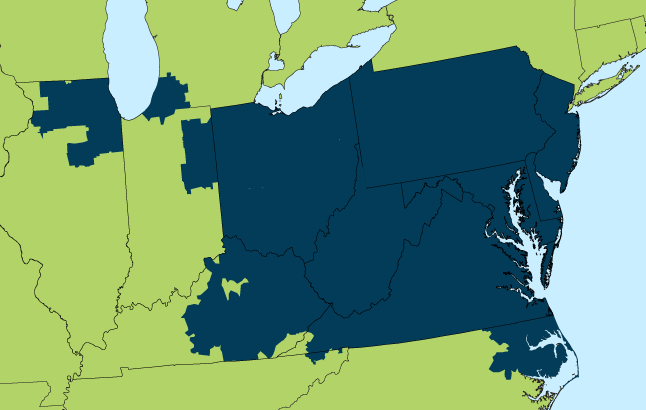
PJM Interconnection serves utilities in these geographic areas.
Ott spoke at a Senate Energy and Natural Resources Committee hearing in response to a question from Sen. Joe Manchin, D-W.Va. Ott referred to a study PJM is conducting, due Nov. 1, about the resilience of the power grid in the 13-state area it covers, which has 65 million people. The study shows that coal and nuclear closures scheduled for 2021 and 2022 can proceed without hurting the grid. 

"The Trump administration is considering requiring federally overseen grid operators such as PJM to buy electricity from select 'critical' coal and nuclear plants for two years, using emergency authority that is normally meant for exceptional crises such as natural disasters, war or a terrorist attack," Siegel reports.

A study commissioned by the Energy Department that doesn't support President Trump's plan is still being kept under wraps, six months after it was submitted, Ari Natter and Jennifer Dlouhy report for Bloomberg. The report's principal author, Michael Webber, tweeted on Friday that "the report hasn't seen the light of day."

The report, done by the University of Texas's Webber Energy Group, "debunks the administration's primary argument for taking extraordinary measures to keep coal plants operating," Natter and Dlouhy report. "Supporters argue that the unprecedented steps are needed to preserve the dependability of the power grid. They say gas-fired power plants rely on pipelines that are vulnerable to attack while coal and nuclear plants generally store fuel on site, making them more reliable."

The Webber analysis says on-site fuel is only one of at least a dozen factors to consider in judging power generators' resilience. The reliability of individual facilities is another. Every power type has pros and cons, the report found.

Though not all reports commissioned by the government are released to the public, the failure to release the Webber report is "eye-raising" because it contradicts the administration's pro-coal narrative, and because the administration released a report that supports its plan, Natter and Dlouhy report.

Monday, June 18, 2018

Utilities still plan to close old coal-fired and nuclear power plants despite Trump's order to save them

Despite President Trump's June 1 order to Energy Secretary Rick Perry to halt the shutdown of ailing coal and nuclear power plants, perhaps through emergency powers to force electric utilities to buy coal, many utilities say the announcement hasn't altered their plans to retire the unprofitable plants.

Mainly, the problem is that "utilities are reluctant to reverse course on plans put in motion years ago or to backtrack on pledges to embrace renewable energy," Ari Natter reports for Bloomberg. "Plant closures that have been worked out under consent decrees to settle environmental lawsuits or in deals with state regulators also can’t be easily reversed."

Coal- and nuclear-powered plants have been closing in increasing numbers for years in the U.S., Natter reports. Nearly 40 percent of the capacity of coal-fired plants has been either shut down or designated for closure since 2010. And more than one-fourth of U.S. nuclear plants aren't profitable. Also, some utilities worry that Trump's use of emergency powers wouldn't stand up in court.

"Certainly I think right now utilities are considering going forward with retirement plans as is,” Richard Glick, a member of the Federal Energy Regulatory Commission, told Natter. "It’s pure economics. Gas prices are way down, renewable projects are getting much less expensive and they are beating other older technologies out in the markets."

Friday, June 15, 2018

Regulators, experts, say Trump's coal bailout unnecessary

Federal regulators and cybersecurity experts say that allowing ailing coal and nuclear power plants to close won't pose a security risk for the United States. President Trump recently ordered Energy Secretary Rick Perry to halt the shutdowns of such plants because he said they were necessary to maintaining the nation's energy mix, grid resilience and national security.

 "Asked by Sen. Martin Heinrich (D-N.M.) at a Senate Energy and Natural Resources Committee hearing whether they believed the U.S. faced a national security emergency in wholesale power markets because of the closures, none of the five members of the Federal Energy Regulatory Commission answered in the affirmative," Miranda Green reports for The Hill. Four of the five members of FERC are Trump appointees.

FERC member Richard Glick told the panel he was "sympathetic to the plight of coal miners who have been disproportionately affected" by coal's long slide, but said it wasn't FERC's job to figure out how to help struggling communities, Green reports.

Some energy companies and grid operators have questioned President Trump's order, such as PJM Interconnection, the nation's largest power grid operator, who called the action "drastic" and warned it could hurt the markets and cost consumers more. Charlie Burd, executive director of the Independent Oil and Gas Association of West Virginia, agreed, saying in a TV interview that picking winners and losers "can be a very dangerous situation," Alex Thomas reports for W.V. Metro News.

Cybersecurity experts said the action is pointless because "hackers have a wide array of options for hitting electric infrastructure and nuclear facilities that are high-profile targets," Timothy Gardner reports for Reuters.

Monday, June 04, 2018

Trump orders halt to coal- and nuclear-plant shutdowns

"President Trump on Friday ordered Energy Secretary Rick Perry to halt the shutdown of ailing coal and nuclear power plants that he said were needed to maintain the nation’s energy mix, grid resilience and national security," Steven Mufson reports for The Washington Post.

The move was made possible by Cold War-era laws: the Federal Power Act and the Defense Production Act (President Truman used the latter to support the steel industry), James Rainey reports for NBC News. One likely plan would give preference to power plants that have a secure on-site fuel supply. That means coal and nuclear plants, since they are the only ones that regularly keep fuel on site. Many of the specified plants are owned or supplied by Trump's political allies, like coal magnate Robert Murray.

According to the memo, the rule would be a two-year stopgap measure meant to keep plants open while Perry's Energy Department studies the issue further, Mufson reports.

Critics attacked the proposal, saying it would make electricity more expensive for consumers and put more greenhouse gases in the air. "Some legal experts questioned whether the Energy Department could invoke the Federal Power Act, saying the law traditionally has been used to respond to hurricanes, blackouts and other disasters," Rainey reports." Several critics suggested that they would challenge the action in court, if necessary."

Tuesday, January 09, 2018

Regulators reject plan to help coal and nuclear power plants

"In an order Monday, the Federal Energy Regulatory Commission rejected U.S. Energy Secretary Rick Perry’s sweeping proposal to subsidize struggling coal and nuclear plants in the name of keeping power grids dependable. Instead, the commission asked grid operators to suggest their own ideas to make the system more resilient," Catherine Traywick and Ari Natter report for Bloomberg.

It's a surprising unanimous vote from an agency in which four of the five commissioners were appointed by President Trump, and three of them are Republicans. In the order, the regulators said they appreciated Perry's efforts to reinforce the resilience of the power grid and said it's "an important issue that warrants further attention."

Perry's plan proposed to raise electricity prices paid to any power plant that has a 90-day fuel supply on hand. That would benefit coal, especially coal magnate Robert Murray's plants, since natural gas and renewable energy are more expensive to store.

U.S. Energy Information Administration graph; click here for the interactive version

The natural gas industry criticized the plan, saying it would undermine competition in wholesale power markets. Natural gas now makes up the largest part of the nation's energy mix, and coal is unlikely to catch up.

FERC's order "gave regional grid operators 60 days to submit feedback on how grid resilience should be assessed, if at all, and whether the commission should take any action on the matter at this time," Bloomberg reports.

Sunday, December 10, 2017

Reporters covering rural communities and issues in ProPublica's new Local Reporting Network

Seven local newsrooms and reporters, several of them covering rural communities and issues, have been picked from 239 applicants to start the ProPublica Local Reporting Network.

The nonprofit, investigative news organization created the network "to support investigative journalism at local and regional news organizations, particularly in cities with populations below 1 million," it says. "ProPublica will reimburse the newsrooms for salary for the selected reporters and provide extensive support and guidance for their stories. . . . The projects selected by editors should surprise and probe deeply, with the potential to spur positive change."

The network members include the Malheur Enterprise, a weekly newspaper in Vale, Ore., which will hire Jayme Fraser, now a reporter with The Missoulian in Montana, as a third reporter. "Fraser will build on the Enterprise’s work investigating the circumstances of the release by state officials of [a man] accused of murder and assault following his release," the Enterprise reports. "Fraser will delve into Oregon’s system for dealing with those guilty of crimes but insane."

Others whom ProPublica selected for the reporting network are:

Molly Parker, a reporter for The Southern Illinoisan in Carbondale. She "plans to focus on issues related to low-income and federally subsidized housing, particularly, she said, where it concerns the health and safety of residents and the viability of the surrounding communities and neighborhoods in high-poverty areas," the SI reports. "For the past two and a half years, Parker has reported on severe mismanagement of funds and facilities and the neglect of Alexander County's housing projects, which led HUD to take over the local housing authority. HUD is relocating residents from complexes known as McBride and Elmwood and plans to demolish them once everyone has moved."

Ken Ward Jr. of the Charleston Gazette-Mail, the leading environmental reporter in Appalachia, "will be investigating the effects of West Virginia’s economic transition as the coal industry declines and natural gas has become a more dominant industry," the newspaper reports. ProPublica reports, "In 2014, when a chemical leak contaminated the drinking water of hundreds of thousands of people, Ward exposed significant flaws in federal safety guidelines for the chemicals and in the state’s water sampling program. His disclosures led to the appointment of an independent scientific team to examine the spill’s impacts." He told the Columbia Journalism Review a few years ago,“I can’t think of many places that are in need of good journalism more than West Virginia is, or what higher calling journalists have than to try to write stories that make their home a better place.”

Rebekah Allen, a reporter for The Advocate in Baton Rouge, La., which also covers New Orleans. The newspaper hasn't reported what she will be working on. ProPublica reports, "She is a member of the paper’s small team of reporters focused on investigative projects and enterprise stories. Last year, she produced a three-part series highlighting how the state’s powerful nursing home lobby fought off efforts to make it easier for the elderly and disabled to receive care in their homes."

Rebecca Moss of the Santa Fe New Mexican, "who has covered energy and environment issues for the paper since 2015," it reports, also without revealing what she and ProPublica will investigate. ProPublica reports, "Last year, she co-wrote an article about how a company that processes and distributes fertilizers and other agricultural products had found a friendlier regulatory climate under the state’s Republican governor than under her predecessor. And this year, she wrote about how a New Mexico town had stepped up to be part of a nuclear waste disposal experiment, even as other states and towns had balked."

Abe Aboraya, a Health News Florida reporter based at WMFE in Orlando. "Aboraya has covered the deadly shooting at the Pulse nightclub and produced an hour-long documentary and podcast on the health care workers who responded to the massacre," ProPublica reports. "Aboraya has also looked at HIV’s impact in Florida and how state budget cuts have reduced access to prenatal care."


Christian Sheckler of the South Bend Tribune, who has covered police and public safety stories for the northeast Indiana paper "and recently took on a new assignment covering education," it reports, without revealing what he will work on. His executive editor told him recently that there are two types of police reporters: "Those who try to make friends with officers and get rewarded with juicy tips about crimes, and those who press for answers on such thorny topics as civil rights, misconduct and accountability." He has chosen the second approach, and “That hasn’t gotten me invited to any barbecues,” he wrote in his application, “but I believe I’ve better served my readers with aggressive reporting on issues such as excessive force, the imperfect protective order system for domestic battery victims and policies on deadly high-speed police chases.”

Thursday, August 24, 2017

Dept. of Energy report: More use of renewables could threaten reliability of power grid

The Department of Energy released a controversial study Aug. 23 that says too much electricity from renewable energy and natural gas could make the U.S. power grid less reliable in the future. "The 187-page study, commissioned by Energy Secretary Rick Perry in April, recommends that federal regulators make changes to wholesale electricity markets that could potentially benefit existing coal and nuclear plants. Revenues for many of these facilities have slumped in recent years as electricity prices have declined, mostly because of cheap natural gas, the study said, but also as a result of low electricity demand growth and the rise of wind and solar power," Brad Plumer reports for The New York Times.

The study says the grid is fine right now because gas and hydropower can easily shore up gaps caused by the intermittent nature of wind and solar, but that could be threatened if more coal and nuclear plants shut down because they can produce electricity around the clock. The study is open to public comment.

Critics of the study say it's an effort by the Trump administration to help the ailing coal industry. Sierra Club officer Mark Kresowik told NPR's Jeff Brady that "coal and nuclear interests are making a last-ditch attempt to try and preserve their market share, that is being taken up by fast-growing, clean, reliable, affordable resources like wind and solar." And Richard Graham, chief executive of clean energy company coalition Advanced Energy Economy, told Plumer that diversifying America's energy sources makes the power grid "more flexible, reliable, and resilient."

Whether or not the study is biased, it's still a boon for the coal and nuclear industries. Utilities buy electricity from energy producers in what's known as a "power purchase agreement." The gas boom and subsidized wind power have driven down the prices coal and nuclear plants can get from utilities. Some believe the study is the administration's way of  "laying the groundwork to justify subsidies for coal and nuclear power plants," Brady reports. Neil Chatterjee, the new head of the Federal Energy Regulatory Commission, said coal plants should be "properly compensated to recognize the value they provide," Plumer reports. Nuclear power plants in some states have already received subsidies.

Thursday, November 17, 2016

Rural N.M. county reinvented itself after oil bust through renewable energy, affordable housing

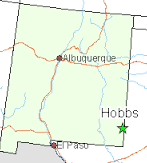
Hobbs, N.M. (Best Places map)
Towns facing an oil bust can look to the success of one New Mexico county, which reinvented itself when the industry crashed in the mid-1980s, taking with it nearly 10,000 jobs, Leah Todd reports for High Country News. Unemployment in Lea County, which has a population of 60,000, tripled when the market crashed, forcing many to flee for greener pastures. For those that stayed and endured, a new boom has come around, in the form of renewable energy and affordable housing.

Without borrowing a dime, the county's largest town, Hobbs, "invested in housing, doubled its police force and pooled resources with five other public and private entities to build a $63.5 million recreation center," Todd writes. "Over the past five years, the town has extended $7 million in incentives to developers building more than 1,500 housing units—affordable and market-rate apartments, even single-family homes—primarily through reimbursing developers for the cost of roads, sidewalks and other infrastructure. Hundreds more units are under construction."

"Oil and gas severance taxes still make up about 50 percent of local tax revenue and one in five local jobs is in mining" and the county lost 1,500 jobs from 2014 to 2015 when oil prices dropped, Todd writes. "But Lea County’s strategic and sustained approach seems to be slowly working. The county boasts above-average salaries and—unique for an oil town—low income volatility, at least compared to other communities its size. During the slow recovery after the 2008 recession, which most gravely afflicted rural areas, Lea County was one of only a handful of counties in New Mexico that actually added businesses."

The county now has four solar power plants and four more are under construction, Todd writes. "Together those operations will produce 288 megawatts—about 19 percent of the state’s solar energy. Wind is growing more slowly, with just one operational plant and another on the way. Lea County’s wind sector will produce about 57 megawatts—7 percent of the state’s wind energy."