Showing posts with label vaccinations. Show all posts

Tuesday, November 04, 2025

Second-largest measles outbreak in U.S. found in an isolated community with reduced vaccination rates

A measles outbreak along the Utah-Arizona border is now the second-largest outbreak in the U.S. this year. "As of Friday, 161 [measles] cases had been confirmed in Utah and Arizona," reports Erika Edwards of NBC News.

Most of the area's 161 confirmed cases involved residents of Hildale, Utah, or Colorado City, Arizona—an isolated region collectively known as "Short Creek," home to roughly 4,000 residents.

The country's largest measles outbreak, which began in January this year, was first identified in rural West Texas and spread into New Mexico, where it infected at least 862 people and killed three.

Both communities where measles outbreaks have occurred share several factors, including declining vaccination rates, a cultural distrust in government intrusion and modern medicine, along with "strong ties to religious sects," Edwards reports.

When measles began to spread in Short Creek, some families turned to herbal remedies rather than visiting a licensed medical professional. Edwards explains, "A similar phenomenon was seen in West Texas: In the city of Seminole, parents of children sick with measles flocked to Health 2 U for cod liver oil, an unproven remedy."

Although 11 people from Short Creek have been hospitalized from measles complications, the community is once again embracing vaccinations. Edwards reports, "the area saw a 14% increase in vaccinations during July through September of this year, compared to the same time period in 2024."

Friday, September 19, 2025

Parents who skip or postpone vaccines for their kids are more concerned about vaccine safety, a new poll finds

 Photo by Mika Baumeister, Unsplash
Parents who skip, avoid or postpone standard vaccinations for their kids often share vaccine safety concerns and other attributes, a new poll from The Washington Post and KFF Health News shows.

The poll found that one in six parents have delayed or skipped some vaccines for their children, with most reporting "concerns about the vaccines themselves," report Lauren Weber, Scott Clement, Emily Guskin, and Lena H. Sun of The Washington Post. "About half of parents overall lack faith in federal health agencies to ensure vaccine safety, mirroring the findings of other surveys."

While the poll revealed that the majority of parents support child vaccinations, it also showed that "skipping or delaying vaccines is more common among parents who homeschool children, are Republicans, are young, or are White and religious," the Post reports.

Some polled parents believe in the effectiveness and necessity of childhood vaccinations -- just not on the schedule set by the federal government, which favors multiple shots in a single visit, rather than a more graduated immunization schedule.

Most interviewed parents did not support claims about vaccines causing autism or chronic disease. The Post reports, "But at least 4 in 10 parents say they don’t know enough to say whether those claims are true or false."

Poll results do seem to indicate some level of distrust in how the government manages vaccines. The Post explains, "Six in 10 Democrats are confident in federal health agencies overseeing vaccine safety, compared with 48% of independents and 41% of Republicans."

"Despite Republican parents being more likely to skip vaccines, 77% still follow vaccine recommendations," the Post reports. "Most of President Donald Trump’s voters believe vaccines save lives."

Tuesday, July 15, 2025

As the U.S. measles outbreak continues, experts see its spread as a harbinger for the return of other diseases

The spherical measles virus is one of the most infectious 
diseases on the planet. (CDC photo via Unsplash)
Brought on by decreasing vaccination rates in communities, measles is making an unwelcome comeback in the United States. The disease was considered "eliminated" in 2000, but following an outbreak in Texas earlier this year, the highly contagious disease has cropped up in 38 states.

"Researchers often think of measles as the proverbial canary in a coal mine," report Teddy Rosenbluth and Jonathan Corum of The New York Times. "It is often the first sign that other vaccine-preventable diseases, like pertussis [whooping cough] and Hib meningitis, might soon become more common."

For many adults and children, catching measles can be likened to having a cold accompanied by a very itchy rash. But for others, the disease can cause severe medical conditions, including "pneumonia, making it difficult for patients, especially children, to get oxygen into their lungs," the Times reports. "It may also lead to brain swelling, which can cause lasting damage, including blindness, deafness and intellectual disabilities."

The disease also decreases an individual's ability to fight off germs they had previously been immunized against. "Scientists call the effect 'immune amnesia.' During childhood, as colds, flu, stomach bugs and other illnesses come and go, the immune system forms something akin to a memory that it uses to attack those germs if they try to invade again," reports Denise Grady of The New York Times. "The measles virus erases that memory, leaving the patient prone to catching the diseases all over again."

Although the U.S. has dealt with "large measles outbreaks in the past, a confluence of factors has made it particularly difficult to rein in the virus this year," Rosenbluth and Corum report. "Nationally, the measles vaccination rate fell during the Covid-19 pandemic and has not rebounded to the 95% mark required to stem the spread of the virus in a community. . . . In Gaines County, the center of the Texas outbreak, just 82% of the population received the MMR [measles, mumps and rubella] vaccine that year."

Other countries are struggling with measles outbreaks as well. Rosenbluth and Corum explain, "Large outbreaks have spread through Mexico and parts of Canada, which has had a record number of cases this year. This spring, the World Health Organization announced that Europe had reported the highest number of measles cases in more than 25 years."

Find the Times' measles tracking tool for the U.S. here.

Tuesday, March 18, 2025

As measles spread in west Texas, the state's 'lackluster investment' in rural health care systems is exposed

Measles is a highly contagious disease
caused by a virus. (Adobe Stock photo)
As the number of diagnosed cases of measles continues to climb, the outbreak in rural west Texas has exposed a health care system that is unprepared to handle even a smaller-scale contagion, reports Pooja Salhotra of The Texas Tribune. "Aging infrastructure, a dearth of primary care providers and long distances between testing sites and laboratories plague much of rural Texas, where the measles outbreak has concentrated."

A few years back, rural Texas was ravaged by Covid infections. Like Covid, the recent measles outbreak is "revealing how a lack of public health resources leaves rural communities vulnerable," Salhotra explains. "What’s left are local leaders forced to scrape together the few tools they have to respond to an emergency, contending with years of lackluster investment from the state and federal level to proactively prevent emerging public health threats."

A lack of hospitals, physicians and dilapidated facilities are just some of rural Texas' health care woes. "Some 64 Texas counties don’t have a hospital, and 25 lack primary care physicians," Salhotra reports. "Swaths of Texas have scant resources for public awareness campaigns. And they lack sufficient medical staff with expertise to provide the one-on-one education needed to encourage vaccination and regular visits to the doctor."

To slow the spread of measles, "rural health care teams have cordoned off spaces to conduct measles testing," Salhotra writes. They've "used social media to blast residents with information about vaccination efficacy and schlepped throat swabs across counties to ship them to a state lab in Austin — the only public state facility that was conducting measles testing until the Texas Tech University Bioterrorism Response Laboratory, part of a national network of CDC-funded labs, began measles testing" recently.

The primary goal of public health is prevention; however, "it’s emergencies that spur the most action, particularly in rural communities," Salhotra explains. "It was only after a school-aged child died from measles that state and federal support intensified."

Currently, Texas "spends less on public health per person than the vast majority of other states, according to the State Health Access Data Assistance Center, whose analysis shows Texas spent $17 per person on public health in 2023. A decade earlier, the spend was $19," Salhotra reports. "The low levels of state funding particularly hurt rural communities that have higher rates of uninsured Texans and more senior citizens with greater health needs."

Friday, March 07, 2025

National vaccination rates may continue to slump as states relax vaccination mandates

Child vaccination rates continue to decline.
(CDC photo, Unsplash)
Sliding vaccine rates could become a national trend as several states relax vaccine requirements and reduce promotion efforts, reports Shalina Chatlani of States Newsroom. "Vaccination rates are lower than they were before the pandemic."

Even with a growing measles outbreak in Texas, many Americans continue to reject or remain uncertain about vaccination requirements. "Public health experts worry that the confirmation of vaccine skeptic Robert F. Kennedy Jr. as secretary of the U.S. Department of Health and Human Services could add fuel to such efforts, leading to the resurgence of long-tamed infectious diseases," Chatlani explains. "Kennedy has made numerous baseless or false claims about vaccines."

Before the pandemic, most Americans accepted vaccination mandates as a medical directive based on scientific expertise, but that has changed. Al Cross, director emeritus of the Institute for Rural Journalism at the University of Kentucky, explained the shift, "Public health was once about doctors and nurses, and when it became defined in the public mind as coming from politicians, trust in it eroded quickly."

Without that trust, more parents have sought vaccination exemptions for their children. Chatlani reports, "Changing attitudes have had an impact: Vaccination rates among children born in 2020 and 2021 declined by between 1.3 and 7.8 percentage points for recommended shots, compared with children born in 2018 and 2019, according to a September report by the federal Centers for Disease Control and Prevention."

The accepted reasons parents can use to avoid state vaccination requirements are also likely to increase. "Republican officials in more than a dozen states have introduced legislation to loosen vaccine rules or otherwise reduce their use," Chatlani adds. An Idaho Senate panel recently considered a bill "that would ban mRNA vaccines, including Covid-19 vaccines, for a decade. Montana and Mississippi lawmakers considered but defeated similar proposals."

Tuesday, March 04, 2025

Despite the death of an unvaccinated child from measles, many community members continue to resist vaccinations

Measles can spread with 'extraordinary efficiency, hanging in the air for hours even after a carrier leaves a room.' (NPR graphic from The Lancet created by Alice Design from The Noun Project)

Despite a measles outbreak, including the death of an unvaccinated child in Gaines County, Texas, anti-vaccination proponents in Seminole, Texas, a small town just 80 miles from Lubbock, resist the measles vaccine for adults or children.

"The life-threatening measles outbreak in West Texas starkly illustrates the stakes of slipping immunization rates and the ascension of vaccine skeptics," report Fenit Nirappil and Elana Gordon of The Washington Post. "And it has revealed how fear and the scientifically false claims of the anti-vaccine movement have seeped into communities. . .hardening attitudes about vaccines. . . in the face of a dangerous, preventable disease."

The measles outbreak in Texas is the state's "worst measles eruption in three decades, which has surged to 146 known cases, with the true toll likely much higher, exposing how under-vaccinated communities are unnecessarily vulnerable to one of the world’s most contagious diseases," the Post reports. The child that died was "6 years old and otherwise healthy."

The initial outbreak began in West Texas and rapidly spread from there. Nirappil and Gordon explain, "It spread across nine West Texas counties and crossed the border into New Mexico. . . . The outbreak spurred hundreds in the region to vaccinate themselves and their children as the threat of the virus became immediate. But it has made others dig in their heels, arguing that measles is no worse than chicken pox or the flu."

Even though science does not support the belief, anti-vaccination advocates believe immunization reactions are more dangerous than the diseases the shots prevent. The Post reports, "Medical experts and the Centers for Disease Control and Prevention say harm from vaccines is rare and is vastly outweighed by the risk of preventable disease. Two doses of the measles vaccine are 97% effective against the virus."

And while many children readily recover from a case of measles, it can have dire outcomes. "As many as 1 in 20 develop pneumonia, according to the CDC. One in 1,000 experience swelling of the brain, which can leave a child deaf or with an intellectual disability," Nirappil and Gordon add. "For every 1,000 children with measles, one or two die."

Measles can spread with "extraordinary efficiency, hanging in the air for hours even after a carrier leaves a room," the Post reports. "If it infiltrates a community with pockets of unvaccinated people, it’s like throwing a torch into a parched forest and igniting a wildfire."  

Tuesday, February 25, 2025

The battle over a chicken vaccination puts egg and poultry industries at odds

Chicken vaxing could help egg producers but harm
poultry industries. (Adobe Stock photo)
American poultry and egg businesses can't agree on a strategy to contain bird flu while protecting incomes. "The chicken and egg industries are at odds. The argument isn’t over which came first but about bird flu vaccinations," reports Patrick Thomas of The Wall Street Journal. "Egg companies are calling for a stronger government response to the bird flu outbreak. . . . They are also petitioning regulators to greenlight a vaccine that could be administered on farms, a sharp reversal from their position a few years ago."

Chicken companies, such as Purdue and Tyson, are not on board with a large-scale flock vaccination because it would put their $5 billion chicken export revenue at risk. Thomas explains, "Countries that import chicken products would cut off purchases of American poultry. Each country would need to sign off on the U.S.’s vaccination strategy before accepting imports again."

Despite the debate, the Department of Agriculture issued a "conditional approval to animal-health company Zoetis for its bird flu vaccine for poultry," Thomas reports. "The next step in the process would be getting commercial approval. Even if that happens, it will still take time to sort out trade ramifications, ramp up production and develop a distribution. For now, the vaccine "is not authorized for use on farms, and poultry producers can’t buy it."

In the coming week, the USDA is expected to "roll out a comprehensive strategy to combat bird flu, the agency representative said, adding that the administration is committed to safeguarding poultry farms and keeping egg prices affordable for families," Thomas adds. Agriculture Secretary Brooke Rollins told Fox News, "This is going to take a little while to bring these prices back down."

Although a chicken vaccine would help the egg industry, delayed chicken exports would produce a chain of costly international and domestic trade problems. Thomas explains, "A backup in exports could lead to production cuts from major chicken companies, resulting in fewer grain and soybean purchases for livestock feed from farmers."

Friday, January 31, 2025

Military members discharged for not getting Covid vaccine can now be reinstated with full benefits

Some soldiers can be reinstated
with full rank and pay. (Unsplash image)
More than 8,000 military troops were discharged between 2021 and 2023 due to “their refusal to get a mandated Covid-19 shot,” reports Nathaniel Weixel for The Hill. However, those discharged soldiers may be eligible to be reinstated to their full former rank and receive full back pay, benefits, bonuses or other compensation, according to a January White House executive order.

The order made it clear that it would only apply to soldiers who request to be reinstated.

Weixel reported, “The Pentagon allowed dismissed soldiers to reapply once the mandate was rescinded in 2023, but only 43 chose to do so, according to federal statistics.”

In 2021, the Department of Defense added Covid-19 vaccines to the list of required vaccinations for its enlisted members.

Despite the vaccine's endorsement from the Food and Drug Administration, many military members voiced concern and confusion about the vaccine -- particularly its use of new mRNA technology -- and refused to receive it.

The executive order said it would allow “service members who provide a written and sworn attestation that they voluntarily left the service or allowed their service to lapse according to appropriate procedures, rather than be vaccinated under the vaccine mandate, to return to service with no impact on their service status, rank, or pay.”

Friday, December 06, 2024

Making sense of bird flu virus H5N1, from its risks to why there's reason to be hopeful

Bird flu H5N1 can kill chickens in 48 hours, but the
infection is less severe in humans. (J. Whitt photo, Unsplash)
As avian flu spreads among birds, cows, and people, understanding the virus can help lessen unnecessary worry and build support for virus containment, testing and possible vaccination efforts.

David Leonhardt of The New York Times demystifies the bird flu virus through questions and answers. The answers have been lightly edited.

1. What is bird flu?
It’s an influenza virus officially known as H5N1 (and sometimes called avian flu). It attracted global attention in the late 1990s after an outbreak among chickens in southern China. . . . That outbreak was especially worrisome because it included the first documented human cases of the virus. At least 18 people were infected, six of whom died.

2. Why the recent concerns?
The virus has recently expanded in two ways: across regions and across species. Rather than being concentrated in Asia, bird flu has moved across much of the planet. And it has infected a wider variety of animals, including mammals. Dairy cows in many parts of the United States have tested positive.

Most concerning, at least four people have tested positive without evidently having had contact with a sick animal. . . . These infections raise the possibility that the virus can move from one human being to another, rather than only from an animal to a person. Human-to-human transmission can lead to a much more rapid spread of a disease.

3. What are the reasons to be hopeful?
First, it’s not yet clear whether those four recent cases stemmed from human-to-human transmission.

Second, H5N1 seems to have become less severe in human beings recently. The reasons aren’t clear. . . . As my colleague Apoorva Mandavilli says, 'Very few people known to be infected with bird flu in the United States have become seriously ill, and none have died.'

4. How can the U.S. reduce the risks?
More testing — of birds, cows and farmworkers — would help. “We know very, very little about how far this virus has spread and how many people and animals have been infected,” Mandavilli said. Testing could allow farms to isolate infected animals and people.

What about a vaccine?
A vaccine for bird flu exists, but the supply is modest. Jennifer Nuzzo, director of the Pandemic Center at Brown University, believes the government should help expand production and make the vaccine available to farmworkers who want to receive it.

The bottom line:
Caitlin Rivers, an epidemiologist at Johns Hopkins, recently published a book on preventing outbreaks called "Crisis Averted." In it, she argues that one of the most effective public health strategies is honesty: Experts should level with people, rather than telling selective truths intended to shape behavior in paternalistic ways (as happened during Covid).

Tuesday, November 19, 2024

Some public schools continue to increase the number of vaccination exemptions given to kindergartners

Graph by Kavya Beheraj, Axios, from CDC data
Even before the pandemic years, the number of vaccination exemptions issued for kindergartners entering public schools was on the rise. According to estimates from the Centers for Disease Control and Prevention, when allowances from school years ending in 2012 to 2022 were tallied, the "nationwide median rate of kindergartners with vaccine exemptions nearly doubled," report Alex Fitzpatrick and Kavya Beheraj of Axios. The political debate over Covid-19 vaccinations could be adding to "vaccine skepticism among a relatively small but growing number of parents."

Schoolchildren are vaccinated to "reduce the spread of childhood illnesses — some potentially fatal — that once plagued the country, such as polio," Fitzpatrick and Beheraj explain. To be admitted to public school, children are required to have several vaccinations; however, "exemptions can be given for both medical and non-medical reasons." Some studies have "found an increased risk of infection from vaccine-preventable diseases among exempt children."

The number of exemptions public schools give varies by state, and the primary push to question vaccination requirements is driven by Republicans. Axios reports, "As of 2022, Idaho (9.8%), Utah (7.4%) and Oregon (7%) had the highest median kindergarten vaccination exemption rates. Mississippi, New York and West Virginia were tied for the lowest, at 0.1%. . . .with 85% of Democrats agreeing with such a requirement compared to 57% of Republicans. . . .While Democratic support for vaccine requirements held steady between pre- and post-pandemic years, Republican support took a remarkable nosedive, falling from 79% in 2019."

Despite the increase in parents seeking vaccination exemptions for their children, the number of students who aren't vaccinated remains relatively low. The nationwide median kindergarten vaccine exemption rate has "stayed at 2.5% or higher since 2020, coming in at 2.7% in 2022, the latest year for which data is available," Fitzpatrick and Beheraj write.

Most Americans support the national childhood vaccination program. A Pew Research Center survey revealed that "when it comes to the measles, mumps and rubella shot, 88% of Americans said the benefits outweigh the risks, compared to 10% who feel the opposite," Axios reports. "The share expressing confidence in the value of MMR vaccines is identical to the share who said this in 2019, before the coronavirus outbreak."

Friday, March 15, 2024

More Americans are opting out of Covid-19 vaccinations; survey shows the choice can be based on political views

Pew Research Center graph
It has been four years since the U.S. rolled out lockdowns and mask mandates to slow the spread of Covid-19. Many Americans, both Republican and Democrat, received the country's first Covid-19 vaccine in fairly equal numbers. However, after that initial jump-off point, Covid-19 vaccines have become more partisan, and many Americans seem less concerned about the virus despite its continuing presence in the population.

"A new Pew Research Center survey finds that just 20% of Americans view the coronavirus as a major threat to the health of the U.S. population today, and only 10% are very concerned that they will get it and require hospitalization," report Alec Tyson and Giancarlo Pasquini for the Pew Research Center. "This data represents a low ebb of public concern about the virus that reached its height in the summer and fall of 2020, when as many as two-thirds of Americans viewed Covid-19 as a major threat to public health."

While it's hard to explain why so many U.S. citizens seem indifferent to the disease, vaccination numbers speak to an overall lack of public interest. "Just 28% of U.S. adults say they have received the updated Covid-19 vaccine, which the Centers for Disease Control and Prevention recommended last fall to protect against serious illness," Pew reports. "This stands in stark contrast to the spring and summer of 2021, when long lines and limited availability characterized the initial rollout of the first Covid-19 vaccines. A majority of U.S. adults (69%) had been fully vaccinated by August 2021."

Historically, political affiliation hasn't been a factor in vaccination status. A Pew survey from 2023 reported: "Robust public confidence in the value of childhood vaccines for MMR, with no decline in the large majority who say the benefits outweigh the risks compared with surveys conducted before the coronavirus outbreak." The Covid-19 vaccination does not have that kind of unilateral support, but instead vaccine choices fall along party lines. Tyson and Pasquini write, "Democrats and Democratic-leaning independents remain more likely than Republicans and GOP leaners to say they've received an updated Covid-19 vaccine (42% vs. 15%). This 27-point gap in recent vaccination is about the same as in January 2022."

The gap is even more distinctly party-affiliated among Americans 65 and older, who are ironically more at risk of dying from the disease. Pew reports, "In the current survey, 66% of Democrats ages 65 and older say they have received the updated Covid-19 vaccine, compared with 24% of Republicans ages 65 and older. This 42-point partisan gap is much wider now than at other points since the start of the outbreak."

Tyson and Pasquini add, "Still, the virus continues to circulate widely in the United States, with wastewater data suggesting that cases in the early part of 2024 were among the highest they have been since the first omicron wave in 2022."

Tuesday, November 28, 2023

Covid-19 vaccination rates are 'abysmal' overall in the United States, and even lower in rural areas

In January 2021, four in 10 U.S. adults (41%) polled said that when a Food and Drug Administration-approved vaccine for Covid-19 was available for free, they would get it as soon as possible.

Fast forward to fall 2023, and times have changed. As Katelyn Jetelina writes in her newsletter, Your Local Epidemiologist: "Data is starting to roll in on Covid-19 vaccine inequities this fall. And it's not pretty. . . . Access. Cost. Outreach. Education. All of these changed once the federal emergency ended in May. Vaccines are no longer purchased or distributed by the government, and funding ran out to support vaccine campaigns. This means the U.S., once again, faces the pre-pandemic privatized and fragmented healthcare and public health systems. And one could argue an even worse system, given the loss of trust. Unfortunately, our communities continue to feel it disproportionately."

Even in 2021, Americans did not universally accept Covid-19 vaccines, with some Americans adopting a "wait and see" approach and "rural residents among the most resistant to getting vaccinated," KFF Health News reported. According to Jetelina, rural Covid-19 vaccination rates have not improved. She cites a Centers for Disease Control and Prevention analysis from last week that "found adults in rural areas were less likely to have gotten a Covid-19 vaccine (10%) vs. those in urban (15%) or suburban (14%) areas."

YLY graph, from CDC data
When compared to other countries, U.S. Covid-19 vaccination rates are strikingly poor. Jetelina writes, "U.S. rates of Covid-19 vaccination this fall are, overall, abysmal. This is especially apparent when we compare it to counterparts like the United Kingdom, where 68% of people over 65 years old are vaccinated (compared to 31% in the U.S.).

Jetelina adds that disparities also fall along race and ethnicity lines, "Communities of color continue to have much lower rates of vaccination." Jetelina states that gaps matter and impact national health for two primary reasons.

  1. Those who are more likely to lack access to healthcare are even more likely to be infected and get seriously ill once again.
  2. The commercialization of vaccines has only amplified gaps in access and uptake. This is cause for concern about our national vaccine system during non-emergency times.

What's the bottom line? "When the nation's health is at stake, we need public health to ensure our resources are fairly distributed and get to those who need it most," Jetelina writes. "The 'marketplace' doesn't do this naturally. In fact, it works against many of our communities. These inequities will continue unless we make big, systemic changes. One would hope that a pandemic would jumpstart these changes, but it seems we are quickly falling back to our pre-pandemic ways."

Thursday, November 02, 2023

When to get which vaccine and how to get insurance to pay for it has some Americans ditching vaccines

Illustration by Molly Ferguson, Stat
If it's too hard to understand or to get done, many people will opt out -- as is the case with adults attempting to get vaccines.

"Alison Buttenheim was floored by a sign she saw in her doctor’s office when she went to get the first jab of the two-dose shingles vaccine to protect her against painful flare-ups of varicella zoster," reports Helen Braswell of Stat. "The notice read: 'Medicare patients cannot receive Tdap or zoster vaccines here. They need to obtain [them] at their pharmacy. If they receive it here, they need to pay out of pocket.' In this instance, patients could receive vaccines covered by Medicare as treatment, but not as a preventative measure. For instance, if a person stepped on a nail, Medicare would pay for their tetanus shot; however, if a patient is getting a tetanus booster to maintain protection, Medicare would not cover it.

Buttenheim, a professor of nursing at the University of Pennsylvania who studies vaccine acceptance and hesitancy, "knows that any amount of difficulty in the immunization process can deter people from getting vaccinated. She couldn’t believe her eyes," Branswell explains. "To stay abreast of what to get and when and where to get it almost requires would-be vaccine recipients to have advanced degrees. Buttenheim recently found herself shelling out $160 for her latest Covid booster. She told Branswell, "We’re absolutely making it too hard."

Branswell reports, "Some of that may be due to vaccine hesitancy but more of it is likely due to the sheer difficulty of knowing what to get, when to get it, and how to get insurance coverage for the various shots, said Saad Omer, a vaccine expert who is dean of the Peter O’Donnell Jr. School of Public Health at the University of Texas Southwestern." Omer told Branswell: “Beyond the cacophony of pro-vaccine and anti-vaccine arguments on X (formerly know as Twitter), most of the country doesn’t actively think about vaccines, period."

Tuesday, October 17, 2023

Veterinarians face pet owners who reject vaccinations; research shows fewer vaccinations could be dangerous

Forty percent of dog owners distrust vaccines, new research
shows. (Photo by Karsten Winegeart, Unsplash)


New research shows that more pet owners are resisting traditional vaccines, which could cause disease outbreaks in animals and people. "Researchers who have studied vaccine hesitancy since the onset of the Covid-19 pandemic say a growing body of evidence shows a surprisingly high level of mistrust among pet owners over vaccines for cats and dogs," reports Stephanie Armour of The Wall Street Journal. "Almost 40% of dog owners believe that canine vaccines are unsafe, more than 20% believe these vaccines are ineffective and 30% consider them to be medically unnecessary, according to a new study published in the journal Vaccine."

Commenting on the study's anti-vax skew, its lead author, Matthew Motta, an assistant professor of health law, policy and management at Boston University, told Armour, "We were shocked. In a world where mandates are being dialed back, and more pets go unvaccinated. . . .That’s a threat to our pets but also a public health threat to you and me.”

If fewer animals are vaccinated, the chance for previously controlled diseases such as rabies to return dramatically increases. Rena Carlson, a veterinarian and president of the American Veterinary Medical Association, told Armour, "We’re going to see more and more disease as we see vaccine compliance drop. . . . Vaccines can really prevent severe disease.” Armour reports, "Seventy percent of dogs in a population should be vaccinated against rabies to prevent outbreaks, according to the World Health Organization."

Social media postings about the potential harm vaccines "could do" has contributed to the anti-vaccine movement. Armour writes, "A pet owner in California with a Chihuahua said she always takes her dogs 'off the system' because she said vaccines can cause cancer, seizures or death. . . . Misinformation and misperceptions are driving a lot of the skepticism, veterinarians say. Thirty-seven percent of dog owners believe vaccines could cause cognitive problems such as autism, according to the study in Vaccine. No scientific data exists that validates the risk for people or animals."

Friday, October 06, 2023

Each household can get four free Covid-19 tests, and some older tests are still good; plus a Covid 'refresher'

U.S. Government photo illustration
Just in time for the cold and flu season the federal government has relaunched its at-home Covid-19 test program. Every U.S. household is eligible for four free test kits sent directly from the U.S. Postal Service, but some older tests might also still be good, too. The easiest way to order kits is through covidtests.gov. "Officials say the tests are able to detect the latest variants and are intended to be used through the end of the year," reports Fenit Nirappil of The Washington Post. "The return of the free testing program comes after Americans navigated the latest uptick in covid cases with free testing no longer widely available."

Keep in mind many antigen tests have extended expiration dates, so tests purchased or received earlier could still be usable, reports Meryl Davids Landau of National Geographic. Check the chart available here to see if yours is still effective.

As temperatures dip and holiday seasons approach, people will spend more time inside. "Experts say free coronavirus testing proved to be an effective public health tool, allowing people to check their status before attending large gatherings or spending time with older or medically vulnerable people at risk of severe disease even after being vaccinated," Nirappil reports. "It also enables people to start antiviral treatments in the early days of infection to prevent severe disease."

If you have forgotten some of the testing details, Landau gives a brief Q & A "refresher."

Swab the throat or the nose?
It turns out nasal samples concentrate more of the virus and are therefore more likely to yield a positive diagnosis.

Can you get sick within days of SARS-CoV-2 exposure? A recent study in France confirmed what people are feeling, that those exposed to Omicron develop symptoms earlier than they did after exposure to the original SARS-CoV-2 strain. . . . It’s possible that the incubation period is shorter due to the mutations.

How long should you isolate if testing positive for Covid? Whether a person has a positive test or is likely to have the disease based on symptoms and exposure, it’s crucial they go home and immediately isolate from everyone, including people with whom they live. . . . This isolation should continue for a minimum of five days, which starts the day after the positive test or the appearance of symptoms, according to the Center for Disease Control.

When is masking after isolation necessary? Once in public, the individual must wear a high-quality mask until 10 days have passed since symptoms began or testing positive. Remember: the first day is day zero. This is important because the sick person could be contagious for a full 10 days.

Who should take the antiviral drug Paxlovid? Those who are most likely to face hospitalization and death should talk with their healthcare provider about taking the antiviral medicine, Paxlovid, which continues to be effective against current strains.

Should you get the new vaccine? The Federal Drug Administration and CDC recently approved new Covid vaccines for people six months and older. The benefits of vaccination outweigh side-effect risks for all these age groups, the CDC noted.

How else can you protect yourself? Avoiding crowds and masking remain extremely effective protection measures, but most people don’t need to do them 24/7.

Thursday, September 28, 2023

Embracing vaccines sooner rather than later can mean healthier months ahead

The timing of vaccines matters.
(Wall Street Journal illustration, from IStock images)
Covid, flu and respiratory syncytial virus (RSV) -- the vaccine season is upon us. To get the maximum protection from having to face a needle, start with a game plan. "Doctors generally suggest getting your flu and Covid shots before the end of October and say it's OK to get both those shots at the same time," reports Sumathi Reddy of The Wall Street Journal. "The most important thing, doctors say, is to get vaccinated. If you're in a doctor's office or a drugstore and can get your shots, it usually makes sense to do it."

Over the summer, there was a "bump" in Covid cases, and if you've been recently infected, putting off getting a booster for three to six months is wise. John Wherry, director of the Institute for Immunology at the University of Pennsylvania, told Reddy, "If your level of antibodies is quite high, the booster does very little good. You're kind of wasting your shot."

For Covid shots, "Sooner rather than later is good. . . especially if you are a senior or immunocompromised," Reddy reports. "The newly approved booster targets the dominant strains now circulating. Covid-19 test positivity rates have hovered around 14% for the past month, according to CDC data, up from 4% in June. Covid boosters from Pfizer and Moderna have already rolled out. The Novavax booster is expected later this fall."

Recommendations for the flu vaccine include getting it in September or October. Reddy adds, "Flu cases usually start ticking up in November and peak in January before trailing off at the end of March, says Wherry. . . . If you get sick with the flu before you've been vaccinated, you should still get the vaccine about a month later, he says. That's because the flu vaccine typically protects against four types or strains of influenza."

RSV vaccines are approved for seniors and some pregnant women; doctors say opting to have the vaccines sooner is best, Reddy reports, "because activity is picking up, and RSV tends to peak earlier than the other respiratory viruses, says Wherry. There is also a new RSV drug approved to protect infants. Cases are already starting to increase in the Southeast, according to the CDC."

Monday, September 18, 2023

What's going on with the latest Covid-19 vaccines? Here are answers to frequently asked questions.

Updated Covid-19 vaccines from Pfizer/BioNTech and Moderna have rolled out to pharmacies. The Food and Drug Administration approved the mRNA vaccines for everyone 6 months and older. The Centers for Disease Control and Prevention’s Advisory Committee on Immunization Practices voted 13-1 to recommend that everyone 6 months and older should get the shots, and the CDC endorsed that recommendation.

Lori Robertson and Catalina Jaramillo of FactCheck.org, a service of the Annenberg Public Policy Center at the University of Pennsylvania. Robertson and Jaramillo compiled a list of common questions and answers about the vaccines, and here's a condensed version of their report:

How are these updated shots different from the last one? All of the Pfizer/BioNTech and Moderna Covid-19 vaccines — the originals, the bivalent boosters and the latest updates — use the same mRNA technology to trigger an immune response to the spike protein of SARS-CoV-2, the virus that causes Covid-19. The spike protein is what the virus uses to enter cells.

The difference between the versions of the vaccines is in what type of spike protein they prompt the body to make. The mRNA in the 2023-2024 vaccines instructs cells to make the spike protein of omicron variant XBB.1.5. The variant became a concern at the end of last year, when the CDC projected it made up 40.5% of new CCovid-19 cases in the U.S., a figure that rose to nearly 90% by early March.

Who is eligible to get an updated vaccine? Everyone 6 months of age and older is eligible for these vaccines.The FDA said those age 5 and older can get a single dose of either mRNA vaccine if at least two months have passed since the prior Covid-19 vaccine dose. Unvaccinated people can also get a single dose. Children ages 6 months through 4 years who previously were vaccinated are eligible to get one or two doses, depending on which vaccines they have received and when. Children in this age group who haven’t been vaccinated against Covid-19 can get three doses of the latest Pfizer vaccine or two doses of Moderna’s. . . . Those who are immunocompromised can also receive additional doses.

What evidence supports the use of the updated vaccines? The FDA said it approved and authorized the latest formulas of the vaccines based on its evaluation of manufacturing data and data showing the immune response to these vaccines against prevalent variants is similar to that of previous versions of the vaccines against prior variants.. . . . The FDA is using a similar approach to the annual influenza vaccines, which are tweaked each year to combat the influenza strains expected for that season. Flu vaccines are approved each year without clinical studies because the changes, compared with prior vaccines, are small and because it wouldn’t be possible to test the vaccines each year in people before the flu season.

How effective are they? We don’t have vaccine effectiveness data for the updated vaccines specifically, but data on similar, previous vaccines show they were quite effective at preventing severe disease. And the research. . . .by Moderna and Pfizer/BioNTech shows the updated version increases neutralizing antibodies against the new and emerging variants.

How safe are they? Moderna’s clinical trial for the latest vaccine showed that the percentage of participants reporting mild side effects, such as pain, swelling, headache, fatigue and muscle aches, was similar to or, in many cases, lower than the reporting rates for the prior Covid-19 vaccines. But, the safety evaluation of this formula is based on hundreds of millions of doses of Covid-19 vaccines administered over the past few years.

Are the shots still free, and where can I get one? The vaccines are no longer provided by the federal government for free, but private insurance companies, Medicare and Medicaid, and some CDC programs will cover them.

For more detailed explanations and questions, read the full article here. 

Friday, June 16, 2023

FDA panel advises updating Covid-19 vaccines; here's why

The Food and Drug Administration's external scientific committee unanimously recommended Thursday that Covid-19 vaccines be updated to thwart new versions of the virus, which is mutating about twice as fast as the flu, vaccines for which are updated annually, Katelyn Jetelina reports in Your Local Epidemiologist, her Substack newsletter.

Also, "The current Omicron variant (XBB) circulating is meaningfully different than other Omicron variants," Jetelina writes. "Covid-19 vaccines are waning in protection against hospitalization (62% effectiveness has dropped to 24%) and ICU admission, albeit with a smaller decline (69% to 52%). This is happening faster when exposed to XBB virus compared to other Omicron variants."

Hospitals aren't filling up with Covid patients "because vaccine effectiveness now represents the incremental benefit above and beyond the baseline protection in the general population. This is different than when we first introduced vaccines and the general population had a very low immunity wall." In other words, natural immuiity (not just antibodies but other features of the immune system) combined with vaccines provide a relatively high immunity wall.

What's next? "Pfizer, Moderna, and Novavax will start manufacturing millions of vaccines. Once they’re ready, the FDA will approve the updated vaccine," Jeteline writes. Then the committee "will determine who should get the vaccines. Expect this to happen in late summer or early fall."

"Everyone’s curious to see how this year plays out," Jetelina says of her community of interest. "The rest of the year will be very telling as to whether Covid-19 has settled into a seasonal, predictable pattern. Comparing Covid-19 to the flu is helpful, but the viruses, and thus processes, are different. This needs to be communicated better."

She adds, "Don’t let anyone tell you there are no human data on these vaccines. All vaccine manufacturers presented preliminary data on humans and animals. What we do not have yet is the safety of these vaccines when combined with RSV and flu vaccines." RSV is respiratory syncytial virus, which targets mainly the young and the elderly. 

Saturday, June 04, 2022

Rural Covid-19 vaccination rate grew little in April and May

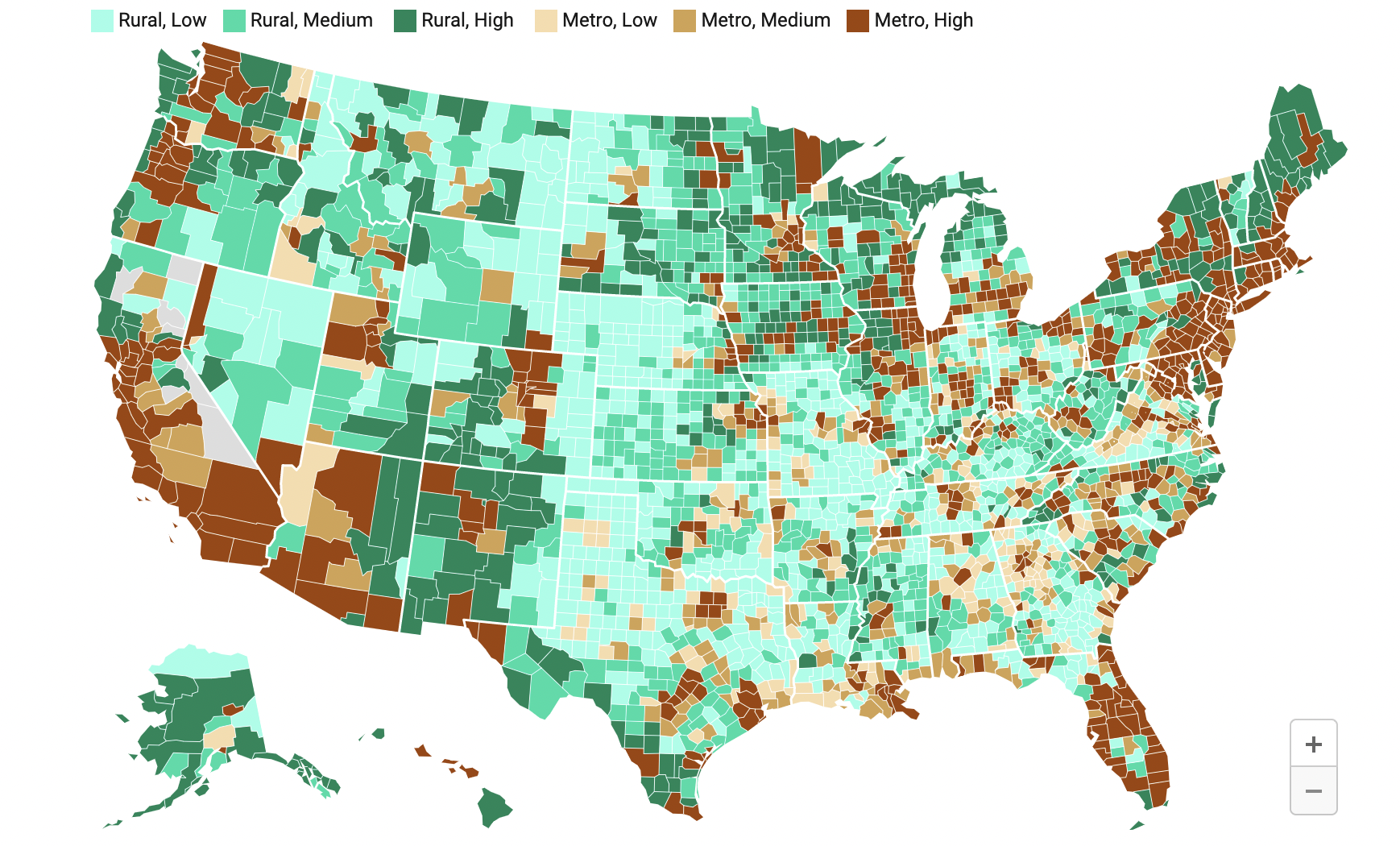
Coronavirus vaccination rates as of May 26, compared to national average and adjusted to account for vaccinations not assigned to a county. Map by The Daily Yonder; click the image to enlarge it or click here for the interactive version.

The rate of new coronavirus vaccinations in rural counties "grew by 0.4 percentage points from the last week of April to the last week of May. The rate grew by about that same amount from March to April," Tim Murphy and Tim Marema report for The Daily Yonder. "The pace of new vaccinations has slowed in both rural and metropolitan counties over the past several months. From December 2021 to January 2022, the rural vaccination rate grew by nearly 1.7 percentage points and the metropolitan rate grew by 2.2 points. As of May 26, 51% of the total rural population was completely vaccinated against Covid-19. In metropolitan counties, that rate is 65.4%."

Only 23.2% of people in rural U.S. counties have had at least one coronavirus booster shot, compared to 30.7% of the metro population, Murphy and Marema report.

Thursday, April 28, 2022

Rural seniors least likely to be vaccinated against Covid-19

Respondents polled between January and March 2022; fully vaccinated individuals are those who got either a single Johnson & Johnson shot or the two-shot sequence from Moderna or Pfizer. (Covid States Project chart)

Full vaccination against Covid-19 with a booster shot is one of the surest ways to protect oneself against severe outcomes from the coronavirus, especially among senior citizens, who tend to be more vulnerable to infection. Seniors who are totally unvaccinated and unboosted are disproportionately likely to be less-educated, lower-income, rural, and Republican. So says a new report by the Covid States Project, a consortium of Northeastern University, Harvard University and its medical school, Rutgers University and Northwestern University

Asked why they were unvaccinated, seniors mainly cited worries about side effects and a lack of trust in the process by which the vaccines were developed, researchers found. Many who had been vaccinated but who had not yet gotten a booster indicated they were open to it, but either did not feel it was urgent or cited obstacles such as transportation that kept them from doing so.

The Covid States Project looked into the question of seniors' coronavirus vaccination rates because they say the data from the Centers for Disease Control and Prevention is "significantly flawed" because it relies on poor record-keeping. Read more here.