Showing posts with label railroads. Show all posts

Tuesday, January 13, 2026

Long Canadian Pacific trains bring a small town's busy Main Street to a standstill each day

A westbound Canadian Pacific train makes its way into Jackman, Maine.
(Photo by Linda Coan O’Kresik, Bangor Daily News)

In Jackman, Maine, drivers waiting to cross Main Street can spend 30 minutes idling as Canadian Pacific Kansas City trains pass through the heart of town. Daniel O’Connor for The Maine Monitor reports, "More than 3,000 cars and trucks pass through the railroad crossing every day."

Doubling as U.S. Route 201, Jackman's Main Street and the railroad that divides it connects Quebec with "southern Maine and the rest of the Northeast," O’Connor explains. "Trains passing through town sometimes exceed 200 railcars, stretching for more than two miles in length. . . .That’s longer than 90% of North American freight trains operated by companies like CPKC." Some of the wait time can be blamed on aging rail lines and increased traffic.

Jackman, Maine, is 16 miles from the Canadian
border. (Northern Outdoors map)

Locals tried to avoid Main Street during the hours when trains were scheduled to cross, but train schedules varied too much. Waits can be extended when an international border scanner, which checks trains for illegal goods from Canada, notifies Customs and Border Protection that additional scanning is needed.  

For Jackman residents and Route 201 travelers, the long and unpredictable daily train waits are frustrating and pose a potential danger. O'Connor explains, "With the town split in half for part of the day and ambulances on one side of the track, trains could delay responses during an emergency."

Maine’s border shares seven rail crossings with Canada, but Jackman’s border crossing "is the only one to see a clear increase in shipping year-over-year," O'Connor reports.

CPKC has made rail improvements to "upgrade the rails in the area since it acquired the route in 2020, but said border security caused slowdowns in Jackman," O'Connor adds. "Many in town seemed to accept that the long trains were just part of life up north."

Friday, August 01, 2025

Mega merger would create first coast-to-coast rail company in U.S.; farming and manufacturing sectors voice concerns

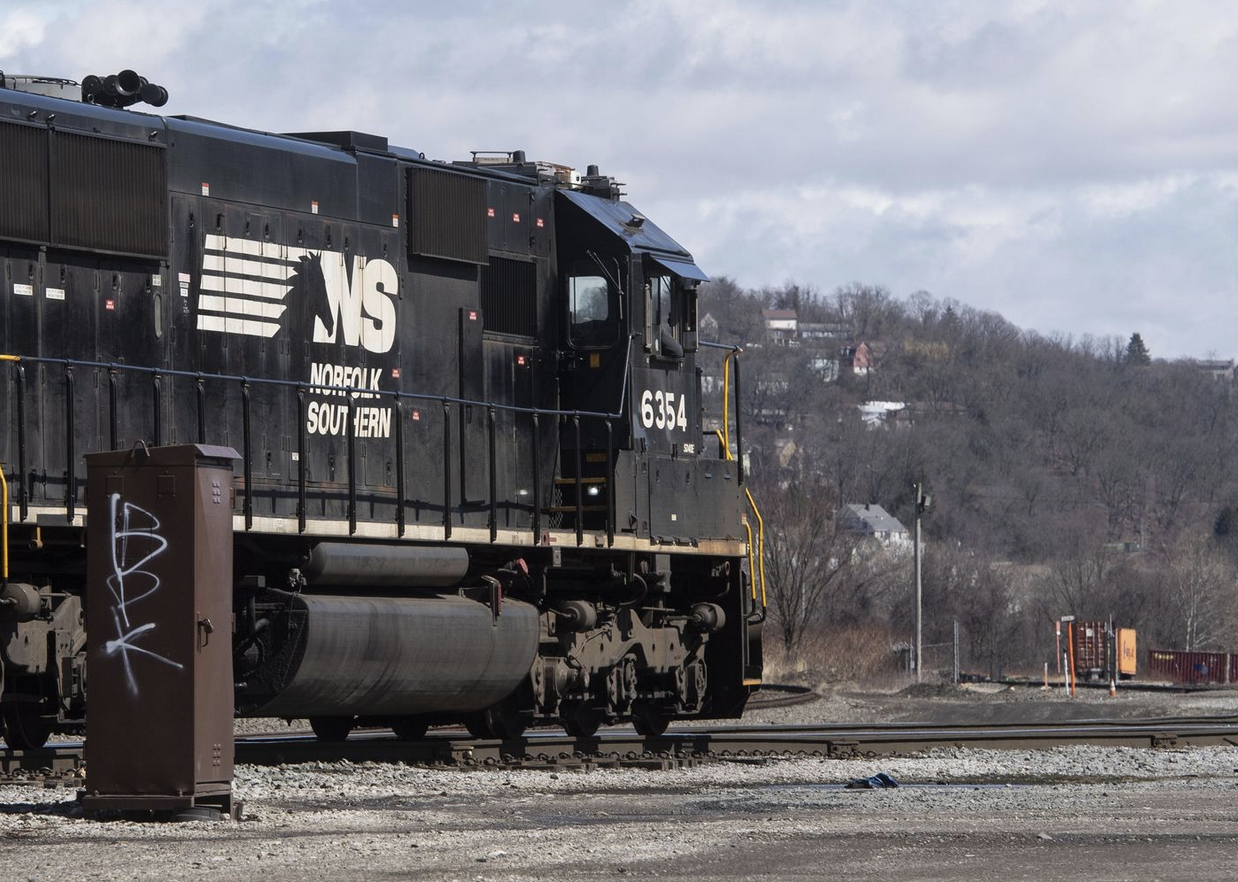
Union Pacific and Norfolk Southern railroads signed an 
agreement to merge. (Photo by Tyler Silvest, DTN CC)
Union Pacific has announced plans to merge with its smaller rival, Norfolk Southern. The $85 billion merger would create the nation's first transcontinental railroad while giving Union Pacific the power
"to reshape the movement of goods from grains to autos across the country," report Sabrina Valle, Shivansh Tiwary and David French for Reuters. "If approved, the deal would be the largest ever buyout in the sector."

The mega deal, which would connect 50,000 miles of track across 43 states, "will face lengthy regulatory scrutiny amid union concerns over potential rate increases, service disruptions and job losses," Reuters reports. "The 1996 merger of Union Pacific and Southern Pacific had temporarily led to severe congestion and delays across the Southwest."

Particularly at harvest time, railroad changes, costs, delays and timing can directly impact farming incomes. The National Grain and Feed Association said in a news release "that it will undertake an extensive evaluation of the proposed merger to better understand its implications for our industry," reports Mary Kennedy for Progressive Farmer.

The American Chemistry Council weighed in and cautioned against further rail mergers. ACC leadership told Kennedy, "The impact of a transcontinental merger between two of these railroads threatens to leave American manufacturers, farmers and energy producers with even fewer competitive options to ship by rail. . . . Many rail customers are currently dealing with high rates and unreliable service. Further consolidation within the rail industry is likely to make these problems worse."

The proposed merger "reflects a shift in antitrust enforcement under U.S. President Donald Trump's administration," Reuters reports. "Executive orders aimed at removing barriers to consolidation have opened the door to mergers that were previously considered unlikely. . . .The Union Pacific merger would give the company a 43% market share, dominating most categories of commodities."

Friday, July 25, 2025

'Hub City' earned its moniker from railroad days, but it's still a place where people from all walks of life come together

‘All Are Welcome’ banner on Bethlehem’s 
exterior. (Photo by Betsy Froiland, The Yonder)

Like spokes on a wheel, nine railroad lines used to converge in Aberdeen, South Dakota —a small rural town that railroads transformed into "Hub City." And while Aberdeen's moniker was earned in the early 1900s, much of the town's reputation as a physical and social hub remains. Betsy Froiland for The Daily Yonder writes, "Many of those railways are gone. But the nickname and the identity endure."

Today's Aberdeen is different in many ways, but it's still a "place where people with different backgrounds, political leanings, and personal identities come together," Froiland writes. Hub City still offers community spaces where its residents and visitors can feel welcome, no matter their differences.

"One such space is Bethlehem Lutheran Church," Froiland writes. "The church itself is a hub of activity, discussion, and community for people from all walks of life. . . . It's politically diverse. While the majority [of members] supported Donald Trump in 2024, 37.5% of its electorate voted for other candidates. People of all political leanings share pews in worship."

The Rev. Jeff Whillock is Bethlehem's lead pastor, who takes an open view to discussing things that can divide people. Froiland writes, "Instead of shying away from political topics at church. . . Whillock takes these conversations on, thoughtfully and methodically." He told Froiland, "I’m continually committed to being a pastor with people that I disagree with."

Like a track that keeps a train moving, part of what has kept Bethlehem alive and growing is "the congregation’s shared understandings of faith and nature to relay a powerful message: all are welcome at Bethlehem," Froiland explains. "Perhaps in part due to the church’s work to connect across differences, Bethlehem is thriving."

Some evenings at Bethlehem include a meal before the religious service. Members and visitors share a meal, with some staying for the service, but some head home after the meal. "In many ways, Bethlehem is a hub of its own. A hub where people from all walks of life can share a meal together," Froiland adds. "A hub where people with different political views can speak a common language."

Thursday, August 22, 2024

Canadian rail strike leaves U.S. commodities unable to move; agricultural interests push for a resolution

Rail-traffic has stopped at U.S.-Canadian
border. (Denley Photography, Unsplash)
As U.S. farmers prepare for expected bumper crops of corn and soybeans, the shutdown of Canada's two largest railways threatens a chunk of their incomes. The fallout from Canada's unresolved rail closures stretches beyond agriculture. It could have "dire consequences for North America’s economy, threatening deliveries of cars, timber and petroleum products," reports Lauren Kaori Gurley of The Washington Post. "The U.S. railway Union Pacific has said a shutdown would sideline more than 2,500 railcars that normally cross the U.S.-Canada border each day."

The two Canadian railways, the Canadian Pacific Kansas City railroad and the Canadian National Railway have been unable to strike a deal with Teamsters Canada "despite days of heated negotiations," Gurley writes. "The Teamsters say the railways are requesting that the union make concessions 'on crew scheduling, rail safety, and fatigue management' — echoing union concerns at the heart of a threatened 2022 rail strike in the United States." The two railroads insist they have offered "significant pay increases and addressed concerns about scheduling."

U.S. agricultural interests are pushing hard for a resolution. Gurley reports, "In a letter addressed to President Joe Biden as well as other U.S. and Canadian officials, dozens of trade associations, including the American Farm Bureau Federation and the National Cotton Council, said a rail shutdown would trigger 'harmful consequences for Canadian and American agricultural producers, the agricultural industry, and both domestic and global food security.'”

Earlier this week, U.S. companies worked to slow the flow of goods to the U.S. Canadian border, which means "that massive flow of goods has screeched to a complete halt," Gurley explains. But the problems go both ways. "Murad Al-Katib, chief executive of AGT Foods, one of the world’s largest suppliers of staple foods such as beans and wheat, said food supply chains would be 'immediately disrupted,' noting that many commodities — such as peas, lentils, chickpeas and durum wheat used for pasta — travel across the Canadian border to U.S. processing and packaging facilities."

Meanwhile, Teamsters Canada said that it won't agree to the rail companies' "grueling schedules," and in turn, both railway companies said "they’ve made generous offers to the union," Gurley writes. "The Canadian government has rejected calls to intervene, but Canadian Prime Minister Justin Trudeau urged parties to 'get to a resolution.'"

Friday, June 21, 2024

East Palestine's controlled chemical burn in 2023 spread pollutants to at least 16 states, new study shows

Norfolk Southern's controlled burn spread chemicals
to surrounding states. (Adobe Stock photo)
In February 2023, a Norfolk Southern train derailed in East Palestine, Ohio, leading to an explosion and a toxic vinyl chloride spill. The subsequent controlled burn, which was intended to prevent further explosions, created a plume that spread air pollutants to at least 16 states, according to research published in the journal Environmental Research Letters, Zack Budryk of The Hill reports. The cloud "reached as far north as New England . . . according to researchers from the University of Wisconsin. They found the overall radius spanned more than 540,000 square miles."

Researchers studied soil samples before and immediately after the spill to evaluate the burn's reach. "They found evidence of high chloride concentration in states including Virginia, South Carolina and Wisconsin, as well as particularly high concentrations near Canada's border with New York, an area downwind of the crash site," Budryk explains. 

The chemical plume may have also changed precipitation pH levels in surrounding areas. "Researchers found unprecedentedly high, or more basic, pH values across a broad belt in the Midwest and Northeast," Budryk reports. "They also found elevated alkaline and earth metals levels, in some cases within the 99th percentile of measurements for the last decade."

The study's lead researcher, David Gay, said, "All of these pollutants are important in the environment because their accumulation has an impact on the Earth's aquatic and terrestrial environments in many ways."

In March 2024, the chair of the National Transportation Safety Board, Jennifer Homendy, testified at a Senate hearing that the deliberate burn was not necessary because there was no risk of additional explosions.

Tuesday, April 09, 2024

Two-person crews are now required for almost all freight trains in an effort to improve railroad safety

Photo by Laurent Jollet, Unsplash
More than a year has passed since the Norfolk Southern train derailment in East Palestine, Ohio, where cars carrying vinyl chloride exploded and a "controlled chemical burn" was completed and then later disputed as unnecessary. Although East Palestine isn't the only town to face the devastating consequences of a rail disaster, the small town's crisis brought rail safety back into the forefront, and now the federal government has put a new rule in place.

"The Biden administration rolled out a mandate requiring nearly all freight trains nationally to operate with two-person crews," reports Daniel C. Vock of Route Fifty, "ending for now a decade-long fight by the railroad industry to stymie similar efforts in Congress and in statehouses around the country. . . .Transportation Secretary Pete Buttigieg said the new Federal Railroad Administration rules will 'address the patchwork of differing uncoordinated requirements that had been developing across the states.'"

"More than 13,000 people commented when the FRA announced its two-person crew proposal, Buttigieg said, and nearly all of them were supportive of the idea," Vock writes. "One worker told the agency that asking someone to run a train by themselves for a 12-hour shift is 'kind of like solitary confinement.'"

The rail industry has maintained that it remains the safest way to move dangerous chemicals, "something the head of the National Transportation Safety Board agreed with in recent testimony in the House -- though officials acknowledge the railroads need to continue improving safety," reports Josh Fund of The Associated Press.

Ian Jeffries, the president and CEO of the Association of American Railroads, pushed against the new regulations, saying that they had "no proven connection to rail safety," Vock reports. "The FRA's rules require two workers to staff freight trains unless a railroad gets a special exemption from the agency. When companies seek an exemption, the public and railroad workers will get a chance to weigh in before the agency decides."

Tuesday, March 12, 2024

In East Palestine, Ohio, residents and officials now know the 'controlled burn' was not neccesary

Vinyl chloride is used to make
PVC piping. (Wikipedia photo)
More than a year has passed since the Norfolk Southern train derailment in East Palestine, Ohio, which left the community of 5,000 facing the aftermath of a chemical explosion followed by a "controlled chemical burn" of vinyl chloride that at the time was presented as the "least bad" of two options. However, area residents and Congress discovered last week that Ohio decision-makers didn't have all the facts needed to avoid the burn.

"The decision to blow open five tank cars and burn the toxic chemical inside them after a freight train derailed in Eastern Ohio last year wasn't justified, the head of the National Transportation Safety Board told Congress," reports Josh Funk of The Associated Press. "But she said the key decision-makers who feared those tank cars were going to explode three days after the crash never had the information they needed."

The East Palestine train derailment.
(Wikipedia photo)
The company Oxy Vinyl made the vinyl chloride inside the five cars, and its experts told "contractors hired by Norfolk Southern railroad that they believed that no dangerous chemical reaction was happening, NTSB Chair Jennifer Homendy said. But Oxy Vinyls was left out of the command center," Funk explains. While vinyl chloride is a flammable gas, it needs a specific combination of heat, air, light, and a contact catalyst to start a fire or explode. Homendy testified that the Oxy Vinyl's experts did not believe this combination or "polymerization" was occurring. "However, that information was never relayed to Ohio Gov. Mike DeWine and the first responders in charge, she said."

DeWine's spokesperson, Dan Tierney, said a lack of information made the burn seem like the only safe option. He told Funk: "The only two scenarios that were ever brought up were a catastrophic explosion occurring, where shrapnel would be thrust in all directions to a one-mile radius, or averting that through a controlled vent and burn. Nobody ever brought up a scenario where if you just did nothing, it wouldn't explode."

East Palestine is in Columbiana
County, Ohio. (Wikipedia)
Area residents now face the heartbreak of knowing the burn was not needed, and some suspect Norfolk Southern pushed for the burn versus waiting for the cars to cool so that more costly delays could be avoided. Funk reports, "Misti Allison, who lives with her family about a mile away from the derailment site, said the findings reaffirm what she believed to be true all along: that the vent and burn did not need to happen." She told Funk, "Norfolk Southern was putting profits over people to get the train tracks up and running as fast as possible and to destroy whatever evidence was left."

Vinyl chloride does not occur naturally and is a category 1A carcinogen. The National Cancer Institute notes that "vinyl chloride exposure is associated with an increased risk of a rare form of liver cancer (hepatic angiosarcoma), as well as primary liver cancer (hepatocellular carcinoma), brain and lung cancers, lymphoma, and leukemia." 

Tuesday, February 06, 2024

A year after the East Palestine derailment, some residents have not returned home, and others report health problems

The site of the East Palestine train derailment.
(Photo by Cara Owsley, The Enquirer via USA Today)
More than a year has passed since the Norfolk Southern train derailment in East Palestine, Ohio, left the unsuspecting community of 5,000 living in the aftermath of a hazardous chemical explosion and its mitigating "controlled chemical burn." Many residents believe their lives are forever changed because of toxic exposure during and after the disaster.

Five days after the accident, Ohio officials announced that it was safe for residents to return home. "But five families who spoke to The Cincinnati Enquirer . . . just before the one-year anniversary say they're still dealing with health problems," reports Elizabeth B. Kim of The USA Today Network. Despite the lack of scientific studies tying the derailment's toxic spill to long-term health problems, "relocated families are still experiencing symptoms and foot many of their medical bills without help from the railroad or the government. They don't consider their East Palestine homes to be safe, and they're worried that moving back will worsen their symptoms."

Financial help from Norfolk Southern ends on Feb. 9 for families who relocated to other areas. "Some of the symptoms families say they face are chronic, and others are acute, appearing suddenly after a short period of time spent in one's home," Kim writes. "Christa Graves, 49, has had migraines before, but they increased in frequency from weekly to daily starting last February. . . . While Norfolk Southern offered to relocate people living within a mile of the derailment site, Graves lives 1.2 miles away. The railroad denied her request for relocation assistance, and her family has been unable to move out ever since."

Despite residents' reported health problems, the town's air and water have repeatedly passed quality testing. Anne Vogel, director of the Ohio EPA, said, "The agency is not planning to offer more residential air testing following those initial results," Kim reports. Ohio EPA "has also continued weekly sampling of the municipal water system since February 2023 and reported that no contaminants from the derailment have been detected."

Beyond ongoing health issues and expenses, families who have been unable to go home "described the crushing blow of losing their homes, sometimes passed down for generations," Kim reports. "Candy Kiehl still feels a strong connection to her East Palestine house despite feeling unconvinced that it's free of contamination." Kiehl told her: "That was my grandparents' house. That's where my mom passed away. That's where my dad passed away. But is it safe? I don't know."

Tuesday, January 23, 2024

In 1985-2014, suicide rates were highest among workers in lumber, wood and furniture; metal fabrication; and mining

Workers in several rural-oriented industries were found to have the highest suicide rates, in what the authors say is the first study of suicide rates by industry using nationally representative data.

The study looked at 1,943 suicides over 29 years, from 1985 to 2014. It found that age-adjusted suicide rates were highest in the furniture, lumber, and wood industry group (29.3 suicides per 100,000 population), the fabricated-metal industry (26.3 per 100,000), and mining (25.8). Railroading had the lowest rate (5.5), then education, banking, hospitals, and entertainment and recreation. 

Lines extending from numbers indicate possible maximum rates, due to
sample size. (Study graph, adapted by The Rural Blog; click to enlarge)
Most workers in the high-ranking industries are men, which may partially explain their rank. "Male-dominated industries often come with intense pressure, competition, and societal expectations that can significantly impact the mental health of individuals working within them," the authors write. "Male-dominated industries often involve high-stress jobs, long working hours, low pay, and limited work-life balance, all of which can contribute to chronic stress and mental-health problems."

The study, published in the Archives of Suicide Research, was conducted by Ahmed Arif and three other researchers at the University of North Carolina at Charlotte. They note, "Suicide rates in the working-age U.S. population have increased by over 40% in the last two decades," with the latest annual total 48,000. "Between 1999 and 2017, the age-adjusted suicide rate increased from 10.5 to 14.0 per 100,000 population. Although suicide may be linked with characteristics of workplaces and their industries, few studies have reported industry-level suicide rates."

Why study such rates? "Characteristics of the workplace may affect suicide risk," the authors write. "Researchers have identified job stress, low job satisfaction, bullying and harassment, lack of support and resources, poor management practices, and job insecurity as some of the risk factors for suicide linked with the workplace." Also, "There is evidence that workplace suicide prevention is effective."

Tuesday, December 12, 2023

U.S. rail gets an infusion of cash from Maine to Alaska; projects will include new or improved tracks in rural areas

Department of Transportation map via Route Fifty

Almost every state will receive federal money to build or improve its passenger rail, reports Daniel C. Vock of Route Fifty. "President Joe Biden, known for decades as the Senate's most loyal Amtrak passenger, unveiled his administration's vision for a more robust passenger rail network throughout the country, with more than $8 billion in funding for big-ticket projects and grants for better service in nearly every state." The administration has ignored criticism that many Americans don't use rail enough to warrant that amount of funding.

While many allotments will go to bigger cities, more rural areas will also glean new or improved tracks. "The administration will spend nearly $94 million to add capacity to Chicago's Union Station. . . $27 million to upgrade tracks used by Maine's Downeaster Amtrak route and $15 million to eliminate bottlenecks in Montana," Vock writes. "The so-called Corridor ID program’s planning grants include proposals to upgrade 15 existing rail routes, add or extend service on 47 new routes and develop seven new high-speed rail projects, according to the administration."

The administration is also pushing to "lay the groundwork for future passenger rail upgrades," Vock adds. "The Federal Railroad Administration is giving half a million dollars each to 69 projects in 44 states to help with planning for service expansions. . . . Some of the ideas — like restoring service through the southern tier of Montana — have been talked about for decades. Colorado is getting money to plan service along the Front Range, linking many of its major cities."

States can refuse the federal money, but those that accept it are more likely to have a history of passenger rail support, Mike Christensen, the executive director of the Utah Rail Passengers Association, told Vock. "The vast majority of proposals receiving funding have been preceded by years of grassroots organizing that ultimately culminated in the proposal."

Thursday, October 19, 2023

Berkshire Eagle, Seven Days, Vermont Standard, Nantucket paper big rural winners in New England newspaper awards

Slide from awards presentation

The Berkshire Eagle
scored big in the New England Newspaper and Press Association awards, which were announced Thursday during the group's semiannual online conference.

The Eagle, of Pittsfield, Mass., was judged the best small daily (less than 9,000 print circulation), with The Keene Sentinel of New Hampshire and the Record Journal of Meriden, Conn., as runners-up. 

The Eagle was judged to have the best editorial, "chastising the Catholic diocese in western Massachusetts for trying to subpoena a reporter's notes which would reveal confidential sources" and calling on legislators to pass a shield law like most other states have to protect reporters. 

And the Eagle won two of NENPA's Publick Occurrences awards, named for America's first newspaper and honoring 13 pieces that were judged to be the best in New England journalism in the past year. The rural or rural-impact winners included the Eagle's reports on nursing homes and hazardous-materials shipments on trains that go through its region; projects by Seven Days of Burlington, Vermont, on child care and the pandemic's impact on housing in the largely rural state; the Lewiston Sun Journal's "Homeless in Maine" series; the Concord Monitor's series on police spending and policies all over New Hampshire; and CT Mirror's "Elder Care Reckoning" series that prompted reforms in Connecticut.

The best small weekly newspaper in New England was judged to be the Vermont Standard of Woodstock, with runners-up the Milton Times of Massachusetts and the St. Albans Messenger of Vermont. The best large weekly (over 4,000 circ.) was the Inquirer and Mirror of Nantucket, Mass.; runners-up were the Martha's Vineyard Times and sister papers in Maine, the Mt. Desert Islander of Bar Harbor the Ellsworth American. The best mid-size daily (circ. 9,000-20,000) was The Day of New London, Conn., with Massachusetts' Daily Hampshire Gazette of Northampton and the Greenfield Recorder runners-up. The Concord Monitor was judged best small Sunday paper.

Tuesday, August 08, 2023

Railroad employee, working solo, got warnings but says he was too busy to notice before derailment; safety bill stalls

Aerial view of the deliberate burning of hazardous vinyl chloride
(Columbiana County commissioners photo from NTSB via ABC)
One employee watching 19,500 miles of track could have prevented Norfolk Southern Corp.'s February train derailment in East Palestine, Ohio, but he says he was distracted by other trains and failed to see  warnings that a wheel bearing was heating up and would fail, reports Darrel Rowland of ABC News: "He wasn't even looking at the readings from defect detectors along the tracks on the bearing, suspected by the National Transportation Safety Board of causing the fiery crash in East Palestine."

Gary Rambo, automatic train-control analyst for the Atlanta-based railroad, told NTSB investigators "he was monitoring other Norfolk Southern trains at the same time," Rowland reports. "Thus, he didn't notice a 'trending alert' from the wayside defect detector showing a spike of 103 degrees in the bearing of doomed train 32N in Ohio. . . . He said, 'Honestly, I didn't see it when it first came in. There were three other trains I was working on.'"

"Rambo said he didn't know for sure the train had derailed until he heard from the chief dispatcher's office that 'We got a lot of cars on the ground' and 'They're on fire,'" Rowland reports. "He told investigators that on the day of the crash, he – as usual – was working solo on a 12-hour shift, attempting to monitor from home all the company's trains on 19,500 miles of track in the eastern U.S. . . . He said he did not even have a scheduled lunch break or time to use the bathroom as he tried to keep up with an average of 300 alerts per shift. . . . Rambo said two persons used to work the shift until Norfolk Southern staff cutbacks a few years ago."

Should Rambo had noticed the warning, he may not have acted, Rowland writes: "The temperature fell just short of the railroad's threshold to stop the train – although whether someone like Rambo could have asked for a halt due to the rapid temperature rise remains unclear. . . . Critics say the nothing-to-see-here stance of Norfolk Southern on a crucial element of the derailment provides just one indicator of how hard it's proving to bring real change on rail safety as we approach the six-month anniversary of the crash where 38 cars from the 1.75-mile-long train derailed in East Palestine, including 11 with toxic materials that first responders had difficulty identifying."

Ohio Sens. Sherrod Brown (D) and J.D. Vance are pushing a bill to create more rail safeguards. The Senate Commerce Committee approved it in May, and a handful of other "Trump-aligned conservatives have signed onto the effort, but party leaders on both sides believe the legislation in its current form lacks enough GOP support to clear the 60-vote threshold" in the Senate, Punchbowl News reports. "The problem for most Republicans is that the bill goes too far in imposing new regulations on the industry.”

Joe Perticone of The Bulwark’s “Press Pass” reports, “The bill’s fortunes started shifting around the same time that the Norfolk Southern Corp.” political-action committee “was cutting big checks to PACs and members of Congress whose positions made them critical to the bill’s fate.“

Friday, June 30, 2023

Since East Palestine derailment, some states have moved to regulate freight trains, but it's a murky legal territory

Norfolk Southern locomotives in Conway, Pennsylvania
(Photo by Gene Puskar, The Associated Press)
Ambulances, fire trucks, people heading to emergency rooms and schoolchildren have all been stuck waiting for miles-long trains to pass. On Feb. 3, a Norfolk Southern train derailed in East Palestine, Ohio, dumping gallons of vinyl chloride in an unsuspecting small town, a different discussion on rail safety began, and some states are taking action, report Marc Levy and Josh Funk of The Associated Press.

"Spurred on by train derailments, some states with busy criss-crossing freight railroads are pursuing their own safety remedies rather than wait for federal action amid industry opposition and questions about whether they even have authority to make the changes," Levy and Funk write. "Legislatures in at least a dozen states have advanced measures in recent weeks, including some in states such as Minnesota that have witnessed disruptive derailments."

The rail industry has long resisted state regulation. "It contends it's capable of making improvements and that its growing efficiency — including significantly longer trains and a much smaller workforce — doesn't compromise safety," AP reports. "States want limits on the length of trains that routinely stretch more than 2 miles long and on how much time trains can block road crossings . . . They are also pursuing rules to maintain the current standard of two-person crews, bolster the trackside detectors used to identify equipment problems and require more notice to local emergency responders about hazardous freight."

State efforts come with legal uncertainties "over whether only the federal government can enforce such requirements. And Congress and federal regulators are considering similar measures," Levy and Funk write. "Ohio moved quickly, with the Republican-controlled government enacting a new law within two months of the Norfolk Southern train derailment in East Palestine. . . . Rep. Rob Matzie (D), whose western Pennsylvania district is home to a major rail-freight handling hub, said he is satisfied with the state's legal standing. . . . Matzie told colleagues during floor arguments, 'It's now time for this state to act. We can't wait for federal regulations, which always seem to be in the works, but never quite get done. Or for federal laws that will never ever see the light of day.'"

"Two rail-union officials, Jason Doering and Matt Parker, who have both lobbied for legislation in Nevada for years, said it's important for states to act because they're not optimistic that Congress will pass meaningful reforms over the strong lobbying of the railroads in a polarized political climate," Levy and Funk report. "Even though government data shows that derailments have declined in recent years, there were still 1,049 of them last year — roughly three a day. More than three-quarters of them happen at slow speeds in railyards and don't cause significant damage. . .. . Joseph L. Schofer, a retired professor of civil and environmental engineering from Northwestern University, said some rules being proposed at the state and federal level — for instance, minimum crew size — have nothing to do with the East Palestine derailment because that train actually had three people in its crew. . . . He also said state-to-state rules will result in chaos."

Thursday, June 29, 2023

Norfolk Southern loses bid to protect itself from state-court action; Supreme Court justice alludes to recent derailment

A Norfolk Southern employee sued in Pennsylvania but claims
exposure in two other states. (Photo by Nate Smallwood, WSJ)
In a loss for Norfolk Southern Corp., the Supreme Court ruled "that states can require companies to submit to their courts' jurisdiction as a condition of doing business within their borders," reports Jess Bravin of The Washington Post. "Norfolk Southern had sought to limit its state-court liability in states where it does relatively little business. . . . At issue was a Pennsylvania law requiring that companies operating within the state consent to lawsuits filed in Pennsylvania courts—even if the allegations involve conduct that took place elsewhere. Norfolk Southern argued that imposing such liability on the railroad. . . violated the Constitution's due-process clause."

Justice Neil Gorsuch wrote for the majority, "Its cargo? Hazardous chemicals." That suggested "that under the railroad's argument, the Constitution could, in theory, shield the company from some state-court lawsuits while leaving its employees exposed to liability," the Journal reports. "Norfolk Southern's safety practices came under new scrutiny after the February derailment in East Palestine, Ohio, released more than 1 million gallons of hazardous chemicals into the environment. The company is facing multiple lawsuits from the incident."

The case at issue was "a workplace lawsuit filed by a retired railway employee from Virginia, Robert Mallory. . . who alleged he developed colon cancer from workplace exposure to carcinogens. . . while working in Ohio and Virginia but filed suit in Pennsylvania state court in 2017," Bravin reports. "The Mallory case was of interest to businesses nationwide for its potential to limit a practice called forum-shopping, in which litigants try to steer cases into courts they hope will be more sympathetic to their claim. . . . Pennsylvania law authorizes lawsuits against any company registered to do business within the state."

Norfolk Southern "argued it was unconstitutional to give Pennsylvania state courts blanket jurisdiction over any potential claim against the company," Bravin reports. "Not so, Gorsuch wrote. . . . The court had resolved the matter in a 1917 case when it upheld a lawsuit that an Arizona mining company filed in Missouri against its Pennsylvania-based insurance company for fire damage to a smelter near Cripple Creek, Colo. . . . States began adopting such laws, in response to the explosive growth of corporations in the 19th century. States required consent to liability 'in exchange for the rights to exploit the local market and to receive the full range of benefits enjoyed by in-state corporations.'. . . Norfolk Southern, Gorsuch said, had complied with the Pennsylvania requirement for decades."

Tuesday, May 30, 2023

Longer trains block vehicles for longer waits, costing lives

Washington Post graph from Assn. of American Railroads data
Longer trains are blocking rural vehicular traffic for longer waits, including by emergency responders. There have been extreme delays and, in one case, an infant died. So far, railroads have been slow to respond to complaints, report Andrea Salcedo, Luz Lazo, and Lee Powell of The Washington Post.

Their object example: "For decades, those living along Glover Road in Leggett, Texas — a rural community with fewer than 150 residents  — wrote letters, sent emails and called authorities pleading that trains stop blocking the neighborhood's sole point of entry and exit for hours. Some residents and a county judge sent letters to the railroad company, warning of a 'greater catastrophe,' including a toxic train disaster."

The community's fears were justified: "In 2021, baby K'Twon Franklin died. His mother, Monica Franklin, had found the 3-month-old unresponsive in her bed and called 911," the Post reports. "Paramedics responded, but a Union Pacific train blocked their path on Glover Road, according to Franklin and a local police report. It took more than 30 minutes for them to carry K'Twon into an ambulance. Two days later, the baby died at a hospital in Houston. Franklin told the Post, "Unfortunately, the delay has cost my child's life."

The tragic events in Leggett are not an exception. "In Tennessee, a man died of a medical emergency after an ambulance crew was held up at a train crossing. In Oklahoma, a man perished from a heart attack after first responders were stuck behind a train at the only entrance to their street. . . . So far this year, there have been more than 1,400 reports of first responders blocked by trains," the Post reports. "Trains have mushroomed in length for a simple reason — to save money and generate profits for railway companies and their shareholders. . . . U.S. railroads have paid out $196 billion on stock buybacks and dividends to shareholders since 2010." Congress is working some solutions: "The Railway Safety Act, which would require railroads to maintain a toll-free number where people can report blocked crossings, advanced this month to the Senate floor, where it will probably need 60 votes to pass. The legislation also would set standards. . . . apply new rules to trains transporting hazardous materials and curb efforts by railroads to reduce their workforces."

Will railroads end up building roads to grade separations where vehicles can cross? "In Leggett, there is a solution to the crossing blocks. To build a short connector road to another crossing, giving Glover Road residents a way out. They could then cross the tracks and drive 15 minutes to Livingston, the nearest town. Or if all crossings were blocked in Leggett, they could take the long way to Livingston, about a 45-minute drive," the Post reports. "Union Pacific said it is committed to working with communities — including Leggett — to resolve issues with blocked crossings. But local officials and residents say that, despite the county and state facilitating land acquisition, the railroad has not made it a priority."

UPDATE, June 5: In Hensley, Arkansas, a largely Black village of 139 people south of Little Rock, the Union Pacific Railroad is installing a longer siding to keep trains from dividing the burg, which has only one railroad crossing, the Arkansas Democrat-Gazette reports.

Friday, April 28, 2023

Kids are crawling under stopped railcars, and aren't the only ones with train problems; railways ignore requests for help

One child helps another cross over a parked freight train blocking their route
to school in Hammond, Indiana. (Photo by Jamie Kelter Davis, ProPublica)
Watching a train go by used to be a relaxing pastime. But now they take longer to go by because they have gotten longer, and their stops block more streets, roads and pathways, no matter who or what needs to get through -- be it ambulances or students trying to walk to school, report Topher Sanders and Dan Schwartz of ProPublica and Joce Sterman of Gray Television. "Recent spectacular derailments have focused attention on train safety and whether the nation's powerful rail companies are doing enough to protect the public — and whether federal regulators are doing enough to make them, especially as the companies build longer and longer trains. . . . In Hammond, Indiana, reporters sat by a train blocking a school path and "witnessed dozens of students. . . . climbing over, squeezing between and crawling under train cars. . . An eighth-grade girl waited 10 minutes before she made her move, nervously scrutinizing the gap between two cars. She'd seen plenty of trains start without warning. 'I don't want to get crushed,' she said."

Multiple reports tell an ugly story: "Ambulances can't reach patients before they die or get them to the hospital in time. Fire trucks can't get through, and house fires blaze out of control. Pedestrians trying to cut through trains have been disfigured," ProPublica and Gray report. "An Iowa woman was dragged underneath until it stripped almost all of the skin from the back of her body. . . . In Hammond, the hulking trains of Norfolk Southern regularly force parents, kids and caretakers into an exhausting gamble: How much should they risk to get to school?"

Hammond's school district has "asked Norfolk Southern for its schedule so that the schools can plan for blockages and students can adjust their routines. The company has disregarded the requests, school officials said. . . . In written responses to questions, a spokesperson for Norfolk Southern said children climbing through their trains concerns the company," they write. The journalists showed footage of kids making the crossing, including an elementary student crawling under a train, to representatives of Norfolk Southern, lawmakers and Transportation Secretary of Transportation Pete Buttigieg; "He was shocked" and said, "Nobody can look at a video with a child having to climb over or under a railroad car to get to school and think that everything is OK."

States and local authorities can issue citations to trains for blocking intersections longer than state laws or local ordinances allow, but after rail companies found a way to negotiate those fines, the practice was largely abandoned. "State and local officials grew hopeful when the Supreme Court invited the federal government to comment on a petition from Ohio seeking the authority to regulate how long a train can block a crossing. The high court will likely hear the case if the solicitor general recommends it, said Tom Goldstein, publisher of SCOTUSblog, which is widely seen as an authority on the court," ProPublica and Gray report. "Nineteen other states have signaled their support for a Supreme Court case. Goldstein expects the solicitor general to respond in November or early December. A favorable court opinion could allow other states to finally enforce their laws on blocked crossings. . . .[In the meantime] the problem has become so endemic in Hammond that getting 'trained,' or stalled at crossings, has become a verb."

Wednesday, March 22, 2023

Pro-Russian Twitter accounts spread false information preying on 'legitimate concerns' after Ohio train disaster

Drone photograph of Feb. 6 Norfolk Southern freight train derailment in
East Palestine, Ohio (Photo by Gene Puskar, The Associated Press)
Something strange and noteworthy followed the Feb. 6 train disaster in East Palestine, Ohio. "Soon after the derailment, anonymous pro-Russian accounts started spreading misleading claims and anti-American propaganda about it on Twitter, using Elon Musk's new verification system to expand their reach while creating the illusion of credibility," reports David Klepper of The Associated Press. "The accounts claimed without evidence that authorities in Ohio were lying about the true impact of the chemical spill. The accounts spread fearmongering posts that preyed on legitimate concerns about pollution and health effects and compared the response to the derailment with America's support for Ukraine following its invasion by Russia."

One posting cried, "'Biden offers food, water, medicine, shelter, payouts of pension and social services to Ukraine! Ohio first! Offer and deliver to Ohio!' [The account] boasts 25,000 followers and features an anonymous location and a profile photo of a dog," reports Klepper. "One video features ex-President Donald Trump's remarks about the train derailment, complete with Russian subtitles."

"The accounts were identified by Reset, a London-based nonprofit that studies social media's impact on democracy, and shared with AP, " Klepper explains. After the accounts were identified, "Zignal Labs, a media intelligence firm, conducted a study. . . . At first, the derailment received little attention online, but mentions grew steadily; Zignal found a time lag that gave pro-Russia voices time to try to shape the conversation. . . . the accounts received an extra boost from Twitter itself. . . . . Musk replaced it [Twitter's Blue check mark verification system] with Twitter Blue. Under the program, Twitter Blue users can write and send longer tweets and videos. Their replies are also given higher priority on other posts."

Felix Kartte, a senior advisor at Reset, told Klepper, "With no one at home in Twitter's product safety department, Russia will continue to meddle in U.S. elections and in democracies around the world." Kartte noted Reset's "findings indicate Twitter is allowing Russia to use its platform like a bullhorn."

Thursday, March 16, 2023

Feds approve $31 billion merger of two major railroads into the first one that connects Canada, the U.S. and Mexico

Map prepared by the two companies in 2021 shows their rail lines and the main areas of Canadian grain production, U.S. grain processing and Mexican grain consumption near the lines. 

With federal approval yesterday, the first railroad to span Canada, the U.S. and Mexico has been created. In a $31 billion deal, Canadian Pacific Railway will acquire Kansas City Southern Railroad and become Canadian Pacific Kansas City as early as April 14, Freight Waves reports.

"In approving the deal, the regulator, the Surface Transportation Board, said the new single-line service would shift about 64,000 truckloads a year to rail from the roads, potentially enhancing safety and reducing carbon emissions, and add more than 800 union jobs. The Surface Transportation Board said the merger would not reduce competition," Niraj Chokshi and Mark Walker of The New York Times report. "Martin J. Oberman, the chairman of the five-member board, told reporters, 'On balance, the merger of these two railroads will benefit the American economy and will be an improvement for all citizens in terms of safety and the environment.'"

The Times reports, "The decision came amid mounting concerns with the deal. The Justice Department said it had 'serious concerns' about industry consolidation and asked the regulator to carefully scrutinize the merger. . . . The board has a congressional mandate to take into account the effect mergers would have on transportation for the public and on competition. . . . Oberman noted that Canadian Pacific and Kansas City Southern were the smallest of the large U.S. freight carriers known as Class 1 railroads." The combined firm will also be the smallest, Freight Waves notes. Olberman "acknowledged criticism that the industry had already become too consolidated in recent decades," but told the Times that the merger “will actually provide a stronger competitive landscape." Freight Waves notes that Board Member Robert Primus dissented, citing consolidation cocerns and saying "The transaction will harm communities along the path of the newly combined network."

In reviewing the merger, "The board took into account the environment and other factors," Chokshi and Walker report. "In a detailed review in January, the board found that the merger would have little negative effect on safety, air quality or other concerns, though some communities could see heightened air or noise pollution, it stated." The two railroads have littel if any overlap and are linked by CP's southernmost line, ending in Kansas City. Canadian grain interests hope the new line will ease exports to Mexico.

Thursday, March 09, 2023

Railroad accidents have been increasing, especially at Norfolk Southern, but have decreased along some big lines

Energy & Environment News graph; click to enlarge
"The country’s major freight railroads were becoming more dangerous even before the train wreck in East Palestine, Ohio, that sparked a chemical fire and weeks of political controversy," Mike Lee and Ellie Borst report for Energy & Environment News.

The reporters found that Norfolk Southern Corp., which had the derailment, had the largest increase in its accident rate from 2013 to 2022, rising 81 percent. Overall, the seven "Class 1" railroads "had 27 percent more accidents," E&E News reports, noting, "The increased accident rate comes as the chemical industry predicts a rise in the amount of chemicals that will be shipped by rail, trucks and other forms of transportation," and that most accidents involve trucks, which handle most of the chemical freight.

The American Association of Railroads told E&E News that the data include minor collisions in train yards and that “main line” accidents are becoming fewer. “If you were going to look at the main line accidents … 2022 was the lowest year in history overall,” said Mike Rush, the lobby’s senior vice president of operations and safety.

"Looking strictly at on-rail accidents, three of the freight railroads — Norfolk Southern, CSX Corp. and Union Pacific Corp. — had higher rates over the last 10 years," Lee and Borst report. "Norfolk Southern had one of the lowest accident rates in 2013 and now has the second highest behind Union Pacific . . .  The accident rates at Union Pacific, CSX and Norfolk Southern are far lower than they were in the 1970s and ‘80s, but they also show a stark contrast to the other four Class 1 railroads — BNSF, Canadian National, Kansas City Southern and Canadian Pacific — where accident rates fell between 5 percent and 65 percent over the last decade."

Thursday, March 02, 2023

Derailments and explosions aren't only worries for railroads' neighbors; noise and vibrations can cause health issues

Train tracks in Newberg, Oregon (Photo by David Herron, Unsplash)
The train explosion and controlled burn of hazardous materials in East Palestine, Ohio, reminded us that living near a railroad can be hazardous to your health and safety. But some health threats from rail are more chronic and unseen, "and while fiery crashes with towering smoke clouds make for lots of headlines, studies suggest trains carry health costs even when they don’t derail," reports Jason Bittel of National Geographic. "Noise pollution and vibrations are some of the biggest concerns, particularly for people who live within one-third of a mile of railroads or railyards, says Natalia Caldeira Loss Vincens, an expert in public health at the University of Gothenburg in Sweden."

“These exposures to noise and other things” are stressful, and chronic stress can lead to “a cascade of pathophysiological changes,” including inflammation, and changes in appetite or a person’s insulin sensitivity. "In a 2022 study in the journal Environmental Research, Vincens found a link between railway noise and incidences of diabetes, even when accounting for variables such as sociodemographic and lifestyle factors," Bittel reports.

Luca Fredianelli, an acoustic technician with the Italian National Council of Research, told Bittel, "If the sounds are quite stable, in the end, we do not perceive it at all." Bittel elaborates: "It’s the less intense but more unpredictable noises, such as squeals, whistles, and grinding brakes, that really bother people, since they’re difficult to acclimate to, he said."