Showing posts with label crop insurance. Show all posts

Wednesday, August 05, 2026

Higher interest rates, heavier debt and increased costs have Midwest farmers drawing comparisons to 1980s struggles

   
Photo by Jesse Gardner on Unsplash

In a report for Wisconsin Public Radio, Hope Kirwan reminds listeners of an agricultural downturn of 40 years ago when “a decline in crop prices and farmland values, massive amounts of farm debt and high interest rates led to a landslide of farmers forced to leave the industry. By the end of the decade, an estimated 300,000 farms went bankrupt or foreclosed.”

While the comparison is understandable — a conflict with Iran, higher fuel and fertilizer prices — farmers and economists alike recognize that unlike then, the federal government now provides more safeguards, such as crop insurance. But the difficulties still are threatening, as Kirwan reports, “Profit margins for U.S. corn and soybeans have been negative for the past two years, according to data from the U.S. Department of Agriculture.”

The WPR report quotes Seth Meyer, an agriculture economist at the University of Missouri, who says today’s safeguards “won’t keep people from exiting” but can allow “a more orderly result. So folks aren’t knocked out by one bad situation, some of which is out of their control.”

One such situation has California lettuce growers plowing their crops back into the ground. The Wall Street Journal reports that the outbreak of the cyclospora virus, even though it has not been connected to domestic production, has instilled so much fear in consumers that “growers can’t afford the expense of picking and storing crops they might not be able to sell.”

In response to the challenges farmers are facing, U.S. Secretary of Agriculture Brooke L. Rollins announced on Tuesday at Minnesota Farmfest that the federal government is implementing “a series of data modernization payment flexibility, and enhanced crop insurance options to benefit farmers.” In a USDA press release, Rollins said, “We’re modernizing how USDA serves farmers, providing common sense flexibility when it’s needed most, and strengthening the risk management tools producers depend on.”

The Wisconsin farmer quoted in the WPR report said he’s hoping to hang in there until commodity prices begin to rise again. “Everything we do is managing risk, and there’s a cost to that,” he said, while expressing optimism.

The California lettuce farmer quoted by WSJ seemed to agree. “You can’t afford to be downcast very long,” he said. “You better pick yourself up, dust yourself off and keep pushing forward.”


Friday, January 10, 2025

Farmer income declines and U.S. government disaster payments begin; roughly $9.8 billion will be paid out

Approximately $9.8 billion will be paid out to farmers.
(FAPRI and RaFF map via Farm Journal)
As some U.S. farmers tally thousands of dollars in losses, the federal government has responded with disaster aid checks. "America has long provided subsidies to its farmers, dating back to the 1930s as a way to tackle rural poverty when a quarter of the population lived on farms," reports Patrick Thomas of The Wall Street Journal. "Today, subsidies largely come in the form of insurance. . . . Direct cash payments, while at times controversial, have been used to bolster farmers during agricultural downturns."

U.S. farmers have coped with declining profits and high input costs for the past two seasons. "Net farm income declined 4% this year to $141 billion after falling about 20% last year," Thomas explains. "Weaker prices for commodities such as soybeans and wheat have weighed on farmers’ earnings after growers in the U.S. and elsewhere reared big crops, swelling supplies. Their costs for essentials such as fertilizer and equipment are also higher."

Farm income woes will likely continue in 2025. Thomas reports, "Some of the world’s largest grain shippers and pesticide suppliers are girding for a shrinking farm economy by cutting costs or laying off workers. . . . [The] financial pain on the farm comes after one of the ag industry’s strongest runs on record. . . . In Iowa, the top corn-producing state, farmland values decreased by 3% this year, breaking a five-year streak of rising prices."

President-elect Donald Trump's pledged tariffs on Mexico and China may also hit farmers in the pocketbook. Both countries are "major importers of U.S. crops," Thomas writes. Still, many farmers "believe that Trump's policies may benefit the agricultural economy. . . . In 2018 and 2019, during Trump’s first term, about $23 billion in taxpayer money was paid to farmers to offset the impact of trade disruptions."

The current farm bill extension through Sept. 30 includes "$9.8 billion in market relief payments for 20 covered crops," reports Jim Wiesemeyer of Farm Journal. "According to an analysis by the Food and Agricultural Policy Research Institute, the top 10 states based on estimated total payments for corn, soybeans, wheat, cotton, sorghum, rice, barley, oats, and peanuts are:
  • Texas: $963 million, primarily because of its status as the largest cotton producer
  • Iowa: $846 million, with strong support for corn and soybean farmers
  • Illinois: $790 million
  • Kansas: $787 million
  • Nebraska: $625 million
  • Minnesota: $616 million
  • North Dakota: $597 million
  • South Dakota: $497 million
  • Indiana: $400 million
  • Missouri: $391 million
To get more details on the American Relief Act of 2025, click here. To see the state and crop breakdown and what it means for U.S. farmers, click here.

Friday, June 14, 2024

Quick hits: The resilient Mississippi River; pizza and sunscreen's shared ingredient; food costs; a new ice cream

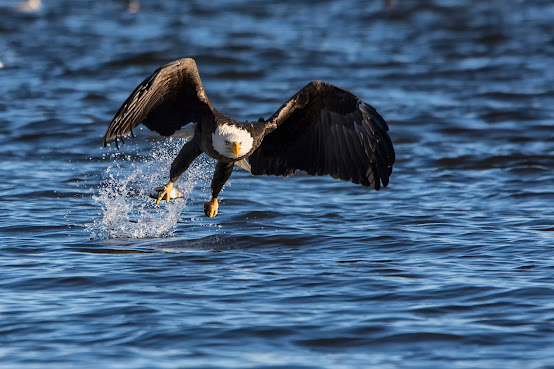
 American Bald Eagle snatches its prey from the mighty Mississippi.  (Adobe Stock photo)
In the fall of 2022, the Mississippi River was drying up and commodity shipping was an expensive struggle. "Dropping water levels in the Mississippi River have caused shipping costs to rise just as harvest season approaches for many Midwestern soybean and corn farmers," reported Keely Brewer in a story for the Daily Memphian." By 2023, things had not improved. "Historic low flows turned the Mississippi River into a construction area in 2023 as the U.S. Army Corps of Engineers dredged huge quantities of sand to keep the channel open for barge traffic," reports Chloe Johnson of the Minneapolis Star Tribune. Earlier this year, "The U.S. Army Corps of Engineers announced that the drought that plagued the Mississippi River basin since 2022 was officially over." Despite this glorious improvement, here's how to keep caring for the mighty Mississippi

On a dairy farm where not everyone speaks the same language, confusion and frustration can impede good animal care. "Great animal welfare is only achievable when a dairy has a strong employee welfare focus," writes Dr. Kaitlyn Lutz for Lancaster Farming. "Consider these practical ideas to improve management as a step toward a culture of care for your employees and cows: 1. Use WhatsApp -- Your Hispanic workers are using it. If you're not, you miss a huge opportunity to connect. 2. Connect over family -- Ask employees about their families. Language barrier? Check out the PONS Translate app's conversation mode. Or, share pictures. 3. Build trust -- Trust is built through small and consistent actions over time."

Titanium dioxide is found in sunscreen and pizza.
Yuck. (Adobe Stock photo)
Adding sunscreen to your frozen pizza sounds disgusting. And yet, "If you have heard of titanium dioxide at all, you probably know it as an ingredient in sunscreen. But it is also used in lots of foods, from pizza and salsa to frosting and candy—and now, there is growing concern about the potential health risks of eating it," reports Andrea Petersen of The Wall Street Journal. "Some research, mainly in animals, has suggested that eating it might be linked to immune system problems, inflammation and DNA damage that could lead to cancer. . . . The European Union has banned titanium dioxide in food since 2022."

U.S. families continue to balance needs with costs.
(Adobe Stock photo)

U.S. consumers continue to grapple with high grocery prices, which drain their budgets and leave some families struggling to make ends meet. "Results from the most recent wave of the Gardner Food and Agricultural Policy Survey demonstrate that consumers perceive inflation and high food prices to be persistent problems," reports Brenna Ellison for Farmdocdaily. "Consistent with this, a recent Gallup poll found that 41% of households identified inflation as the most important financial problem they are currently facing. . . . Some retailers like Target, Walmart, Amazon, and Walgreens have announced they will be cutting prices on thousands of items."

Crop insurance helps provide income stability for food and animal producers who must make a living despite unpredictable weather, hungry pests and insidious weeds. This year marks the biggest acreage for U.S. crop insurance coverage. "Farmers and ranchers bought crop insurance policies on more than 500 million acres of land last year, the largest amount ever, driven by the surging popularity of forage policies," reports Successful Farming. "Overall enrollment in crop insurance was up 85% in the seven years from 2016, according to Department of Agriculture data."

No-melt ice cream could help some humans stay
cleaner. (Adobe Stock photo)
A creamy, cool, delicious ice cream cone is one of summer's simple delights -- until your dip starts dripping and your cone starts crumpling. Then the slurp and smear battle ensues. Could there be a less-melty way? "Cameron Wicks, a student at the University of Wisconsin, is working on a new technology that adds naturally occurring compounds [polyphenols] to ice cream," reports Elise Mahon for University of Wisconsin News. Wicks told Mahon, "We learned that adding polyphenols to ice cream can create a product that holds its shape for over four hours at room temperature. That's pretty close to a no-melt ice cream."

Friday, April 19, 2024

Opinion: Don't rush to pass a new farm bill. 'This Congress already has failed. Let the next Congress take it up.'

Art Cullen

By Art Cullen, Editor
Storm Lake Times Pilot

A five-year farm bill was supposed to have been approved last year, but was held up in the House over disagreements on food stamps, conservation, crop insurance and funding. House Agriculture Committee Chair Glenn Thompson, R-Pa., announced that he will find a way to push a farm bill out before Memorial Day in order to get President Biden to sign a new farm bill by the end of the year.

Don’t bet the farm on it.

Sen. Chuck Grassley said he is pessimistic, and so is Sen. Joni Ernst, both Republican Ag Committee members.

Rep. Randy Feenstra, R-Hull, is optimistic. “So there’s going to be a lot of talk, especially when it comes to SNAP and stuff like that. But I fully believe that we will get it out of the House, and then it’s just a matter of what (Sen. Chuck) Schumer and (Sen. Debbie) Stabenow is going to do in the Senate when it comes their way,” Feenstra told Brownfield News.

If a new farm bill can’t pass this year, it is expected that another one-year extension will be passed. Grassley said farmers would receive protection but not adequate protection. Getting beyond an extension of the same-old would be up to a new Congress, and as of now it is anybody’s guess who will be in charge.

It’s not as if the existing hang-ups are going anywhere. Fights over food stamps in the House stalled the last farm bill by two years. House Speaker Mike Johnson walks on egg shells in his caucus room as he is accused of caving in to Democrats on spending. The same sticking points will be as sticky in 2025.

It’s a huge piece of legislation with terribly complicated politics. You have regional interests from the South and Midwest battling over commodity payments. You have disagreements between commodity and livestock interests. Then you throw in cultural wedge issues like food stamps (SNAP benefits), and it all becomes a mishmash.

What used to be a fairly bipartisan process in the past decade has devolved into a food fight like everything else in Washington. Because so few know or care about the work of the agriculture committees, their work is controlled by the interest groups that fund our politics.

If food is important, the farm bill should be.

Our food security and agricultural resiliency are imperiled by a warming climate. A farm bill with conservation at its core could serve farmers and the environment better.

The farm bill as it is and has been over the past 40 years has resulted in more consolidation, accelerated rural depopulation, more surface water pollution in Iowa, and fewer farmers.

It also has stunted funding for research into livestock disease as pandemics build and bird flu jumps to humans.

Putting a new label on a defective product does not make it better.

But it might make some politicians look better if they can say they actually got some lipstick applied to the pig.

The Farm Bill is entwined with 'terribly complicated politics.'
(Adobe stock photo)
Crop insurance remains intact, as does a safety net for commodity markets. Food stamps too. As Grassley said, the protections are in place. So instead of jamming through an even worse farm bill than we already have, which is likely in this election year, we may all be better off if we take our time and do it right.

Ernst should be the No. 3 Republican in the Senate following the election, and the top woman in the caucus. She could establish herself as a national leader by stating unequivocally that nutrition programs are the most efficient way to fight poverty, which makes all of America stronger. Democrats and Republicans used to join hands over it — Hubert Humphrey and Bob Dole, Tom Harkin and Chuck Grassley.

Someone needs to be a voice of reason. The ethanol industry, for example, is openly acknowledging that the future for corn growers depends on capturing tax credits for carbon dioxide pipeline. That’s not a great position for Iowa farmers to be in. But that is where the current farm bill puts us.

We could write a new piece of legislation that enhances soil and water health while directly paying farmers for stewardship. We can make conservation programs a lot more flexible. We can help farmers diversify their revenue streams while cleaning up the Raccoon River, which did not have a nitrate problem before farm programs encouraged planting fencerow to fencerow. And it could cost less if we cut corporations off the teat, which would have a lot of appeal in Iowa. That is not likely to happen by Memorial Day. More of the same is.

Wednesday, May 03, 2023

Farm lobbies ask Congress to improve commodity programs

By Adam Goldstein
States Newsroom

Farm and commodity trade-association leaders lobbied for updating commodity programs and strengthening crop-insurance programs at a Tuesday hearing of the U.S. Senate Agriculture, Nutrition, and Forestry Committee.

They said crop insurance and the Department of Agriculture’s Price Loss Coverage and Agriculture Risk Coverage programs are not a “true safety net” for farmers, and that crop reference prices must be increased due to declining farm income and increasing costs.

A reference price is the Farm Bill's estimated cost of crop production, used for insurance and other risk-management program. Prices were last updated in the 2014 Farm Bill.

American Farm Bureau Federation President Zippy Duvall told the committee that what he hears most often from farmers about the bill is the need to strengthen and expand federal crop insurance.

Kentucky farmer Caleb Ragland testified (Photo via Morning AgClips)
Caleb Ragland, a row-crop farmer from Magnolia, Kentucky, said crop insurance is one of the main ways his farm stays viable. “Without crop insurance, the risks would be more than many farmers and lenders could handle,” he said. “It certainly would be for me and my family.”

Committee Chair Debbie Stabenow, D-Michigan, asked how to better provide crop insurance options for specialty crop farmers. Duvall said the most important things are that the program is funded correctly and is easy for farmers to use; National Farmers Union President Rob Larew suggested more actively applying a provision of the Federal Crop Insurance Act to encourage adoption and continued use of climate-smart agricultural practices by developing new specialty-crop insurance policies.

Republican Sen. Chuck Grassley of Iowa asked how Congress might bolster the farm safety net without costing the country more money. Duvall said “I don’t have any suggestions.”

Grassley also asked Larew if owners of commodity farmland should be eligible for safety-net programs if they are not actively farming, since the biggest 10% of farms get 70% of the money. Larew said the NFU supports limiting payments to those truly invested in management and labor.

Saturday, January 14, 2023

Farm Bureau backs farm-program boost, alliance with food advocates to pass Farm Bill as GOP plans non-defense cuts

The nation's largest organization of farmers and ranchers wants the new Farm Bill to expand funding for federal agriculture programs but that "may run into a roadblock in the House of Representatives," where Republicans in a new but thin majority "are calling for cutting up to 25% of spending in federal non-defense agencies," Chris Clayton reports for DTN/The Progressive Farmer.

American Farm Bureau Federation convention delegates in Puerto Rico "voted Tuesday to expand baseline funding for the Farm Bill and ask Congress to develop more flexible disaster-relief programs," Clayton notes. Most Farm Bill money funds nutrtion programs run by the Department of Agriculture, by far the Supplemental Nutrition Assistance Program, formerly food stamps. An alliance of farm and nutrition advocates has been key to passing farm and food programs, and delegates' voters confirmed that the lobbying interests "should stick together to get a Farm Bill passed," Clayton reports: Delegates "approved new policy to support access to nutrition programs including connecting farms directly with food banks, increasing the number of SNAP-approved food sales outlets, and other efforts to make produce available to families living in food deserts."

There will be less presure to get a five-year Farm Bill passed by Sept. 30, the end of the federal fiscal year, than in past cases, because the current law lets nutrition and crop-insurance programs continue, DTN Political Correspondent Jerry Hagstrom reports.

On other issues, the delegates "also want to see more crop insurance options for specialty crops" and "more transparency" in the federal milk-pricing system," a Farm Bureau press release said. "Changes they would like to see in milk programs include more USDA audits of processing costs to ensure data remains accurate," Clayton reports. "Farm Bureau would also like to see the Federal Milk Marketing Orders voting procedure changed that would require 'cooperatives to communicate more clearly with members regarding proposed changes'."

Whom does Farm Bureau represent? AFBF said a poll of the 334 delegates found that 99% of those who cast votes "operate family farms and almost 65% represent small- to mid-size farms as defined by USDA," Clayton reports.

Friday, May 27, 2022

Quick hits: Black farmers' debt-relief controversy illustrated; Sinclair boss says political division is good for his business; FCC chair: school buses should get pandemic funds for wi-fi

Daily Yonder illustration by Nhatt Nichols
Here's a roundup of stories with rural resonance; if you do or see similar work that should be shared on The Rural Blog, email us at heather.chapman@uky.edu.

The Daily Yonder illustrates the controversy around debt relief for Black farmers via a graphic novel-style illustration. Read it here.

Sinclair Broadcast Group CEO Chris Ripley remarked recently that, though he laments the "political environment we're in," a politically divided America is "very good for our business," referring to political candidates' outsized expenditures for television ads. Sinclair's audience is disproportionately rural. Read more here.

Rural students often lack the broadband access to complete homework, making it difficult to complete schoolwork during pandemic shutdowns, or homework in general. To help close the "homework gap," Federal Communications Commission Chair Jessica Rosenworcel has proposed that schools should be able to use federal broadband funding to outfit school buses with wi-fi hubs. Such bus rig-ups have helped many rural students access broadband during the pandemic. Read more here.

A recently published study found that rural counties were much less likely than metropolitan counties to have enough—or any—buprenorphine or methadone treatment programs available for opioid use disorder. Counties with large shares of people with disabilities or without insurance were especially likely to lack enough treatment options. Read more here.

Many municipalities, large and small, that have embraced cryptocurrency for payments and other local commerce are now reeling amid the cryptocurrency crash. Read more here.

Between 1995 and 2000, crop insurance payouts have increased between 300% and 400% for American farmers, and are expected to keep rising as disasters become more frequent and extreme. A thoughtful opinion piece from an environmental group posits that the federal crop insurance program encourages irresponsible environmental practices by insulating farmers from the consequences of climate change to their crops. Read more here.

Friday, February 19, 2021

Quick hits: Firefighters face lies, biased studies when trying to uncover truth about carcinogenic chemicals in their gear

Here's a roundup of stories with rural resonance; if you do or see similar work that should be shared on The Rural Blog, email us at heather.chapman@uky.edu.

Firefighters face lies and biased studies when trying to uncover the truth about carcinogenic chemicals used to make their firefighting gear flameproof. Read more here.

Members of Congress are calling on the Treasury Department and the Small Business Administration to clarify Paycheck Protection Program guidelines to make more farmers and ranchers eligible for forgivable loans, but it may be too late. Read more here.

New York Times contributing author Margaret Renkl will speak at the Rural Assembly Everywhere conference in April. Read more here.

Book review: Robert Gipe's Pop, the latest in a trio of illustrated novels set mostly in Eastern Kentucky, "shows the power of telling our own stories." Read more here.

Here are eight novels with rural settings that you can curl up with while the weather outside is frightful. Read more here.

Some experts say the new crop-insurance supplemental option is worth considering even if it's pricey. Read more here.

An initiative is helping farmers market products from heritage livestock sheep breeds. Read more here.

Monday, February 08, 2021

Farmers must pick federal safety-net program by March 15; experts advise them to start the sign-up process now

Starting with the upcoming crop season, farmers must now choose the Farm Bill safety-net program they want—either Agriculture Risk Coverage or Price Loss Coverage—on an annual basis. March 15 is the deadline, but experts say it's best to start the process now, especially if records must be updated. 

University of Illinois economists say neither program is likely to "make payments for the next crop season. based on current price forecasts and trend yields for corn and soybeans," Dehlinger reports. "Still, the deadline to make elections is fast approaching."

Illinois Farm Service Agency chief program specialist Randy Tillman said in a recent webinar that "if everyone in Illinois who enrolled in ARC or PLC last year wanted to change their elections, 170,000 contracts would need updating. With less than a month of business days to the deadline, that works out to nearly 6,000 farm updates each day," Katie Micik Dehlinger reports for DTN/The Progressive Farmer. But the pandemic has limited how many FSA employees can be in the office at one time, and many states require farmers to make appointments to complete paperwork.

"If we wait until the last few weeks, and then we find out you have farm records that you need to have updated before we can do an election, there's the possibility you'll miss out," Tillman said. Farmers who don't update their ARC/PLC elections by March 15 will be re-enrolled in the same program as the previous year. Tillman noted that farmers can choose one now and change their mind before the 15th.

Thursday, October 15, 2020

Cannabis farmers are stuck without disaster aid or useful crop insurance because federal law disqualifies them

Farmers have had a rough two years, partly because of wild weather: derechos in the Midwest, wildfires in the South and West, and hurricanes in the Southeast. But while most can get disaster aid or crop insurance payouts, cannabis farmers have access to neither, and it's a threat to the fledgling industry.

Cannabis cultivation was authorized in the 2018 Farm Bill, but "because federal law defines marijuana as an illegal, dangerous drug, neither federal agencies nor conventional banks and major insurance companies will work with marijuana businesses even if they are legal under state law," Sophie Quinton reports for Stateline. "Nor are marijuana businesses eligible for federal disaster relief."

Though cannabis growers can buy crop insurance from local providers, one farmer told Quinton he couldn't find a policy worth the money. "Producers and industry supporters now are pushing for changes to federal relief law and seeking state disaster aid," Quinton reports.

Wednesday, March 04, 2020

Government watchdog identifies improper USDA spending on crop insurance payouts, food stamps and school meals

The U.S. Department of Agriculture improperly spent $6.7 billion in 2019, according to the Government Accountability Office's annual report to Congress on improper federal spending. That's more than last year, but still a small part of the $175 billion in improper spending the GAO identified across the government, Ryan McCrimmon reports for Politico's Morning Agriculture.

The largest share of improper payments, more than $4 billion, went to the Supplemental Nutrition Assistance Program, formerly known as food stamps. School meals added just over $1.5 billion to the total. Improper payouts and funding for crop insurance programs made up about $1 billion more.

USDA improperly paid about $42.5 million in crop-disaster assistance, GAO said. Though the total amount was low compared to other improper expenditures, crop-disaster assistance had the highest rate of improper payments as a percentage of a program's total outlay, McCrimmon reports.

Tuesday, March 03, 2020

Flooding hurting farmers again; could delay planting

Precipitation in January 2020 as a percentage of the average for the 20th century.
National Oceanic and Atmospheric Administration map; click on the image to enlarge it.
American farmers could see planting delays and crop losses for the second year in a row, as ground still saturated from last year's flooding can't absorb heavy recent rains.

"Relentless storms that have marched across the Midwest and into the South this winter have already filled rivers to the brim and are threatening to make farm fields too soggy to plant as spring arrives," Brian Sullivan reports for Bloomberg. "And there isn’t much to suggest an easing ahead. Heavy rains forecast through next week could push waterways higher where the Mississippi and Ohio meet in Illinois, and into northern Mississippi and Arkansas." Farmers in Washington state, North Dakota and Minnesota have been seeing flooding, too.

Because the recently concluded meteorological winter was two to three times as wet as normal in most states, it wouldn't take much more rain to once again cause major problems for farmers, homeowners, businesses and infrastructure, Sullivan reports.

The 2019 flooding was so bad that last year's crop insurance payout was the highest in history and farm bankruptcies rose 20 percent. "Odds are we won’t have the $20 billion in losses we had last year," Scientific American meteorologist Jeff Masters told Sullivan. "But the odds are we will see multi-billion dollar losses."

Wednesday, February 05, 2020

Floods made 2019 crop insurance payout highest in history; still-saturated soils in Midwest threaten more this year

"Flood-related federal crop insurance payouts for the 2019 growing season total more than $6.4 billion so far — the costliest on record," Ryan McCrimmon reports for Politico's Morning Agriculture. "Most of those indemnities are tied to the spring and summer floods across states like North and South Dakota, Minnesota, and Illinois, according to an analysis of USDA data by Steve Bowen, a meteorologist and head of catastrophe insight at Aon, an insurance company."

Bowen told Politico, “Given the record rainfall that occurred and the multiple ‘waves’ of flooding that affected areas across the Mississippi, Missouri, and Arkansas River basins, the heightened impacts are not overly surprising. Last year was a very tough year for farmers, and there are concerns that already saturated soils across the Plains and Midwest may set the stage for more possible flooding in 2020.”

Department of Agriculture economists predicted last year that climate change will fuel bigger and more frequent storms, which will increase the price of crop insurance by 4% to 22%. Inside Climate News reported in 2018 that drought, partly driven by climate change, was driving up crop-insurance payouts and accounted for almost half the payouts from 2000 to 2016. Floods were second.

McCrimmon notes that the crop-insurance program "is overseen by USDA and carried out by private companies. Taxpayers cover companies’ costs of administering the program and subsidize, on average, 60 percent of farmers’ premiums; growers pay the other 40 percent."

Monday, December 16, 2019

Dec. 19 webinar to discuss 2020 agriculture outlook

A free webinar on Dec. 19 at 12:30 p.m. ET will discuss the 2020 agricultural economic forecast.

Purdue University ag economists Jim Mintert and Michael Langemeier will go over updated corn and soybean supply and demand estimates and price projections, marketing strategies for 2019 and 2020 crops, profit projections for 2020, and the relative merits of signing up for the different types of federal crop insurance.

The one-hour webinar is free, but registration is required. If you are unable to attend, the hosts say they will email you a recording afterward. Click here to register or for more information.

Tuesday, November 26, 2019

Tune in today for webinar on USDA farm income forecast

Tune in at 1 p.m. ET today for a free webinar discussing the latest Farm Income Forecast, which the U.S. Department of Agriculture's Economic Research Service will release tomorrow. The forecast will be published here.

The USDA releases estimates each year in February, August and November, covering a wide range of data and predictions concerning the farming sector's economic health. ERS economist Carrie Litkowski will discuss updated data and forecasts on farm income and wealth, cash receipts, other sources of income such as government payments and insurance, production expenditures, off-farm income, and breakouts by major commodities and regions. Register here.

Thursday, November 21, 2019

Crop-insurance deadline delayed as harvest problems and farmers' struggles continue; land prices go negative

As U.S. farmers conclude a difficult crop year, the outlook remains troubling. The downturn in agriculture echoes the one that led to the 1980s farm crisis, Farm Credit Administration Chairman Glen Smith told the House Agriculture Committee on Tuesday. The FCA regulates farm lenders.

Smith said the farm-lending system is "safe and sound" but officials are "very concerned and closely monitoring some weakening in credit quality." At a subcommittee meeting, he also compared the current economic climate to that of the early '80s, "citing economic trends like falling farm income, rising debt-to-asset ratios and concerns about the value of farmland," Ryan McCrimmon reports for Politico's Morning Agriculture. "Farmland values remain largely stable across the country. But that could change, Smith warned in his written remarks to the committee, if larger amounts of farmland go up for sale — like if farm bankruptcy rates continue ticking upward." Smith also noted the role of trade wars in agricultural instability in the late '70s and early '80s.

Meanwhile, abnormally wet weather continues to slow harvests, making it likely that some crops won't be harvested this year at all. "Instead, a good deal of corn in Northern states will likely have to wait until the spring of 2020 to be harvested, while soybeans left over winter might not be harvested at all," Ray Grabanski reports for Successful Farming. "That is going to lead to harvest losses much greater than factored so far into USDA numbers" estimating production.

Within the next two weeks, the corn harvest will be about 76 percent complete and soybeans 91% complete. It's not likely to go much higher, Grabanski writes: "Most of the corn not harvested never made maturity, and therefore is still very wet (25% to 35% moisture) and it is not economical to harvest now (and no propane is available to dry it)." And very wet soil, or snow, will block soybean harvests. But, Grabanski notes, China is buying more soybeans, so commodity prices could go up quickly if the trade war ends.

Almost three-quarters of the rural bankers surveyed for Creighton University's Rural Mainstreet Index reported negative economic impacts from the trade war. The RMI is a monthly survey of bank CEOs in rural areas of a 10-state region where agriculture and energy are essential to the economy: Colorado, Illinois, Iowa, Kansas, Minnesota, Missouri, Nebraska, North Dakota, South Dakota and Wyoming.

The overall index has been barely above growth-neutral for three of the past four months, buoyed by higher grain prices and trade bailout payments, writes Ernie Goss, the Creighton economist who compiles the report. However, prices for land continued to slide. "The confidence index, which reflects bank CEO expectations for the economy six months out, slumped to 36.5 from September’s 42.9, and continues to indicate a very negative economic outlook among bankers," Goss reports. This is because of the trade war with China and uncertainty about when or if the U.S.-Mexico-Canada Agreement, replacing the North American Free Trade Agreement, will pass.

One banker complained to Goss that it was hard to make predictions because this year's planting and harvesting data isn't known -- or, if known by the Agriculture Department, isn't being made public.

Because of the delayed harvest, USDA is granting most farmers a second extension on crop insurance premium due dates, Dan Looker reports for Successful Farming. Normally, payments on spring-planted crops are due Sept. 30 and begin to accrue interest Oct. 1. USDA announced in August that it would defer interest until after Nov. 30; now it says farmers have until Jan. 31 to make interest-free payments on crops planted last spring. But if their payments are even a day late after Jan. 31, they'll be charged the retroactive interest that would have accrued since the original due date of Oct. 1.

Tuesday, November 12, 2019

More farmers turning to nontraditional, high-interest loans; 'shadow financing' with 'hot money,' ag-econ prof says

"Financial stress is mounting in the Farm Belt, pushing more growers to take on high-interest loans outside traditional banks to stay in business," report Jacob Bunge and Kirk Maltais of The Wall Street Journal. "With crop prices stuck at low levels, traditional farm banks are placing stricter terms on farm loans and doling out less money, leaving cash-strapped farmers . . . to seek capital from more lightly regulated entities."

Farmers have been struggling in the past few years. Five years of good harvests that lowered crop prices and farm profits, and the trade war with China, have left many with no customers. On top of that, record wet weather this year kept millions of acres unplanted, and now standing water in the fields is preventing harvest, Bunge and Maltais note.

"Farm debt is projected to hit a record $416 billion this year, according to the U.S. Department of Agriculture, up nearly 40 percent since 2012. Defaults and bankruptcies are rising as well, crimping the ability of cash-strapped farmers to secure funding for seed, fertilizer and fuel," Bunge and Maltais report. But some big banks are cutting back on farm loans, seeing them as too big of a risk. That has led many farmers to seek nontraditional, high-interest loans.

While such high-interest loan providers can be a lifesaver for farmers in the short term, their interest rates are double those of traditional farm lenders. "The funding can require closer monitoring of how farmers spend, as well as liens on each bushel of grain they produce," Bunge and Maltais report.

"For collateral, alternative farm lenders rely on crop-insurance policies, government payments and crop-sale proceeds rather than real estate, equipment and other assets. Lenders said that allows them to lend to farmers who don’t own much land or are working their way out of bankruptcy," Bunge and Maltais report. "David Kohl, professor emeritus of agricultural economics at Virginia Tech, estimated such firms supply about 2% of financing to U.S. farms. They can provide a financial bridge to struggling farmers, but their looser regulation allows the firms more control over rates and terms."

Kohl called the proliferation of nontraditional loans "shadow financing for ag," and told Bunge and Maltais that "It’s hot money trying to find a place to get a good return without a lot of oversight."

Tuesday, October 29, 2019

USDA publishing rule to ease widespread hemp production, which could help the young industry's growing pains

The Department of Agriculture is publishing a final rule today allowing farmers to legally begin widespread hemp production. It has "requirements for licensing, maintaining records on the land where hemp will be grown, testing the levels of THC — the active ingredient in marijuana that causes a high — and disposing of plants" that could, David Pitt reports for The Associated Press.

The rule comes none too soon. Though the 2018 Farm Bill legalized hemp production, the industry has had growing pains as the crop's booming popularity has outpaced laws to govern its growth and distribution. Farmers have also had difficulties with banking and a lack of financial protections when distributors and processors don't live up to their promises. An article by Janet Patton in Kentucky's Lexington Herald-Leader gives examples; other states are seeing similar issues.

A group of Kentucky farmers filed suit against hemp processor GenCanna Oct.11, saying it had exploited their lack of legal and financial protection. They and GenCanna had agreed to buy a building from the Burley Tobacco Growers Cooperative Association for $1.2 million and turn it into a hemp-drying facility, but the farmers say the company never provided a promised dryer. They "also allege that GenCanna didn’t provide them with hemp to plant until it was too late in the growing season to make other arrangements, forcing them to accept 'horrific' contracts and plants that have produce a lower yield crop," Patton reports. Some small-time Ohio Valley hemp farmers have formed a cooperative, partly to gain a stronger position in bargaining with processors.

Seed quality is another problem. Lexington hemp company Elemental Processing sued Oregon-based HP farms for $44 million, alleging HP farms sold them the wrong kind of seed. Farmers need the CBD-rich "feminized" seeds, but it's impossible to tell the sex of a hemp seed until it grows. "According to the lawsuit, farmers planted 1,100 acres that had to be plowed under after the plants turned out to be male, costing the company millions," Patton reports.

Hemp processors and distributors are also facing problems, since banks are reluctant to lend to them, Patton reports. Until very recently, even major legal cannabis operations in states like California were obliged to operate as cash-only businesses because banks refused to deal with them. Things should be a little more stable in the hemp industry soon, since the the 2018 Farm Bill stipulates that hemp will be eligible for crop insurance starting next year, Patton reports.

In Vermont, the hemp supply has exceeded demand, so prices have plummeted. One processor told VtDigger that he paid $100 to $150 per pound for it last year, but this year he has paid $20 to $55.

Hemp's most powerful backer in Congress, Senate Majority Leader Mitch McConnell, said in a floor speech today about the USDA rule, "Our work to support the future of hemp is hardly over. There are ongoing conversations with the FDA on CBD products. Ongoing work to help growers and retailers to access credit and financial products. There will inevitably be ups and downs as this new industry develops, but today’s announcement is another crucial step."

Tuesday, September 10, 2019

Signups for farm disaster aid begin Wednesday

Starting Wednesday, farmers hit by natural disasters in 2018 or this year will be able to sign up for aid at their local U.S. Department of Agriculture offices, as long as they live in counties where a disaster was declared. The aid is being offered under the Wildfire and Hurricane Indemnity Program Plus, and covers damage caused by hurricanes, floods, tornadoes, snowstorms, and wildfires (as well as typhoons and volcanoes), Chris Clayton reports for DTN/The Progressive Farmer. WHIP+ will pay a maximum of $125,000 per individual per year, but the limit could increase to $250,000 if at least 75 percent of a farmer's income is from farm production.

"The WHIP+ focuses only on crops and does not include livestock losses. The program will provide aid for production losses and cover from 75% to 95% of losses, depending on crop insurance coverage or Noninsured Crop Disaster Assistance policies," Clayton reports. "Farmers who did not insure crops will receive 70% of the expected value of the crop."

The program also covers prevented planting for some uninsured farmers. It will also compensate losses of crops or hay stored on farms under the On-Farm Storage Loss Program. Heavy flooding and snowstorms destroyed some of the crops farmers had stored on their land this spring; many farmers stored their crops (especially soybeans) after they couldn't sell last year because of the trade war. 

The WHIP+ aid is in addition to the $3 billion for livestock and crops allocated in the disaster-aid bill passed in June, but there are some caveats to the new aid because of the overlap. "Farmers who were affected by 2018 disasters, such as hurricanes Florence and Michael, as well as California wildfires, will be eligible for 100% of their payments," Clayton reports. "Yet, WHIP+ payments for 2019 disasters will be limited to an initial 50% of their value with the possibility of receiving the other 50% of their payments after Jan. 1, 2020, 'if sufficient funding remains,' USDA stated."

USDA Farm Service Agency Administrator Richard Fordyce said they limited that reimbursement to 50% in case more disasters happen later this year. "The 50% for 2019 just allows us to manage the funds' availability of the program. We don't know what's yet to come," Fordyce told Clayton.

Wednesday, August 07, 2019

Klobuchar and Warren release rural policy plans; Mass. senator calls for breaking up biggest agribusinesses

Democratic presidential hopefuls Elizabeth Warren and Amy Klobuchar now have rural policy plans.

Amy Klobuchar
Klobuchar's, which she is pitching to voters on a tour of Iowa this week, aims to preserve emergency and outpatient services at rural hospitals by creating a new Rural Emergency Hospital classification. She would also review all tariffs and create a national rural export strategy, expand rural child-care assistance, promote renewable energy and biodiesel programs, Ali Vitali and Amanda Golden report for NBC News.

The Minnesota senator wants to expand support systems for family-owned farms, including federal crop-insurance programs, and increase the Farm Service Agency's maximum loan amount. "She’ll also increase the size of the FSA’s loan portfolio to make sure more farmers can access it, and offer a new tax credit to farmers that help beginning farmers get in business – be it by selling land or equipment to them," Vitali and Golden report.

The plan also includes a hefty broadband expansion plan, as well as investment in other infrastructure like bridges, highways, airports, and railroads. It aims to expand housing, health care and transportation access for rural veterans and seniors. Klobuchar also vows to fight discrimination in communities of color and partner with rural Native American tribes. "Klobuchar’s campaign did not release an estimate" of the plan's cost, Vitali and Golden report.

Elizabeth Warren
Warren's plan includes an unusual plank: breaking up the biggest agribusinesses to give family farmers a better shot. In a Medium post, she mentions the problems with contract chicken farming as an example. "The senator, who has criticized corporations throughout her presidential campaign, said her proposal would reverse anti-competitive mergers in agribusiness, as well as moving away from farm subsidies, toward guaranteeing farmers prices at their cost of production," Julia Manchester reports for The Hill.

Warren, of Massachusetts, also vows to fight to give farmers the ability to repair their own farming equipment with a national "right to repair" law. "Warren also addresses the issue of climate change in her proposal, pledging to lead an effort to decarbonize the agriculture sector in order to reach the goal to reach net-zero emissions by 2030," Manchester reports.

The plan also looks to "improve education, internet service, affordable housing, the opioid crisis and corporate responsibility in rural communities across the country," Manchester writes. It has $85 billion for rural broadband buildout.

The Rural Blog reports major statements by presidential candidates about rural policy.