Showing posts with label hunting. Show all posts

Friday, May 01, 2026

Homesteading offers independence from the uncertainty of American life, but few people actually make the switch

Homesteading requires resources and 
stamina. (Photo by A. Spratt, Unsplash) 
For people looking to leave the unpredictability of mainstream American life behind, homesteading -- or at least the idea of it -- is becoming more popular in the U.S., reports Anemona Hartocollis of The New York Times. Some regional pockets of homesteaders host expos that draw thousands to learn how to live life "off the grid."

"Pryor, Okla., is a low-slung town of 9,700 people, tucked among hills and woods," Hartocollis writes, "But for two days in March, its population swelled, as the Okie Homesteading Expo brought 3,000 people from all over the country eager to return to the land."

A need for self-sufficiency and a drive to prepare for the end of the world are at least part of what draws attendees to the Okie Expo, where they learn to grow and preserve their own food, raise goats, chickens and other livestock and hunt and fish.

"For all its bucolic, back-to-the-land imagery, homesteading taps into the desire to escape from the discontent and disquiet of modern America," Hartocollis adds. "Homesteaders believe disaster could happen anytime, and few are ready to handle it."

Despite the growing number of Americans who are interested in homesteading, it's a goal few attain. "The number of people who are truly self-sufficient is vanishingly small," Hartocollis reports. "To go back to the land, you need to buy land, which can be expensive." Some homesteaders live in a spot where they keep jobs "in the world" while raising their own food and striving toward independence. 

Some homesteaders view it as a religious calling. Others see it as a way to have more agency in their own lives. Hartocollis writes, "One couple, Matt White, 50, a retired Air Force lieutenant colonel, and his wife, Lara, 51, a real estate broker, are buying 30 acres north of Oklahoma City."

Lara White told the Times, "We’ve always been controlled by our circumstances. We want to try to control our own circumstances.”

Friday, January 16, 2026

Hunter program provides food for local food banks in Georgia

Donated deer meat feeds thousands of Georgians through the 
Hunters for the Hungry program. (Photo by E. Jones, Grist)
By participating in Hunters for the Hungry, Georgia hunters use their harvested deer to feed their own families and help local food banks address food insecurity, which is often concentrated in the state's rural counties.

Sponsored by the Georgia Wildlife Federation, the program allows hunters who harvest more meat than they need to donate the extra. Emily Jones for Grist reports, "This year, the program has set a goal of collecting 140,000 pounds of donations, which the state Department of Natural Resources estimates can feed 560,000 people."

While not all donated meat is used to feed rural residents, a large percentage stays in the rural community where the deer were harvested. "Across Georgia, nearly 15% of families are food insecure," Jones explains. "Rural Hancock County, nestled between Atlanta and Augusta, has the highest rate in the country of children facing food insecurity, at 47%."

Many people outside of rural systems tend to think that because rural areas have large farms, everyone has plenty of food. But that isn't how the U.S. food industry works. Most of the peanuts, chickens and eggs produced on Georgia farms supply "the wider U.S. food system. . . which means the majority of people who grow food and farm animals have to rely on grocery stores to buy their food just like people in big cities."

So far, the Hunters for the Hungry program has proved successful, and its state-sponsored support is growing. Jones reports, "The state recently increased funding to $350,000 annually, allowing the program to expand from six processors to 56 and add freezer trailers to store additional meat."

Tuesday, December 16, 2025

The Rush at Rush Pond

By Tom Cosgrove
The Daily Yonder

Starr Lodge

Four of us sleep in borrowed beds at Starr Lodge; the fifth, our host — the one who left our Pennsylvania town decades ago for northern Maine — sleeps in his own with his wife.

Before the alarm rings, the truck is already loaded: two canoes strapped down, chairs wedged in, decoys packed, guns cased, a cooler full of food.

Up at 3:30 a.m., we move through the familiar motions.

No matter how many times we’ve done this, or how old we’ve become, there’s still a charge in the air. A quiet boyishness. A flicker of anticipation we pretend we’ve aged out of, but haven’t.

It’s the same energy we felt at twelve, finally old enough to hunt with our fathers — only now with the weight of time. We know these trips aren’t endless. We know how many parents we’ve buried. We know each other’s triumphs and losses. We know the years ahead are fewer than the ones behind.

Climbing into the truck, we recognize something sacred: we don’t assume we’ll all be here next year. 

Bruce Van Allen in the bow of a canoe paddling 
toward the take out. (Photo by Tom Cosgrove)

First Light

By 5:30 a.m., the five of us are at Rush Pond.

Two canoes — one with two of us, one with three.

Never perfectly balanced, but always enough.

We push off in the dark.

The sky is a deep, endless gray.

Headlamps off, eyes adjusting. 

Paddles dipping in and out: the only melody for miles.

We glide upstream, almost silently. The cold air stings just enough to remind you you’re alive.

We split into two spots, set the decoys, and settle into chairs.

And then, a miracle modern life almost never allows:

We sit still.

No notifications.

No meetings.

No cell phone calls.

Just breath, water, woods.

The rush at Rush Pond isn’t adrenaline.

Tom Cosgrove
It’s presence — the clarity that comes when nothing competes for your attention except your own heartbeat and the friends sitting ten yards away, doing exactly the same thing. 

This Year, Nothing Happens


No ducks committed.

No geese.

No shots fired.

The pond offered itself, nothing more.

But nothing is ever nothing.

This “uneventful” day will outlast most of the “important” ones because it held: 

hours of quiet company,

old stories retold and new ones added,

proof our bodies can still do this,

updates on family and friends,

honest conversations that stay on the pond,

silences that don’t feel empty,

the rare sense of being exactly where you’re meant to be.

Eight hours slipped by in a way modern hours never do.

Time didn’t race or drag.

It simply moved with us. 

The Photograph

Jeff Kann towing Michael Cosgrove and Allen 
Starr to the pull out. (Photo by Tom Cosgrove)
On the paddle back, Bruce and I reached shore first. 

Jeff, without a word, stepped into the water and began towing Michael and Allen’s canoe toward land.

I snapped the picture: one man, boot-deep in the river, rope in hand, pulling friends who’ve been part of his life for more than half a century.

It could have been any of us.

On a different day, it would’ve been.

That’s what decades do — they rotate the burden.

No drama.

No complaints.

Just selflessness.

The photograph captures what the hunt was never about — not ducks, not sport, not success — but friendship in its simplest form: someone stepping in to pull the load. 

The Real Rush


There’s always a moment on these trips when the truth hits:

We don’t get this forever.

We don’t get each other forever.

We don’t get mornings like this forever.

The rush at Rush Pond isn’t the hunt.

It’s the awareness:

We are here.

Today, all five of us are here.

No one is sick.

No one is grieving.

No one is missing.

No one is gone.

In a country where loneliness has become an epidemic — especially among men — showing up for each other isn’t nostalgia.

It’s survival.

It’s medicine.

It’s meaning.

Friendship isn’t the garnish.

It’s the meal. 
Rush Pond (Photo by Tom Cosgrove)
What We Bring Home


By late afternoon, we reach the take-out.

We load the boats.

Peel off waders.

Toss the gear into the truck.

Head to the house — still connected, still talking, just warmer.

No ducks.

No tailgate trophies. 

Nothing to freeze or brag about.

What we bring home is different: 

Five men still able to gather,

decades of shared history,

the memory of a quiet pond,

the comfort of presence,

the joy of not being alone in the world.

No guarantees for next year.

No guarantees for tomorrow.

Just this day, this year, this trip, this moment. Maybe that’s the real rush —

the rare awareness that today was enough, and you lived every second of it.

This article first appeared on The Daily Yonder and is republished here under a Creative Commons Attribution-NoDerivatives 4.0 International License.

Opinion: Bear camp illuminates wildlife and wild politics in this purple state

The American black bear is one of the largest and most
elusive animals in Pennsylvania. (Pennsylvania Game photo)
In Potter County, Pennsylvania, the resurgence of the state's black bear population and the legal means to hunt them helped build the region's reputation as a hunting mecca since the 1980s. The county became home to "bear camp," which serves to tell a deeper story about politics and life in this wildly purple state," writes Salena Zito in her opinion for The Washington Post.


"Bear camp is about much more than hunting, and for anyone trying to understand Pennsylvania politics, it’s essential," Zito explains. "It sits at the crossroads of rural and urban, illuminating Pennsylvanians’ sense of place and their traditions that transcend profession and party."

Bear camp is emblematic of how Pennsylvania folk see themselves — it isn't predictable, and "the core principles animating bear camp are not political," Zito writes. "Democrats, Republicans and independents can all gather at one camp — and not only get along but also work toward a common goal."

Bear camp participants come from a wide range of ages, professions and educational backgrounds. "When they arrive, they bond as a community to hunt the American black bear," Zito explains. "Keeping the camp thriving and attracting younger hunters is a testament to their unwillingness to let this tradition slide as so many others have in the digital age. For 40 years, this camp has not only survived, it has grown and prospered."

David Cunningham, one of Bear camp's founders, told Zito, "A lot of times, we don’t realize that our traditions — like the bonds that are formed here — shape us more than what is consuming the rest of the world in politics."

Collaboration, camaraderie and adaptation are hallmarks of Bear camp. When a bear is harvested, it is processed from "nose to tail," Zito writes. Little goes to waste, and family pantries are filled.

Pennsylvanians' resourcefulness and ability to shift to meet shared goals and uphold traditions are alive at bear camp. The state's swing-vote history speaks to a region and a people that aren't predictable — just like an election and just like a hunt.

Friday, October 31, 2025

Flora & Fauna: Delightful Federal Duck Stamps; pumpkin history; bats for bug control; the incredible shooting plant

The simple genius behind duck stamps has supported conservation for over 90 years. (Adobe Stock photo)

Undeniably adorable when waddling on land, elegant and playful while paddling in water and given to showstopping, streamlined moves while flying: Ducks give artists so many reasons to love them. Among those artists, there is a special group -- realist wildlife painters vying to win the Federal Duck Stamp award, which many artists consider a "career pinnacle achievement, comparable to the Oscars or the Grammy’s," writes Kim Kobersmith of The Daily Yonder. The simple genius behind duck stamps has supported conservation for more than 90 years. "Duck hunters over 16 years old are required to purchase the stamp annually. . . . Ninety-eight percent of stamp proceeds go directly to add protected land to the National Wildlife Refuge System. In its 91-year history, the duck stamp has raised $1.2 billion and conserved 6 million acres across the country." The Fish and Wildlife Service website features the nation's Federal Duck Stamp gallery

How pumpkins evolved from a humble staple to a "spicy fall obsession" is a tale that began 9,000 years ago in ancient Mexico, writes extension specialist and horticulturist Shelley Mitchell for The Conversation. "I educate the people about the plant’s storied history and its prominence today." Mitchell explains that Native Americans grew pumpkin crops "even before [they grew] corn and beans." Being completely edible, pumpkins are a versatile crop, and early American settlers learned that growing them in North America was easier than in Europe. Read Mitchell's full history about this adaptable member of the squash family here.

A bat researcher measures the ears of a 'chatty' evening bat.
(Photo by Michael Minasi, KUT News)
An orchard filled with stink bugs, mosquitoes and dusty moths is an evening bat's dream dinner. "The tiny brown bats fill the Texas skies each night, and collectively eat tons of insects. They’re essential for farms – including where these researchers are working: Swift River Pecans," reports Michael Marks for Harvest Public Media. "The orchard’s owner, Troy Swift, hosted the researchers so they could collect more information on the species that visit his 266-acre property . . . Swift decided to forego using pesticides on part of his pecan orchard and just let the bat population handle the bugs this year."

An autumn road trip through rural Maine is one way to find the rarest and most coveted apples. "As leaf-peepers flood the state, apple-obsessives also fan out to find oddball specimens that range from rare heirlooms to never-before-tasted seedlings," writes Jen Rose Smith for The Wall Street Journal. "As an amateur fruit fanatic myself, I’ve long wanted to taste my way through Maine’s apple underground. . . along the state’s 3,500-mile coastline." Read Smith's complete apple adventure here.

A great blue heron stands in a restored stream that was once a cranberry bog. 
(Photo by C. Jackson, The Living Observatory via Inside Climate News)
Rising temperatures in Massachusetts have left some cranberry farmers unable to grow the state's signature crop. Instead of continuing to grow cranberries in a climate no longer suited for them, some area farmers are using state assistance to "transform their bogs into wetlands, ensuring the land remains protected," reports Nicole Williams of Inside Climate News. "The shift, called a green exit strategy, has been developed by state agencies and conservationists and driven in part by farmers finding tougher competition from regions with colder climates and younger vines."

American witch hazel plants use internal 'spring' pressure to shoot
their seeds at alarming speeds. (Snapshot via bioGraphic video)
 
As an understory shrub native to the eastern U.S., the American witch hazel (Hamamelis virginiana) plant may sound boring, but it has secret powers. "For centuries, Indigenous peoples in eastern North America have brewed 'magic water' by boiling bark from the twiggy shrub and using it to treat all manner of maladies," writes Katie Garrett for bioGraphic. "Perhaps the plant’s strangest trait is how it spreads its seeds. As winter approaches, they fire their glossy black seeds across the forest floor with audible pops — sometimes launching the start of a new generation as much as 10 meters (33 ft) away from the parent plant."

Friday, October 03, 2025

Community journalists can help hunters avoid chronic wasting disease risks


Chronic wasting disease distribution in North America as of April 2025. (USGS National Wildlife Health Center map)

As deer and elk hunting seasons open across the U.S. and Canada, community reporters can help prevent the possible spread of chronic wasting disease, which has affected 36 states and four Canadian provinces, writes Joseph A. Davis for the Society of Environmental Journalists. "Journalists can do a lot to help hunters understand how to minimize any risks."

Chronic wasting disease is caused by the replication of abnormal brain proteins, known as prions, that clump together and cause brain damage. All hoofed ruminant mammals, such as mule deer, white-tailed deer, red deer, elk, bison and moose, are susceptible to contracting the disease.

So far, no humans have contracted CWD, but scientists haven't been able to prove or disprove whether the disease could be spread to humans by direct contact or by consuming meat from an infected animal.

"Many states have programs of one sort or another to help hunters safely handle the animals they kill," Davis adds. 

Community journalists who investigate and report on the disease in their community and publish prevention tips can also help reduce CDW risks, according to Davis. His story ideas include:
  • Has CWD been found in your state? Where, how and how often? Contact your state wildlife agency for more information.
  • Are there captive deer populations in your state? Deer farms are often available to hunters, and CWD incidence seems to be higher in such areas. Visit some and talk to managers, hunters and neighbors.
  • There are businesses that process killed deer into specific cuts or frozen meat. If any are near you, discuss CWD safety with managers and customers.
  • Are there labs in your state that check deer carcasses for CWD? Discuss with them how to mitigate the risk of CWD.
  • Find local deer hunting clubs and discuss CWD with them. 
Davis also makes the following suggestions for sources:

Wednesday, April 23, 2025

Forest plants and resources can help feed more marginalized people while supporting biodiversity conservation

Policies recognizing the value of
forests have multiple benefits.
(Photo by Ruta Celma, Unsplash)
The first humans didn’t have a Walmart or a convenience store, but they did have the forest, which has provided food, medicine and life since the dawn of time.

In an article for the Great Lakes Echo, Victoria Witke wrote that a “notable” number of people in the United States rely on “public forests for food and medicine.” Witke acknowledged that this is a low-cost option.

Jimmy Chamberlain, a researcher in a study conducted in the journal Trees, Forests and People, told Witke that, “policies should be created to recognize forest foods as valuable, thus supporting food production and biodiversity conservation.”

According to Witke's report, "A notable proportion of the U.S. population relies on public forests for food and medicine, but the forest products industry is 'not well served by institutions that set forest management policies,' according to a new study in the journal Trees, Forests and People."
 
Chamberlain said that if public land agencies don’t manage the plants and resources, there will be less food security for the people using them. However, “If we can begin to manage for food and medicine, then we meet the needs of a larger constituency. That constituency is typically economically marginalized – poor people.”

Not only would caring for the forest increase its value and help people, but it is also a meaningful practice that encourages giving care to what provides our resources and discourages greed.

Roger LaBine, of the Lac Vieux Desert Band, told Witke, "his tribe is taught that plants and animals sacrifice for humans, and it’s mankind’s responsibility to protect them."

Friday, February 07, 2025

U.S. has about 60 venison donation programs in 42 states that help to feed hungry Americans

Kip Padgelek loads 828 pounds of packaged venison for a
local food bank. (Photo by Randy Ferguson/HSH via the Yonder)

Ending hunger for many rural Americans can begin with connecting hunters with those in need. "Deer venison donation programs provide food-insecure Americans with tens of millions of pounds of meat every year," reports Katie Hill of The Daily Yonder. "And it’s their relationship with hunters, butchers, and food banks that make it possible."

For smaller communities with residents who often struggle with food insecurity, deer meat is a solution that provides sustenance and connection. Hill explains, "In states like Pennsylvania, Texas, and Illinois, where the urban-rural divide seems to deepen with every passing election cycle, venison becomes something of a bridge — a show of communal care passed from hunters to their neighbors in need, near and far."

Getting a harvested deer onto the table of those needs requires the donating hunter to find a butcher to process the meat. That's when businesses such as Kip's Deer Processing in Pennsylvania lend their expertise and hard work. Hill adds, "Kip's is one of roughly 100 independent processors from across the state who do the messy, tiresome work of turning donated deer into ground meat."

Butchers are paid for their work through the state's Hunters Sharing Harvest program, which "compensates participating butchers with money that comes partially from corporate sponsors and non-profit partners of HSH and partially through the Department of Agriculture's Emergency Food Assistance Program (TEFAP) administered by the Pennsylvania Department of Agriculture."

A carve-out within the TEFAP law is foundational for many venison donation programs across the U.S. The allowance provides "funding to be spent on 'intrastate and interstate transport, storing, handling, repackaging, processing, and distribution of foods (including donated wild game)' and other commodity proteins." Currently, there are almost 60 venison donation programs in 42 states. 

Tuesday, December 12, 2023

Flora & Fauna: A threatened tree and its bird; bear hunting; the expensive loss of seed breeders; broadband for turkeys

Clark's nutcracker
(Photo by Emilie Chen, Flickr)
"The unlikely love story of an endangered tree and the little bird who eats its seeds," is an interesting article by Matt Simmons, a Local Journalism Initiative Reporter for The Narwhal. "Alana Clason studies mountain ecosystems and leads an extensive, complex restoration project in northwest British Columbia focused on protecting whitebark pine, an endangered tree species. . . . Whitebark has been in decline for over a century. . . . Studying the bird — a member of the corvid family called Clark's nutcracker — is one part of figuring out how to keep the tree around for generations to come." Clason told Simmons, "The nutcracker is the only dispersal agent for whitebark."

Floridians have had enough and are putting the squeeze on their problematic python population. "Though Florida is a hot spot for invasive species, pythons are particularly tricky — a January study by the U.S. Geological Survey called them 'one of the most intractable invasive-species management issues across the globe," writes Rachel Fobar of National Geographic. "Over the last few decades, these gigantic reptiles have wrought havoc on the state's ecosystems. . . . Certain data shows that killing the pythons one by one is the best option compared with trapping, using dogs, luring snakes using pheromones, and other methods."

A different three bears.
(Photo by Parth Panchal via Lancaster Farming)
Some people go on bear hunts to harvest a bear, but Stephanie Speicher of Lancaster Farming went on her hunt to see one in the wild and bask in the Apex predator's majesty. "When our friend came walking into our cabin saying someone got a bear, I thought he was pulling my leg," Speicher writes. "Later that night, we took a walk down the road to see the bear (a dead bear still doesn't count in my quest, by the way). . . . He was about 200 pounds and was a beautiful animal. . . . I might never get so close to a bear again, so I took the opportunity to give him a little pet on the head. Bears have very soft ears for anyone wondering."

The U.S. is losing its public seed breeders while corporations work on consolidation. "Public plant breeders — often academics at land grant universities — are typically focused on creating plant and seed types that remain in the public domain, meaning the final product is available to any interested researcher or farmer. But public breeders are becoming all the more rare," reports Shea Swenson of Ambrook Research. "The companies control major seed-breeding programs, which then patent and restrict other breeders from access to the crops' genetics — resulting in fewer and more expensive options for row crop farmers."

Photo by Jake Hilton, Hakai
This hurdle-climbing baby green sea turtle can be a poignant reminder, "Even with good intentions, humans can still cause harm," writes Jake Hilton for Hakai magazine. "Hatchlings must make a perilous journey from nest to ocean. . . . this little hatchling was struggling to navigate through sandy footprints that onlookers had left in its path. . . . The spectators were innocently observing the newborns and inadvertently created an extremely difficult terrain for the turtles—slowing them down, making them more vulnerable to birds, and tiring them out more than nature intended. This would put them at greater risk of being preyed on by marine species once they entered the ocean."

Turkey farmers in Minnesota think better broadband could help farmers raise healthier chicks and fight bird flu, reports Christopher Vondracek of the Star Tribune. Poor internet connection can cause farmers "a range of problems," but seeing birds in person or on a camera is the best way to detect possible illness. "The addition of cameras could help give producers the ability to remotely monitor their animals for concerning signs — from a school event or even at the house during supper."
Smokey Bear's message has been the same for
80 years. (Photo by Jeenah Moon, AP)

After 80 years of fire prevention teaching, Smokey Bear needs "to get with the times," writes Sammy Roth of the Los Angeles Times. "Can't Smokey do more than advise us on campfire safety and backyard debris burning? . . . I'm hardly the first person to wonder if Smokey's message could expand. . . . Former Forest Service smokejumper Sarah Berns made a similar argument, writing that Smokey 'needs to become an unfiltered, microphone-wielding, unmuzzled spokesbear' capable of deeper public education. . . . Maybe Smokey could warn people against living in the wildland-urban interface?"

Wednesday, November 22, 2023

News bits: Bold Canada jays; permissive hunting laws in S.D.; meet the 'moose on the loose;' why cranberries?

Canada jays are gregarious and enjoy cookies.
(Photo by Mike Hubert, Shutterstock via Hakai)

Canada jays are special. They thrive in the cold, and the species has forged unique bonds with humans over the centuries. The life's work of 81-year-old ornithologist Dan Strickland reveals the beauty of that relationship and gives us clues as to how the birds will cope in an ever-warming world, reports Brian Payton for Hakai magazine. "Strickland repeats a series of squeaks made by loudly kissing the back of his hand. Soon, several more jays arrive. The first wild bird perches on his hand in less than two minutes." Meet the "Naturalist and the Wonderful, Lovable, So Good, Very Bold Jay."

Cranberries bounce when ripe,
(Photo by R. Kasparaviciene, Unsplash)

How did cranberries end up on our holiday menus in the first place? Serina DeSalvio explores the bouncy, floating, self-pollinating berry's origins for The Conversation, a platform for journalism by academics. "Wild cranberries are native to North America. They were an important food source for Native Americans, who used them in puddings, sauces, breads and a high-protein portable food called pemmican – a carnivore’s version of an energy bar made from a mixture of dried meat and rendered animal fat and sometimes studded with dried fruits."

Photo by M. Hoyt, Unsplash
The rules of where, what and how people are allowed to hunt game varies wildly from state to state, with South Dakota a standout among the Great Plains states. "No neighboring state is as liberal as South Dakota when it comes to traveling with loaded guns and hunting on, along or over roads," reports Abbey Stegenga of South Dakota News Watch. "Despite accidents in which hunters have been killed or wounded, it remains legal for a hunter to drive with a loaded, uncased firearm along almost any highway or road except an interstate. . . . The hunter can pull over, exit the vehicle and then fire at pheasants, waterfowl or other small game from the pavement or the ditch – even at a bird flying across the travel lanes."

Dedicated fans have followed the moose’s movements.
(Photo by Bernie Stang, Star Tribune)
From the flight of Flaco to the taunting turkey of New Jersey, some animals draw a crowd. This young male moose, dubbed by fans as 'the moose on the loose,' has thousands of followers in a central Minnesota Facebook group. His fans have been watching "hoping he would successfully make it across I-94," reports Jenny Berg of the Star Tribune. "There were sightings of the moose loping through harvested cornfields, nestled in tall grass and even prancing through the parking lot of a rural business stocked with dozens of all-terrain vehicles. But he still hadn't made it safely across the busy freeway." Read about his crossing here.


Wednesday, October 25, 2023

The return of the mighty grizzly has Westerners seeking guardians and defense strategies

A stuffed cub and female grizzly bear at a Montana Fish and
Wildlife station. (Photo by John Stember, The New York Times)
In states where the grizzly bear population is increasing, residents are finding strategies to cope with the fierce predator's return. "Grizzly bears are a daily concern for residents in the northern Rockies. The bears no longer live only in the remote high country, in parks, wilderness and surrounding areas," reports Jim Robbins of The New York Times. "Instead, they have increasingly moved into the valleys and prairies to reclaim portions of their old realm."

Known as rugged livestock protectors, Anatolian shepherds
have been adopted by many Westerners. (AKC photo)
One option Westerners have turned to is owning Anatolian shepherds, a breed known for its watchful, protective nature paired with a muscular, agile body, which makes it a formidable match for any predator -- even grizzlies. Natalie Thurman, owner of Apex Anatolians, "markets the dogs primarily to people who raise livestock, [but] she also sells them to people with children," Robbins writes. Thurman told him: "We have gray wolves, grizzly and black bears here. . . . We just had a grizzly bear in the creek a hundred yards from here. . . .[Anatolian owners] take them on hikes, they take them camping. . . .They tell you when a bear is coming. I can replace livestock, but you can't replace a human child."

Active grizzly populations can be deadly and destructive. "They wander onto golf courses, break into homes, stalk chicken coops and raid cornfields," Robbins explains. "Montana and Wyoming are home to about 2,100 grizzlies, by far the most in the lower 48 states, with a much smaller population in Idaho."

In general, black bears avoid people. Grizzlies are
another story. (Photo by Roadsendnaturalist)
Black bears are also common in the West, but their response to humans is different than grizzlies. "They are generally bigger and more defensive, especially when surprised or when their cubs seem threatened," Robbins adds. "A black bear will usually scramble off, but a grizzly will more often stand its ground."

In response to the added threat of grizzly encounters, "Sales of bear spray, which contains capsaicin, the chemical that gives peppers their spicy heat, are booming," Robbins reports. "Many hikers, picnickers, ranchers and hunters — just about anyone who spends time outdoors in bear habitats — pack bear spray these days." Awareness of bear activity is also a defense. "Fall is when the possibility of conflicts peaks. Bears become especially ravenous — a period called hyperphagia — when they are driven to eat far more than they do the rest of the year, to bulk up fat reserves to live on during several months of hibernation."

"And so a grand experiment is underway to manage the human world in such a way that an apex predator and people in a large urban and suburban complex surrounded by large swaths of public land can coexist with few conflicts," Robbins writes. "The future of the bear is at stake, experts say. Although there is a lot of support for bears in the region, attacks on livestock and people can undermine it."

Thursday, October 19, 2023

Government officials have 'unqualified access to private land;' hunters sue to change Open Fields doctrine

The Open Fields doctrine has allowed government officials access
to private land. (Photo by Institute for Justice via Farm Journal)

Sometimes private land isn't private, and in states such as Pennsylvania, the question, "How much power does the government claim on private land?" is answered by a court ruling, reports Chris Bennett of Farm Journal. On Sept. 29, a "court ruled against two hunting clubs in their lawsuit accusing the Pennsylvania Game Commission of private property rights violations. . . . In its ruling, the Commonwealth Court of Pennsylvania noted the government's absolute power to 'roam private land without consent, warrants, or probable cause.'"

The hunting clubs, Pitch Pine and Punxsutawney sued PGC "after game wardens consistently entered club lands without permission or warrant, and secretly monitored club members, including photo collection via installation of a hidden game camera," Bennett writes. "The wardens' behavior, the lawsuit asserted, was a direct violation of Pennsylvania's state constitution, which explicitly protects 'persons, houses, papers, and possessions.'"

The Open Fields doctrine allows state and federal officials "unqualified access to private land" without requiring a warrant to "enter or surveil private land," Bennett reports. "The Commonwealth Court detailed the alarming powers and 'unfettered discretion' assumed by the government via Open Fields: To ensure their members' privacy, the Hunting Clubs have posted their properties with no trespassing signs and have installed gates at all entrances to exclude nonmembers and intruders. However, the Entry Statutes empower game wardens with unfettered discretion to enter upon and roam private land without consent, warrants, or probable cause."

"Six states place state constitutional authority above the Open Fields doctrine: Mississippi, Montana, New York, Oregon, Vermont, and Washington," Bennett writes. The Institute for Justice represents Pitch Pine and Punxsutawney is appealing the decision. "Arguments before the Pennsylvania Supreme Court should take place in 2024, with a decision likely in 2025. IJ is litigating similar Open Fields cases in Virginia and Tennessee about warrantless intrusions on private land."

(For more on Open Fields, see How Much Ag Property Is Protected From a Warrantless Search?)

Wednesday, October 04, 2023

Pheasant hunting offers a chance for shared camaraderie among rural and urban sportsmen and women

Nick Jorgensen and family host about 500 hunters in
Ideal, S.D. (Photo by Ariana Schumacher, Agweek)
A farming family in Ideal, South Dakota, is using its hunting lodge as a venue to teach urban hunters about food and farming. Over a weekend, barriers come down, and both sides enjoy the hunt and find some surprisingly common ground, reports Ariana Schumacher of Agweek.

The Jorgensens family owns the Lazysee Lazy J Grand Lodge and Jorgensen Land and Cattle, which hosts about 500 pheasant hunters a year. One of the appeals of pheasant hunting is camaraderie built on the challenge finding the sneaky quarry; pheasants can cleverly avoid becoming prey by circling just behind hunters.

Beyond the hunt, the Jorgensens "see the hunting lodge as an opportunity to teach visitors about agriculture and where their food comes from," Schumacher writes. Nick Jorgensen, CEO of Jorgensen Land and Cattle, told Schumacher, "We view this as an opportunity for our business to do what we call agriculture advocacy. . . . [Guests come] from large metro areas, on the coast, Nashville, Houston, California ... and they are very disconnected from agriculture."

A farm tour is a required part of the hunting experience, Jorgensen told Schumacher. "So, we load them on a bus. We drive them 4 miles away to the feedlot. We go drive through the pens. We go show them a farm field that maybe has some cover crop growing in it. We stop and look at the cows out in the grass, and it’s just an opportunity for us to tell our story on how food is made."

"While many guests come in thinking this operation is a far cry from the business world they know, they soon learn that there is common ground to be found," Schumacher reports. Jorgensen told her: "They get to our operation where we farm 15,000 acres, we have a large feedlot, we have a large cow-calf herd, we are the largest seedstock producer in the United States ... and they think, 'Wow, this is a big business, and these are largely business people. We can talk about how raising food really is a business."

Pheasants came to America from China in the 1880s.
(Photo via Meadowbrook Game Farm, Tenn.)
Because the lodge is a hunting preserve, each pheasant taken on a hunt is replaced. "They want guests to have success without diminishing the wild population," Schumacher explains. "Operating this way allows hunters to take between 4,000 to 5,000 roosters a season. . . . They hope that with this experience, their guests walk away with some agricultural knowledge while enjoying the South Dakota landscape and one of the state’s most popular pastimes: hunting."


Friday, September 29, 2023

Don't know much about hunting season? Here's your primer.

Bright orange gear is a safety must in the woods.
(Photo by Donna Kallner, The Daily Yonder)
In many rural areas, hunters anxiously await the start of each new season. But for people unfamiliar with tree stands, deer tacos and harvest tags, the entire operation can be bewildering. Below is a condensed primer from Donna Kallner of The Daily Yonder on all things hunting.

It's tradition. If you're a soon-to-be spouse or in-law, don't even think of planning the wedding during the 9-day season in late November called Gun Deer. Many of your guests, as well as the wedding party and possibly the parson, will have standing plans to go to Deer Camp. Deer Camp may be off in the woods, based on an actual structure like a cabin or camper. Or it can be centered at the same kitchen table we use the rest of the year. . . . It's less a place than a state of mind. . . . In many families, this 9-day period is sacrosanct.

There's more. There are seasons for hunting migratory waterfowl, wild turkeys and other game birds, small game like rabbits, large game like bears, and more.

Dress accordingly. When and where it's firearm deer season, it's prudent to have at least 50% percent of your outer clothing above the waist be solid blaze orange or fluorescent pink (or camo-blaze, which is legal but not as visible). You definitely want your hat or other head covering to be at least 50 percent blaze orange or fluorescent pink.

Hunting for food.
It may be hard for some to imagine how much rural families rely on hunting for food. That might be easier if they imagine living where incomes are generally lower, and a family's food budget also has to cover fuel to travel more miles to and from a grocery store.

There's a plan.
Some hunters will field-dress a deer and take it to a processor to make the transformation from carcass to neatly wrapped and labeled frozen meat. But for people hunting to feed a family, that gets pricey. Instead, many hunters do their own butchering. Often, that's a family affair. One friend's deer camp includes not only hunters but also a team that butchers, preps, and pressure cans the meat, which is then divided among the group. 

Community. Hunters – even solitary, curmudgeonly ones – cherish community. Before it became possible to register harvests online, Deer/Turkey Registration Stations were the place to meet and greet other hunters. . . . Sure, everyone wanted to see the trophy bucks. But the pictures they took also documented many kids' first hunts and their hunts over the years.

Hunter's Ed. Many of the kids pictured in those albums knew our neighbor not just from the gas station but also as their Hunter Safety instructor. . . . A few times, I helped serve lunch on the last day of the course and got to watch as kids tested at some of the stations. Those kids were expected to know everything from the correct type of ammunition for different firearms to the maximum projectile range for different calibers of rifles and shotguns.

Memories. I did not grow up in a hunting household. So when I moved to rural northern Wisconsin, I had much to learn (and still do). But it became clear early on that hunting was about much more than shooting. . . . .I appreciate how hunting connects us to the land we share with this wildlife and with the community of hunters.

Friday, September 08, 2023

Friday Fauna: World's oldest chicken; island for cows; dog escapes to nursing home; giraffe with no spots?

Peanut eats blueberry yogurt, grapes, bananas and vegetables.
(Photo via Smithsonian)
Meet "Peanut," the world's oldest chicken. She's sassy and just celebrated her 21st birthday, reports Sarah Kuta of Smithsonian magazine. Peanut loves her morning blueberry yogurt, muttering in the garden, possibly doing Chicken Little re-writes. The bantam hen is a "character" with a "ragtag group of chicken friends," reports Bridge Michigan. In addition to not being afraid to peck at cats, Peanut just earned another distinction: Guinness World Records has named her the world's oldest living chicken.

Chirikof Island sits in the Gulf of Alaska, a verdant home to over 2,000 feral bulls and cows, reports Jude Isabella of Hakai magazine. The remote island, affectionately known as the "Republic of Cows," has been a bovine home for 200 years, perhaps more.

This dog's first nursing home break-in was back in 2017. "He leaped over two fences and crossed a highway, then sauntered into the nursing home lobby through an automatic revolving door and parked himself on a brown-colored couch," reports Sydney Page of The Washington Post. Find out what happened next.

The spotless giraffe is ​the first one seen in 50 years.
(AP photo via National Geographic)
Spots, stripes, glow in the dark--nature has relentless creature fashion, but sometimes, less is more. This baby giraffe was born without blocked spots. It's a phenomenon that "hasn't been observed in any giraffe for more than 50 years," reports Dina Fine Maron of National Geographic. "She was born last month at Brights Zoo, a family-owned facility in Limestone, Tennessee. A spotless giraffe was last reported at a Tokyo zoo in 1972."

Well, meow--think you know everything about cats? This article thinks maybe you don't. "What makes cats even more interesting is that there are so many things we don't know about them despite their popularity. So, here are some of the most intriguing facts about cats that even their biggest fans don't know," writes Nancy Truman of Last Night On. "Your cat thinks you're bad at hunting . . ."

In 2021, Brood emerged throughout the Eastern U.S. in the trillions.
(Photo by Rebecca Hale, Nat Geo Image Collection)
If you thought there were more cicadas this year, you're right. "Some Americans are getting a preview of summer 2024, when two periodical cicada broods will emerge simultaneously for the first time in 221 years—an event rarer than Halley's comet," reports Kiley Price of National Geographic. Find out what's in store for 2024 here.

There are reasons to scout for whitetail deer year round. The animal needs hunters to keep its numbers in check and people need the food. There's even an app to aid in the scouting.

Tuesday, September 05, 2023

Opinion: America needs hunting but its popularity is falling

Photo by Raymond McCrea Jones, Redux via The Atlantic

Humans, the land and animals benefit from responsible hunting, but the practice has declined in popularity, with more Americans opposing it, writes Andrew Exum in his opinion for The Atlantic. “Public approval for all forms of hunting has declined in just the past two years, according to a new study by the Outdoor Stewards of Conservation Foundation. More Americans disapprove of hunting today than they have at any point over the past two decades. And that’s a problem because America needs hunting more than most Americans realize.”

Why the change? “Americans favor hunting some species more than others. Americans are just fine with people hunting deer, for example, which are a menace in most northeastern suburbs and the cause of 2 million car accidents each year,” Exum writes. “They are less fine with people hunting bears and wolves. . . . As more Americans associate firearms with mass shootings and other violence, fewer Americans approve of any firearms-related activities, including hunting and sport shooting. . . . And this year’s survey registers a sharp increase of Americans who disapprove of all legal recreational shooting, including the kind of shotgun games you might see at the Olympics."

A decrease in hunters alters conservation efforts. “Even as approval for hunting declines, though, hunting remains an important part of the conservation model that has served America so well for more than 100 years. . . . [We] now rely on hunters to help manage wildlife populations under strict government regulation. . . It’s also ironic that many left-leaning Americans can be so ambivalent about some of the longest-running, most successful, and scientifically grounded government programs,” Exum reports. 

“Red-state conservatives. . . are silent about the fact that although conservation remains one of the few truly bipartisan issues. . . .They are likewise silent about decisions from the conservative judiciary that endanger wildlife habitat," Exum adds. “You very rarely hear Democrats talk about how hunting plays a role in the party’s conservation goals—even though that might help bridge some of the gap that now exists between a largely urban Democratic Party and the kind of rural voters necessary for it to maintain control of the Senate.”

“We tell our neighbors in our extremely left-leaning D.C. neighborhood that I hunt for the same reason we grow many of our own fruits and vegetables: We like being connected to our food chain, without supermarkets as intermediaries, and we like to consume our food in as conscientious and sustainable a way as possible,” Exum writes. 

Wednesday, May 24, 2023

Flora/fauna nibbles: Time to bake with rhubarb; bison hunters; it's okay to feed the birds; eat more beans

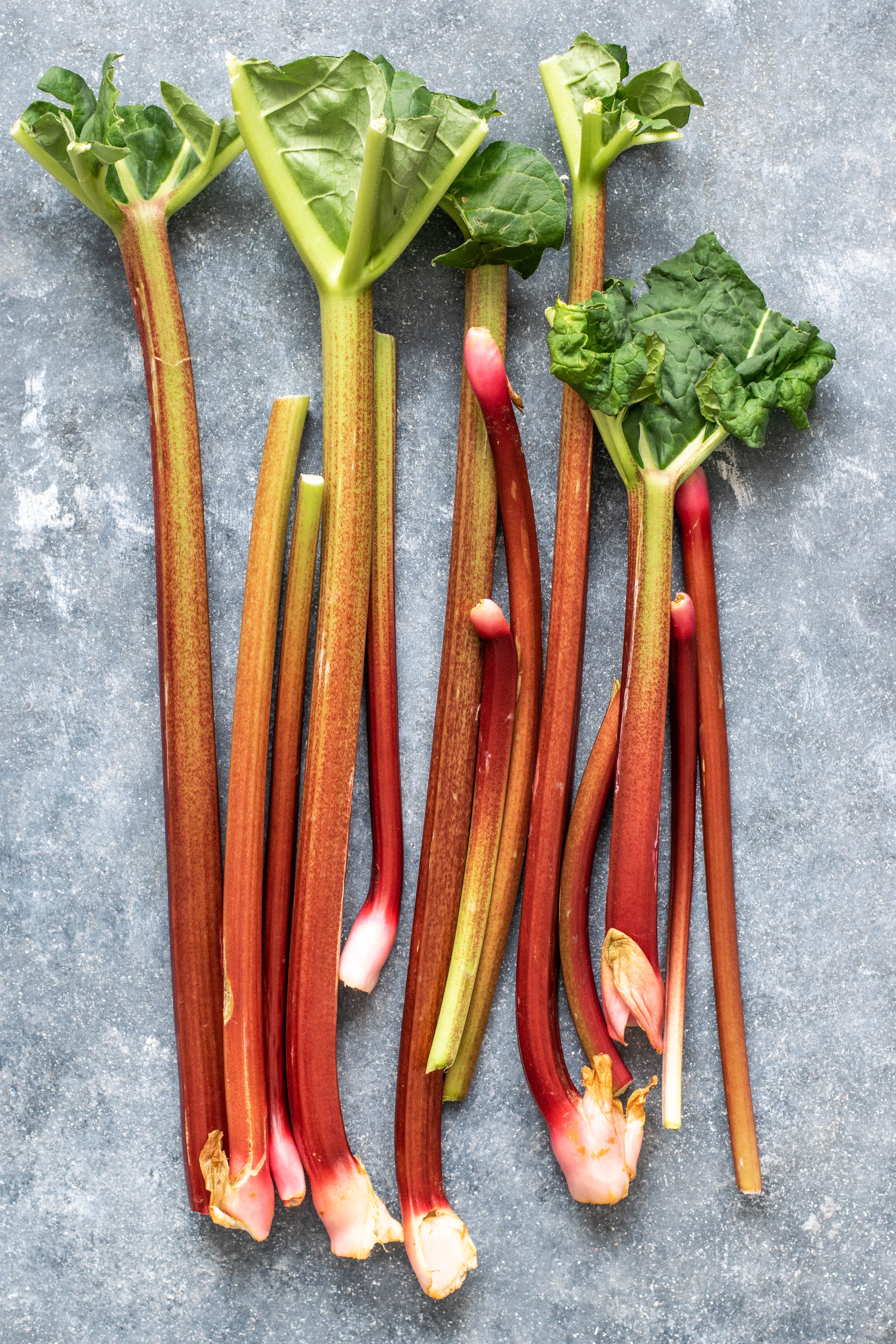
Photo by Monika Grabkowska, Unsplash
Spring produce is here, and it's time to celebrate that tart, celery-like stalk that blends with strawberries and apples like they're best friends. Chopped and sugared into delicious jam, pie or puddings. . . . go to the market or out into your yard and gather some rhubarb! Here are 10 recipes to get your sweet and sour taste buds singing.

Turtles can be tricky. "We thought we knew turtles, but this newfound behavior may offer a clue to how these reptiles will respond to a warming planet," reports Jessica Taylor Price of National Geographic. "On a warm spring night . . .two scientists settled into a canoe . . . they made their way through the water. . . . . They noticed something odd: Krefft's river turtles basking in the moonlight, just as they do during the day. But when they asked around after that evening in 2017, they found that other scientists hadn't heard of turtles basking at night, and there were no studies on the behavior."

A crab (Mississippi Dept. of Marine Resources image)

Would you like a used crab trap? Not really. "Derelict crab traps harm wildlife and disrupt other fishers, especially shrimpers. Bulky crab traps get caught in shrimping nets, tearing them open or blocking them from catching shrimp. Frustrated shrimpers, with nowhere to put the smelly traps, generally just throw them back, continuing the cycle," reports Ilima Loomis of Haiki magazine. "A group in Mississippi has found a solution: paying shrimpers a U.S. $5 bounty to collect and recycle derelict crab traps. In just three years, the program has removed almost 3,000 crab traps from Mississippi waters."

Beans can be the last thing left on a child's plate and the brunt of jokes, but they pack nutritional power. "Beans are high in protein, efficient to grow, and can even improve soil health. They cost less than conventional or new plant-based meats, and they're increasingly getting attention among foodies," reports Julieta Cardenas for Vox. "As one global campaign to double bean consumption by 2028 frames it, the answer to the question of how we can get inexpensive protein without sacrificing animals or the planet is simple: 'Beans is how.'"

Summer heat is coming, and along with it comes an increased likelihood of walking by a pet stuck in a heating car. The feeling of worry and then stress over your next move has a solution, "See a dog locked in a hot car? Here's what you can do," reports Rachel Fobar of National Geographic. "Several U.S. states allow bystanders to intervene when animals are trapped inside hot vehicles."

Photo by Louis Johns, The Washington Post
"A group of Yakama hunters gave us a rare glimpse into their yearly ritual. . . . Deer and elk were no problem for Kashius Gleason. The 19-year-old member of the Yakama Nation had hunted plenty. . . Standing in freezing temperatures at the doorstep of Yellowstone at daybreak, he was nervous as a herd of bison trekked out of the park. He had driven 16 hours with his family to get to this snowy basin and didn't want to miss. . . . Now Gleason's people are among a handful of tribes hunting bison again. By exercising hunting rights enumerated in an 1855 treaty, the Yakama are able to maintain an ancient cultural relationship with the animals," reports Dino Grandoni of The Washington Post.

Do North Atlantic right whales sniff out their meals? Maybe. Elizabeth Preston of Hakai magazine reports, "Right whales are baleen whales, which means they fuel their massive bodies with minute crustaceans that they filter from gulps of seawater. We know what they eat, says David Wiley, a marine ecologist." He told Preston, "We don't really know how whales find their food." Preston explains, "Wiley says his preliminary data from this and other recent experiments show that right whales—as well as another species called sei whales—are more likely to turn up in areas with higher DMS [molecule made by phytoplankton], suggesting they sniff the chemical out.

Photo by Julian Avery for The Conversation
"Millions of Americans feed wild birds, especially in winter and spring. Studies show that this can influence birds' health and behavior in surprising ways," reports Julian Avery for The Conversation, a platform for journalism by academics. "There is still much to learn about the risks and benefits of feeding birds, particularly through large integrated national citizen science networks like Project FeederWatch. But we now have enough information to promote healthy interactions that can inspire future generations to care about conservation."