Showing posts with label wolves. Show all posts

Friday, October 03, 2025

Flora & Fauna: Chunk, the Fat Bear Week winner; learning bird songs; deterring wolves; nabbing feral pigs

Chunk's broken jaw didn't stop him from feasting on sockeye salmon and gaining hundreds of pounds this summer. 
(Photo by Christine Loberg, NPS)

During this year's Fat Bear Week, many Alaskan brown bears made the salmon run at Brooks Falls in Katmai National Park the place where they packed on the pounds eating as much sockeye salmon as possible. But there was one bear that was more dedicated to getting his unfair share of salmon: Chunk. "A bear weighing in at over 1,200 pounds — with a broken (but healing) jaw — is the 2025 Fat Bear Week champion," reports Ava White of NPR. "It’s the first time number 32, or as he’s aptly nicknamed Chunk, has been dubbed the fattest bear in Katmai National Park and Preserve."

An unlikely union between two plants created the potato, affectionately known as the spud. "The origin of the potato has long puzzled scientists. Genetically, it is a close relative of the tomato. But in appearance, it resembles three potato-like species found in South America known as Etuberosum," reports Aylin Woodward of The Wall Street Journal. "The problem is, Etuberosum don’t have tubers — the parts of the potato plant that grow underground, and that we eat baked, mashed or fried. . . . An examination of these DNA sequences revealed that between eight million and nine million years ago, Etuberosum and an ancient tomato exchanged genes." And today's spud was born.

Watching and listening to birds is a delightful hobby that can be enhanced by learning to identify birds by their songs. "Learning bird songs is the difference between 'hearing' and 'listening,'" writes ornithologist Chris Lituma for The Conversation. "Listening requires full attention and limiting distractions. It means using your ears to pick up different patterns in the sounds that birds make. Every person has the capacity to listen and learn patterns in sound." Read all of Lituma's tips for learning bird songs and sounds here.

In this remote arctic town, it's too cold for trees, but strawberries grow by the dozens. "A high-tech greenhouse brings fresh produce to Gjoa Haven, an Inuit hamlet in Canada’s Arctic whose residents have little experience growing plants," reports Norimitsu Onishi of The New York Times. "The greenhouse, researchers hope, will eventually provide an alternative to perishable goods flown in at great cost from southern Canadian cities — and a healthier diet for the Inuit, the only people who have lived in Canada’s Arctic for centuries."

The wolves have learned to associate the drones
with people. (Illustration by A. Dixon, Offrange)

In most states, gray wolves are protected, which means livestock owners have had to find creative ways to keep wolves from preying on their cattle. While human presence and voices remain the most effective wolf deterrent, it's often not feasible, so some ranchers are experimenting with drones combined with human voices from speakers to deter wolves from grazing cattle, reports Rose Garrett for Offrange. Dustin Ranglack, predator project leader for the National Wildlife Research Center, told Garrett, "The wolves in this area have had exposure to the drone, and they will often already be moving away when we approach them. They’ve already come to associate the drone with people, and we’re not necessarily having to use the human voice."

When feral pigs invade the countryside, they go hog wild, eating farm crops, tearing up the ground, prolifically reproducing and spreading diseases. States have been under pressure to find ways to oust unwanted swine, but few have been as successful as Missouri. "Alan Leary, the feral hog coordinator with the Missouri Department of Conservation, says since 2016 the state’s population of feral hogs has dropped 80%," reports Chris Six of Farm Progress. The state formed a multi-agency partnership that "uses traps, drones, helicopters and more to find and eliminate the feral hogs."

Tuesday, January 09, 2024

Flora and Fauna: A predator returns to Colorado; declining wild turkey population; marvel revealed; helping manatees

Colorado has released 10 gray wolves into the wilderness.
(Colorado Parks and Wildlife photo via Business Insider)
In the 1940s, the gray wolf was eradicated from Colorado, but they are slowly being reintroduced. "Colorado wildlife officials have now released 10 gray wolves — four males and six females — as part of a voter-backed effort to reintroduce the predator to the state's wilderness after roughly 80 years," Michelle Mark of Business Insider reports. "The 10 wolves hail from Oregon and have been outfitted with satellite GPS collars to track their movements and survival. Ultimately, some 30 to 50 wolves will be introduced to Colorado over three to five years."

Once near extinction, North American wild turkeys made a phenomenal comeback. But their triumphant return has since suffered setbacks, with wild turkey population steadily declining. "Biologists say the nation's turkey population may have gone down by about 1 million, or nearly 15 percent, between 2004 and 2014, with much of that decline in parts of the South and Midwest. Between 2014 and 2019, turkey numbers dipped a further 3 percent, though researchers caution that there are gaps in the data," reports Dino Grandoni of The Washington Post. "Scientists are exploring a few possible causes — habitat loss, hunting, disease, climate change."


What marvel is a half-mile long and includes a 17-acre lake in the northern forests of Canada?
Hint: It was built by large and busy rodents.
If you guessed "world's largest beaver dam," you are correct! "The largest beaver dam on Earth was discovered via satellite imagery in 2007, and since then, only one person has trekked into the Canadian wild to see it," 
reports Ian Frazier of YaleEnvironment 360. "Animal technology created the largest beaver dam in the world, but human technology revealed it."


A greyhound's speed peak is around 45 mph.
(Photo by Craig Pittman, National Geographic)
The era of greyhound racing seems to be coming to a close. "Concerns about the dogs' welfare and declining betting revenue have led tracks across the country to close in recent decades," reports Erika Larsen of National Geographic. "In its glory days of the 1950s, Derby Lane in St. Petersburg, Florida, attracted thousands of avid racing fans, such as Joe DiMaggio, who left Marilyn Monroe sitting in the car while he ran inside to place his bets. Now only a few hundred show up for the races, a sign of how its fan base has dwindled."

In San Fernando Valley, California, sits the area's last working orange grove, but it was sold to a housing developer who has agreed to spare a fifth of the trees. "The San Fernando Valley was home as early as the 1920s to a more-than-70,000-acre sea of citrus. Suburban sprawl began encroaching, and some growers opted to sell because it was more lucrative than continuing to run a grove," reports Jim Carlton of The Wall Street Journal. "Profits diminished over time as agriculture's regional footprint shrank. . . and as tougher global competition emerged from places like Brazil."


Manatees love to munch on seagrass.
(Photo by Geoff Trodd, Unsplash)
The return of seagrass to Florida's space coast is helping manatee populations who have struggled for survival. "The recovery of seagrass, the manatees' favorite food, in Mosquito Lagoon means that an emergency hand-feeding program that has kept many of the starving aquatic animals alive over the last two winters can be discontinued, at least temporarily," reports Richard Luscombe of The Guardian. "While scientists say this might be only a small step in the wider fight to rescue a species that has seen a record die-off in recent years from water pollution and habitat loss, what's happened at Mosquito Lagoon offers signposts to how the manatees' battle for survival might ultimately be won."


Thursday, November 30, 2023

Nature bits 'n bites: Unearthly fish; plant memories; forest tardigrades; gray wolves return; a very hungry beetle

(Photo by Dante Fenolio,
Science Photo Library via Hakai)
Creatures that dwell in the deep ocean may look like inedible Star Wars characters, but fish industry experts are looking into their potential. Scientists are also studying these fish in an attempt to protect them. "Mesopelagic fish are not yet commercially exploited, though projects are underway to investigate the marketability of the species and the best methods for harvesting them," reports Moira Donovan for Hakai magazine. "Scientists working in this area are, therefore, in the rare position of being able to assess potential impacts from fishing before they happen. But with so many unknowns, the question remains: can they do it in time — for the fish's sake and our own?" The telescopefish, above right,  has large tubular eyes to maximize light collection and a highly extensible jaw with needle-sharp teeth that ensure a firm grip on prey.

Plants aren't normally considered "learners," but maybe they should be. "In the study of the plant kingdom, a slow revolution is under way. Scientists are beginning to understand that plants have abilities, previously unnoticed and unimagined, that we've only ever associated with animals. In their own ways, plants can see, smell, feel, hear, and know where they are in the world," reports Sarah Laskow for Atlas Obscura. "Of the possible plant talents that have gone under-recognized, memory is one of the most intriguing."

Do dairy calves need more love to keep them from unhealthy oral habits? A new Florida study suggests that more pets can keep young calves happier and less likely to chew on everything out of boredom or frustration, reports Shea Swenson for Ambrook Research. "The presence of somebody scratching and having some contact with them reduced the duration of those pen-directed sucking behaviors, particularly for the individual housed calves."

Tardigrades are part of a forest's dynamic life forms.
(
Photo by Oliver Meckes and Nicole Ottowa, Nat Geo)
Mary, Mary, quite contrary, what makes a forest grow? Tardigrades! "A photographer and biologist put microscopic fungi, roots, and slime molds from Germany's Black Forest under a scanning electron microscope—and found creatures like this astounding tardigrade among the forest's essential, and often overlooked, life forms," report Oliver Meckes and Nicole Ottowa for National Geographic. "This discovery in the moss on a tree trunk, magnified 2,400 times, marked a newfound species among the 1,300 known types of tardigrades."

Next month, Colorado will begin its planned reintroduction of gray wolves, with the release of about 50 wolves captured in Oregon, reports Trevor Hughes of USA Today. "The exact [release] locations will be kept secret, but the wolves will generally be released on state or private land in a rural area of west-central Colorado. . . . Backers of Colorado's reintroduction plan say that wolves are a natural and important part of the ecosystem. . . . They argue that safety concerns are wildly overblown, and that ranchers and farmers who lose livestock will be fairly compensated by taxpayers. . . . But farmers and ranchers consider wolves a dangerous threat to wildlife and stock alike."

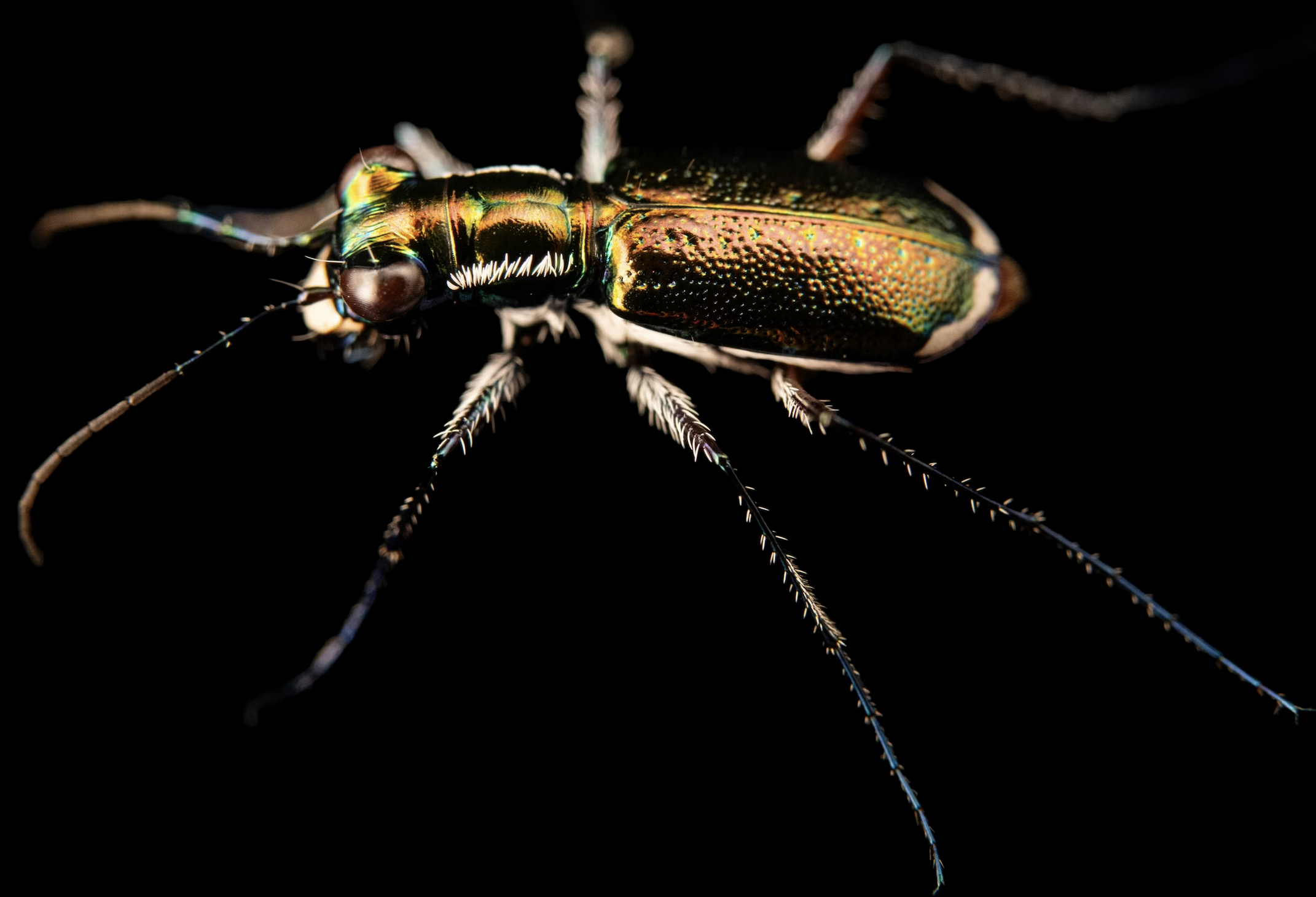
The Miami tiger beetle has 'big, serrated mandibles.'
(Photo by Joel Sartore, National Geographic, Photo Ark)
Meet the Miami tiger beetle, named for its 'highly voracious predatory behaviors, it's the 15,000th species in National Geographic's Photo Ark. "The beetle was rediscovered in 2007 after a more than 60-year absence," reports Rachel Fobar. "With its iridescent blue-green exterior and round, expressive eyes, some would call the Miami tiger beetle beautiful. . . . But when photographer Joel Sartore looks at one, he also sees carnage. . ."


Friday, July 28, 2023

Flora and fauna: Ladybugs; mushrooms and fires; wolves and ranchers; tomatoes; animal senses; Vermont loons

Painting by Ed Steed, The New Yorker

Aphid eaters and adorable, ladybugs, or Coccinellidae, are like little summertime friends. A "swarm of ladybugs is collectively called a loveliness," Françoise Mouly writes for The New Yorker. Mouly interviewed artist Ed Steed, who decked out the magazine's June ladybug cover, about "the joy of painting, an affection for the little things, and the luck of the ladybugs." Mouly asked him if each ladybug had its own personality. He told her: "That's the good thing about painting by hand. No matter how hard you try to make things look the same, each comes out unique. So each one ends up having its own character. Just like in real life, no two of anything can be the same."

Mushrooms could be an answer to megafire prevention. "Slash piles are an increasingly common sight in the American West, as land managers work to thin out unnaturally dense sections of forests. . . [The piles] have inadvertently increased the risk of devastating megafires," reports Stephen Robert Miller of The Washington Post. Hauling the slash piles out of the woods has been one solution. Letting mushrooms do the job is another. "Like a flame, saprophytic fungi break organic material into carbon compounds. Mycelium, the often unseen, root-like structure of the fungi, secretes digestive enzymes that release nutrients from the substrate it consumes. . . Whereas a flame destroys nearly all organic nitrogen, mycelium can fortify nitrogen where it's needed in the forest floor."

Gray wolves in California, where they are a recovering
endangered species. (Shutterstock photo)

In areas where ranchers and gray wolves must coexist, some states compensate ranchers for predator damages, reports Shea Swensen of Ambrook Research. "To aid the ranchers who deal with the impacts of wolf presence, states like New Mexico, Oregon, and California started programs that pay them back for the financial burdens of losing their animals. The programs offer reimbursement for direct livestock loss due to wolves or non-lethal on-ranch tools — like fences, guard dogs, or even extra staff."

Pink Pounder hybrid tomatoes
(Garden Plants online photo)
With names like Beefsteak, Big Beef, Bucking Bronco or Pink Pounder Hybrid, summer tomatoes are fun, but more importantly, they are delectable. Try out these meaty varieties. Rejoice in learning how to make all the best tomato recipes. Find out about the infamous Southern tomato sandwich. Enjoy!

Sometimes it can be hard for humans to grapple with the tremendous gifts other animals have. They don't go to school, YouTube it or read how-to manuals. "Pit vipers have infrared vision, bees can view ultraviolet light, and electric eels use their zaps to 'see' through the murky waters of the Amazon," reports Jason Bittel of Popular Science. He adds five animals that can sense things humans can't. They are just born that way.

A parenting loon gives the chicks a ride. Male and
female loons co-parent. (Shutterstock photo)


Vermont's oldest loon, known as "Neward Pond Male," died at age 31. For the past 45 years, The Loon Conservation Project "has helped bring the common loon back to lakes across the state and made huge strides in research, education and advocacy, reports Hannah Cho of the Valley News of West Lebanon, N.H., and White River Junction, Vt. "When Newark Pond Male was banded, the loon was still on Vermont's endangered species list (it wouldn't come off until 2005), but the population had already begun to rise."

Wednesday, April 05, 2023

Flora/fauna quickies: How snails travel so far, pet-inspired art, what to do when baby bird falls from a nest, and more

Sybil Gorby with an heirloom tomato she grew
in her garden. (Courtesy family photo)
Big-vegetable photos aren't just for rural weeklies. The Washington Post spotlights Sybil Gorby, 92, who has been planting tomato seeds from the same lineage since 1965. "Sometimes, the seeds turn into giant heirloom tomatoes, including one from last year's harvest," reports Sydney Page. Gorby's daughter, Sandy Marody, "shared a photo of her mother holding the large fruit in a Facebook group called 'Appalachian Americans.'. . . . People were quite impressed with the photo of Gorby proudly cupping the supersized tomato in her hands."

The "alpha wolf" myth has a long history as a paragon of power and dominance. But new research shows the myth is false. Researcher David Mech describes the wolf as "one of the wildest and shyest of all the animals in the northern wilderness," reports Rivka Galchen of The New Yorker.


Thom van Dooren wonders this about snails: "How do organisms that are so sedentary end up being so incredibly widely dispersed?" Find out how these notoriously slow animals get around.


Robin fledgling (Photo by Jeanette Tasey, Audubon)
A baby bird is out of its nest. Now what? Do you attempt to help? Walk away feeling bad but not wanting to make things worse for the little guy? This timely article gives some advice

As a child, Jessica Gauley, a kayak tour operator, once romped about Honey Island Swamp in Louisiana. Now she's working to reclaim a wetland, reports Anya Slepyan of The Daily Yonder. "Poisonous pollutants from industrial plants had turned nearly 10 acres of the healthy, primeval swamp into a toxic wasteland. . . . She calls the area the 'kill zone' because of the contaminants' toll on the local wildlife. . . . Gauley began cleaning up the kill zone, one kayak-load of trash at a time. . . . . a tour group she lead offered to help her. . . .The zone still has a long way to go, but Gauley has already started workshopping a new name for the area: the resurrection swamp."


Calling all pet artwork! Beth Novey of National Public Radio zipped out a missive asking for submissions, "We were curious to see what other pet-inspired artworks were out there, so we asked you to share some of yours, and dear readers, you did not disappoint. Below is just a small sampling of the hundreds of masterpieces we received." They've got a cat snow sculpture, "The Goatie Boys" Christmas drawing, Meow Lisa, and artwork with real horse hair.


Billy the Goat was a popular sight on Lake Cumberland
in Southern Kentucky. (Photo courtesy of Matthew Blum)
A huge Kentucky lake has lost one of its longtime fauna friends. "Billy the Goat, a wild creature who had made his home along the busy shores of Lake Cumberland, is being mourned and remembered by the legions of lake users who had taken a shine to him, after recently being found dead, apparently by gunshot," reports Christopher Harris of the Somerset Commonwealth Journal. "And like Billy's exploits in life, the news of his death has become something of a local viral sensation."

There's just no explaining some couples. "A rescue dog and goat are best friends. A shelter put them up for adoption as a pair," Cathy Free of The Washington Post reports. Jennifer Federico, director of animal services at the Wake County Animal Center, told Free, "It's a weird duo, but it works for them. Who are we to judge? They obviously love each other."

Thursday, March 09, 2023

Flora/fauna quickies: Holding a baby goat can cheer you; corvid birds can 'ponder the content of their own minds'

Baby goats (Photo by Rachel Schlegel)
"Holding a baby goat is very therapeutic. It calms you and brings you so much joy. It does wonders for coping with anxiety and depression.,” says Friends of the Pennsylvania Farm Show Foundation. And baby goats aren’t cranky and stubborn like their elders!

To the south, pigs "play in the mud, run around the large field they’re sectioned off in, and enjoy the nutritious food given to them daily. Eventually, they will be sold to fine dining restaurants and artisan butcher houses throughout the D.C., Maryland and Virginia area," reports Paula Phounsavath of The News Virginian of Waynesboro, where "a family-owned pig farm has created a sustainable pork production."

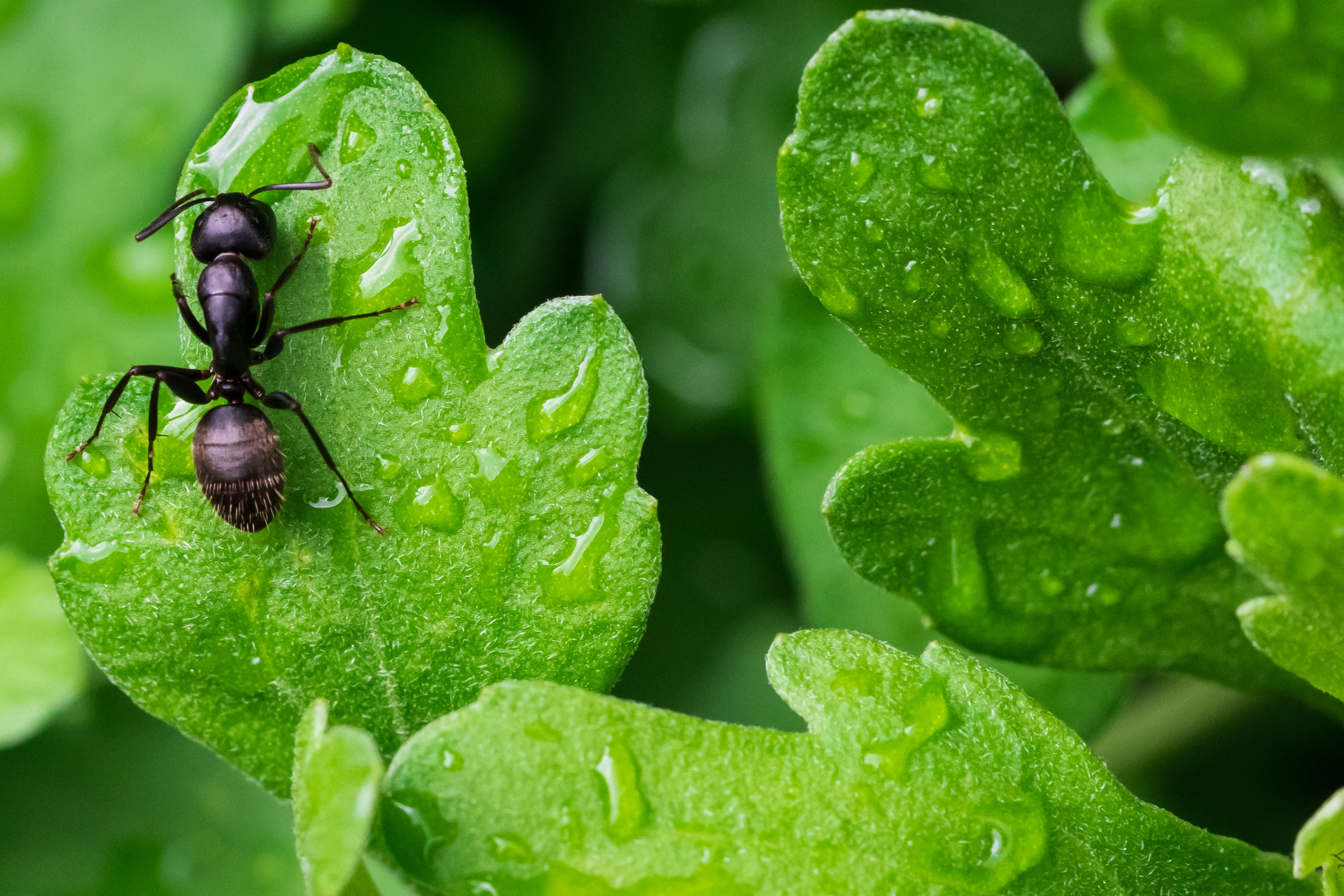
An ant at work (Photo by Shannon Potter, Unsplash)
Dogs, worms and ants have an amazing thing in common: They can be trained to detect markers of illness, from Covid-19 to tuberculosis. "Next time you’re irritated that ants have gotten into your kitchen, you might take a moment to consider their extraordinary powers of perception," reports Liz Langley of National Geographic.

What can bring your hope for humanity back? A horse show. The Horse World Expo returned to Pennsylvania for nickers, neighs and whole lot of horsing around.

Time to cook cabbage. Rumor is that cauliflower and Brussels sprouts may have been ousted. "Cooked the right way, cabbage can more than rise to the occasion." We agree.

Virginia is expecting its best oyster harvest in 35 years, the Richmond Times-Dispatch reports.

The rare Steller's sea eagle has returned to Maine.
(Photo by Zachary Holderby, The Associated Press)
Enjoy the Great Backyard Bird Count? Here's some more fun. "A rare Steller’s sea eagle native to the eastern coast of Asia, which caused a birding frenzy last winter, has returned to Maine. . . . If you're taking a specific trip, like to Japan in the winter, going out on a boat to some ice floes, that’s kind of your only chance to see one . . . But now, it’s just hanging out in Midcoast Maine.”

Of woods and men. Sounds more exciting than mice. The Conversation discusses the reintroduction of wolves in Colorado. "Aldo Leopold, the famed conservationist and professor of game management at the University of Wisconsin, believed that moral beliefs evolve over time to become more inclusive of the natural world. And what’s happening in Colorado suggests Leopold was right."

Crows are more intelligent than we thought. "New research shows that crows and other corvids "know what they know and can ponder the content of their own minds . . . This is considered a cornerstone of self-awareness and shared by just a handful of animal species besides humans."

With extra work and a little green thumb, you can make money from your garden. Consider growing perennial crops as a side hustle.

The glorious night sky! Eleven fantastic things to write on your calendar. "In the coming year, planetary alignments, perfectly timed meteor showers, and a pair of solar eclipses will delight stargazers around the world."

Friday, April 15, 2022

Quick hits: U.S. gets 2nd dark-sky reserve; USDA names more state chiefs; Google can show your town since 1985

Here's a roundup of stories with rural resonance; if you do or see similar work that should be shared on The Rural Blog, email us at heather.chapman@uky.edu.

Medical coding can have an oddly large impact on rural health-care inequalities. Read more here.

A musicology professor reflects on the sage songwriting of fellow West Virginian Bill Withers. Read more here.

Rural Texans who met Putin almost 21 years ago reflect. Read more here.

Just days after The Post and Courier in South Carolina reported that a Greenwood judge Curtis Clark's family improperly profited from real estate auctions that he ran, the state's chief justice stripped Clark of his job overseeing foreclosures. Read more here.

Friday, March 11, 2022

Quick hits: Ginseng and Appalachia; why your brain likes forests more than cities; did you know about Manure Expo?

Here's a roundup of stories with rural resonance; if you do or see similar work that should be shared on The Rural Blog, email us at heather.chapman@uky.edu.

Registration is open for the North American Manure Expo, which will take place in Chambersburg, Pa., July 13-14. Registrants can enter a t-shirt contest for the Top 10 Rejected Manure Expo Slogans; a recent one suggested that attendees "be part of the movement." We want some of the official swag! Read more here.

On the 150th anniversary of Yellowstone National Park, a fifth of its wolves have been killed by hunters in the last six months. Read more here.

A new book explores the importance of wild ginseng to Appalachia. Read more here.
 
A newly published study shows why your brain prefers walking in a forest to walking down an urban street. Read more here.

The Black Lung Disability Trust Fund is funded by a federal tax on domestically produced and sold coal. At the end of last year that tax was cut by more than half, and the fund is running out of money. Democratic lawmakers have proposed legislation to extend the tax at its original rate through 2031, but the bill has stalled out, leaving the program's future uncertain. Read more here.

Friday, February 11, 2022

Judge restores endangered-species status for most gray wolves, but not in wolf-hunting hotbed of northern Rockies

A gray wolf in Montana (Getty Images photo by Dennis Fast)
"A federal judge on Thursday restored protections for gray wolves in much of the country, reversing a decision by the Trump administration that stripped Endangered Species Act protections and exposed the animals to aggressive hunting in areas where they were nearly killed off years ago," Joshua Partlow reports for The Washington Post. "The decision by U.S. District Judge Jeffrey S. White in Northern California immediately reimposes safeguards for wolf populations in the Lower 48 outside of northern Rocky Mountain states — one of the hotbeds of wolf hunting — and puts federal officials in charge of managing wolf populations in places such as the Great Lakes region, the Pacific coast, and other parts of their range.

The U.S. Fish and Wildlife Service took gray wolves off the endangered species list during the Trump administration and gave control back to the states. That was not scientifically sound and didn't adequately address threats to wolf populations outside their main populations in the Great Lakes and Northern Rockies, White said in his ruling.

"Environmental groups hailed the decision but warned that intense hunting pressure in states such as Montana, Idaho and Wyoming — which were not part of this court case — remains a serious threat to the country’s gray wolves," Partlow reports. "Hunters nearly wiped them out a century ago in much of the country, but federal protections have helped reestablish many packs in recent decades."

Pro-hunting groups criticized the decision. Kansas-based group Hunter Nation said in a statement that White was an "activist judge" and that hunting wolves helps "farmers, ranchers, and anyone who supports a balanced ecosystem with common-sense predator management."

Friday, January 14, 2022

Quick hits: Drought reveals 'lost national park' along Colorado River; podcast explores coal in Appalachia

Eric Balken, executive director of the Glen Canyon Institute, walks through a Colorado River canyon that was filled by Lake Powell until a few years ago, when drought began lowering lake levels. (NPR photo by Claire Harbage)
Here's a roundup of stories with rural resonance; if you do or see similar work that should be shared on The Rural Blog, email heather.chapman@uky.edu.

A recent Inside Appalachia podcast explores coal's economic and health impacts on Appalachian coal communities. The hosts will also discuss the industry's past and future with regards to labor and climate change, and will talk to Indigenous communities about the future of coal. Listen to it here.

Hunters killed 20 wolves that wandered out of Yellowstone National Park in recent months, the most killed by hunting in one season since wolves were reintroduced to the area more than 25 years ago. The kills mean a "significant setback for the species' long-term viability and for wolf research," park officials said. Read more here.

The megadrought in the West has shrunk Lake Powell so much that it's revealing America's "lost national park," Glen Canyon. Read more here.

Monday, November 08, 2021

Wolves may reduce frequency of car collisions with deer, not just by killing them but keeping them away from roads

Indigenous tribes and wildlife advocacy groups are suing the state of Wisconsin to stop the state wolf hunt, which was set to begin last week until a judge blocked it. Their concerns center on the wolves' lives, but there's another good reason to halt the hunt, Ed Yong writes for The Atlantic: New research shows that wolves can cut down on serious or fatal car collisions with deer, and not just by killing them.

Wolves "tend to prowl along human-made corridors such as trails and roads. By killing deer near these areas, or simply intimidating them into staying away, wolves could keep the animals far from cars," Yong reports. By analyzing 22 years of data, researchers found "Wisconsin’s wolves have reduced the frequency of deer-vehicle collisions by a quarter. They save the state $10.9 million in losses every year—a figure 63 times greater than the total compensation paid for the loss of livestock or pets."

Friday, November 05, 2021

Quick hits: 3G phones will die next year; legal battles have little impact on N.C. hog farms; Wisconsin wolf hunt halted

Here's a roundup of stories with rural resonance; if you do or see similar work that should be shared on The Rural Blog, email heather.chapman@uky.edu.

Phones on 3G networks will stop working next year, which will disproportionately affect rural Americans. The Washington Post has the rundown of what will happen, when it will happen, and what consumers need to know. Read more here.

Years of legal battles over hog-farm pollution in North Carolina has changed little for nearby residents. Read more here.

A Wisconsin judge issued a temporary injunction to block the state's fall wolf-hunting season, agreeing with advocacy groups that holding the hunt would be unconstitutional. A judge presiding over a similar lawsuit at the federal level declined to issue an injunction because the first one is already in place. So the details of the hunt, meant to start tomorrow, are still up in the air. The state held a wolf-hunting season in January with a limit of 119 kills, but hunters killed 218 in just four days. 

The National Park Service could soon have its first Native American director, if Charles "Chuck" F. Sams III is confirmed. Read more here.

The Biden administration has promoted Fish & Wildlife Service principal deputy director Martha Williams to head the agency. Read more here.

Vultures descended on a North Carolina town a year ago. They won't leave. Read more here.

The South Dakota Department of Education has resumed its review of social-studies curriculum standards after protests that a local Native American tribe's history was deleted. The department will review the new standards over three years, providing more chances for the public to weigh in, and will publish lesson plans on the Oceti Sakowin tribe for teachers who want to use them. Read more here.

Friday, September 17, 2021

Quick hits: Firefly tourism; gray wolves; potty-trained cows; right-to-repair laws; are hospitals publishing their prices?

Fireflies at Grandfather Mountain in North Carolina. (Washington Post photo by Travis Dove)

Here's a roundup of stories with rural resonance; if you do or see similar work that should be shared on The Rural Blog, email heather.chapman@uky.edu.

Researchers released the first-ever comprehensive study of firefly tourism this year. They found that about 1 million tourists across the globe travel to witness firefly-related phenomena each year. That includes the famous synchronous fireflies in the Great Smoky Mountains; that's been getting increasingly popular for years, but the pandemic may have boosted its popularity even more this year as cooped-up tourists flocked to outdoor spots felt to be safer than indoors. Read more here.

The gorgeous but unwelcome spotted lanternfly
(Associated Press photo by Matt Rourke)
However, in news of less-desirable insects: A boy's bug collection at the Kansas State Fair last week
included a spotted lanternfly, which has triggered a federal investigation. The invasive species has been devastating trees and crops throughout the Mid-Atlantic states for years, but Kansas is more than 850 miles west from its nearest known location. Read more here.

Few hospitals in Maine, the most rural state by percentage of population, are complying with a federal rule requiring them to publish detailed prices of medical procedures for insured and uninsured patients. Are your local hospitals complying? Read more here.

The U.S. Fish and Wildlife Service administration may restore federal protections for gray wolves in the western U.S. after laws in some states have made it much easier to kill the predators. USFW has begun a year-long biological review to determine if such a step is necessary. Read more here.

In its first meeting last week, the White House Competition Council discussed advancing right-to-repair laws that would bar companies such as John Deere from blocking customers or independent repair shops from fixing tractors and other machinery. President Biden called for the formation of the council in a July order aimed at increasing economic competition. Read more here.

The Agriculture Department "accepted offers for more than 2.5 million acres from agricultural producers and private landowners for enrollment through this year’s Grassland Conservation Reserve Program signup," Ximena Bustillo reports for Politico's Weekly Agriculture. "This is double last year’s enrollment and brings the total acres enrolled across all CRP sign ups in 2021 to more than 5.3 million acres, surpassing USDA’s 4-million-acre goal. Producers and landowners submitted offers for nearly 4 million acres in Grassland CRP, the highest in the signup’s history. The top submitters included Colorado, South Dakota, Nebraska, Montana, and New Mexico." Read more here.

Restaurants and businesses are asking Congress for more pandemic aid, but it could be a long shot since Congress is mostly occupied on hashing out the infrastructure package and a Democratic health-care, education and climate bill. Read more here.

As Republican lawmakers in Ohio work to limit drop boxes and early voting, rural voters in Ohio—and likely elsewhere—said in a poll that they want expanded voting options. Read more here.

Appalachian musicians are tackling the complicated topic of coal—and trying to inspire change—through song. Read more here.

Many rural regions that rely on tourism and drive-through visitors are finding it beneficial to install charging stations for electric vehicles. Read more here.

With 1.4 billion cows on earth, cow waste—from both ends—adds up to become a significant driver of climate change. But scientists in Germany and New Zealand have an innovative solution: potty-trained cows. A German herd has been successfully taught to relieve themselves only in a designated area nicknamed the "MooLoo." Read more here.

Friday, April 23, 2021

Quick hits: Idaho Senate approves bill to kill 90% of state's wolves; federal pandemic aid isn't reaching some of the poor

Here's a roundup of stories with rural resonance; if you do or see similar work that should be shared on The Rural Blog, email us at heather.chapman@uky.edu.

A Black high school baseball team in rural Virginia won the state championship in 1969, but their hometown didn't celebrate their victory. But last weekend county officials made sure they got their dues—and championship rings—over 50 years later. Read more here.

A study investigates severe lung injury among e-cigarette users in rural Appalachia. Read more here.

The Idaho Senate has approved a bill to kill 90% of the state's wolves. Read more here.

In a recent survey, nearly half of Americans who plan to move said climate change and associated issues like wildfires and rising sea levels were a factor in deciding where to move, and that they wouldn't relocate to an area with more climate risk even if it were more affordable. Read more here.

Though the federal government is expanding the social safety net, the funds aren't reaching many impoverished Americans. Read more here.

An increasing number of Americans believe in conspiracies, partly because of decreased trust in the news media and criticism of the news media from prominent figures, according to a recent poll. Read more here.

Rural migration during the pandemic may accelerate a trend of e-commerce expansion into rural America. Read more here.

A rural South Dakota high school rodeo club canceled its annual 'slave auction' fundraiser after local pushback about its name. Read more here.

Friday, February 26, 2021

Quick hits: Drought forecast for Western U.S.; which seven senators voted against Tom Vilsack?

Here's a roundup of stories with rural resonance; if you do or see similar work that should be shared on The Rural Blog, email heather.chapman@uky.edu.

A rural liberal in New Hampshire set out to talk to his many pro-Trump neighbors. Read more here.

The Senate confirmed Tom Vilsack for his second stint as agriculture secretary, 92-7. Independent Bernie Sanders of Vermont voted no, with Republicans Ted Cruz of Texas, Josh Hawley of Missouri, Rand Paul of Kentucky, Marco Rubio and Rick Scott of Florida, and Dan Sullivan of Alaska. 

The U.S. Department of Agriculture is asking farmers and ranchers to respond to the 2020 Local Food Marketing Practices Survey to get a more accurate picture of local and regional food systems. USDA will continue to accept responses through April. Read more here.

The National Rural Electric Cooperative Association called on the federal government to establish more rural-friendly rules for broadband grants. Read more here.

James Fallows, who crisscrossed the U.S. writing about rural America and its newspapers for The Atlantic, writes now about how we can apply the lessons from FDR's New Deal to rebuild the economy from the pandemic. Read more here.

President Biden reverses his predecessor's freeze on certain green cards and temporary work visas for farmworkers and other skilled workers. Read more here.

At the Agricultural Outlook Forum this week, USDA leadership committed to helping control the pandemic as well as tackling deep-seated farming issues. Read more here.

Scientists are forecasting a drought for much of the Western U.S. this spring. Read more here.

Twenty percent of Wisconsin wolves are to be killed after a court sided with hunters. Read more here.

Extreme winter weather has caused shipping nightmares for grain barges. Read more here.

The internet has played a critical role in farmer networking during the pandemic. Read more here.

An explainer shows the ins and outs of how the Federal Communications Commission's Rural Digital Opportunity Fund broadband auction works. Read more here.

Frozen pipes in Texas are the latest warning of what will happen to water systems across the U.S. if policies and aging infrastructure are not updated to account for the increase in extreme weather climate change brings. Read more here.

Tuesday, November 17, 2020

Wolves may help curb chronic wasting disease among deer through the 'predator cleansing effect'

A wolf near a hot spring in Yellowstone National Park in Wyoming
(Associated Press photo by Jacob W. Frank of the National Park Service)

Chronic wasting disease is an increasing threat to deer, elk and moose, but gray wolves in Yellowstone National Park (and possibly elsewhere) may be a valuable tool in helping slow its spread, according to preliminary data from a research project.

"Researchers are studying what is known as the predator cleansing effect, which occurs when a predator sustains the health of a prey population by killing the sickest animals," Jim Robbins reports for The New York Times. "If the idea holds, it could mean that wolves have a role to play in limiting the spread of chronic wasting disease, which is infecting deer and similar animals across the country and around the world. Experts fear that it could one day jump to humans."

The possible benefit to humans is something to keep in mind as the federal and state governments consider protections for wolves. In the recent election, Coloradans approved restoration of gray wolves to public lands. Meanwhile, the Interior Department issued a final rule in October removing Endangered Species Act protections from gray wolves.

Friday, November 06, 2020

Ballot measure roundup: Coloradans approve restoration of gray wolves, paid family and medical leave

Colorado voters approved the restoration of gray wolves and mandated paid family and medical leave Tuesday, the first time any state has done such things in a referendum, on Tuesday.

Those were just two of 184 statewide ballot measures, according to the National Conference of State Legislatures. Here are a few others, courtesy of NCSL:
  • Arizona, Montana, New Jersey and South Dakota approved efforts to legalize recreational marijuana, while voters in South Dakota and Mississippi approved medical marijuana programs.
  • Oregonians decriminalized small amounts of certain controlled substances, such as heroin and cocaine, and the Beaver State also legalized psilocybin—become the first state ever to do so. The drug comes from mushrooms and is used in rituals by some Native American tribes.
  • Ranked-choice voting, which was adopted in Maine recently, failed in Massachusetts and looks likely to fail in Alaska.
  • Virginia voters adopted a redistricting commission, and that change means most states will now have a commission of some kind, though some are merely advisory, or only come into being if the legislature fails to pass maps.
  • Voters approved taxes on tobacco and electronic-cigarette products in Colorado and Oregon. Washington will require public schools to provide comprehensive sex education beginning in 2022. 
  • California voters rejected stricter parole and sentencing policies and stopped the legislature’s efforts to replace cash bail with pretrial risk assessments.
  • Kentucky passed Marsy’s law, the crime victims’ bill of rights.
  • Florida voters raised the minimum wage.
  • An effort to overturn California’s affirmative action ban failed.
  • Two “Stand Your Ground” Rights measures pass in Alabama.
  • Mississippians approved the state’s new magnolia flag design, which was put before voters after the legislature decided to replace the previous flag feature the confederate battle emblem.

Friday, October 30, 2020

Interior Department issues final rule removing Endangered Species Act protections from gray wolves, numbering 6,000

A gray wolf and pups in California's Lassen National Forest (U.S. Forest Service trail camera photo via Washington Post)

"The Trump administration announced Thursday that it is stripping gray wolves of their Endangered Species Act protections in the Lower 48 states, ignoring an outcry from conservation groups and scientists who say the animals will be slaughtered as a result and might not survive," Darryl Fears reports for The Washington Post. "Under a final rule expected to go into effect early next week . . . state wildlife agencies will assume control of managing an estimated 6,000 wolves, mostly in three Midwestern states — Michigan, Wisconsin and Minnesota." An estimated 1,800 are in other states.

“After more than 45 years as a listed species, the gray wolf has exceeded all conservation goals for recovery,” Interior Secretary David Bernhardt said in announcing the decision by the Fish and Wildlife Service. Fears reports, "The population is up from 1,000 when gray wolves were listed as endangered starting in 1967, officials said. But their population is still so depleted that thousands of acres of historical wolf habitat in Utah, Colorado and Maine is uninhabited by any wolves, conservationists said."

This is "the second time in the last decade that federal wildlife officials have tried to remove gray wolves from the endangered species list, where they say the animals no longer belong now that they’re thriving in the wild," notes Anna Phillips of the Los Angeles Times. "Like the previous attempt, which took place under the Obama administration, this latest effort is expected to face legal challenges."

Wednesday, October 28, 2020

Precedent-setting Colorado ballot measure would require state biologists to reintroduce gray wolves on public lands

A gray wolf in Wallowa County, Oregon (Oregon Department of Fish and Wildlife photo)

Gray wolves once roamed the southern Rocky Mountains but were hunted out of existence. Colorado voters are deciding whether to bring them back.

"If approved, a precedent-setting ballot measure would require state biologists to reintroduce the native carnivores to more than 17 million acres of rugged public lands in Colorado’s rural west by the end of 2023," Jennifer Oldham reports for The Washington Post. "The proposal is the capstone of a 40-year campaign by conservationists to return the animals to their former range along the Rocky Mountain chain from Canada to Mexico. And it could herald a paradigm shift in wildlife management, backers say, by giving Coloradans the nation’s first vote on reintroducing an endangered species to a place it once thrived — a decision typically reserved for government scientists." Read more here.