Showing posts with label referenda. Show all posts

Wednesday, July 05, 2023

Calif. law giving sows more room takes effect; state delays enforcement until Jan. 1; U.S. pork industry must adjust

Piglets and a sow in a farrowing crate on a farm in Walsh, Illinois, that meets
California’s new standards. 
(Photo by Jeff Roberson, The Associated Press)
"It seemed for a while that California’s controversial pork law would take effect only when pigs fly," but went into effect Saturday, July 1, and will have an impact far beyond the state's borders, reports Noah Goldberg of the Los Angeles Times.

Now, pork sold in California must have come from pigs raised in farrowing crates that have at least 24 square feet of floor space, "allowing them to fully turn around in their living area," Goldberg notes. The law, passed in a 2018 referendum and cleared May 11 by the U.S. Supreme Court, "targeted the practice among some farmers of keeping sows in cramped stalls separate from other pigs. . . . While the law went into effect Saturday, the state allowed for pork killed before that date to be sold in California through the end of the year."

As the court case proceeded, the Biden administration sided with pork producers, who "argued that California, which consumes around 15% of pork nationwide but only produces a marginal amount, should not be allowed to dictate the rules of pig farming to farmers outside of the state. Opponents of the law said it would be a massive burden on producers and that the costs of the changes would be passed on to consumers." They also warned of a slippery slope in regulation of animal agriculture.

Friday, May 19, 2023

Iowa editor reminds pork producers: 'The customer comes first' and Calif. voters say sows need room to turn around

By Art Cullen
Storm Lake (Iowa) Times Pilot

The U.S. Supreme Court cut sows some slack last week, which caused a lot of squealing around Iowa where we forget that the customer comes first.

The high court on a 5-4 vote last Thursday upheld Proposition 12, a 2018 California ballot initiative that drew 63% voter support, demanding that gestating sows be allowed room to turn around. Prop. 12 also called for cage-free poultry production and more space for veal calves.

The lawsuit was brought by the American Farm Bureau Federation and the National Pork Producers Council of Ankeny. They said they would evaluate their next steps.

Next steps should be getting with the program and responding to consumer concerns. . . . The poultry industry largely adapted to cage-free production years ago when McDonald’s demanded it based on consumer preference. The pork industry failed to heed the warnings and chose instead to fight the will of the people of California.

Art Cullen
Iowa is the leading purveyor of pork in the giant California market. The pork complex generally claims the costs of 24-foot gestation stalls will be catastrophic. Meatpackers were somewhat restrained. Hormel, for one, reported that complying with California production standards will have no material effect on the company’s bottom line. Tyson said it will comply.

The California electorate is not 63% liberal. It is a bellwether because of the sheer size of the Golden State economy. Voters were well aware potentially higher pork costs, and they were equally cognizant of threats to animal and human health from piling more livestock on top of more livestock.

Iowans are similarly aware, consistently voting for cleaner water while being rebuffed by legislators and agri-industry. The legislature continues to pass "ag gag" laws because they don’t like the picture of hogs jammed into confinement. They know what their nose tells them — that this is about enough, already. Yet more hogs keep coming.

The court’s ruling will require retrofitting of old sow facilities and will reduce throughput at the margins. It will not put swine feeders on the rocks. It will force the industry to change with consumer demand. We were told that we needed consistent, lean hogs of a certain structure because of consumer taste, when in fact it was to standardize the carcass for more efficient processing.

This is real consumer action at the ballot box. The court challenges the notion that the livestock industry can sneer at regulations and rationalize its excesses.

Not a single independent pork producer will be affected. Whatever is left of them. They did not depend on locking a sow down. They performed husbandry in the farrowing house. That costs more. Lord forbid that a producer with 30 sows might gain a foothold. . . .

Eventually, when the industry gets off its arrogance hangover, it will figure out that the customer is always right. Or, at least, that the Supreme Court has ruled. Let’s get on with raising hogs the way our customers actually want.

Friday, May 12, 2023

By 5-4, Supreme Court OKs Calif. ban on tight confinement of sows; ruling has broad implications for animal agriculture

Sows in gestation crates that are illegal in California
(Photo by vinsenssandy/Shutterstock)
The U.S. Supreme Court has "preserved a California law banning the sale of pork in America's most populous state from pigs kept in tightly confined spaces, rejecting an industry challenge claiming that the voter-backed animal welfare measure impermissibly regulates out-of-state farmers," reports Nate Raymond of Reuters. Pork producers contended that California's Proposition 12 tells out-of-state pork producers that if they want to tap into California's pork market, California voters can indirectly tell them how to raise their pigs. And that might not be all. The decision "was met with disappointment by many in U.S. agriculture, claiming it sets a dangerous precedent for animal agriculture moving forward," Morning AgClips reports.

"The justices voted 5-4 to uphold a lower court's dismissal of a lawsuit by the National Pork Producers Council and the American Farm Bureau Federation seeking to invalidate the law," Raymond reports. The lobbies argued that the Constitution's commerce clause, which gives the federal government the power to regulate interstate commerce, keeps the states from doing so in this case. NPPC President Scott Hays of Missouri told Raymond, "Allowing state overreach will increase prices for consumers and drive small farms out of business, leading to more consolidation."

Conservative Justice Neil Gorsuch, wrote in the decision, "While the Constitution addresses many weighty issues, the type of pork chops California merchants may sell is not on that list." Chief Justice John Roberts and fellow conservatives Samuel Alito and Brett Kavanaugh, and liberal Justice Ketanji Brown Jackson, "said they would have allowed the challengers to the California law to pursue their claim in the lower courts," Raymond reports.

"California farms collectively are only a small part of the $26 billion-a-year U.S. pork industry. The size of cages used at American pig farms is humane and necessary for animal safety, according to the industry, which asserts that California's law gives the state unwarranted influence over the pork sector. President Joe Biden's administration sided with the pork producers in the case, saying that states cannot ban products that pose no threat to public health or safety due to philosophical objections."

Thursday, March 23, 2023

GOP-led N.C. legislature expands Medicaid, still may dicker with Democratic governor; other states seeing action

State Rep. James Roberson takes a picture with fellow House Democrats on the chamber floor after the House gave final approval to a Medicaid expansion agreement in Raleigh, N.C., on Thursday, March 23. (AP photo by Gary Robertson)

"The North Carolina legislature sent Gov. Roy Cooper on Thursday its proposal to expand Medicaid for an estimated 600,000 adults, a move cheered by Medicaid advocates who hope the movement could spread to the remaining 10 states" that haven't expanded, reports Dorothy Mills-Gregg of Inside Health Policy. Cooper, a Democrat with a Republican legislature, said he would sign the bill.

The expansion is expected to have a big impact in rural North Carolina. The state had almost 3.5 million rural residents in the 2020 census, one-third of its total but second only to Texas' 4.74 million.

The bill does not set a date for the expansion, but "It can’t happen until after a state budget is approved," notes Gary D. Robertson of The Associated Press. "This usually happens in the early summer. Cooper panned that provision, which could give GOP leaders leverage to include unrelated items he may strongly oppose. . . . North Carolina is one of several Republican-led states that have begun considering expanding Medicaid after years of steadfast opposition. Voters in South Dakota approved expansion in a referendum in November."

Republicans in North Carolina and many other states have tried to require work of "able-bodied" Medicaid beneficiaries, but the Biden administration has resisted that. North Carolina's bill requires the state "to work with a workforce development case manager that assesses Medicaid beneficiaries’ employment status and barriers to employment," Mills-Gregg reports.

The bill also directs the state to work with the Centers for Medicare and Medicaid Services to add work requirements to the program, but the Biden administration has "managed to revoke all Trump-era work requirement waivers except for Georgia’s requirement, which survived after a federal judge ruled CMS failed to recognize that Georgians would actually gain coverage under the state’s partial Medicaid expansion," Mills-Gregg notes. "The Biden administration decided not to appeal the ruling." Georgia's expansion takes effect in July.

UPDATE, March 24: Politico Pulse reports on other holdout states: "Kansas Gov. Laura Kelly, a Democrat, continues to press for Medicaid expansion this year and included funding for the policy in her budget. The state’s GOP-controlled legislature, however, remains skeptical. Expansion proponents in Wyoming were hopeful they’d be able to pass the policy this year. A bill passed out of committee in January, but the proposal died on the House floor without a vote. And expansion advocates had their hopes crushed in Mississippi on Thursday after a bill that would have restored the state’s ballot measure process — thereby giving Medicaid expansion a shot at the ballot box — died amid disagreements between the House and Senate." Most holdouts are in the South.

Tuesday, January 17, 2023

Voters in Bar Harbor, Maine, have put a lid on cruise-ship passengers, and businesses are worried about their future

Shops on Main Street in Bar Harbor, Maine
(Photo by Robert F. Bukaty, The Associated Press)
Bar Harbor, Maine, is known for its scenic views of sea and mountains, but the battle for who gets to see them has been brewing for years: "A high-stakes, deeply emotional dispute over an effort to restrict the flow of what many people consider the economic lifeblood of Bar Harbor," reports Thomas Farragher of The Boston Globe. "A new ordinance went into effect early last month that limits the number of passengers who can disembark in Bar Harbor each day to 1,000, a response to complaints that more than 150 cruise ships were overwhelming this picturesque port during the cruise season. Local voters last fall approved the cap by a vote of 1,780 to 1,273, despite efforts by the town's planning board and Warrant Committee, which urged the local electorate to reject it."

The vote has local officials "pondering what this new economic landscape might look like, because the smaller ships with 1,000 or fewer guests account for just 5 percent of the annual ship schedule," Farragher notes. Kristi Bond, owner of FishMaine Restaurant Group and president of the Association to Preserve & Protect Local Livelihoods, told him, "We’ve built our town on wanting the tourists to come. Our town economy is getting 20 to 30 million dollars pumped into it with these people coming to our town. They come at 8 in the morning and they’re gone at 5 o’clock at night. I just don’t understand how it makes sense to anyone."

But Charles Sidman, who spent his career as a biomedical researcher, told Farragher that the cruise industry "is causing enormous damage . . . They’ve had totally improper monopolies granted by the town, and they want to protect them . . . On a busy cruise-ship day here, it’s like Times Square.’" As you might expect, there's a lawsuit. Businesses "claim the new restrictions jeopardize their livelihood and break federal laws," reports Victoria DeCoster of the Mount Desert Islander.

Farragher writes, "Kevin Sutherland, Bar Harbor’s town manager, said local frustration with congestion was the chief propellant for the new ordinance that took effect Dec. 8, a move local businesses fighting the measure have said immediately renders the town an unavailable destination port-of-call." Sutherland said, “For years, if you look at the cruise ship visits from the early 2000s, this community embraced and actually went out and asked the cruise ships to start doing tours in the Northeast. . . . This is the only thing I’ve been dealing with for almost a year." Farragher notes, "But over time, some residents say, it has all become simply overwhelming."

Bar Harbor is on the Gulf of Maine. (Google map)
The town's economy has relied on cruise income, "The town receives passenger fees. If a 2,000-passenger boat shows up, the town collects about $5 per lower-berth capacity of that boat," Farragher reports. Sutherland told Farrar, "So, the town gets $10,000 for that boat. A million dollars has a big impact on our ability to hire a harbor master and his staff. It allows us to address some of our capital needs. It takes care of our sidewalk work. It takes care of some of our downtown aesthetics."

This season, "New rules are on the book," Farragher writes. "And those behind the counters and at the cash registers of local businesses say Bar Harbor’s economic future is hanging in the balance."

Wednesday, November 09, 2022

Voters expand Medicaid in S.D., reject abortion restriction in Ky., approve recreational marijuana in Mo. and Md.

Among the many referenda on Tuesday's ballots, Kentucky voters rejected a proposal that would have kept state courts from finding a right to abortion in the state's constitution. That clears the way for the state Supreme Court to hear arguments next week in a lawsuit by the state's two abortion clinics against some of the nation's most restrictive abortion laws, one of which kicked in when Roe v. Wade was overturned. Both clinics are in Louisville, so rural access to abortion is difficult.

Voters in Michigan added abortion rights to their constitution. Voters in California and Vermont approved similar measures that would have little effect on existing law in those states, Lou Jacobson reports for U.S. News and World Report.

Voters in South Dakota expanded Medicaid to an estimated 42,000 people under the provisions of the Patient Protection and Affordable Care Act. "The Republican-controlled state, where lawmakers have long resisted Medicaid expansion, is the seventh in the last five years to do so at the ballot box — and likely the last to do so for some time," reports Megan Messerly of Politico.

"A different health care proposal, in Oregon, was losing narrowly in early returns," Jacobson reports. "This measure was more vague.” It would add language to the constitution that says the state will "ensure" that every resident "has access to cost-effective, clinically appropriate and affordable health care as a fundamental right."

Missouri voters approved a constitutional amendment to legalize recreational marijuana, while those in Arkansas and the Dakotas defeated similar measures. Voters in Maryland also approved the idea, which carried every county except Allegany, at the state's western end.

"By a 2-1 margin, Iowa approved adding language to the state constitution affirming the right to own and bear firearms and require strict judicial scrutiny of any alleged violation, Jacobson reports. "Oregon voters were on their way to approving a measure to keep state lawmakers from running for reelection if they had 10 or more unexcused absences. The minority party – most recently Republicans – had used the state’s two-thirds quorum rule to shutter chamber business by not showing up for sessions. The measure was winning by a 2-1 margin. In Michigan, voters approved by a 2-1 margin a measure that would set 12-year term limits for state legislative service, as well as stiffen financial disclosure rules for legislators and statewide elected officials. And in North Dakota, voters approved an eight-year term limit for the governor and eight years in each legislative chamber. The measure passed with nearly two-thirds of the vote."

Nebraska and Nevada voters raised their states' minimum wages. "One blue state and one red state went their expected directions on ballot measures affecting labor unions," Jacobson reports. "By a 3-2 margin, Illinois appears to have passed a measure that would create a state constitutional right to collective bargaining. But in Tennessee, a right-to-work measure that makes it illegal for workplaces to mandate labor-union membership passed with 70%."

Voters in Jonesboro and the rest of Craighead County, Arkansas, cut the local library's property-tax rate in half. The vote "stemmed from protests over a gay pride book display in the library last year and a transgender author’s visit there earlier," Kenneth Heard writes for the Arkansas Advocate.

This story may be updated.

Monday, October 31, 2022

As number of hunters falls, number of deer rises, increasing disease threats and damage to crops and landscapes

Deer are becoming more familiar neighbors.
(Photo from LifeInMichigan.com)
The nation's population of deer is rising, and its population of hunters is falling. That's causing problems for people in rural areas and suburbs, reports Keith Matheny of the Detroit Free Press.

Matheny notes, "Michigan is the second-leading state for car-deer accidents in the U.S., trailing only Pennsylvania, and car-deer accidents have increased 6.6% in Michigan since 2012, with 115 of them causing human fatalities. Farmers and orchard growers are seeing rising problems as well. The number of special, out-of-season deer permits granted by the Michigan Department of Natural Resources to address significant crop damage increased 60% from 2014 to 2020."

Milder winters allow more deer to survive, but denser populations make them more vulnerable to chronic wasting disease and bovine tuberculosis, which they can give to or get from livestock. "That's a big worry for Michigan's beef and dairy industries," Matheny reports.

Hunting has kept deer populations in check, but less so these days because there are fewer hunters. "In the 1990s, driven by baby boomers, Michigan had 900,000 deer hunters in the woods. By 2030, the DNR expects about half as many. An age cliff looms where almost all of the hunters who have sustained the activity in Michigan for decades are just too old to do it anymore," Matheny reports. "In 2011, most deer-hunting licenses in Michigan were bought by men age 50. In 2021, most were bought by men age 60 -- as if it was the exact same hunters, just 10 years later."

Chad Stewart, deer-management specialist for DNR, asks, “How do you manage a deer herd when there are no longer as many hunters that you can depend on? Where the swell of new fawns in the summer is going to continue to dwarf the fall kill? That is something that is an ongoing discussion with deer biologists right now - not only in our region, but nationally.”

Local governments in more populated areas are responding to homeowners' complaints about deer damage. "In Southfield, residents are being asked on the general election ballot whether they would support a deer cull, a thinning of the local herd with the resulting meat donated to local food banks and similar organizations," Matheny reports.

Wednesday, September 28, 2022

Fight over wind turbines in Ohio county will be decided in state's first referendum of its kind; nearby project blocked

Wind turbines, built by Apex Clean Energy,
in Michigan. (Gere Goble/Telegraph-Forum)
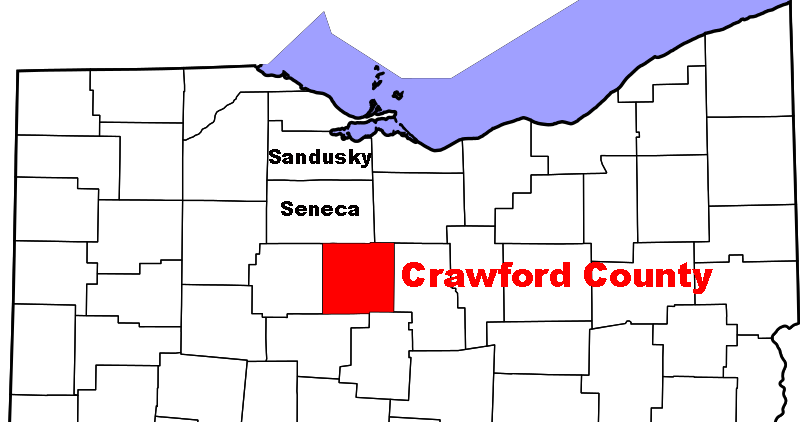
On Nov. 8, north-central Ohio's Crawford County will have a referendum on whether to allow an energy company to build 50 to 60 wind turbines, each 650 feet high, in the county, Kris Maher reports for The Wall Street Journal. Discussions over the coming vote have grown contentious.

“If you’re pro-wind and an anti-winder knows that you’re pro-wind, you don’t talk to them,” Dan Bute, a county fiscal specialist who supports the wind project, told Maher. Supporters of the project see it as a way to increase revenue through land leases and payments to the county — which according to pro-wind billboards around the county could be $2.7 million annually. Opponents say the turbines "will disrupt rural life, damage property values and put birds and other wildlife at risk," Maher writes.

The referendum comes after the county's commissioners passed a resolution in May blocking the development of wind farms in the county, Gere Goble reported for the Bucyrus Telegraph-Forum, the newspaper based in the county's seat. However, a political action group backed by Apex Clean Energy, the company seeking to build the turbines, secured enough signatures on a petition asking for a countywide referendum — which will be the first of its kind in the state.

Apex's projects have been controversial nearby. The company is appealing an Ohio Power Siting Board's denial of a permit to build a wind farm in Seneca and Sandusky counties, just north of Crawford County, Daniel Carson of the Fremont News-Messenger reported in July.
(Wikipedia map, adapted)

Tuesday, July 26, 2022

Governor to sign bill giving Alaska Native tribes recognition

Supporters of the bill posed after its passage. (James Brooks/Alaska Beacon)
Alaska Gov. Mike Dunleavy will sign a bill giving state recognition to the 229 federally recognized Native tribes in the state Thursday, the Alaska Federation of Natives announced last week.

“This is an historic moment for all Alaska tribes,” AFN President Julie Kitka said in a prepared statement. She called it “a step toward building a stronger relationship with our state government.”

"State recognition is not expected to affect tribes’ legal relations with the state, but supporters have said it is an important symbolic statement by the state, which has historically fought efforts by tribes to exert their sovereignty," James Brooks reports for Alaska Beacon, part of States Newsroom.

The legislation heads off a potentially divisive referendum called by citizens who signed petitions circulated by supporters of tribal recognition. Alaska’s constitution allows a measure to be removed from the ballot if the Legislature passes a “substantially similar” law, and Attorney General Greg Taylor concluded in June that the bill "meets that standard," Brooks reports.

Thursday, November 04, 2021

Referendum roundup: New York state rejects looser voting rules; Maine adopts vague 'right to food' amendment

Off-year elections are usually pretty quiet, but voters are often asked to decide questions large and small. This week there were 24 statewide refernda in six states. Here are a few with rural resonance:

In Maine, by share of population the most rural state, two-thirds of voters approved a first-in-the-nation constitutional amendment establishing a "right to food," even though there's considerable confusion over what it means. "Described as an outgrowth of the food sovereignty movement, the amendment says Mainers have a right to grow and consume food of their choosing," Chuck Abbott reports for the Food and Environment Reporting Network. That extends to popular issues such as raw milk and the right to save and exchange seeds as long as it doesn't violate laws or exploit natural resources.

"Supporters used the campaign to make the case the amendment would ensure the right to grow vegetables and raise livestock in an era when corporatization threatens local ownership of the food supply," Patrick Whittle reports for The Associated Press. "They positioned the amendment as a chance for Mainers to wrestle control of the food supply back from large landowners and giant retailers with little connection to the community."

Abbott reports, "Opponents said the amendment was so broadly written that it could override animal cruelty laws or open the gate to domestic livestock in urban backyards. The Bangor Daily News said the ambiguous wording would put judges in charge of interpreting what the amendment means at the practical level." The paper also noted that the amendment doesn't expressly mention hunger.

In Colorado, 54 percent of voters rejected a measure that would have raised $150 million to partially fund private, out-of-school learning for children by raising the marijuana tax five percentage points to 20%, Jenny Brundin and Bente Birkeland report for Colorado Public Radio.

Proposition 119 aimed to help children falling behind because of the pandemic by providing tutoring, enrichment opportunities in the arts, career and technical training, physical therapy, mental health services, support for students with special needs, and mentoring. However, "opponents of the measure said it would have taken dollars away from public education and would have instead funded private companies to provide services," Brundin and Birkeland report.

In Texas, voters approved two constitutional amendments by broad margins. "Proposition 3, which was approved 63% to 37%, bars governments from taking any action that "prohibits or limits religious services," Asher Price reports for Axios Austin. "The proposition is part of a much broader national Covid-19 debate that pits public health officials bent on stymieing the disease's spread against pastors who say they were protecting their practice of religion."

And Proposition 6, approved by nearly 88% of Texas voters, "gives residents of nursing homes and long-term care facilities the right to designate an 'essential caregiver' who could not, under most circumstances, be barred from in-person visits," Price reports. "The proposition comes after stories of elderly people enduring months of isolation as part of the fight against Covid-19." It's unclear whether nursing homes could bar essential caregivers who are unvaccinated or unmasked. Since nursing home workers must be vaccinated, it stands to reason that visitors would be more likely to infect residents. That could be particularly deadly, since nursing home residents are far more likely to die from Covid-19 than others.

Voters in New York rejected three amendments that would have broadened voting access by allowing same-day registration without proof of residency, let voters get absentee ballots without needing an excuse, and requiring that incarcerated New Yorkers be counted as living at their last place of residence in redistricting, Dana Rubinstein reports for The New York Times. Broadened voting access measures tend to benefit urban—and therefore more liberal—voters. And rural areas generally gain more political clout when prisoners are counted as local residents in redistricting.

Analysts say the measures were defeated because the language on the ballot was hard to understand, and because the Democratic party made little effort to boost the propositions, while the state Republican party used the ballot issues as lightning rods to turn out their base in an otherwise quiet election cycle, Rubinstein reports.

Friday, May 21, 2021

More Oregon counties vote to pursue idea of joining Idaho; it's doomed, but shows growing rural-urban political divide

Citizens for Greater Idaho map; star denotes Idaho's capital, Boise. California counties are not part of the current proposal.
Counties on board, sort of (Wikipedia base map)
Voters in seven rural counties in Oregon have approved ballot measures more or less endorsing the idea that they become part of Idaho. Five voted for it Tuesday, following two that had voted earlier. The notion is almost certain to remain a fantasy, since Congress and the states' legislatures would have to agree to it, but it's another illustration of the growing rural-urban divide in American politics, and backers of the idea are already talking about second phase, to take in some Northern California counties.

"This election proves that rural Oregon wants out of Oregon," said Citizens for Greater Idaho President Mike McCarter. "If we're allowed to vote for which government officials we want, we should be allowed to vote for which government we want."

"Supporters of the plan say extending Idaho's western boundary far into Oregon would benefit people and lawmakers in both states. They say people in rural Oregon have values and economies that more closely align with those in Idaho," reports Bill Chappell of NPR. "The ballot initiatives that were endorsed this week stop short of demanding an immediate departure from Oregon. Voters in Sherman County and Grant County, for instance, backed measures that urge officials to discuss the idea of relocating the border and to promote the plan if it's in the counties' best interests."

Voters in Malheur County were asked: "Shall the County Court meet three times annually to discuss promoting Malheur County's interests regarding relocation of the Oregon-Idaho Border?" The vote in favor was 3,050 to 2,572, the weakest of this week's five counties. Malheur County shares most of Oregon's border with Idaho and is near its capital, Boise, but has a fresh tie to the rest of Oregon: "The county recently saw a spike in tax receipts from the $10 million of cannabis sold there each month," Chappell notes. "Cannabis is legal in Oregon but not in Idaho." 

Friday, November 06, 2020

Ballot measure roundup: Coloradans approve restoration of gray wolves, paid family and medical leave

Colorado voters approved the restoration of gray wolves and mandated paid family and medical leave Tuesday, the first time any state has done such things in a referendum, on Tuesday.

Those were just two of 184 statewide ballot measures, according to the National Conference of State Legislatures. Here are a few others, courtesy of NCSL:
  • Arizona, Montana, New Jersey and South Dakota approved efforts to legalize recreational marijuana, while voters in South Dakota and Mississippi approved medical marijuana programs.
  • Oregonians decriminalized small amounts of certain controlled substances, such as heroin and cocaine, and the Beaver State also legalized psilocybin—become the first state ever to do so. The drug comes from mushrooms and is used in rituals by some Native American tribes.
  • Ranked-choice voting, which was adopted in Maine recently, failed in Massachusetts and looks likely to fail in Alaska.
  • Virginia voters adopted a redistricting commission, and that change means most states will now have a commission of some kind, though some are merely advisory, or only come into being if the legislature fails to pass maps.
  • Voters approved taxes on tobacco and electronic-cigarette products in Colorado and Oregon. Washington will require public schools to provide comprehensive sex education beginning in 2022. 
  • California voters rejected stricter parole and sentencing policies and stopped the legislature’s efforts to replace cash bail with pretrial risk assessments.
  • Kentucky passed Marsy’s law, the crime victims’ bill of rights.
  • Florida voters raised the minimum wage.
  • An effort to overturn California’s affirmative action ban failed.
  • Two “Stand Your Ground” Rights measures pass in Alabama.
  • Mississippians approved the state’s new magnolia flag design, which was put before voters after the legislature decided to replace the previous flag feature the confederate battle emblem.

Monday, August 17, 2020

Medicaid expansion OKd by voters in Missouri was opposed by most voters in rural areas, but it may help them most

Kaiser Family Foundation map, adapted by The Rural Blog
"Missouri recently became the fifth straight red state to approve Medicaid expansion by referendum, joining Idaho, Nebraska, Utah and Oklahoma," former Minnesota senator Al Franken, a Democrat, notes in an op-ed for the StarTribune in Minneapolis.

Franken writes that he's unsurprised by the trend, since during his Senate career, he saw many rural Minnesotans who were "passionate" about Medicaid expansion. However, in Missouri, the largest state to expand Medicaid by referendum, the measure passed because of urban support; two-thirds of rural voters opposed it, Bill Bishop and Tim Marema report for The Daily Yonder.

Franken writes that Medicaid expansion will disproportionately help rural residents, as it has done in Minnesota. "After the Affordable Care Act became law and Medicaid expansion was adopted in our state, these hospitals suddenly found themselves with a lot less uncompensated care and, therefore, a lot more resources," Franken writes. Now that rural hospitals didn’t have to eat the costs of uninsured patients, they had money they could spend for more doctors, nurses, technicians, technology, rehabilitation therapists, dietitians — even better food! Suddenly, these rural hospitals were able to significantly expand their scope of practice."

Expanded access to health care may help fewer people get sick with covid-19, he continues: "Not only did rural Minnesotans have access to more specialists and sophisticated medical equipment (including ventilators), now they could receive regular free checkups from their physicians, reducing the incidence and severity of the co-morbidities that make people so vulnerable to the coronavirus."

Thursday, April 11, 2019

Trump executive orders increase presidential power, target states' power to stop oil and gas pipeline projects

President Trump signed two executive orders Wednesday that aim to make it easier for oil and gas companies to build pipelines and harder for states to stop them.

The first order directs the Environmental Protection Agency to review a section of the Clean Water Act that states have used to delay projects on environmental grounds, and "requires the Transportation Department to change its rules to allow the shipment of liquefied natural gas by rail and tanker truck, Toluse Olorunnipa and Steven Mufson report for The Washington Post. "And it seeks to limit shareholder ballot initiatives designed to alter companies’ policies on environmental and social issues. Trump’s order requires the Labor Department to examine whether retirement funds that pursue those investment strategies are meeting their responsibility to maximize returns."

The second order asserts that the president is solely responsible for approving or denying pipelines or other infrastructure that cross international boundaries; until now, the secretary of state had that authority, Olorunnipa and Mufson report.

"Critics said the president’s orders on pipelines would trample on authority delegated to the states under Section 401 of the Clean Water Act and other congressional legislation," Olorunnipa and Mufson report. "That authority has been upheld twice by the Supreme Court. Trump’s move would benefit, among others, Energy Transfer, whose chief executive, Kelcy Warren, was a major contributor to Trump’s campaign." Energy Transfer has the controversial Dakota Access Pipeline.

Tuesday, March 19, 2019

Some lawmakers try to tighten rules on ballot initiatives

"Republican legislators in states across the country have introduced dozens of bills that would make significant changes to the initiative and referendum process, tightening rules and raising requirements after their voters approved progressive proposals that legislators opposed or refused to take up," Reid Wilson reports for The Hill, a Washigton, D.C., news outlet.

Critics say the bills are an attempt to muzzle citizens who want to make their voices heard. "This is, combined with what we saw after the success of many of these ballot initiatives in 2018, state legislatures undermining the will of the people," said Chris Melody Fields Figueredo, who runs the progressive Ballot Initiative Strategy Center. "Rather than listen to the will of the people, elected officials are undermining the will of the people."

Some Republicans behind such bills say they're not trying to stifle democracy, and "say they are necessary to curb the influence of big-money groups that increasingly fund some of the most expensive ballot measure campaigns across the country," Wilson reports. "Other legislators said easy access to the ballot has led to a raft of ill-considered public policy that does not face the same scrutiny as legislation reviewed and scored by trained legal analysts."

Bills to tighten initiative rules aren't just by Republicans; Democrats in Oregon and Washington have proposed similar measures after low signature requirements led to crowded ballots, Wilson reports.

Monday, October 15, 2018

Ballot initiatives in Michigan and North Dakota test whether Midwest is ready to legalize recreational marijuana

Voters in Michigan and North Dakota could be the first in the Midwest to legalize recreational marijuana in November, but the region is deeply divided on the topic. "Advocates will have to overcome opposition campaigns arguing that legalization will make the drug more available to children and endanger public safety if people are driving high," Graham Vyse reports for Governing.

Polls in Michigan suggest that a majority supports legalization, but polling in North Dakota has been limited and gives mixed results, Vyse reports. Fund-raising indicates that the ballot initiative is more popular in Michigan than in North Dakota. Pro-legalization groups in Michigan have raised $1.7 million, while opponents have raised only $286,062. But in North Dakota, anti-legalization groups have raised $110,000, while pro-legalization groups have raised $28,900. In America overall, 62 percent support legalizing marijuana, including 69 percent of Democrats and 45 percent of Republicans, according to the Pew Research Center.

Pro-legalization advocates view the initiatives as a matter of personal liberty and as a means to reduce criminal drug convictions and save taxpayers money. Foes of legalization worry that legalization could lead to more use, and worry about businesses marketing the drug to addicts and children, Vyse reports.

The initiatives have a few differences. Michigan's Proposal 1 would set up a licensing and taxation system, while North Dakota's Measure 3 would not. Michigan's initiative would limit how much marijuana people can keep in their house, and would allow cities and counties to prohibit or restrict pot shops. "North Dakota's ballot initiative is unique in that it would create a system for automatically expunging some previous marijuana convictions," Vyse reports. Both measures would legalize it for ages 21 and up, while penalizing younger people caught using it.

Recreational marijuana is legal in eight other states: Through referenda in Alaska, California, Colorado, Maine, Massachusetts, Nevada, and Oregon, and by a legislative bill in Vermont.

Wednesday, June 06, 2018

Entrepreneur convinces California town to let him buy hospital in hopes of saving it with remote lab-services billing

Rural hospitals have been making headlines lately because of questionable laboratory-billing schemes designed to take advantage of higher government reimbursements for rural health-care providers. The schemers buy struggling hospitals and use them to billing for lab services actually provided at other hospitals.

Insurance companies and some in Congress are crying foul over the practice, but one Denver entrepreneur pitched a version of it as a way to save a struggling rural hospital he wanted to buy — and the town agreed. On June 5 the Northern California town of Cedarville voted 83 percent in favor of allowing Beau Gertz to buy the bankrupt 26-bed Surprise Valley Community Hospital, the hospital's interim administrator, Bill Bostic, told The Rural Blog.

Gertz, who owns laboratory and nutraceutical companies, promised the town that he would retain vital services, and that "he’d like to open a 'wellness center' to attract well-heeled outsiders — one that would offer telehealth, addiction treatment, physical therapy, genetic testing, intravenous vitamin infusions, even massage," Heidi de Marco and Barbara Feder Ostrov report for Kaiser Health News. "Cedarville’s failing hospital, now at least $4 million in debt, would not just bounce back but thrive, he said."

His plan to pay for the improvements: Doctors at the hospital would help remote patients through telemedicine, and that way lab-test bills could be issued through the hospital, regardless of where the patients live. "If you do it correctly here is a nice profit margin," he told Kaiser Health News. There [are] extra visits you can get from telemedicine but … it has to be billed correctly and it can’t be abused."

The people of Cedarville were skeptical, since other outsiders had made similar pitches. But they were evidently swayed by his vision, if yesterday's vote is an indication. "The people of Surprise Valley want to keep health care in the valley, and this is how they want to do that," Bostic said.

Thursday, January 25, 2018

Oregon voters OK health taxes to keep Medicaid expansion

In a special election Tuesday, Oregon voters approved a tax on hospitals and health-insurance plans to continue funding the state's Medicaid expansion. It's the first time a state has approved such a measure by referendum, and "the second time that the Medicaid expansion has won at the polls: Maine voters in November overwhelmingly supported bringing the Medicaid expansion to their state," Sarah Kliff reports for Vox. The tax could raise as much as $320 million over two years.

The referendum almost didn't happen, since last spring Oregon legislators considered ending Medicaid expansion to balance the state's budget. That would have made the state the first in the country to repeal an expansion. But the Democrat-controlled state legislature voted to pass a 1.5 percent tax on premiums collected by health insurers and a 0.7 percent increase on the tax rate collected from some hospitals, Elon Glucklich reports for The Register-Guard in Eugene. In response, some Republican state representatives gathered enough signatures to put the taxes up for vote through Oregon's referendum process.

About 62 percent of Oregon voters favored Measure 101, with more than 1 million votes cast; much of rural Oregon voted against it. The referendum's success "may catch the eye of other states with difficult budget situations as a way to bring in additional revenue," Kliff reports.

Wednesday, November 08, 2017

Elections have an anti-Trump feel; Maine voters override governor to expand Medicaid

Election Day brought sweeping victories to Democratic candidates across the country, even in rural areas and places that voted for President Trump in 2016. Some results may have been a referendum on Trump, as political scientist John Sides writes, but the party in the White House usually loses seats in midterm elections. Regardless of the reason, "It’s become clear that Democrats have the momentum across the country," Aaron Blake writes for The Washington Post. Here are some elections with rural resonance or special interest:

VIRGINIA: Democrat Ralph Northam was elected governor by 9 percentage points, which The Washington Post's James Hohmann says was a direct reflection of Trump's standing in the state: "Republican Ed Gillespie could not escape Trump’s unpopularity, despite his best efforts to thread the needle.” In exit polls, 34 percent of voters said the reason for their vote was to express opposition to Trump. This is especially telling in a race where pundits said Northam was having trouble connecting with rural voters. Voter turnout surged in the Northern Virginia suburbs and in rural Southwest Virginia, but the former has a lot more voters than the latter. (Post map)
Steve Kornacki of MSNBC said Gillespie wanted to do “normal bad” for a Republican in Northern Virginia and make it up in rural areas. But his numbers in northern Virginia were more like Trump’s (very bad) and though he did better in the southwest than he did when he ran for the Senate, it wasn’t enough to make up the difference. “Revenge of the suburbs,” Kornacki called it.

Democrats erased a 32-seat GOP advantage in the House of Delegates, in what Michael Martz of the Richmond Times-Dispatch calls a "tsunami election," gaining an "epochal gain in power in a legislative chamber that has been under an iron Republican grip." Recounts are likely to determine which party ultimately controls the House. The surge of votes for Northam likely helped downticket races.

Two of those new delegates may be of interest to journalists. Former reporter Danica Roem became the first openly transgender person in the country to be elected to a state legislature, WRC-TV in Washington, D.C., reports. She beat out the 26-year incumbent, 73-year-old Republican Bob Marshall, who proposed a bill restricting which bathrooms transgender people could use. Roem worked for the Gainesville Times, the Prince William Times, and the Montgomery County Sentinel.

Roanoke Times photo by Heather Rousseau
In the Blacksburg area, Republican Del. Joseph Yost lost to former television news anchor Chris Hurst, who was a reporter/anchor at Roanoke's WDBJ-TV in 2015 when his girlfriend, fellow reporter Alison Parker, was shot and killed during a live remote broadcast. The incident and Hurst's career gave him "unusually high name recognition," The Roanoke Times reports. "Touched by Hurst’s heartbreaking story and angry at Trump, Democrats from Virginia and other states donated big money to Hurst’s campaign hoping to flip the seat from red to blue," and he was boosted by student volunteers at Virginia Tech and Radford University. The race between Hurst and Yost is tricky to fit into a larger narrative, though; both are young centrists, and though the district is in a solid-red region, it was split almost evenly between Democrat and Republican voters in 2016, with Hillary Clinton getting a slight edge, the Post notes.

MAINE, America's most rural state, became the first to expand Medicaid by referendum. "As many as 80,000 residents of the state will gain coverage," Quinn Libson
reports for Route Fifty. Republican Gov. Paul LePage had declined to expand the program under a main provision of the Patient Protection and Affordable Care Act.

COLORADO: "Voters on Tuesday passed a controversial ballot issue that gives Broomfield more local oversight of oil and gas operations in the city, a move that probably will invite a legal challenge from Colorado’s large energy sector," John Aguilar reports for The Denver Post.

MONTANA: Liberian refugee Wilmot Collins will be the new mayor of the state capital of Helena, unseating Republican incumbent Jim Smith with just over 51 percent of the vote, Thomas Plank reports for the Helena Independent Record. Helena is one of the smallest capital cities in the country, with a population of around 31,000. Trump got 55 percent of the city's vote in 2016.

WASHINGTON: Democrat Manka Dhingra won a special election to a state Senate seat, which flipped the Senate to Democratic control. That means that Washington's legislative and executive branches will now be controlled by Democrats, just as in Oregon and California.

NEW JERSEY: "Democrat Phil Murphy, a former banker and first-time candidate, won the New Jersey governor’s race by 13 points over Chris Christie’s lieutenant governor. That’s on par with Clinton’s margin a year ago, but it’s a remarkable turnabout from four years ago — when Christie got reelected with a 22-point margin of victory. It means that Democrats will have unified control of the Garden State’s government," Hohmann reports.

Tuesday, January 10, 2017

Study of Ky. meth-lab busts boosts case that drug use is less prevalent where alcohol sales are legal

Meth use is more prevalent in counties where the sale of alcohol is illegal, say researchers at the University of Louisville. They looked at meth-lab seizures (based on Drug Enforcement Administration records) and local-option ordinances in Kentucky counties from 2004 to 2010, and found that "the number of meth-lab seizures in Kentucky would decrease by 34.5 percent if all counties became wet." (UofL maps: Meth lab seizures by county, with green indicating more busts; alcohol status: red for wet, orange for moist or limited, and yellow for dry)

In 2010 Kentucky had 39 "dry" counties (where all alcohol sales are banned), 32 "wet" counties (sales are allowed), 20 "moist" counties (contain some wet jurisdictions) and 29 "limited" counties (sale by the drink in restaurants meeting certain criteria). All the dry counties were rural; several have since gone wet or moist.

For the study period the mean lab-seizure rate was 2.17 per 100,000 residents in wet counties, 2.26 in moist counties and 3.92 in dry counties. The highest rates of lab seizures were along the border of Tennessee, a state in which beer is generally available but stronger drink is less so.

Christopher Ingraham of The Washington Post reports, "After running some statistical tests, the researchers found that this is more than just a simple correlation." They said, "Our results add support to the idea that prohibiting the sale of alcohol flattens the punishment gradient, lowering the relative cost of participating in the market for illegal drugs."

"In other words: people who buy alcohol in places where it's illegal become accustomed to dealing with the black market," Ingraham writes. "If you're going to get punished whether you trade in booze or trade in meth, why not give meth a spin?" (Post graphic using data from UofL study)
The UofL research "fits in with other findings showing harmful effects of localized alcohol prohibitions," Ingraham writes. "A 2005 paper in the Journal of Law and Economics found that when Texas counties changed from dry to wet, their incidences of drug-related mortality decreased by 14 percent as people substituted alcohol for other drugs. Records from the Kentucky State Police show that dry counties tend to have higher rates of DUI-related car crashes than wet ones, presumably because when you live in a dry county, you have to drive farther to get your booze. A 2010 report from the Robert Wood Johnson Foundation found that binge drinking rates were often higher in Alabama's dry counties than its wet ones."