Saturday, October 22, 2022

Rural Mainstreet Index falls for fifth month in a row; 3 of 4 small-town bankers in Ill.-Wyo. region see recession in 2023

An index of small-town economies in 10 heartland states that are dependent on agriculture and energy production remains below growth-neutral for the fifth month in a row.

Creighton University's Rural Mainstreet Index fell for the sixth time in the past seven months, sinking below growth neutral for a fifth consecutive month. The index is based on a survey of bank CEOs in about 200 rural communities with an average population of 1,300 in Colorado, Illinois, Iowa, Kansas, Minnesota, Missouri, Nebraska, North Dakota, South Dakota and Wyoming.

The October index fell to 44.2 from 46.3 in September. Its range is 0-100, with 50 representing growth neutral. “The rural mainstreet economy is now experiencing a downturn in economic activity,” said Ernie Goss, the Creighton professor who compiles the index. “Almost one in four bankers, or 23.1 percent, reported that the economy was already in a recession. Approximately, three of four bankers expect a recession to begin in 2023.”

Plymouth County, Iowa (Wikipedia base map)
The index includes state figures and looks at farmland prices and other agricultural inputs. The region’s farmland price index for October declined to 58 from September’s 61.1 but stayed above growth neutral for the 25th straight month. In Plymouth County, Iowa, 55.6 acres sold for $26,250 per acre, setting a new state record, according to Jim Rothermich of the Land Talker, Goss reports.

"Labor shortages continue to be a significant issue constraining growth for Rural Mainstreet businesses," Goss writes. "Despite labor shortages, Rural Mainstreet expanded non-farm employment by 2.9% over the past 12 months. This compares to 3.0% growth for urban areas of the same 10 states for the same period of time."

USDA gives debt-ridden farmers $800 million to make them current on debt payments or clear tax refunds from IRS

The Agriculture Department has given about $800 million in debt relief to more than 13,000 farmers as part of a $3.1 billion appropriation in the Inflation Reduction Act, Democrats' name for the last big spending bill they passed through Congress.

Payments were made Tuesday to farmers "who were facing the loss of their operations," reports Spencer Chase of Agri-Pulse. "Ag Secretary Tom Vilsack detailed a handful of investments he said would help make about 11,000 farmers current on their loans and help some 2,100 others facing Treasury Department action to direct tax refunds to debt repayment.

“The first order of business was to keep people on the land,” Vilsack told reporters. Chase notes, "USDA has had a foreclosure moratorium in place since the earliest days of the Biden administration in January 2021. That moratorium cites the national public health emergency due to Covid-19, and lifting of that emergency could also reinstate regular debt servicing protocols by the department."

USDA plans to use about $434 million to help producers that it expects "to have tough financial times," Chase reports. "A department release identified 1,600 'complex cases' where borrowers are on the brink of bankruptcy or foreclosure and another 14,000 cases where producers could receive help to 'avoid even becoming delinquent'." The cases will be worked by local Farm Service Agency loan officers.

"Vilsack said USDA is also working on a separate program, funded through a different IRA allocation, to help borrowers who feel they have faced discrimination from USDA," Chase reports. "A previous debt forgiveness program was challenged in the courts and was repealed in the IRA."

Friday, October 21, 2022

Mississippi River could stay low this winter, as NOAA predicts continued dry conditions for much of its watershed

NOAA drought outlook through January

This winter, drier-than-normal weather is expected to persist across the southern U.S. and Gulf Coast, Karl Plume reports for Reuters, citing a report from the National Oceanic and Atmospheric Administration's Climate Prediction Center. Those dry conditions should keep water levels low on the Mississippi River, where shipping traffic to and from the Gulf Coast has been stalled or even stopped by low water. 

The dry weather is credited to an expected return of La NiƱa, a climate phenomenon that alters weather patterns, for the third consecutive winter, the NOAA report says. Drought spans 59% of the country and dry conditions are expected to continue or worsen in much of the West and Great Plains. That's bad news for the southern Plains farm belt "where farmers are struggling to plant their winter wheat crop due to excessively dry soils," Plume writes. Parts of California, the Southwest and southern Rockies could also see drier-than-average conditions, and drought is forecast to expand in the Southeast.

However, above-average precipitation is expected in the Midwest and Ohio River valley, which could eventually could provide relief to the Mississippi later in the winter. Additionally, the NOAA forecasts that the Pacific Northwest and northern Rockies should get wetter-than-average conditions. 

Rural states oppose proposed rule that would require states to set targets to cut highway greenhouse-gas emissions

The Garden State Parkway in New Jersey (Kena Betancur/Viewpress)
A Biden administration proposal to "require states and metropolitan planning organizations to establish targets for cutting greenhouse-gas pollution from vehicles" has sparked a dispute between state transportation departments and Republican and Democratic attorneys general, Daniel C. Vock reports for Route Fifty. The rule would be administered by the Federal Highway Administration and the dispute surfaced in comments submitted to the FHwA on the rule in July.

Republican attorneys general from 20 states wrote that the rule was federal overreach, but 13 Democratic attorneys general countered that it would be "an efficient and judicious tool for tracking and addressing [greenhouse gas] emissions on the [national highway system]," Vock reports. 

The National Association of City Transportation Officials also backed the proposal, noting that transportation accounted for 27% of U.S. greenhouse-gas emissions in 2020 and over half came from passenger vehicles. But the rule would have an unfair and disparate effect on states with largely rural populations, the transportation departments of Idaho, Montana and South Dakota wrote: “Relatively dispersed populations in rural states have to travel longer distances to and from destinations for basic needs such as shopping and health services.”

Many coroners lack training, raising doubts in Pennsylvania on whether the local office should still be an elected one

Many of Pennsylvania's county coroners and medical examiners "lack adequate funding, transparency, and training," Ashad Hajela reports for Spotlight PA, in the latest of many such stories from many states over many years. Most Pennsylvania coroners, are elected but only five of the state's 67 counties have an accredited coroner or medical examiner. In many rural counties, "challenges are exacerbated because many coroners don’t have access to the labs and specialists who help investigate deaths," Hajela writes.

The rural coroners are less likely to have accreditation than their urban counterparts, a study from the state-run Center for Rural Pennsylvania finds. Those rural coroners also often have to "bear the burden of additional costs of transportation and lack of personnel because of their location," Hajela writes. 

Experts have long debated whether coroners should be elected. Christina VandePol, a former coroner and one of the study's authors, said elected coroners are able to work independently from counties so they're not always at the whim of district attorneys or county officials. "This autonomy can be important for investigating deaths like those in county jails. VandePol explained that because of her office’s independence, she was able to release the names of nursing homes that had more Covid-19 deaths while she was under pressure not to," Hajela reports. Conversely, elected coroners may be unqualified for the job. If a medical examiner was hired in they wouldn't have to meet residency requirements needed to run for office, "which allows counties to attract applicants beyond the county’s boundaries."

How newsrooms can build trust with their audiences and learn what they want to hear about local elections

By the American Press Institute

All your thoughtful election planning and coverage is wasted if no one’s buying what you’re selling (literally or figuratively). What does your community actually want and need to know about the election process, candidates and issues? Below are some ways to build trust with your readers and effectively learn what they want to hear from you.

✅ Let the public tell you what information they’re looking for but can’t find. The Citizens Agenda model centers voters and invites them to tell newsrooms what they want politicians to be talking about as they compete for votes.

✅ Collaborate with local community groups or agencies for a sense of what people are lacking — and consider offering voting guides, surveys or toolkits they can hand out to constituents. Here’s a great example of a partnership between a civic engagement hub and news outlet aiming to help constituents be well informed and prepared to vote in November.

✅ Avoid using “us vs. them” or two-sided framing when asking questions. Instead, use mindful language to complicate the narrative, and reveal more viewpoints by interviewing people who are not dead set on one approach. Learn more about complicating the narrative from Amanda Ripley and Solutions Journalism Network.

✅ Don’t be afraid to go off-platform to reach communities with low voter turnout. Consider printing off election guides that can be passed around, or starting a text message campaign that allows your audience to ask questions about the election. Here are some tips on answering live questions about voting.

✅ Follow up, and act on what you’ve learned. If possible, send community members a note thanking them for their time along with an observation about what you learned. And be sure to have a standardized way to track community responses across the newsroom, so insights and trends are readily accessible.

Quick hits: New 'Battery Belt' jobs, declining snowmelt, spooky rural tales, dams that are 'drowning machines' . . .

Santa Claus, Ind., has put up a roadblock for a proposed plant that would make diesel fuel from Illinois Basin coal, reports Rebecca Thiele for Indiana Public Media.

The new "Battery Belt" brings jobs to smaller cities, Joann Mueller reports for Axios.

As snowmelt becomes uncertain, grit and tradition prevail in the Pacific Northwest, Ruth Fremson and Kirk Johnson report for The New York Times.

Low-head dams, called "drowning machines," claim lives across Kentucky and the U.S., Sarah Hume reports for the Louisville Courier Journal

Liz Carey and Adam B. Giorgi write up rural America's spookiest stories for the Daily Yonder.

Thursday, October 20, 2022

Drug three times as potent as fentanyl kills three in Virginia; more naloxone may be needed to reverse overdoses of it

A synthetic opioid that's more deadly than fentanyl has arrived in Virginia, Luca Powell reports for the Richmond Times-Dispatch. The drug, nitazene, is three times as potent as fentanyl and is "popping up all over the country," said Nelson Smith, commissioner of the Virginia Department of Behavioral Health and Development Services

The drug has been linked to three deaths in Virginia so far, "a number that medical examiners believe to be an undercount," Powell writes. State forensics labs can't readily identify the drug and have to rely on outside testing agencies contracted by the state for toxicology reports. Because the drugs are more potent, several more doses of naloxone may be required to reverse an overdose, early Centers for Disease Control and Prevention research suggests.

Michelle Peace, a forensic toxicologist at Virginia Commonwealth University, said that it's now easier to buy synthetic drugs online and the more powerful nitazenes may be more appealing to users who have developed a tolerance for other opioids. "The piece that the public needs to know is that they can’t really trust what they’re buying on the internet," Peace said. "That sounds like it should be obvious, but it’s not." Nationally, overdose deaths have jumped since the start of the pandemic and synthetic opioids like fentanyl account for much of the deaths.

Theory of resentment driving rural Republican votes is firmed up by analyzing national polls, researchers write

Rural Americans increasingly vote Republican because they resent urban elites who overlook or disrespect them and who they think get a disproportionate share of economic opportunity, two political scientists in Maine and Utah say in a new peer-reviewed research paper and in The Washington Post.

"Unlike Republican voters in suburbs and the cities, rural voters care about what we might call 'geographic inequity' — the idea that rural areas receive less than their fair share from the government, are ignored by politicians, and are mocked and derided in popular culture. Without these beliefs, the urban-rural political divide would not be as vast as it is today," Nicholas Jacobs of Colby College and Kal Munis of Utah Valley University write in a Post op-ed.

This ground has been plowed before, most notably by Katherine Cramer of the University of Wisconsin, and the authors build on her research and interviews with 27 groups of rural residents of Wisconsin. The news study firms up the theory with data from polls in 2018, 2019 and 2020 that take the research beyond "a relatively small number of communities in a handful of states," they write. "We find that rural beliefs about geographic inequity, or what we and others call rural resentment, are widespread across the country. . . . For example, in 2020, we found that voters harboring high levels of rural resentment were 35 percent less likely to say they would vote for the Democratic U.S. House candidates than non-resentful rural voters, all else equal. In other words, rural resentment was among the most powerful factors in pushing respondents to vote for Republicans."

The authors write, "Is this resentment justified? Certainly, rural areas are sicker and poorer than nonrural America. And rural areas have undoubtedly lost many sources of meaning, money and respect over the past three decades. Still, some Democrats may want to dismiss resentment as unjustified white anger. After all, rural states have more power than their numbers would warrant in institutions like the U.S. Senate and the Electoral College. At least in politics, rural voices are already amplified. But voters form judgments based on what they believe to be true. And most rural voters resent what they perceive to be real geographic inequity. Perceptions, not facts, drive political behavior."

Whites now more likely to die from Covid-19 than Blacks, partly because of resistance to vaccines, other prevention

The racial gap in age-adjusted Covid-19 death rates narrowed, then reversed.
(Graph by Dan Keating, The Washington Post; click here for the interactive version.)
White people are now more likely to die from Covid-19 than Black people — a dramatic shift from earlier in the pandemic when certain minority groups were more likely to die from the disease, Akilah Johnson and Dan Keating report for The Washington Post.

Usually, when such a shift occurs, it's because the worse-off group got better. In this case, the better-off group got worse, in large measure because rural whites have resisted vaccination and other measures to prevent Covid-19 infection. Early in the pandemic, Black Americans, afflicted by long-running health disparities that predate the pandemic, fell victim to the virus more often as those with "hypertension, diabetes and obesity, all of which beset Black people at higher rates and earlier in life than White people." But as vaccines came along, Blacks were more likely to get them than rural whites.

“After it became clear that communities of color were being disproportionately affected, racial equity started to become the parlance of the pandemic, in words and deeds,” Johnson and Keating write. “As it did, vaccine access and acceptance within communities of color grew — and so did the belief among some White conservatives, who form the core of the Republican base, that vaccine requirements and mask mandates infringe on personal liberties.”

The phenomenon was essentially predicted in 2019 by Jonathan M. Metzl, director of Vanderbilt University's Department of Medicine, Health, and Society, in a book, Dying of Whiteness: How the Politics of Racial Resentment is Killing America's Heartland, which examined how the politicization of public health furthered mistrust in medical institutions. The book served as a sort of "prehistory" for the pandemic, Metzl said. It detailed how some uninsured white patients declined life-saving procedures because it meant they'd have to sign up for health benefits provided by the Patient Protection and Affordable Care Act. Metzl told the Post that rejecting public-health measures is about "dogma, more so than a mistrust of the science of vaccines or masks."

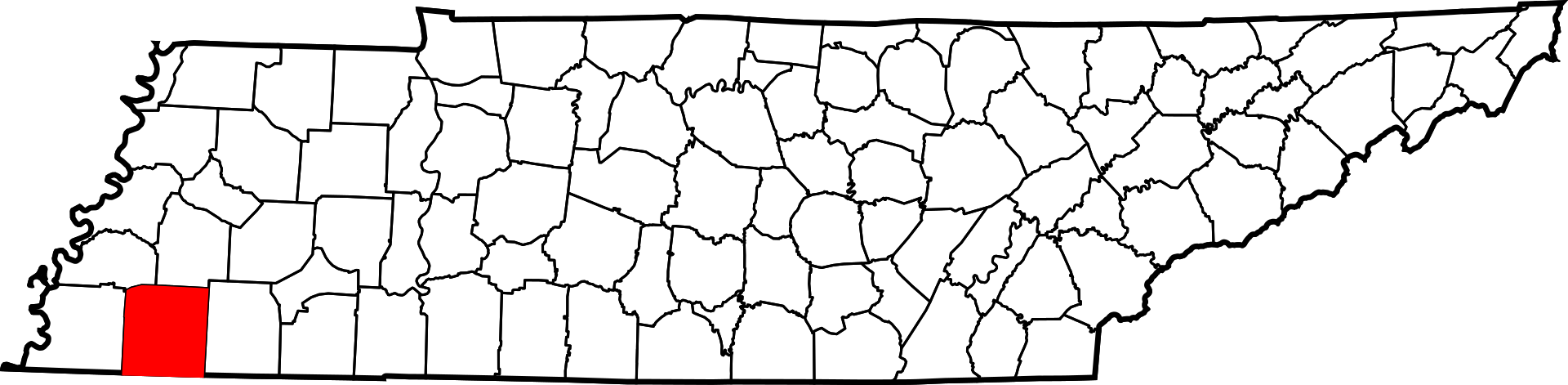
Fayette County in Tennessee (Wikpedia map)
The Post's object example is Fayette County, Tennessee, and Skill Wilson, who was an unvaccinated paramedic in Somerville, is the prime example. As the pandemic raged in nearby Memphis, Wilson and his wife felt their county of 42,000 was more protected because there were simply "less people, less chance of exposure." Eventually, Wilson "joined the choir of critics opposing vaccination requirements" and "commiserated with like-minded people in Facebook groups and on Parler and Rumble, the largely unmoderated social networking platforms popular with conservatives." The 59-year-old died from Covid-19 falling ill after transporting an infected patient to the hospital. 

Wilson's widow, Hollie, said after Skill died in January, "We’re Republicans, and 100 percent believe that it’s each individual’s choice — their freedom" when it comes to getting a vaccine. "We decided to err on the side of not doing it and accept the consequences. And now, here we are in the middle of planning the funeral."

Congress's auditing arm says states could keep more rural delivery rooms open by raising Medicaid reimbursements

Increasing state Medicaid reimbursement rates for rural hospitals could help them keep their obstetric units open, the Government Accountability Office said in a report Wednesday.

More than half of rural counties "did not have such services in 2018, according to the most recent data available," the report notes. "Studies showed that closures were focused in rural counties that were sparsely populated, had a majority of Black or African American residents, and were considered low income."

The GAO, the auditing arm of Congress, interviewed stakeholders, who said Medicaid reimbursement and physician recruitment and retention are the most important factors in keeping delivery rooms open. "Stakeholders said Medicaid reimbursement rates set by states do not cover the full cost of providing obstetric services. This may mean particular financial losses for hospitals providing these services in rural areas, where a higher proportion of births are covered by Medicaid. Medicaid covered 50 percent of rural births in 2018, compared to 43 percent of births for the United States as a whole."

"Recruiting and retaining providers is particularly challenging for rural areas, as they must compete with urban areas for a limited pool of providers to staff obstetric units that require a full range of maternal health providers, such as physicians and nurses, as well as anesthesiologists." The report said obstetric services would also benefit from more remote consultations, such as videoconferencing, to {ensure that rural patients who live longer distances from higher levels of obstetric care have access to such care through their own clinicians in their communities."

The report also suggests "establishing regional partnerships—such as a hub-and-spoke model where a larger hospital partners with smaller rural hospitals for care coordination and to provide training and other resources. . . . For example, a specialist from the hub hospital could help manage a rural patient's high-risk condition as needed and support the rural clinician for planning delivery at the local hospital."

A lack of specialized health services takes a toll on rural communities across the country, four-part series concludes

Part of Lanai City, Hawaii (Cory Lum/Honolulu Civil Beat)
A lack of specialists in rural communities as diverse as remote Hawaiian islands to the rugged mountains and forests of far Northern California are straining local health-care resources and forcing local residents to rely on telehealth services or faraway providers. So say the last two stories in a four-part series by The Daily Yonder, the Institute for Nonprofit News, Carolina Public Press, Honolulu Civil Beat and Shasta Scout, with support from the National Institute for Health Care Management Foundation.

The Hawaiian island of Lanai, which has a population of just over 3,000, no longer has in-person psychiatric care, reports Brittany Lyte of Honolulu Civil Beat. In 2020, the state agency that offers mental-health services to uninsured or underinsured adults no longer staffed a professional on the island and switched to telehealth services from a provider in Michigan. A report from a local health-care nonprofit surveyed residents of Lanai and a nearby island found that nearly 70% of the health care that residents of the two islands receive require trips off the island, "which is arduous and expensive," the report said.

California's North State
(California Economic Development Dept.)
A lack of health-care specialists also plagues Shasta County and the other 10 counties that make up California's rural North State, an official economic development region of the state, reports Annelise Pierce for the Shasta Scout. The largely remote area, which has about a fifth of the state's geographic area but relatively little population, has a dearth of doctors who specialize in lung care and only one neonatal intensive care unit, in Redding. But still, the families of babies in need of intensive care may struggle to come up with the gas money necessary to drive from one county in the area to Redding or Sacramento or southern Oregon where the other closest NICUs are. The lack of specialists is due in part to a lack of state central planning, Pierce reports. There's a statewide acknowledgement of a lack of specialists but "no one Shasta Scout spoke with knew exactly which or how many specialist doctors are missing in Shasta County."

Wednesday, October 19, 2022

News-media roundup: 2/3 of Americans have no or 'not very much' trust in mass media to report fully, accurately, fairly

Gallup
For the first time, a plurality of Americans have told The Gallup Organization that they have no trust and confidence in the mass media to report the news fully, accurately and fairly. That was the response of 38 percent of those surveyed Sept. 1-16; 28% said they had "not very much" trust and confidence, for a net negative rating of 66%, virtually two-thirds of the sample. Only 34% said they had a great deal, or a fair amount, of trust and confidence. That is "just two points higher than the lowest that Gallup has recorded, in 2016 during the presidential campaign, Gallup's Megan Brennan writes. "Just 7% of Americans have 'a great deal' of trust and confidence in the media, and 27% have 'a fair amount'." The biggest decline in trust was among independent voters; opinions of those who identify with a major party were slightly more favorable than in 2021.

"There are some significant differences within several subgroups . . . based on aggregated data from 2020 through 2022," providing samples big enough for analysis, Brennan writes. "Older Democrats and independents are more trusting of the media than their younger counterparts. While liberal and moderate Democrats register roughly equal levels of trust in the media, independents' trust differs markedly, based on their political ideology: Those who describe themselves as liberal are the most confident, and conservatives are the least confident. . . . Independents with a college degree are more likely than those without a degree to express trust in the media, but there are no differences among Democrats or Republicans based on college education."

Collecting signatures on a petition to declare her town a "sanctuary city for the unborn" got the news director and co-anchor at a Gray Television station in North Platte, Neb., fired for violating KNOP's policy that says they can't “actively engage in any political activity for any candidate, party or ballot initiative.” Veteran Iowa broadcaster Dave Busiek writes about it.

Inflation is hurting newspapers' finances, reports Rick Edmonds of The Poynter Institute. "It has also been an off year for revenues in the hard-pressed sector, but expense increases have been truly terrible," especially for independently owned papers, with newsprint up 30% or more, fuel up 50% and production supplies and electricity up 10% to 15%.

Votebeat, which education publisher Chalkbeat started as a pop-up newsroom to cover election administration during the pandemic in 2020, is now a permanent nonprofit entity, thanks to $3.1 million in fundraising, Editor and Publisher reports. Its co-founder and general manager, Alison Go, told E&P, “A lot of people don’t have a lot of information on elections, and so that vacuum is filled with nonsense. It’s just filling a yawning gap in coverage that there really is a civic demand for.” Votebeat reporters are in Arizona, Pennsylvania, Michigan and Texas, where "they saw both urgent needs and significant opportunities to make an impact," E&P reports. 

The nation should spend $10 billion to revive local news, Washington Post political columnist Perry Bacon Jr. writes: "[It] isn’t much money . . . to spend on the collapse of local news, something that the nation defines as a crisis." But his plan doesn't take existing news outlets into account.

Keeping it local: The 23-year-old Eastern Shore Post in Virginia has been bought by Ted Shockley, the owner and editor of monthly lifestyle publication Eastern Shore First, and Jim Ritch, a Post photographer who was a newspaper leader in Maryland and Delaware.

Conservative radio net reaches 'deep into parts of America that don't engage with most mainstream media outlets'

Salem Media Group, a publicly traded company based in Texas, has turned into a "conservative media juggernaut" as its big-name radio hosts reach "deep into parts of America that don’t engage with most mainstream media outlets," Cecilia Kang and Tiffany Hsu report for The New York Times. Salem isn't a household name but personalities backed by the company, such as Eric Metaxas, Sebastian Gorka and Charlie Kirk, are well-known in conservative circles.

Leading up to the midterm elections, that trio and other Salem hosts have "amplified the messages of conspiracy theorists, including misinformation about the voting process," Kang and Hsu write. Meanwhile, the company has said that the "war for America's soul is on the line" in the midterms and has put many of its hosts on tour. With a network of 100 radio stations and more than 3,000 affiliates, Salem says it reaches 11 million listeners. It also operates religious and conservative websites while expanding into podcasts, news shows, book publishing and social-media influencers. This year the company financed a film that claimed voter fraud in the 2020 election and was directed by Dinesh D'Souza, another conservative commentator.

Salem CEO David Santrella (Business Wire)
The company started in 1974 as two tiny radio stations in North Carolina. Salem added more stations and eventually went public in 1999. Over the past two decades, it expanded into conservative websites and book publishing. Multiple former employees told Kang and Hsu that the company executives largely stayed out of editorial decisions until Trump's presidency. Bloggers and Craig Silverman, a former radio host, said they were fired from the company after being publicly critical of Trump. 

In an August earnings call, David Santrella, Salem's chief executive, said political advertisers had spent nearly twice as much so far this year compared to the same period in 2020. "The political environment has never been as interesting and as heated and intense as it is right now," he said.

Nearly 40% of U.S. adults say they've not met a farmer; consumers say they want to learn about origins of their food

Almost 40 percent of U.S. adults have never met a farmer and 23% don't know where they could meet one, reports Spencer Chase for Agri-Pulse, citing a new study released by Land O' Lakes, an agricultural and food cooperative based in Minnesota. 

Many American consumers are eager to learn more about where their food comes from, a survey found: 87% were at least somewhat interested and over half were extremely or very interested, Chase reports. But many are unaware of how their food is produced and who is growing it. A vast majority of respondents didn't know the that average age of U.S. farmers is 60. In a press release, Land O' Lakes said many Americans believe less than half of their groceries come from family farms, but according to the U.S. Department of Agriculture, nearly 88% come from family farms. 

Interest in origins of food was strongest among urban consumers; 68% said they had a heightened interest, Chase reports. Only half the rural respondents shared that same interest. Almost all of the respondents in the 1,000-person survey, conducted by Wakefield Research, said that it was "at least somewhat important that their food be grown or sourced sustainably," Chase writes. 

Several states have passed laws as part of the educational 'culture war;' is it more about education or votes?

Number of laws passed affecting education culture wars
(Washington Post map; click to enlarge; click here for the interactive version.)
Over the past three academic years, half of U.S. state legislatures have passed laws restricting what cultural values can be conveyed through American education, an analysis by Hannah Natanson, Clara Ence Morse, Anu Narayanswamy and Christina Brause of The Washington Post finds. Just over 40% of those laws bar transgender students from sports teams that match their gender identities, while over a one-fourth limit what teachers can say about race, racism and history. 

That suggests that both political parties are "doubling down on the culture war," the Post reports, as both sides use "the education laws to signal their values to voters: While Republicans are proposing and passing the measures, Democrats are loudly opposing them." The paper citing Houman Harouni, a Harvard University lecturer who studies education. "This, to me, reads more like a PR campaign," Harouni said. "On either side, I don’t really think this is about education."

The online education offered during the pandemic allowed many parents to get a closer look at what was being taught in schools and some didn't like what they saw, Robert Pondiscio, a senior fellow at the right-leaning American Enterprise Institute, told the Post. Politicians everywhere took note of Republican Glenn Youngkin's rise to Virginia governor on a 2021 campaign promising to give parents more control over lesson plans. 

"So now, there’s a sense among some conservatives that pushing this kind of legislation can actually win over swing voters," Pondiscio said. "A sense that attacking public education is an electoral winner."

Publisher of former daily in Iowa, now printing twice a week, details mental toll of fighting to keep his paper afloat

Douglas Burns in his office (Carroll Times Herald)
The Carroll Times Herald has been in Doug Burns's family for generations, but the Iowa publisher and columnist feels he's been fighting the newspaper's last stand for several years. The battle has taken a toll on his mental health, Burns writes in a column for his Substack newsletter The Iowa Mercury: "In some of my more desperate days, I talked about suicide, my own, and the summoning of the last traces of resilience in this fight."

Burns' fight and the fight of many other newspapers are detailed in a new book, Beacons in the Darkness: Hope and Transformation Among America's Community Newspapers, by Dave Hoekstra, formerly of the Chicago Sun-Times. Hoekstra spent hours with the Times Herald and many other newspapers, such as The Journal-News in Hillsboro, Ill., owned by National Newspaper Association Chairman John Galer.

Cover of the paperback book
Burns told Hoekstra that when he was a teenager, he took a "condescending attitude" toward stories of family farmers committing suicide after losing their farms. "But now, I’ve thought about killing myself. You can quote me on that," Burns said in 2020. "I haven’t, of course, but I’ve spent 30 years of my life on this. We were best paper in the state (named by the Iowa Newspaper Association in 2013). What for? Maybe I’ll catch coronavirus. I’ve been flying around all over the country trying to find ideas and implementing dozens of them, working myself probably to an early grave trying to keep this paper from going to an early grave."

In that same conversation, Burns also touched on the diminishing status of community newspapers: "I used to be the guy in the room who could pretty much tell anybody they were wrong. I don’t have that leverage anymore. It’s tragic. Because the one person in the room that could tell people in positions of power to do that in smaller rural areas was the newspaper owner. He or she had the credibility of being a big community booster, and also, it’s our job."

Rural weekly in North Carolina reshapes election coverage

Top of the front page of last week's edition; click to enlarge
"As America heads toward Nov. 8 and a midterm election stress test for its democracy, a rural newspaper in one big swing state — North Carolina — is rewriting the books on election coverage in hotly contested local, state and federal races," University of Kentucky journalism professor Buck Ryan writes in the latest installment of his study of the weekly Chatham News+Record in North Carolina.

Publisher Bill Horner's model can be summed up as "Explain your approach in advance, hold community forums, and make endorsements a rarity." Horner took sides in a primary race after he published an article exposing a troublesome slate of Siler City town commissioner candidates, backed by “a mysteriously self-mythologizing millionaire,” who had recently moved to town together, making grandiose promises. He published an editorial asking readers not to vote for them, and "They all finished dead last." he says.

The paper's Oct. 13 edition featured these stories: “DENIERS: Where Chatham candidates stand on the ‘rigged and stolen’ 2020 election” and “Inside the ‘Election Integrity’ efforts undermining elections,” a reprinted article published in partnership with two other publications, The Assembly of North Carolina and The Guardian, with financial support from the Fund for Investigative Journalism.

Horner told Ryan that he conducts or helps with candidate forums because so many he has seen were "so poorly executed." His latest effort is "an example of the craziness of today's election ecosystem," he said. "Chatham County Republican candidates pulled out of two scheduled candidate forums that we're producing because we wouldn't allow their pet videographer — who's denigrated our work since Day 1 and, among other things, encouraged anonymous online attacks on my reporters, all the while being the chief distributor of misinformation and disinformation to his small legion of followers — to record the proceedings. Anyone but him, we told them; it's him or we take our ball and go home, they said."

Turkey prices at record as flu kills near-record count of birds

Chickens eat from feed bins. (Randall Hill/Reuters)
A new strain of avian flu has killed a near-record number of U.S. chickens and turkeys, reports Tom Polansek of Reuters. More than 47 million birds have died this year from the virus, nearing the high-water mark of 50.5 million deaths the disease claimed in 2015. The deaths have contributed to record prices for turkeys just ahead of the holiday season, as many consumers are dealing with rising inflation. 

The outbreak is credited to a subtype of the H5N1 strain of the virus that has been found in a broader range of wild birds compared to past iterations of the virus, Rosemary Sifford, the chief veterinary officer for the U.S. Department of Agriculture. Wild birds spread the virus over their migration patterns and Sifford said there could be increased risk of the virus through summer 2023.

"Retail prices for fresh boneless, skinless turkey breast reached a record $6.70 per pound last month, up 112% from a year earlier and 14% above the previous record from 2015," Polansek writes, citing the American Farm Bureau. The Hormel Foods Corp., owner of the Jennie-O Turkey Store brand, said its turkey production will be reduced through at least March 2023 because of the flu. China, a major buyer of U.S. poultry and eggs, has blocked imports from states with confirmed cases, Polansek reports.

Tuesday, October 18, 2022

Post and Courier columnist wins prize for commentary in smaller papers; editor in Columbus, Ind., places second

Cindi Scoppe
Cindi Scoppe, columnist and editorial writer for The Post and Courier in Charleston, S.C., is the winner of this year's Carmage Walls Commentary Prize for opinion journalism in newspapers of less than 50,000 circulation.

Scoppe dived into the messy culture war over election access and integrity, "working to keep lawmakers and the public focused on actual problems that need to be solved," says America's Newspapers, which presents the award. "Her deep institutional knowledge and straight-forward style provided critical insight and context to the debate, and helped create the middle ground that allowed South Carolina lawmakers from both parties to come together and unanimously pass legislation to expand voting options, eliminate actual problems with our election system and reject the sorts of extreme changes that legislators have been passing in both red and blue states." Click here to read her editorials.

Dave Stafford
Second place went to Dave Stafford, opinion-page editor of The Republic in Columbus, Ind., whose warnings of "authoritarian censorship" in schools and libraries helped prompt "an unprecedented coalition of local education and civic leaders . . . opposing bills that had the support of local lawmakers," America's Newspapers says. "As a result of the paper's editorial leadership and the pressure Hoosiers put on lawmakers, these bills were withdrawn from the General Assembly. Judges commented that his editorials were among the shortest overall, but also the sharpest — very powerful."

Honorable mentions went to David Bloom, managing editor of The Baytown Sun in Texas, for editorials promoting dialogue about open government; Jeff Gerritt, editor of the Sharon Herald in Pennsylvania, for editorials opposing the death penalty; and Eric Hartley, opinion editor of The Desert Sun in Palm Springs, Calif., for deeply reported editorials about a long-promised college campus. The winner for work in newspapers over 50,000 circulation was Bridget Grumet, metro columnist for the Austin American-Statesman; second place went to Brian Colliogan of The Virginian-Pilot in Norfolk; Lee Wolverton of the Charleston Gazette-Mail in West Virginia got an honorable mention.

The prize is named for the late Benjamin Carmage Walls of Southern Newspapers, who owned primarily community papers and advocated strong, courageous and positive editorial leadership.